
ACE Inhibitors and High-Potassium Foods: What You Need to Know About the Risks
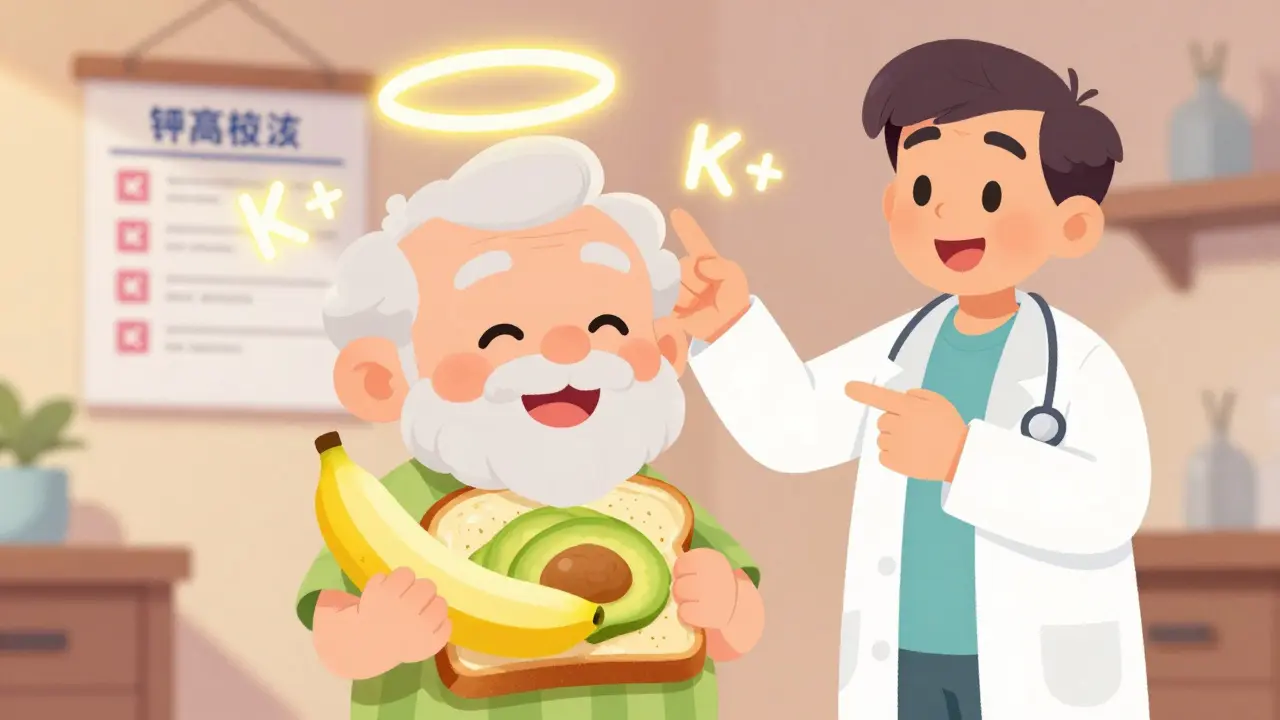
When you're taking an ACE inhibitor like lisinopril, your doctor likely told you to watch your salt. But what they might not have mentioned is that your bananas, potatoes, and avocado toast could also be a hidden risk. This isn’t about eating too much fruit-it’s about how your body handles potassium when this common blood pressure medication is in the picture.
How ACE Inhibitors Change Your Body’s Potassium Balance
ACE inhibitors work by blocking a chemical in your body that normally tightens blood vessels. By stopping this, they help lower blood pressure. But there’s a side effect built into the mechanism: less aldosterone. Aldosterone is a hormone that tells your kidneys to flush out extra potassium. When it drops, potassium stays in your blood. That’s not a problem if your kidneys are working well. But if they’re not, potassium builds up-fast.
For someone with healthy kidneys, the chance of dangerous potassium levels from diet alone is low-under 1% per year. But if you have diabetes, chronic kidney disease, or are over 65, your risk jumps. Studies show patients with moderate kidney disease on ACE inhibitors have up to a 13% annual risk of hyperkalemia (potassium above 5.0 mmol/L). That’s 10 times higher than someone with normal kidney function.
Which Foods Are the Real Culprits?
Not all potassium-rich foods are created equal when you’re on an ACE inhibitor. Some pack a punch in small portions. Here’s what to watch:
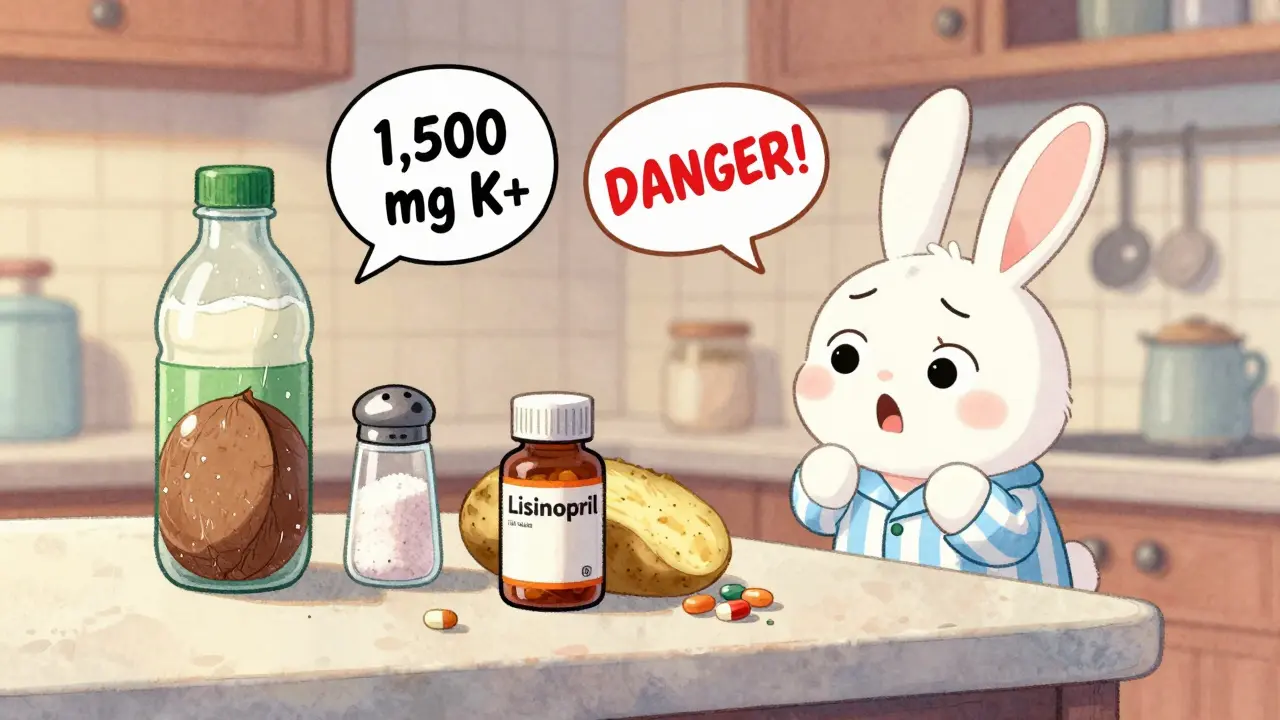
- Coconut water: One cup has over 1,500 mg of potassium-more than four bananas. Several hospital cases have been linked to patients drinking it daily thinking it’s a "healthy" drink.
- Salt substitutes: Products like Nu-Salt or NoSalt replace sodium with potassium chloride. One teaspoon can contain over 1,000 mg of potassium. Many people use them thinking they’re making a heart-healthy swap, not realizing they’re doubling their risk.
- Avocados: Half an avocado has about 500 mg. It’s a great food, but if you’re eating it daily with your medication, it adds up.
- White and sweet potatoes: A medium baked potato has 600-700 mg. Baked, mashed, or fried-potassium stays high.
- Bananas: One medium banana has around 320 mg. Not a huge amount, but if you’re eating two a day, that’s 640 mg extra potassium your kidneys can’t clear.
- Dried fruits: Apricots, raisins, prunes-concentrated sugar and potassium. A small handful can equal the potassium of a whole banana.
Tomatoes and orange juice are often mentioned too, but you’d need to drink a liter of OJ or eat over a pound of tomatoes daily to hit risky levels. The real danger comes from combining multiple high-potassium foods in one day.
It’s Not Just Food-Medications Stack Up
Many people on ACE inhibitors are also taking other drugs that raise potassium. The biggest combo to watch for is spironolactone, a water pill often prescribed for heart failure or swelling. When taken with an ACE inhibitor, the risk of hyperkalemia triples. That’s why doctors check potassium levels more often if you’re on both.
Other medications that can add to the problem include NSAIDs like ibuprofen, certain antibiotics, and even some herbal supplements like licorice root. If you’re on multiple prescriptions, your pharmacist should flag these interactions-but they won’t always. You need to speak up.
What Symptoms Should You Watch For?
Hyperkalemia doesn’t always cause obvious signs. Many people feel fine until their heart starts acting up. Early warning signs include:
- Feeling unusually tired or weak
- Muscle cramps or tingling in hands or feet
- Nausea or upset stomach
- Irregular heartbeat or fluttering in your chest
Severe cases can lead to cardiac arrest-but that’s rare if caught early. The problem is, these symptoms look like normal aging, stress, or even side effects of other meds. That’s why blood tests are critical.
Monitoring Is Non-Negotiable
If you’re on an ACE inhibitor, you need regular potassium blood tests. Here’s the standard schedule:
- Before starting the medication
- 1-2 weeks after starting or changing the dose
- Every 3-6 months if your kidneys are normal
- Every month if you have kidney disease, diabetes, or are over 70
Some clinics now use home finger-stick potassium tests or remote monitoring apps. A 2023 study showed these reduced hospital visits by nearly a third. Ask your doctor if this is an option.
Should You Avoid Potassium Altogether?
No. And here’s why: cutting out all potassium-rich foods can actually hurt your heart. Potassium helps balance sodium, lowers blood pressure naturally, and protects against strokes. A 2016 study in the Journal of the American College of Cardiology found that people on ACE inhibitors who ate 3,400-4,700 mg of potassium daily didn’t develop dangerous levels-if their kidneys were healthy.
The real goal isn’t to eliminate potassium. It’s to manage it. For most people on ACE inhibitors with normal kidney function, 2,000-3,400 mg per day is safe. That’s about:
- One banana
- One cup of cooked spinach
- Half an avocado
- One medium potato
- One cup of low-sodium tomato sauce
Just don’t eat all of those in one day. Spread them out. And never use salt substitutes unless your doctor says it’s okay.
Timing Matters Too
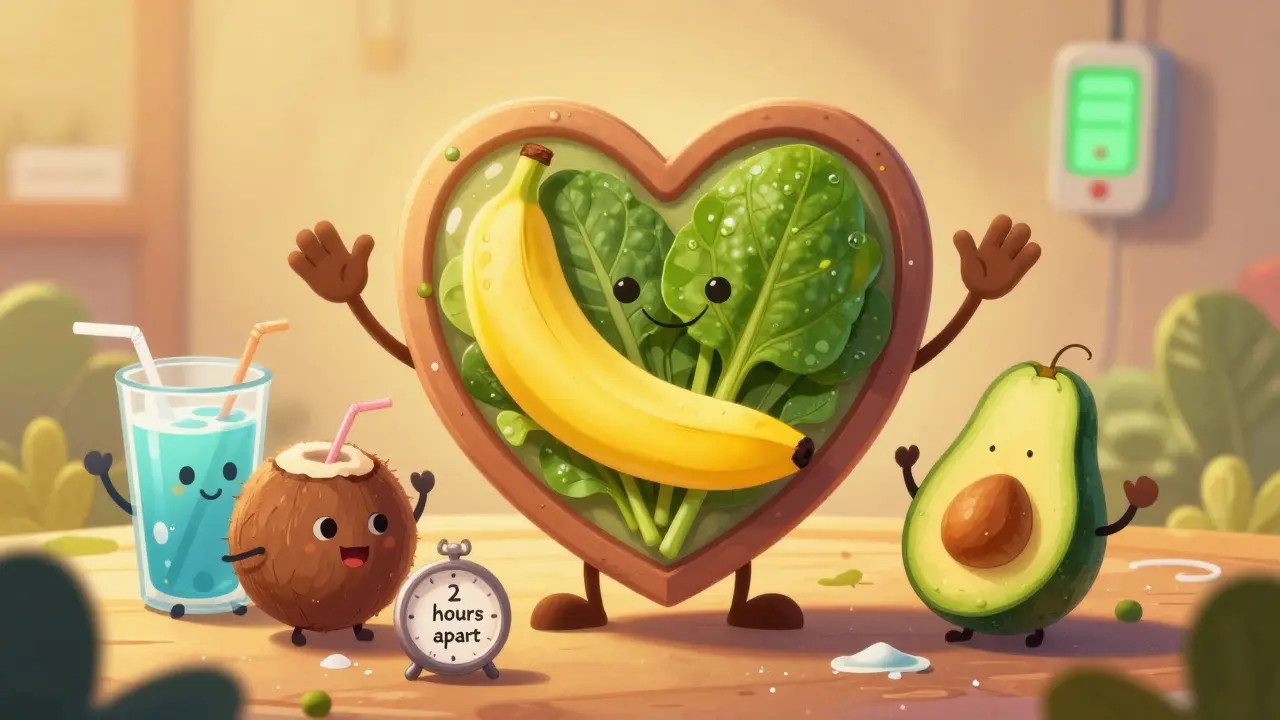
It’s not just what you eat-it’s when. Research shows that eating high-potassium foods 2 hours before or after taking your ACE inhibitor reduces the spike in blood potassium by about 25%. That’s a simple trick that can make a real difference. Take your pill in the morning, have your banana at lunch, and your potato at dinner. Don’t eat them together.
What If Your Potassium Is Already High?
If your blood test shows potassium above 5.5 mmol/L, your doctor will likely:
- Hold your ACE inhibitor temporarily
- Prescribe a potassium-binding medication like patiromer (Veltassa)
- Adjust your diet and other meds
Patiromer binds potassium in your gut so it’s flushed out in stool. Clinical trials show 89% of patients who couldn’t tolerate high-potassium diets were able to restart their ACE inhibitor after using it. This isn’t a cure, but it’s a lifeline for people who need the heart protection these drugs provide.
Bottom Line: Balance, Not Fear
ACE inhibitors save lives. They reduce heart attacks, strokes, and kidney damage. But they’re not risk-free. The key is awareness-not avoidance. You don’t need to give up your avocado toast. You just need to know how much potassium you’re eating, when you’re eating it, and whether your kidneys can handle it.
Keep your potassium tests on schedule. Talk to your pharmacist about all your meds and supplements. If you’re unsure about a food, check its potassium content online-many apps now track it. And if you feel weird-weak, dizzy, or your heart feels off-get it checked. A simple blood test can prevent a medical emergency.
This isn’t about perfect dieting. It’s about smart choices. Your body is doing the work. You just need to give it the right support.
Can I still eat bananas if I’m on lisinopril?
Yes, but limit yourself to one per day, and don’t combine it with other high-potassium foods like potatoes or avocado in the same meal. If you have kidney disease or diabetes, check your blood potassium levels regularly. One banana alone is unlikely to cause harm if your kidneys are working normally.
Is coconut water safe with ACE inhibitors?
Generally, no-not if you’re taking an ACE inhibitor and have any kidney issues. One cup of coconut water contains more potassium than four bananas. There are documented cases of patients being hospitalized after drinking it daily. If you’re healthy and have normal kidney function, occasional use may be okay, but it’s not worth the risk. Water or low-sodium sports drinks are safer alternatives.
Do all ACE inhibitors raise potassium the same way?
No. Studies show enalapril has a slightly higher risk of raising potassium than lisinopril at the same dose. Ramipril and captopril fall in between. But the difference is small. What matters more is your kidney function, age, and other medications. Don’t switch drugs just to avoid potassium-talk to your doctor about your overall risk profile instead.
Can I use salt substitutes if I’m on an ACE inhibitor?
Avoid them unless your doctor specifically says it’s safe. Most salt substitutes replace sodium with potassium chloride. One teaspoon can contain over 1,000 mg of potassium-enough to push your levels into the danger zone. Even if you think you’re being healthy, you’re adding a hidden risk. Use herbs, lemon juice, or garlic instead.
How often should I get my potassium checked?
Baseline before starting, then 1-2 weeks after beginning or changing your dose. If your kidneys are normal and your first test is fine, check every 3-6 months. If you have diabetes, kidney disease, or are over 70, check every month. Many clinics now offer home testing or telehealth follow-ups-ask if you’re eligible.
Does drinking more water help lower potassium?
No. Drinking extra water won’t flush out excess potassium if your kidneys aren’t working well. In fact, over-hydration can sometimes make the problem worse by diluting sodium and triggering more potassium retention. The only reliable way to manage high potassium is through diet, medication adjustments, or potassium binders-not by drinking more water.
Can I stop my ACE inhibitor if my potassium is high?
Never stop your ACE inhibitor without talking to your doctor. These drugs protect your heart and kidneys. Stopping suddenly can cause your blood pressure to spike or worsen heart failure. Instead, your doctor may lower your dose, add a potassium binder, or switch you to a different class of medication. The goal is to keep you on the most effective treatment safely.
Okay but have y’all seen the potassium levels in those fancy "superfood" smoothies? 🍌🥑🥤 I drank one daily thinking I was being healthy-ended up in the ER with a heart flutter. My doc said it was like drinking liquid potassium chloride. Don’t be that guy. 🤯
Stop scaring people. Bananas are fine. Potassium isn’t poison. If your kidneys are broken, maybe don’t take meds that require functioning kidneys? 🙄
I love how this article breaks down the real risks without fearmongering. 🙌 And yes-coconut water is a sneaky villain. I used to drink it after yoga, thinking I was being so wholesome. Turns out, I was basically doing a potassium IV. 🤦♀️ One cup = 1.5x your daily limit. Mind blown.
Dear all, I am from India and here we consume a lot of banana and potato in daily diet. My father is on lisinopril since 5 years. His potassium level is always normal. He eats 2 bananas and one potato daily. He does not use salt substitute. He drinks water normally. I think, if kidney function is normal, no need to worry. But please consult doctor before changing diet.
This is one of those posts that feels like a public service announcement written by someone who actually cares. 🙏 I’ve seen too many older patients panic and cut out all fruits, then get malnourished. The balance point here is everything-don’t fear the avocado, just know your numbers. And yes, timing matters. I’ve told my patients to take their pill with breakfast and save the banana for lunch. Simple. Effective.
Let’s be real: if you’re on an ACE inhibitor and you’re eating avocado toast, a banana, and sweet potato fries in the same day-yes, you’re asking for trouble. 🚨 I’ve been a nurse for 18 years. I’ve seen the EKGs. I’ve seen the codes. It’s not dramatic-it’s predictable. Stop pretending you’re being "healthy" by stacking potassium bombs. Use herbs. Use lemon. Use your brain.
People are so dumb. You take a pill that makes your body hold onto potassium? Then you go eat 5 bananas and drink coconut water like it’s Gatorade? DUH. You’re not a victim-you’re just lazy. Get your blood tested. Stop blaming the medicine. Blame yourself.
My grandpa’s on lisinopril and he eats potatoes like they’re candy. But he’s got a home monitor now-he checks his potassium every week with a finger prick. Doc says it’s saved his life. Seriously, if you’re high-risk, ask about home testing. It’s not expensive, and it’s way better than waiting until you’re dizzy and your heart’s doing the cha-cha.
It’s fascinating how medicine turns simple biology into a balancing act of trust and vigilance. We take drugs to restore harmony, yet the very mechanism that heals us becomes a source of new imbalance. Perhaps the real lesson isn’t about potassium or bananas-it’s about humility. Our bodies are complex systems; we are not their masters, only their cautious stewards. A banana isn’t the enemy. Neither is the pill. But forgetting to listen-to test, to observe, to adapt-that’s where the danger lies.