
Acute Bronchitis: How to Care for a Cough and Why Antibiotics Usually Won’t Help

Most people think a bad cough means they need antibiotics. But if you’ve got acute bronchitis, that’s usually not true-and taking them can actually hurt you more than help.
What Exactly Is Acute Bronchitis?
Acute bronchitis is a short-term inflammation of the bronchial tubes-the airways that carry air into your lungs. It’s not pneumonia. It’s not the flu. It’s just your airways getting irritated, usually by a virus.
You’ll know it by the cough. It often starts after a cold or sore throat and can last for weeks. You might cough up clear, white, or yellow mucus. Sometimes you feel a little tired or have a low-grade fever. But if you’re running a high fever, breathing fast, or have chest pain with deep breaths, that’s a red flag for something else-like pneumonia.
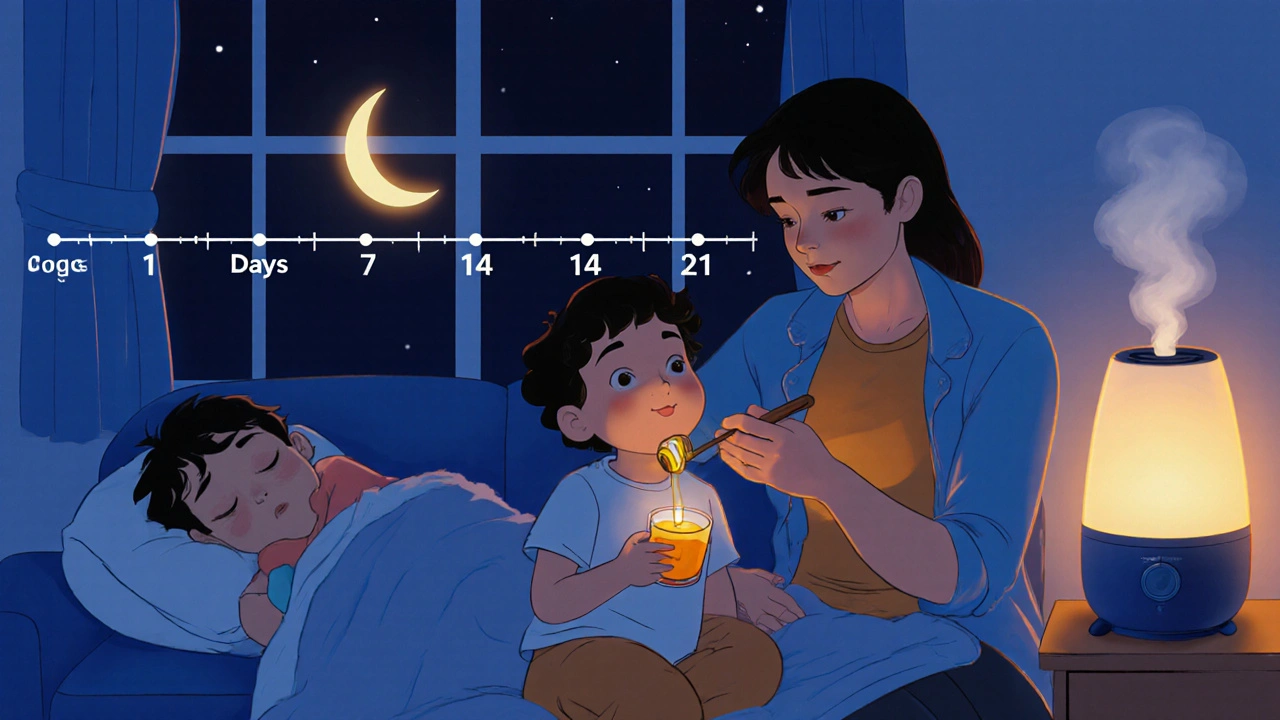
It’s super common. About 5% of adults get it every year in the U.S., and it’s one of the top 10 reasons people visit the doctor. The cough alone lasts an average of 18 days. Half of people are still coughing at 10 days. One in four still has it at two weeks. And 1 in 10 are coughing at three weeks. That’s normal. It doesn’t mean you’re getting worse. It just means your airways are healing slowly.
Why Antibiotics Don’t Work for Most Cases
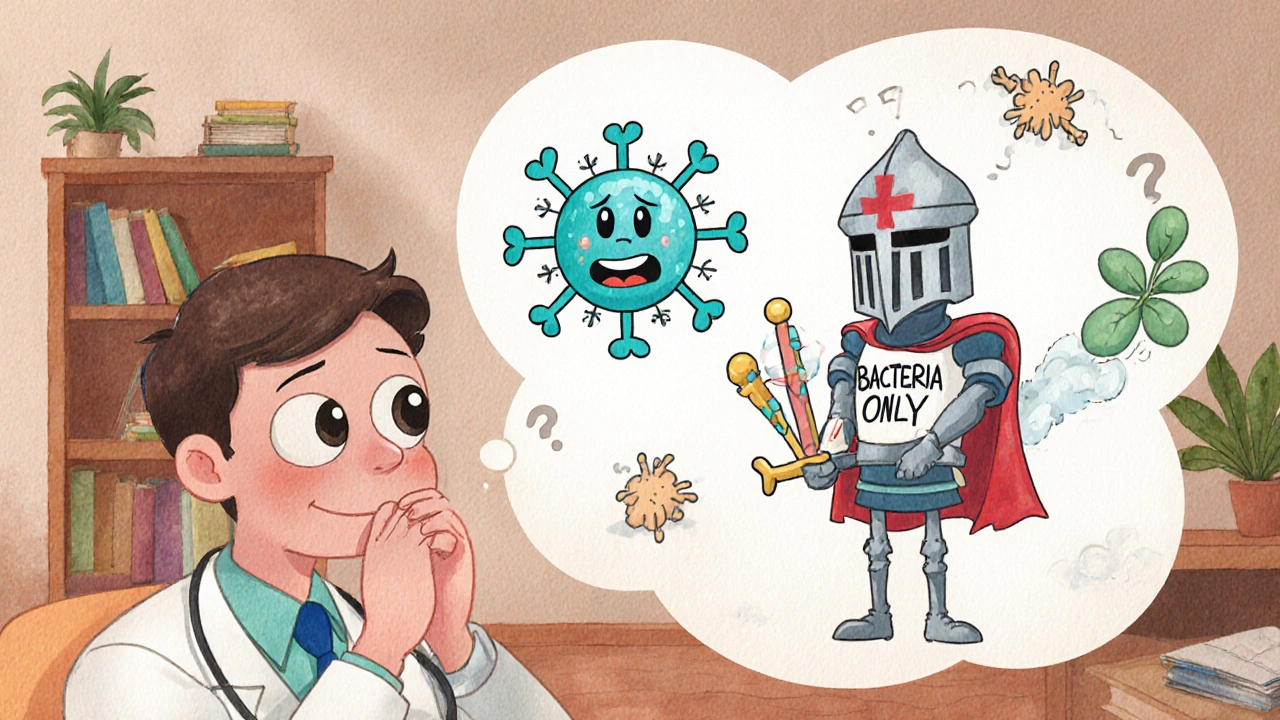
Ninety to ninety-five percent of acute bronchitis cases are caused by viruses-rhinovirus, coronavirus, flu, RSV. Antibiotics kill bacteria. They do nothing to viruses.
Despite that, doctors still prescribe antibiotics for acute bronchitis way too often. In 2022, over half of all visits for bronchitis ended with an antibiotic prescription. That’s down from 74% in 2010, but it’s still far too high.
Why? Because patients expect them. And doctors feel pressured to give something, even if it’s not helpful. But here’s the truth: antibiotics reduce cough duration by less than a day-just 0.6 days on average. That’s not worth the risk.
Every time you take an antibiotic unnecessarily, you increase your chances of side effects. About 1 in 14 people get diarrhea, nausea, or a rash. Some get serious allergic reactions. And on a larger scale, overuse leads to antibiotic resistance. That’s when bacteria evolve to survive drugs, making infections harder to treat. The CDC says 46 million unnecessary antibiotic prescriptions are given each year for respiratory infections like bronchitis. That fuels 2.8 million resistant infections and 35,000 deaths annually in the U.S. alone.
What Actually Helps a Cough from Bronchitis
Since antibiotics don’t work, what does? The answer is simple: time and smart symptom care.
- Rest. Your body needs energy to fight the virus. Skip the gym, skip the late nights, and let yourself sleep.
- Hydrate. Drink 8 to 10 glasses of water a day. Fluids thin mucus so it’s easier to cough up. Warm tea, broth, or even just plain water helps.
- Humidify. Use a cool-mist humidifier in your room. Or sit in a steamy bathroom for 10 minutes. Moist air soothes irritated airways.
- Use pain relievers. If you have a sore throat or body aches, take ibuprofen (Advil) or acetaminophen (Tylenol). Stick to the label-no more than 3,000 mg of acetaminophen a day if you don’t have liver problems.
What About Cough Medicines?
Over-the-counter cough syrups? They’re a mixed bag.
Honey is one of the best options-especially for nighttime coughs. Studies show it works as well as dextromethorphan (the active ingredient in many cough syrups) and better than nothing. For adults, take 1 to 2 tablespoons as needed. Important: Never give honey to babies under 1 year old. It can cause botulism.
Dextromethorphan (found in Robitussin DM, Delsym) can help reduce cough frequency. It’s not magic, but it might make sleep easier. The standard dose is 15-30 mg every 6-8 hours, max 120 mg per day. Avoid it if you’re on antidepressants or have liver disease.
Guaifenesin (Mucinex) is supposed to loosen mucus. But studies are all over the place. Some show a tiny benefit. Others show nothing. It’s not harmful, but don’t expect miracles.
Inhalers like albuterol? Only help if you’re wheezing. About 1 in 3 people with bronchitis have mild wheezing. If you don’t wheeze, these won’t help-and they can cause shaky hands, fast heartbeat, or anxiety.
Codeine and opioid cough syrups? Avoid them. The FDA banned codeine for kids under 12 in 2018 because of breathing risks. Even for adults, they’re rarely needed and carry addiction risks.
When Should You See a Doctor?
You don’t need to go for every cough. But here are the red flags:
- Fever above 38°C (100.4°F) that lasts more than a few days
- Shortness of breath or wheezing that gets worse
- Coughing up blood
- Chest pain when you breathe or cough
- Cough lasting longer than 3 weeks with no improvement
- Weight loss, night sweats, or extreme fatigue
If you have asthma, COPD, or a weak immune system, talk to your doctor sooner. You’re at higher risk for complications.
Why Doctors Still Prescribe Antibiotics
It’s not because they don’t know better. They do. The guidelines from the American Academy of Family Physicians, the CDC, and the American College of Chest Physicians have been clear since 2006: don’t prescribe antibiotics for acute bronchitis.
But patient pressure is real. People walk in saying, “I need something strong.” They’ve had antibiotics before. They believe they work. So doctors give them-sometimes with a delayed script. That means: “Take this if you’re not better in 48 hours.”
That strategy works. Studies show it cuts antibiotic use by half without making patients sicker. It gives time for the virus to run its course, and only uses antibiotics if something bacterial shows up.
Doctors are also getting better at explaining the timeline. Saying, “Your cough might last 2 to 3 weeks, and that’s normal,” reduces anxiety. Most people just need to know it’s not dangerous.
The Bigger Picture: Antibiotic Resistance
This isn’t just about your cough. It’s about the future of medicine.
Every time you take an antibiotic when you don’t need it, you’re helping superbugs survive. These are bacteria that no longer respond to common drugs. MRSA. Drug-resistant pneumonia. Untreatable UTIs. They’re already killing 35,000 Americans every year.
Acute bronchitis is one of the biggest drivers of this problem. The Choosing Wisely campaign-backed by top medical groups-lists “Don’t prescribe antibiotics for acute bronchitis” as a top priority for doctors.
There’s progress. Antibiotic prescribing for bronchitis has dropped from 74% in 2010 to 51% in 2022. But it’s still too high. The goal? Get it below 20% by 2026.
That’s not just a number. It’s a public health win. Fewer side effects. Fewer resistant infections. Lower healthcare costs. The CDC estimates that cutting unnecessary prescriptions for bronchitis by half could save $150 million a year and prevent 20,000 adverse events.
What You Can Do Right Now
1. Don’t ask for antibiotics. If your doctor offers one, ask: “Is this caused by a virus? Will antibiotics help?”
2. Use honey for coughs. It’s natural, safe for adults, and works better than most OTC syrups.
3. Wait it out. If you’re otherwise healthy, your body will clear this on its own. Coughing for two weeks isn’t a failure-it’s healing.
4. Protect others. Wash your hands. Cover your cough. Stay home if you’re feverish. You’re contagious in the first few days.
5. Know your limits. If you’re over 65, have lung disease, or your symptoms worsen after 10 days, call your doctor. But don’t rush to the clinic for a cough that’s just stubborn.
Acute bronchitis isn’t serious for most people. But it’s a test of our medical habits. Do we trust our bodies to heal? Or do we reach for a pill every time we feel uncomfortable? The answer matters-for you, and for everyone who might need antibiotics someday.
So i just had this cough for like 3 weeks and went to the doc and they gave me amoxicillin like it was candy and now i have diarrhea and feel like a zombie
why do they even do this
its not like they dont know better
thank you for writing this so clearly
so many people are scared when they cough for more than a week but its just your body cleaning house
honey is magic and i use it every time i get sick
no need to panic
antibiotics are a crutch for weak minds
we used to heal ourselves
now we want a pill for everything
pathetic
Thank you for this comprehensive and evidence-based overview. The public health implications of unnecessary antibiotic prescribing are profound and deeply concerning.
As a healthcare professional, I have witnessed firsthand how patient expectations are shaped by misinformation and cultural narratives around quick fixes.
It is both encouraging and disheartening to see the decline from 74% to 51% over 12 years-progress, yes, but still far from adequate.
Education, patience, and clear communication are our most powerful tools.
We must continue to normalize the message: a lingering cough is not a failure of the body, but its quiet, necessary healing process.
honestly i used to panic every time i coughed for more than a week
then i read this exact thing last year and just waited it out
took 18 days but i felt better
no pills needed
just honey and sleep
thanks for the reminder
Hey this is great info
just shared it with my mom who keeps asking for antibiotics every time she gets a cold
she said honey sounds way better than pills
she’s 68 and still thinks medicine is the only way
small wins right
Interesting data. The persistence of the cough is often misinterpreted as progression rather than resolution.
It aligns with broader patterns in acute viral respiratory illness.
The psychological burden of prolonged symptoms is underestimated in clinical settings.
Physician-patient communication remains a critical gap.
in india we have this problem worse than usa
pharmacists sell antibiotics like candy
no prescription needed
people think stronger medicine = faster cure
my cousin took 10 different antibiotics for a cold and ended up in hospital with C diff
please spread this message more
Thank you for sharing this important and timely information! It is absolutely critical that we, as a society, begin to understand the dangers of antibiotic overuse, and recognize that the human body is an incredibly capable healing machine when given the right conditions.
Hydration, rest, humidity, and honey are not just home remedies-they are scientifically supported, safe, and effective strategies.
Let us stop treating symptoms as enemies, and start respecting the natural course of illness.
Every unnecessary antibiotic prescription is a step backward for global health.
Let’s choose wisdom over convenience.
Thank you again for being a voice of reason in a noisy world.
antibiotics are for weak americans who cant handle a cough
we used to just tough it out
now we want pills for sneezing
pathetic
usa is falling apart
the real question is why do we think illness is something to be fixed instantly
why is discomfort so unbearable that we reach for a pill before we even breathe
maybe the cough isn’t the enemy
maybe its the signal
the body saying hey i’m working here
we’ve forgotten how to listen