
ADHD in Adults: How to Stay Organized, Find the Right Coaching, and Use Medication Safely
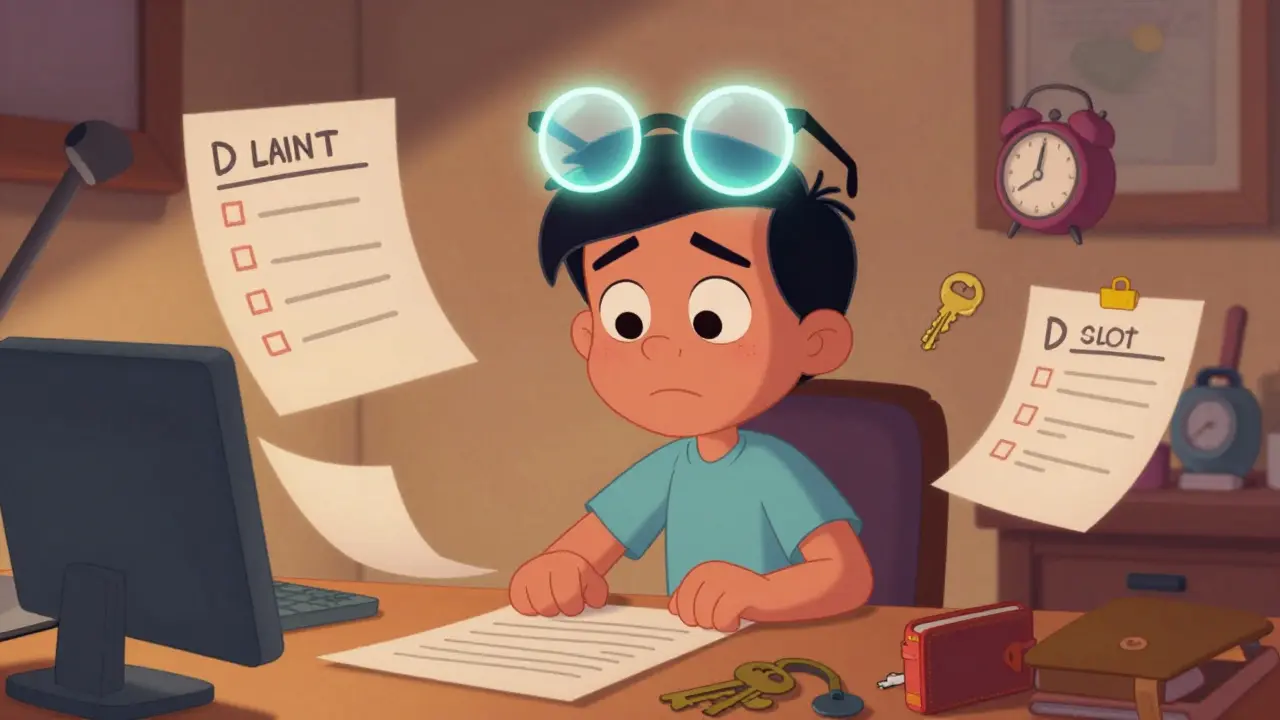
ADHD in adults isn’t just about forgetting keys or being late. It’s about missing deadlines, burning out from constant mental overload, and feeling like you’re always one step behind-even when you’re working twice as hard.
If you’re an adult with ADHD, you’ve probably tried lists, apps, alarms, and motivational quotes. Maybe you’ve even tried medication. But without the right support system, it’s easy to fall back into the same cycle: overwhelmed, guilty, frustrated. The truth? ADHD in adults isn’t a lack of willpower. It’s a brain wiring difference that needs practical systems, skilled support, and careful medical oversight to work with-not against.
Why Organization Alone Doesn’t Work
Most advice for ADHD says: “Just use a planner.” But if your brain struggles to start tasks, hold onto intentions, or shift focus when needed, a planner becomes another thing you feel bad about not using. Research shows that people with ADHD don’t lack motivation-they lack reliable access to executive function. That means planning, prioritizing, and following through don’t happen automatically, no matter how much you want them to.
Successful organization for adults with ADHD isn’t about buying the fanciest app. It’s about building external systems that replace what your brain can’t consistently do. Think of it like wearing glasses: you don’t fix your vision by trying harder to see-you use a tool that compensates for the gap.
Start with three non-negotiables:
- One central task list-not five apps. Use Google Tasks, Notion, or even a physical notebook. The goal is consistency, not complexity.
- Time blocking with buffer zones. If you think a task takes 30 minutes, block 60. ADHD brains underestimate time. Add 15 minutes between tasks to reset.
- Visual triggers. Put your keys next to your wallet. Leave your workout clothes by the door. Place your medication bottle on your toothbrush. These cues bypass the need to remember.
Studies from the Massachusetts General Hospital Adult ADHD Program show that adults who use these simple, consistent systems see a 40-60% improvement in daily task completion within 6-8 weeks. The key? Not perfection. Just repetition.
Coaching: The Missing Piece in ADHD Treatment
Therapy helps you understand your ADHD. Coaching helps you live with it.
ADHD coaches don’t give advice. They hold space, ask the right questions, and help you build routines that stick. A 2023 survey by the ADHD Coaches Organization found that 81% of adults who used coaching alongside medication reported major improvements in time management-compared to just 58% who used medication alone.
Good coaching looks like this:
- Weekly 30-minute check-ins to troubleshoot what didn’t work, not what should’ve been done better.
- Help designing systems that match your energy patterns-like scheduling important tasks during your peak focus window (for many, that’s early morning).
- Teaching you how to break big tasks into micro-steps. “Clean the kitchen” becomes: 1) Put dishes in sink. 2) Wipe counter. 3) Take out trash.
Many coaches use proven frameworks like the Eisenhower Matrix (urgent vs. important) or the “2-Minute Rule” (if it takes less than two minutes, do it now). These aren’t magic. They’re scaffolding for a brain that gets stuck in overwhelm.
You don’t need a fancy coach. Look for someone certified by the ADHD Coaches Organization or the International Coach Federation with specific ADHD training. Most offer sliding scale rates. Some community groups like CHADD offer free group coaching sessions.

Medication: What Works, What Doesn’t, and How to Stay Safe
Medication isn’t a cure. But for most adults with ADHD, it’s the most effective tool to regain control over attention and impulse control.
There are two main types:
- Stimulants (like Adderall, Vyvanse, Concerta, Ritalin): These are first-line treatment. They work fast-within 30-60 minutes-and help 70-80% of users. Vyvanse, a prodrug, releases slowly over 10-14 hours and has lower abuse potential than older stimulants.
- Non-stimulants (like atomoxetine, guanfacine): These take 1-2 weeks to kick in and are less effective overall (50-60% response rate), but they’re safer for people with heart conditions or anxiety.
Costs vary wildly. Generic methylphenidate can cost $10-$30/month with insurance. Brand-name Vyvanse? $350-$450 without it. Many pharmacies offer discount programs. Ask your doctor about generic alternatives.
But safety matters. The FDA and American Heart Association recommend:
- A baseline heart check before starting stimulants, especially if you’re over 40.
- Annual blood pressure monitoring while on medication.
- Avoiding stimulants if you have uncontrolled high blood pressure, heart disease, or a history of substance abuse.
Some studies show a small increased risk of cardiovascular issues with long-term stimulant use-about 4% higher risk per year of use. But here’s the balance: a 2024 study in Nature Mental Health found adults on ADHD medication had a 39% lower risk of accidental injury and a 39% lower risk of early death. The risk isn’t zero-but the benefit is bigger for most.
Side effects like insomnia or appetite loss are common at first but usually fade after 2-4 weeks. If they don’t, talk to your doctor. Don’t just quit. Adjusting the dose or switching meds can make a huge difference.
The Biggest Mistake People Make
Trying to do it alone.
ADHD treatment fails most often not because the tools don’t work-but because people stop using them. Why? Shame. Burnout. Feeling like they’re “failing” at managing their own brain.
One user on Reddit shared: “My primary care doctor didn’t check my blood pressure for two years while I was on Vyvanse. I ended up with undiagnosed hypertension.” That’s not normal. You deserve better.
Here’s what good care looks like:
- First appointment: full medical history, heart check, baseline blood pressure.
- Follow-ups every 2-4 weeks until meds are stable.
- Then monthly for 3 months, then every 3-6 months.
- Regular check-ins about mood, sleep, energy, and daily function-not just “are you still taking it?”
Most primary care doctors aren’t trained in ADHD management. If you’re not getting this level of care, find a psychiatrist, neurologist, or clinic specializing in adult ADHD. University hospitals often have ADHD programs with sliding-scale fees.
What to Do If Medication Doesn’t Work
It’s not you. It’s not your brain. It’s likely a mismatch.
Only 70-80% respond to the first stimulant. That means 20-30% need to try another. Maybe you need a non-stimulant. Maybe you need a different dose. Maybe you need coaching to go with it.
Also, ADHD rarely travels alone. About 70% of adults with ADHD also have anxiety, depression, or both. If you’re on medication but still feel stuck, overwhelmed, or emotionally drained, ask about comorbid conditions. Treating anxiety or depression can make ADHD meds work better.
Don’t give up after one try. Medication is a tool. Like a hammer-it only works if you use the right one for the job.

Where to Start Today
You don’t need to fix everything at once. Pick one thing:
- Write down your biggest daily struggle. Is it starting work? Remembering appointments? Paying bills?
- Build one tiny system around it. Put your wallet and keys in the same spot. Set a phone reminder labeled “START” for your most avoided task.
- Find one coach or support group. CHADD has free local chapters. Reddit’s r/ADHD has thousands of people sharing real solutions.
- If you’re on medication, ask your doctor: “Can we schedule a follow-up in 3 weeks to check my blood pressure and how I’m feeling?”
Progress isn’t about becoming perfect. It’s about becoming predictable-to yourself.
ADHD in adults is not a life sentence of chaos. It’s a condition that responds well to the right mix of structure, support, and science.
The goal isn’t to be “normal.” It’s to feel in control. To finish what you start. To stop apologizing for who you are-and start building a life that works with your brain, not against it.
Can adults with ADHD stop taking medication eventually?
Some adults do reduce or stop medication after years of stable symptom control and strong coping systems. But this isn’t common. Most continue long-term because ADHD is a lifelong neurodevelopmental condition. Stopping without a plan often leads to a return of symptoms. If you want to try reducing meds, work with your doctor to taper slowly and monitor closely.
Is ADHD coaching covered by insurance?
Most insurance plans don’t cover coaching because it’s not medical treatment. But some employers offer it through wellness programs. Many coaches offer sliding scale fees ($50-$120/hour), and groups like CHADD host free group coaching sessions. Look for certified coaches through the ADHD Coaches Organization or the International Coach Federation.
What’s the best ADHD medication for adults?
There’s no single “best” medication. Stimulants like Vyvanse and Concerta work best for most people, with 70-80% response rates. But if you have anxiety, heart concerns, or a history of substance use, non-stimulants like atomoxetine may be safer. The right choice depends on your health, lifestyle, and how your body reacts. Trial and careful monitoring are key.
Can ADHD be managed without medication?
Yes-but it’s harder. For mild cases, coaching, organizational systems, exercise, sleep hygiene, and therapy can help significantly. For moderate to severe ADHD, medication is usually needed to unlock the ability to use those tools effectively. Think of medication as the key that lets your brain access the strategies you already know.
How do I know if my ADHD diagnosis is correct?
A proper diagnosis includes a detailed clinical interview, symptom history since childhood (ADHD starts in childhood, even if undiagnosed), and ruling out other conditions like anxiety, thyroid issues, or sleep apnea. If your provider didn’t ask about childhood symptoms or skip a medical workup, consider getting a second opinion from a psychiatrist or ADHD specialist.
What Comes Next?
If you’re reading this, you’re already ahead of most people with ADHD-you’re looking for real answers, not quick fixes. The next step isn’t grand. It’s small.
Right now, open your phone. Set a reminder for tomorrow at 9 a.m.: “Call my doctor and ask about blood pressure checks on my ADHD med.” Or text a friend: “I’m trying to find an ADHD coach. Any recommendations?”
Progress isn’t about fixing everything. It’s about taking one step that your brain couldn’t take yesterday. And that’s enough.
Been there. Tried the planner. Tried the apps. Tried the alarms. Still forgot my keys today. But the visual triggers thing? Game changer. Left my meds next to my toothbrush. Didn’t miss a dose in 3 weeks. Small wins.
Yup. Just one system. One list. No more app hopping. I use Google Tasks on my lock screen. Done. That’s it.
The idea that ADHD is a lack of willpower is not just wrong-it’s a cultural myth rooted in industrial-era productivity worship. We’re not broken machines that need more discipline. We’re neurodivergent systems that need different inputs. Think of executive function not as a muscle to be flexed, but as a radio signal that’s always static unless you’ve got the right receiver. Coaching isn’t advice-it’s tuning. Medication isn’t a crutch-it’s a frequency amplifier. The real tragedy isn’t the diagnosis. It’s the fact that so many of us are told to fix ourselves instead of being given tools that actually match our wiring. And yes, the 40-60% improvement stat? That’s not magic. That’s physics. When you remove the friction between intention and action, movement becomes inevitable.
Wow. Another ‘ADHD is not laziness’ article. Congrats. You just reinvented the wheel. Everyone on Reddit knows this. But who the hell has time for time-blocking and visual cues when you’re working two jobs and your insurance won’t cover a $400 med? This reads like a rich person’s fantasy.
As a South African woman who has studied neurocognitive disorders at Wits University, I must say: this article is dangerously oversimplified. In our public health system, we see adults with ADHD who cannot afford even generic methylphenidate. The Western obsession with ‘coaching’ and ‘systems’ ignores structural inequality. Your ‘one central task list’ means nothing if you’re sleeping in a shelter. This is privilege disguised as advice.
i just wanted to say thank you for this. i been on vyvanse for 2 years and its changed my life but i never knew about the buffer zones thing. i been blocking 30 min for everything and its always overruns. gonna try 60 now. also found a free chadd group in bangalore. its weird but kinda nice to not feel alone. ps. sorry for typos. my brain is still tired
Coaching is just therapy with a higher price tag and no insurance coverage. Medication is the only real tool. Everything else is fluff. If you can’t afford Vyvanse, tough. Life isn’t fair. Stop looking for hacks. Just take the pill or deal with it
So you’re telling me the solution to ADHD is… more structure? Wow. Groundbreaking. Next you’ll tell me water is wet and gravity exists.
My husband has ADHD. We’ve been through 3 meds, 2 coaches, and one therapist who told him to ‘just try harder.’ He finally found a psychiatrist who checks his BP every time. We’re not ‘fixed.’ But we’re not drowning anymore. Thank you for writing this. It’s the first time I’ve seen someone say it’s okay to need help.