
Antimalarial Medications: QT and CYP Interactions Explained

Antimalarial Drug Interaction Checker
Check Your Medication Risks
Select your antimalarial medication and other drugs to see potential interactions. Based on CDC and FDA guidelines.
When you take an antimalarial drug, you’re not just fighting malaria-you’re also risking your heart. Some of the most common treatments, like hydroxychloroquine and artemether-lumefantrine, can mess with your heart’s electrical rhythm and how your body breaks down other medications. This isn’t theoretical. People have died from this. And it’s happening more often as these drugs are used for other conditions like lupus and rheumatoid arthritis, far beyond malaria-endemic areas.
Why QT Prolongation Matters
Your heart beats because of electrical signals. One of the key phases is called the QT interval-it’s the time it takes for your heart to recharge between beats. If this interval gets too long, your heart can slip into a dangerous rhythm called Torsades de Pointes. It’s rare, but when it happens, it can turn fatal in seconds. Antimalarials like chloroquine, hydroxychloroquine, and lumefantrine are known to block the hERG potassium channel, which is critical for resetting that electrical charge. That’s why they prolong QT.
It’s not just about the drug itself. The risk goes up if you already have heart disease, are over 65, or are taking other QT-prolonging meds. A 2021 study found that hydroxychloroquine combined with clarithromycin increased QT prolongation risk by nearly 18 times. That’s not a small number. That’s a red flag.
How CYP Enzymes Change the Game
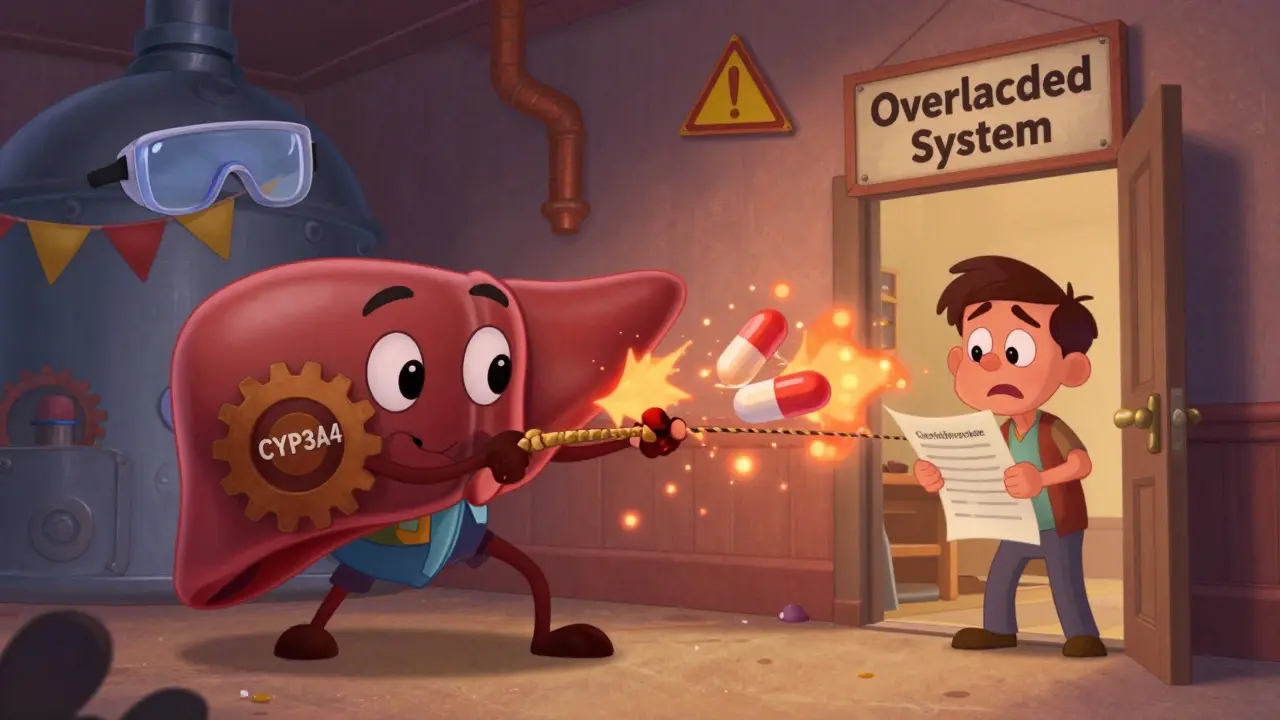
Your liver uses enzymes called cytochrome P450 (CYP) to break down drugs. If two drugs fight over the same enzyme, one can build up to toxic levels. Artemether, the main ingredient in the most common malaria combo, is processed by CYP3A4. So if you’re on a drug that blocks this enzyme-like some HIV meds or even common antibiotics like clarithromycin-your body can’t break down artemether properly. That means more of it hangs around, increasing your chance of side effects.
Lumefantrine, the partner drug in artemether-lumefantrine, has a half-life of 3 to 6 days. That means it sticks around. Combine that with a CYP3A4 inhibitor, and you’re stacking up the risk. The Northern Alberta HIV Program warns that even though artemether itself is active, we don’t have enough data to say whether this interaction is harmless. That’s not reassuring.
Who’s at Highest Risk?
Not everyone is equally at risk. Here’s who needs to be extra careful:
- Older adults-especially over 65. Their liver and kidneys don’t clear drugs as fast. Lipophilic drugs like hydroxychloroquine can build up in fat tissue and linger for weeks.
- People on multiple medications-if you’re on a statin, an antidepressant, or an antibiotic, you might be adding fuel to the fire.
- Those with heart conditions-a history of arrhythmia, heart failure, or low potassium makes QT prolongation far more dangerous.
- Patients on protease inhibitors-common in HIV treatment. These drugs strongly inhibit CYP3A4 and can spike antimalarial levels.
Hydroxychloroquine is especially tricky. It has a terminal half-life of 40 to 50 days. That means if you took it for lupus last month, it’s still in your system. Now you get malaria. You take more. And suddenly, you’re at risk even if you didn’t think you were.
Comparing the Top Antimalarials
Not all antimalarials are created equal when it comes to interactions. Here’s how they stack up:
| Drug | QT Prolongation Risk | Main CYP Metabolism | Key Interaction Risks |
|---|---|---|---|
| Hydroxychloroquine | High | CYP2C8, CYP3A4, CYP2D6 | Clarithromycin (OR 17.85), furosemide, piperacillin/tazobactam |
| Artemether | Low | CYP3A4, CYP2C19 | Strong CYP3A4 inhibitors may reduce activation to DHA |
| Lumefantrine | Medium-High | CYP3A4 | Clarithromycin, ketoconazole, HIV protease inhibitors |
| Mefloquine | Medium | CYP3A4 | Can increase CNS side effects with other neurotoxic drugs |
| Atovaquone-proguanil | Very Low | CYP2C8 (proguanil) | Interacts with mitochondrial inhibitors; avoid with statins |
Notice how hydroxychloroquine stands out. It’s not just about QT. It’s about how many drugs it interacts with. A 2021 study identified 12 specific drugs that, when taken with hydroxychloroquine, increased QT prolongation risk-even if those drugs alone don’t usually cause it. That’s the hidden danger: additive effects.
What Clinicians Are Seeing
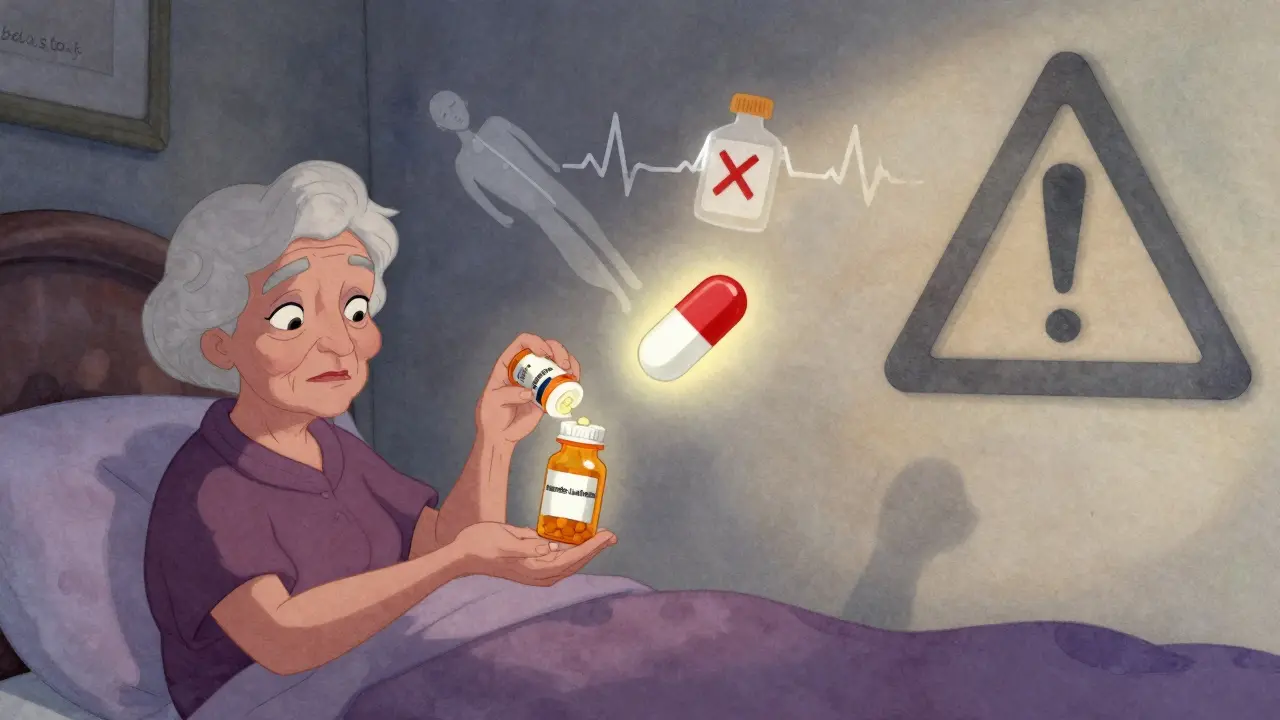
Real-world cases tell the story. A 72-year-old woman with lupus took hydroxychloroquine daily. She got traveler’s malaria and was prescribed artemether-lumefantrine. Two days later, she had a fainting spell. Her ECG showed a QTc of 580 ms. She didn’t have a prior heart condition. Her only other medication? Furosemide-a common diuretic that also prolongs QT. The combination wasn’t flagged by her pharmacist. It should have been.
Another case involved a man on HIV treatment with lopinavir/ritonavir (a strong CYP3A4 inhibitor). He was given artemether-lumefantrine for malaria. His artemether levels spiked. He developed nausea, dizziness, and a prolonged QT interval. He didn’t die-but he came close.
Even "safe" alternatives aren’t safe. Azithromycin is often used instead of clarithromycin. But there are documented cases of Torsades de Pointes with azithromycin too. No drug is risk-free.
What You Should Do
If you’re taking an antimalarial-or thinking about it-here’s what actually works:
- Check your meds-list every pill you take, including over-the-counter and supplements. Share it with your doctor.
- Ask about ECG-if you’re on hydroxychloroquine, mefloquine, or artemether-lumefantrine, get a baseline ECG. Repeat it after 5-7 days if you’re on long-term therapy.
- Avoid clarithromycin-if you need an antibiotic while on hydroxychloroquine, use amoxicillin or doxycycline instead. Avoid macrolides entirely.
- Don’t assume short-term = safe-even a 3-day course of lumefantrine can be risky if you’re on other meds.
- Watch for symptoms-dizziness, palpitations, fainting, or sudden fatigue could be early signs. Don’t wait for a full-blown arrhythmia.
For travelers, this isn’t just about malaria. It’s about knowing what’s in your medicine cabinet. Many pharmacies stock artemether-lumefantrine without checking for interactions. That’s dangerous.
The Bigger Picture
Over 247 million malaria cases happened in 2021. Artemisinin-based combinations are now used in 90% of treatments. But as resistance grows, we’re relying more on these combos. And as more people take hydroxychloroquine for autoimmune diseases, the pool of at-risk patients is expanding-far beyond tropical regions.
Regulators have caught on. The FDA added QT warnings to hydroxychloroquine labels in 2011. The EMA updated lumefantrine safety info in 2015. But guidelines haven’t changed much since 2014. That’s a problem. Science moves faster than policy.
Future solutions? Better screening tools. Electronic alerts in pharmacies. Genetic testing for CYP enzyme variants. But right now, the best tool is awareness. You need to know what you’re taking. And you need to ask the hard questions.
Man, I just read this and my heart dropped. I’m on hydroxychloroquine for lupus, and I had no idea it could still be in my system for over a month. I got sick last month and took azithromycin-now I’m sweating bullets thinking about it. Thanks for laying this out so clearly. I’m calling my doctor tomorrow.
Also, side note: my pharmacist didn’t even blink when I asked if it was safe. We need better alerts. Like, now.
This post is basically a horror movie script but with ECG readouts. 🎬💀
Hydroxychloroquine doesn’t just chill in your system-it throws a 50-day rave in your cells. And lumefantrine? It’s the uninvited guest who refuses to leave the party. Combine that with clarithromycin? You’re not just risking your heart-you’re throwing a funeral for it.
Also, why is this not a mandatory pre-travel checklist? ‘Hey tourist, here’s your malaria meds… and your death sentence. Have a nice trip!’
LET ME TELL YOU SOMETHING, MY FRIENDS.
THESE DRUGS AREN’T JUST MEDICINES-THEY’RE TIME BOMBS WRAPPED IN WHITE PILLS.
I’VE SEEN IT IN MY HOSPITAL IN CAPE TOWN. A WOMAN, 71, ON STATINS, ON HYDROXYCHLOROQUINE, TOOK ARTEMETHER-LUMEFANTRINE FOR MALARIA-AND SHE DIED IN THE EMERGENCY ROOM BECAUSE NO ONE CHECKED HER MEDS.
WE’RE NOT JUST TALKING ABOUT SCIENCE. WE’RE TALKING ABOUT LIVES. AND IF YOU’RE STILL SITTING THERE THINKING ‘IT WON’T HAPPEN TO ME’-YOU’RE THE PROBLEM.
STOP. LISTEN. ACT.
OMG I’m so scared now 😭 I took artemether-lumefantrine last year and I was on sertraline… I’m literally shaking. Someone please tell me I didn’t just almost die. 💔
Also, my cat just meowed and I thought it was my heart skipping. I’m never taking another pill again. 🤕
There’s a metaphysical dimension to this, you know. The heart isn’t just a pump-it’s the seat of the soul’s rhythm. When we disrupt the QT interval, we’re not just interfering with biochemistry-we’re disturbing the harmony of existence.
Pharmaceutical corporations operate in the material realm, but the body… the body sings in frequencies. And when you layer drugs like a bad symphony, the soul’s melody distorts.
Perhaps the real question isn’t ‘what drugs interact?’ but ‘what truths are we silencing?’
Just wanted to add a real-world data point: I work in a rural clinic. We’ve had 3 cases in the last 18 months where QT prolongation led to syncope after antimalarial use. All involved patients on statins or SSRIs. None had ECGs done before or after.
Baseline ECGs aren’t optional. They’re cheap, non-invasive, and life-saving. If you’re on hydroxychloroquine long-term-even for lupus-get one. Then get another 7 days after any new antimalarial.
And yes, furosemide + HCQ is a terrible combo. We’ve lost people to that.
This post is alarmist nonsense. You cite a 2021 study with an OR of 17.85-what about the confidence interval? Did you consider confounding variables? Age? Renal function? Electrolyte imbalances?
Furthermore, you imply that artemether-lumefantrine is inherently dangerous. It has been used in over 500 million doses worldwide with a mortality rate of 0.002%.
Meanwhile, you ignore the fact that untreated malaria kills 600,000 annually. This kind of fearmongering undermines public health.
Also, your table is poorly formatted. CYP2C8 is not the primary metabolism for atovaquone-proguanil. Proguanil is metabolized by CYP2C19. Fix your science before you preach.
It is imperative to underscore that the pharmacokinetic interactions described herein are not merely theoretical constructs, but clinically significant phenomena with documented morbidity and mortality.
As evidenced by the Northern Alberta HIV Program’s cautionary advisory, the absence of robust pharmacodynamic data regarding artemether metabolism under CYP3A4 inhibition constitutes a critical knowledge gap.
Furthermore, the terminal half-life of hydroxychloroquine exceeds 40 days, which necessitates a paradigm shift in clinical risk assessment protocols. The current standard of care remains woefully inadequate in light of expanding off-label usage.
It is therefore recommended that institutional pharmacy and therapeutics committees implement mandatory pre-prescription ECG screening and electronic health record-based drug interaction alerts for all patients prescribed antimalarials.
Oh honey, you’re telling me hydroxychloroquine is dangerous? 🤦♀️ I thought it was just for people who don’t know how to take a vacation.
And now we’re all supposed to be terrified of artemether-lumefantrine? Sweetie, I got mine from a roadside vendor in Thailand. It came in a bag with a dragon on it.
Also, why are you so obsessed with QT intervals? I have a 580ms QT and I’m still out here doing yoga and sipping kombucha. 🙃
Maybe the real problem is… too many doctors?
lol i just took artemether-lumefantrine and i’m on lisinopril and i’m fine so ur wrong. also i think you’re overreacting. i’ve been on hcq for 3 years and never had an ekg. why would i? i’m 32. i don’t even know what qt means. maybe u should chill.
also i think the real problem is people who overthink meds. my dog takes heartworm pills and he’s fine. why can’t we?
As someone who’s lived in both Lagos and LA, I’ve seen how differently this plays out. In Nigeria, people take artemether-lumefantrine like candy-no ECGs, no questions. And they survive.
In the U.S., we’ve turned a life-saving drug into a villain because we have 17 different meds and a pharmacist who doesn’t talk to your cardiologist.
Maybe the real issue isn’t the drugs-it’s our over-medicalized, hyper-analyzed culture. I’m not saying ignore risk. But maybe we need to trust the body a little more, too.
One cannot help but reflect upon the ontological implications of pharmaceutical intervention. The human organism, in its biological essence, is a self-regulating system of equilibrium-yet we, as agents of modernity, impose upon it a cascade of synthetic molecules, each a foreign actor in the theater of homeostasis.
When we speak of QT prolongation, we are not merely discussing ion channels; we are confronting the fragility of the corporeal covenant between nature and technology.
The antimalarial, once a savior of the tropics, now stands as a paradox: a cure that threatens the very life it seeks to preserve. This is the tragedy of progress.
So basically, the solution is… don’t take any meds? Because if I’m gonna have to get an ECG before every antibiotic, I’m just gonna keep my mouth shut and hope for the best.
Also, I’ve had 3 courses of azithromycin. Never had a problem. So yeah, I’m not scared. I’ll take my chances. 🤷♂️
Okay, but let’s be real-this whole thing is a perfect storm of bad luck and bad timing.
You’re on a statin for cholesterol. You have lupus so you’re on HCQ. Then you get malaria on vacation. You take the combo. And boom-your heart says ‘nope.’
The real hero here? The person who caught it early. That’s why the symptoms matter. Dizziness? Palpitations? Don’t shrug it off. Call your doc. Text your sister. Send up a flare.
And if you’re a clinician? Stop assuming ‘short-term’ means ‘safe.’ It doesn’t. Not with these drugs.
Knowledge is power. But awareness? Awareness saves lives.
Wait, you said you got artemether-lumefantrine from a roadside vendor? 😳 I’m so glad I called my doctor. They checked my meds and switched me to atovaquone-proguanil. It’s way more expensive, but at least I’m not playing Russian roulette with my heart.
Also, I’m telling my whole family about this. My mom’s on furosemide. She has no idea.