
Asthma Control: Mastering Inhaler Use, Avoiding Triggers, and Long-Term Management

Many people think asthma is just about wheezing or coughing when they catch a cold. But true asthma control means living without limits - no missed work, no nighttime coughing, no panic when climbing stairs. The latest guidelines from the VA/DOD and GINA (2025) make one thing crystal clear: if you’re using a SABA inhaler alone, you’re at risk. SABA-only treatment is no longer acceptable. It’s not just outdated - it’s dangerous.
Why Inhaler Technique Matters More Than You Think
It doesn’t matter how good your prescription is if you’re not using your inhaler right. Studies show that up to 70% of people with asthma don’t use their inhalers correctly. That’s why every doctor visit should include a technique check - not just once, but every time.
For metered-dose inhalers (MDIs), the most common mistake is not coordinating the spray with the breath. You press the canister and breathe in at the same time - not before, not after. And always shake it well before use. If you’re using a spacer, you’re already ahead of most people. Spacers cut down on throat irritation and help the medicine reach your lungs.
Dry powder inhalers (DPIs) are trickier. You don’t press anything. Instead, you breathe in hard and fast - like you’re trying to suck a thick milkshake through a straw. If you inhale too slowly, the powder won’t open up. It just sticks in your mouth. Many patients don’t realize this. They think the inhaler is broken. It’s not. It’s their technique.
And don’t forget to rinse your mouth after using inhaled corticosteroids (ICS). It’s simple: spit, don’t swallow. This cuts your risk of oral thrush by over 80%. A quick rinse with water after every puff is all it takes.
The New Rule: No More SABA-Only Treatment
For decades, asthma was treated with a blue inhaler - albuterol, salbutamol, whatever you call it. You used it when you felt tight. That’s it. But since 2019, GINA flipped the script. And by 2025, every major guideline - including the VA/DOD and NENC - says the same thing: never use a SABA alone.
Why? Because relying on a rescue inhaler means your airways are already inflamed. You’re treating symptoms, not the disease. And each time you need it, your risk of a severe attack goes up. Data from military health records shows SABA-only prescriptions dropped from 57% of new cases in 2019 to just 22% in 2024. That’s progress.
Now, even people with mild, occasional asthma should be on an ICS-containing inhaler. The best option for most? An inhaler that combines an inhaled corticosteroid (ICS) with formoterol - a fast-acting bronchodilator. You use it as your daily controller and your rescue inhaler. One device. Two jobs. Fewer mistakes.
For example, if you’re prescribed budesonide-formoterol (Symbicort) or fluticasone-fomoterol (Duoresp), you take one or two puffs every day. If you feel tight, you take one or two more. No need for a separate blue inhaler. This approach cuts severe flare-ups by nearly 40% compared to SABA-only use.
What Are Your Real Triggers? (And How to Beat Them)
Asthma isn’t just about what’s in your lungs. It’s about what’s around you. And triggers vary wildly from person to person.
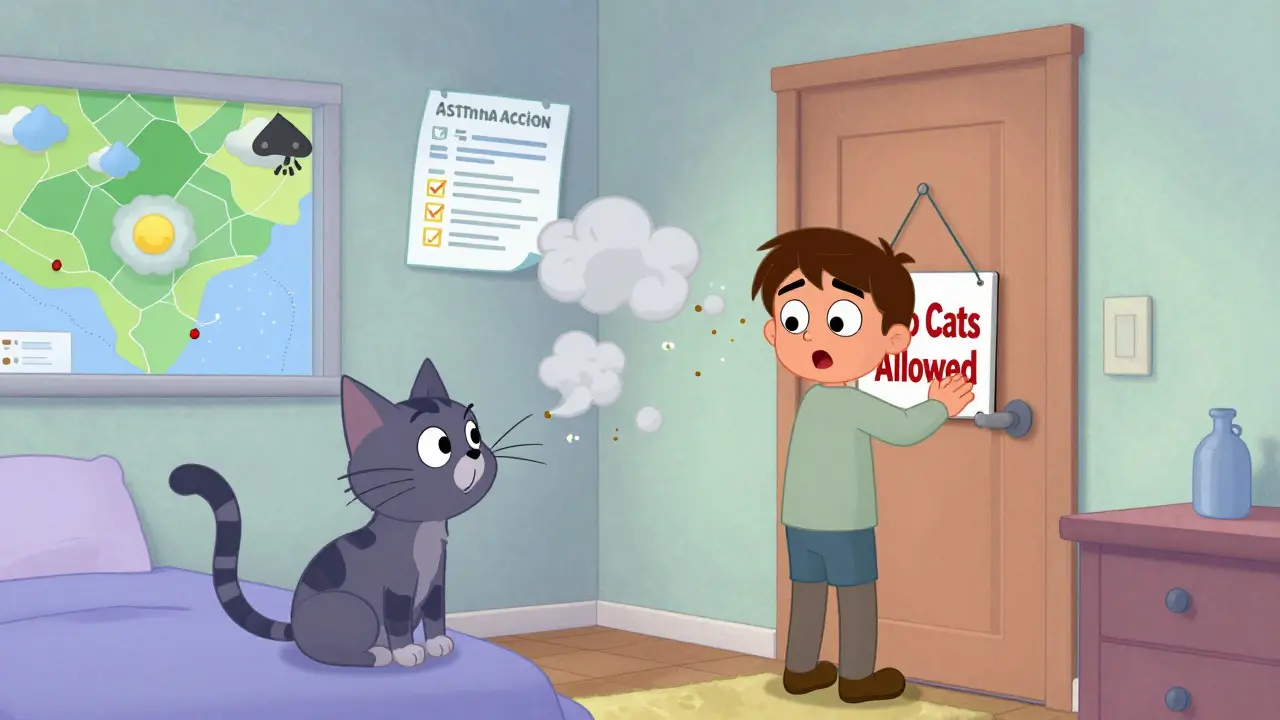
Here’s what the 2025 guidelines say: if you have persistent asthma, get tested for allergies. Skin prick or blood tests can find out if dust mites, pet dander, or mold are making your asthma worse. You might be surprised. A woman in Melbourne I spoke with thought her asthma was weather-related. Turns out, her cat was the main trigger. Once she stopped letting the cat sleep in the bedroom, her nighttime symptoms vanished.
Other common triggers:
- Air pollution - especially ozone and PM2.5. On high-pollution days, keep windows closed and avoid outdoor exercise.
- Smoke - cigarettes, vaping, wood fires. Even secondhand smoke can trigger an attack.
- Weather changes - cold air, humidity spikes, thunderstorms. Cold air causes bronchospasm. If you go out in winter, cover your nose and mouth with a scarf.
- Exercise - yes, even athletes get exercise-induced bronchoconstriction. But it’s manageable. Use your ICS-formoterol inhaler 10-15 minutes before working out. Don’t skip your controller meds.
- GERD - acid reflux. If you have heartburn and asthma, treating one helps the other. Elevate your head while sleeping. Avoid large meals before bed.
Don’t just avoid triggers - measure them. Keep a simple log: date, symptoms, what you were doing, what you were around. Patterns emerge. You’ll start to see which days are safe and which aren’t.
Long-Term Management: It’s Not Just Medication
Asthma control isn’t a one-time fix. It’s a rhythm. You need three things: consistent meds, trigger awareness, and a plan.
The Asthma Control Test (ACT) is a quick, free tool. It’s five questions:
- In the past 4 weeks, how often has your asthma prevented you from doing normal activities?
- How often have you had shortness of breath?
- How often have you woken up at night because of asthma?
- How often have you used your rescue inhaler?
- How would you rate your asthma control overall?
Score 20-25? You’re well-controlled. 15-19? Partially controlled. Under 15? You need a plan change. Bring this score to every appointment.
And yes - you should have a written asthma action plan. Not a vague reminder. A real, personalized document. It should say:
- Which meds to take daily
- When to increase dose (e.g., “If symptoms worsen, take 2 extra puffs of ICS-formoterol”)
- When to call your doctor (e.g., “If you need your rescue inhaler more than twice a week, call”)
- When to go to the ER (e.g., “If you’re too breathless to talk, go now”)
Most clinics give these out. If yours doesn’t, ask. It’s standard care.
When to Step Up - and When to Step Down
Asthma isn’t static. Your needs change. If you’ve been stable for 3 months - no symptoms, no rescue use, no nighttime waking - you can step down. Not stop. Step down.
Guidelines say reduce your ICS dose by 25-50%. If you’re on 2 puffs of 100 mcg twice daily, try 1 puff. Monitor for 3 months. If you stay stable, try going lower. Some people can eventually switch to ICS-formoterol only as needed. But never stop ICS completely unless your doctor says so.
For those with severe asthma, adding a LAMA (like tiotropium 18 mcg once daily) may help. It’s not for everyone. But if you’re on high-dose ICS and LABA and still struggling, it’s an option. Blood eosinophils above 300 cells/μL or FeNO over 50 ppb can help guide this decision. These tests aren’t routine - but they’re worth asking about if you’re not improving.

What About Digital Tools and Apps?
You’ve probably seen asthma apps. Track symptoms. Log triggers. Remind you to take meds. Sounds great, right?
Here’s the truth: the NHLBI says there’s not enough evidence to recommend them. They don’t improve outcomes more than good old-fashioned care. That doesn’t mean they’re useless. But if you’re relying on an app instead of seeing your doctor, you’re missing the point.
Focus on the basics: proper inhaler use, consistent meds, trigger avoidance, and regular check-ins. Technology can help - but it can’t replace them.
Final Thought: Asthma Is Manageable - But Not Ignorable
You don’t have to live with wheezing. You don’t have to avoid the gym, the park, or even a cold winter day. The tools are here. The guidelines are clear. The science is solid.
Stop using your blue inhaler alone. Start using an ICS-containing inhaler daily - even if you feel fine. Learn your triggers. Use your action plan. Get tested if you’re not improving. And never, ever assume your asthma is "mild" just because you don’t have symptoms every day.
Asthma control isn’t about perfection. It’s about consistency. And with the right approach, you can live - fully - without limits.
Just wanted to say how much this resonated. I’ve been on budesonide-formoterol for a year now, and honestly? My life changed. Used to wake up gasping three nights a week. Now? I hiked 8 miles last weekend in the mountains and didn’t touch my inhaler. The technique tips? Game-changer. I didn’t even know I was breathing wrong until my nurse showed me the spacer trick. Rinsing after? I do it like a ritual now. No more thrush. No more panic. This isn’t just medical advice-it’s freedom.
ok so i just read this whole thing and i’m crying?? not because it’s sad but because i finally feel like someone gets it. i used to think my asthma was just ‘bad allergies’ until i started using my inhaler right and realized i’d been holding my breath wrong for 12 years. also i have a cat and i used to think she was my best friend but now i know she’s my trigger lol. i moved her out of the bedroom and i’ve slept through the night for the first time since college. also i’m gonna start logging stuff like the article said. maybe i’ll make a chart. or a mood board. idk. but this felt like a hug from a very smart doctor.
This article reads like a pharmaceutical brochure. SABA-only treatment is dangerous? That’s not science-that’s marketing. I’ve been using albuterol for 20 years and I’m still breathing. The guidelines change every five years because someone’s stock portfolio needs a boost. And don’t get me started on the ‘ICS-formoterol combo’-it’s twice the cost and twice the side effects. You’re being sold a lifestyle, not a cure.
USA rules. 🇺🇸 We got the best asthma care in the world. Why are we listening to GINA? They’re some EU group. My VA doc told me to stick with my blue inhaler and stop worrying. Also, I don’t need no dang spacer. I got lungs. I got grit. I got freedom. 🤝💪
How quaint. You’re all acting like this is revolutionary. I’ve been managing asthma since before the 2019 guidelines were drafted. The fact that you need a 2,000-word essay to explain how to use an inhaler speaks volumes. Also, ‘rinse your mouth’? Really? That’s the headline? And you think people don’t know about triggers? I’ve been tracking my pollen count since 2003. This reads like a pamphlet from a 1998 asthma support group. Please. Just… stop.
Appreciate the clarity. I’ve been using my inhaler wrong for years. Didn’t realize the DPI needed a hard inhale. Thought I was broken. Turns out I was just breathing too gently. Simple fix. Also, the ACT test is genius. Took it last week. Scored 17. Went to my doc. We adjusted my dose. No drama. No panic. Just smart care.
My wife has asthma and I’ve been reading everything I can to help. This is the first time I’ve seen a guide that actually makes sense without being condescending. The spacer tip? I’m showing her tonight. The action plan? I’m printing it. And yeah, I’m gonna start asking about eosinophils next visit. Thanks for writing this like a human.
Think about it-asthma is just your body screaming that modern life is toxic. The inhalers? Band-aids on a sinking ship. The real trigger? Industrial air. Glyphosate. EMFs. The government doesn’t want you to know that. They profit off your dependency. I stopped using inhalers entirely. Now I breathe raw honey, meditate in forests, and chant mantras. My lungs are cleaner than yours. Just saying.
Wait… so… the VA and GINA are in cahoots? And the ‘ICS-formoterol’ combo… is that really not just a stealth way to push Big Pharma profits? I read somewhere that formoterol is linked to increased cardiac events in people over 65. And what about the aluminum in spacers? Did you know aluminum accumulates in the brain? And why do they always say ‘rinse your mouth’ but never mention the fluoride in the water that’s making your thyroid swell? I’ve been keeping a log since 2017… and I think this is all a cover-up. Someone’s watching. They’re always watching.