
Calcium and Iron Supplements with Medications: Absorption Problems
Medication Timing Calculator
Select Your Medication
Take Calcium or Iron?
Timing Results
Please select medication type and supplements to see timing recommendations.
How It Works
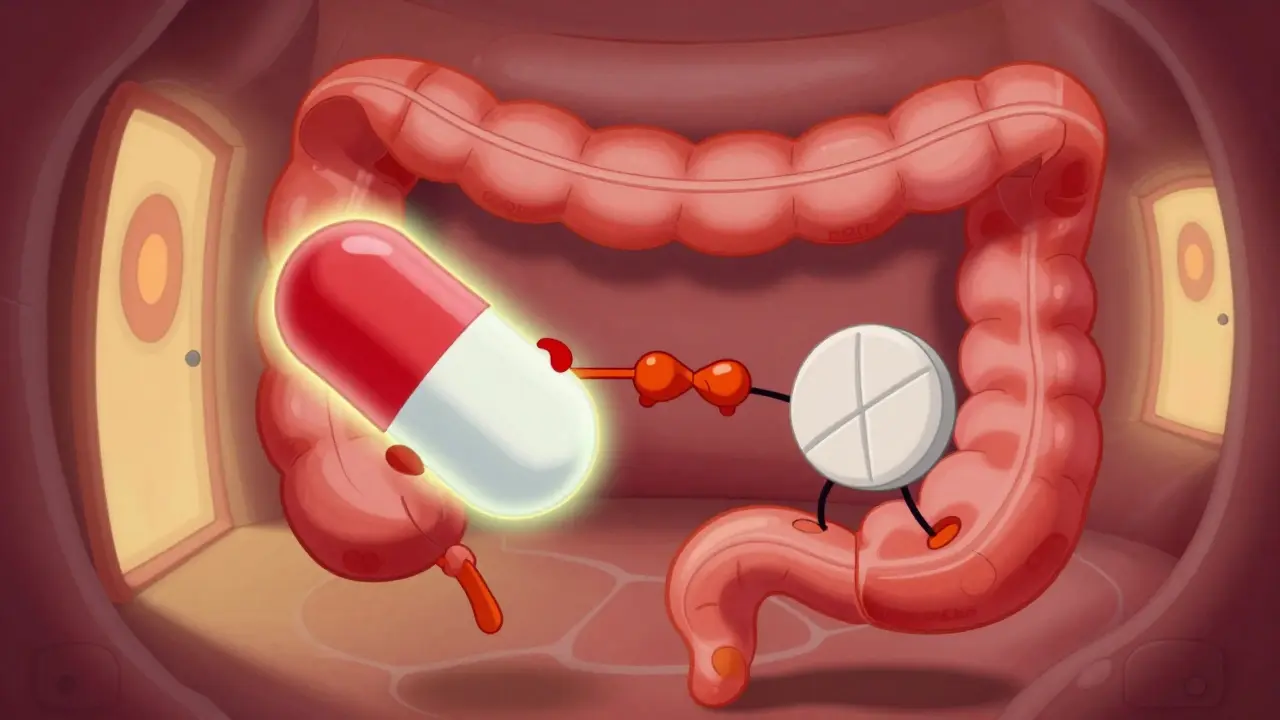
Calcium and iron compete for absorption in your gut. Taking them together or too close in time reduces effectiveness of both supplements and medications.
Green = Safe absorption | Yellow = Partial interference | Red = Maximum interference
Many people take calcium and iron supplements to support bone health or fight anemia. But what if those same supplements are quietly sabotaging your medications? It’s not a myth. Calcium and iron can seriously reduce how well your body absorbs antibiotics, thyroid meds, and even heartburn drugs - sometimes cutting absorption by more than half. If you’re taking any of these, timing matters more than you think.
How Calcium Blocks Iron Absorption
Calcium and iron don’t just coexist in your gut - they fight over the same doorway to your bloodstream. Both use the same transporters in your small intestine to get absorbed. When you take calcium and iron together, calcium wins. A 1991 study from the American Journal of Clinical Nutrition found that a 600 mg dose of calcium - common in one tablet - cut iron absorption by up to 62%. That’s not a small drop. For women who need 18 mg of iron daily, regularly taking calcium with meals can make it nearly impossible to meet that need.
It gets worse. Calcium carbonate, the most common form of calcium supplement (think Tums), also acts like an antacid. It raises the pH in your stomach, making it less acidic. Iron, especially non-heme iron from supplements and plants, needs acid to dissolve and be absorbed. No acid? No iron. One study showed iron absorption from a meal dropped from 10.2% to just 4.8% when calcium was added. Even if you take calcium and iron hours apart, if you take calcium with food, it can still linger in your gut long enough to interfere.
Iron and Antibiotics: A Dangerous Mix
If you’re on antibiotics like ciprofloxacin (Cipro) or doxycycline, taking iron at the same time is like pouring water on a fire. These antibiotics belong to two families - fluoroquinolones and tetracyclines - and both bind tightly to iron (and calcium, and aluminum). The result? The antibiotic gets trapped in your gut and never enters your bloodstream. You might feel better after a few days, but the infection could still be there, lurking.
Pharmacists at major clinics warn that patients on these antibiotics often don’t realize their iron supplement is making the drug useless. A 2022 report from Business Insider quoted a pharmacist saying: “If a patient’s taking antibiotics for an infection, but they’re taking it in conjunction with calcium supplements, it can block the absorption of those antibiotics, and they may not get the adequate levels that they need to manage that infection.”
MedlinePlus recommends waiting at least two hours between iron supplements and these antibiotics. But for tetracyclines specifically, GoodRx advises an even wider gap: take the antibiotic at least two hours before or four hours after the iron pill. That’s not just a suggestion - it’s the difference between treatment success and failure.
Other Medications That Get Blocked
It’s not just antibiotics. Iron and calcium can mess with a whole list of common drugs.
- Levothyroxine (for hypothyroidism): Calcium, magnesium, and iron all block thyroid hormone absorption. One study found patients taking levothyroxine with calcium supplements had up to 30% lower hormone levels. The fix? Take thyroid meds first thing in the morning on an empty stomach, and wait at least four hours before taking any mineral supplement.
- Bisphosphonates (for osteoporosis): Drugs like alendronate (Fosamax) need an empty stomach and plain water to be absorbed. Calcium supplements, even a few hours later, can interfere. Take these meds first thing in the morning, wait 30 minutes before eating or drinking anything else, and don’t take calcium until at least two hours after.
- Heartburn meds: Proton pump inhibitors (omeprazole, pantoprazole) and H2 blockers (famotidine) reduce stomach acid. Less acid means less iron absorption. If you’re on these long-term and also taking iron, you might develop deficiency even if you’re getting enough iron in your diet.

Why Timing Isn’t Just a Suggestion
Most people think “take with food” or “take on an empty stomach” is just about avoiding nausea. But for iron and calcium, it’s about chemistry.
Iron is best absorbed on an empty stomach. That’s why most labels say “take one hour before or two hours after meals.” But for many, that causes stomach cramps, nausea, or diarrhea - up to half of users report these side effects. So what’s the workaround? Take iron with a small amount of food - like a few crackers - but avoid dairy, whole grains, coffee, or tea. And always pair it with vitamin C. One study showed vitamin C boosted iron absorption by up to 300%. Orange juice, a bell pepper, or even a 250 mg vitamin C tablet with your iron pill can make a huge difference.
Calcium, on the other hand, absorbs better with food. So if you need both, the smartest move is to take iron in the morning on an empty stomach with vitamin C, and calcium at dinner. That gives you at least a 6-hour gap - enough time for both to be absorbed without competing.
What About Food?
Even without supplements, your diet can interfere. A breakfast of fortified cereal (high in iron) with milk (high in calcium) might seem healthy - but it’s a double whammy for absorption. One study found that a meal with low iron but high calcium blocked iron absorption by 55%. A meal with high iron and low calcium? Only 28% blocked. So if you’re at risk for iron deficiency, avoid pairing iron-rich foods (spinach, lentils, red meat) with calcium-rich ones (milk, yogurt, cheese) in the same meal.
And don’t forget tea, coffee, and red wine. They contain tannins and polyphenols that bind to iron and reduce absorption. If you drink coffee with breakfast, you’re probably not absorbing much of the iron in your eggs or toast.

Who’s Most at Risk?
Not everyone is equally affected. Women of childbearing age, pregnant people, vegetarians, and older adults are most vulnerable. Women need more iron (18 mg/day) and often take calcium for bone health. If they’re taking both at the same time - say, a multivitamin with iron and a calcium tablet after dinner - they’re setting themselves up for deficiency. The American Journal of Clinical Nutrition study concluded that regular calcium supplementation with meals makes it harder for women to meet their daily iron needs.
Older adults on multiple medications - thyroid meds, antibiotics, heartburn drugs - are another high-risk group. Many don’t realize their supplements are working against their prescriptions. And children? Iron overdose is the leading cause of fatal poisoning in kids under six. Keep supplements locked away.
Practical Rules to Follow
Here’s what works in real life, based on clinical guidelines:
- Take iron first thing in the morning - on an empty stomach, with vitamin C (orange juice or a supplement).
- Wait at least 2 hours before taking calcium, antacids, or thyroid meds.
- Take calcium at dinner - with food, not with iron.
- Avoid coffee, tea, and dairy within two hours of taking iron.
- For antibiotics like Cipro or doxycycline, take them 4 hours before or 2 hours after any calcium or iron supplement.
- Use a straw for liquid iron to avoid staining teeth. Rinse mouth afterward.
If you’re unsure, write down your daily supplement and medication schedule. Bring it to your doctor or pharmacist. A simple 10-minute chat can prevent months of fatigue, brain fog, or recurring infections.
Watch for Warning Signs
Iron supplements can cause black stools - that’s normal. But if your stool is tarry, has red streaks, or you feel dizzy or weak, get checked. That could mean internal bleeding. And if you’re taking iron and still feel tired, weak, or short of breath, your body might not be absorbing it. Ask for a serum ferritin test - it’s the best way to measure your iron stores.
And if you have kids? Keep all supplements out of reach. A single iron pill can be deadly to a child under six. Poison control centers in the U.S. handle thousands of cases each year.
Can I take calcium and iron together if I space them out by a few hours?
No - even if you take them hours apart, if you take calcium with food, it can still interfere with iron absorption later in the day. The best practice is to take iron in the morning on an empty stomach and calcium at night with food. That creates a 6-8 hour gap, which gives each mineral time to be absorbed without competition.
Does vitamin C really help iron absorption?
Yes - dramatically. Studies show vitamin C can boost iron absorption by up to 300%. A small glass of orange juice or a 250 mg vitamin C tablet taken with your iron pill makes a measurable difference. This works especially well for non-heme iron from supplements and plant-based foods.
Can I take iron with my multivitamin?
Only if the multivitamin doesn’t contain calcium, magnesium, or zinc. Most multivitamins include calcium, which blocks iron. If you need both, take your iron separately - ideally on an empty stomach - and take the multivitamin at a different time of day.
Why do some iron supplements cause stomach upset?
Iron on an empty stomach can irritate the gut lining, causing nausea, cramps, or constipation. About 30-50% of people experience this. If you can’t tolerate it, take iron with a small amount of food - not dairy or fiber-rich foods. Avoid taking it with coffee, tea, or calcium.
Should I stop taking calcium if I’m anemic?
No - calcium is still important for bone health. But you need to change when you take it. Take calcium at night with dinner, and iron in the morning on an empty stomach. This simple timing shift solves the problem without cutting out either supplement.
i just take my iron with orange juice and call it a day 🍊✨ no more tiredness, no more brain fog. why make it complicated?
The body is not a machine with isolated inputs. It's a dynamic system where chemistry, timing, and individual physiology intersect. Simply spacing doses doesn't always resolve interference. Some people absorb differently. Always test serum ferritin and TSH if you suspect interaction.
THIS IS WHY BIG PHARMA WANTS YOU TO TAKE SUPPLEMENTS TOGETHER!! They profit off your fatigue, your anemia, your thyroid chaos!! They don't want you to know calcium and iron are NATURAL COMPETITORS-this is all engineered! Read the 1991 study again-see how they buried the truth? Wake up!!
Haha yeah I used to take my iron with my calcium pill like a dummy. Then I got so dizzy I thought I was gonna pass out. Now I do iron at 7am with OJ, calcium at 8pm. Life changed. Also, coffee = iron assassin. I quit morning coffee. No regrets.
In many traditional Indian households, we eat dal with yogurt. This practice, while culturally meaningful, may inadvertently reduce iron bioavailability. Perhaps there is wisdom in adapting ancient dietary patterns with modern science-without discarding either.
I find it deeply concerning that the medical establishment continues to promote ‘take with food’ as a universal directive, when the evidence clearly shows that for iron, this is often counterproductive. Your body’s chemistry does not care about your convenience.
I used to be one of those people who took everything at once because ‘it’s easier’-until I started passing out in the shower. Now I have a whole system: iron at sunrise with vitamin C, calcium at dinner, thyroid med on empty stomach, and NO TEA OR COFFEE UNTIL 2PM. I’m not a genius, I just stopped being lazy. Also, if you’re still tired after all this? Get a ferritin test. Seriously. Don’t just ‘feel better.’ Measure it.
I read this and I’m like… why are we even taking supplements? Isn’t the whole point of food to give us nutrients? Why are we turning our bodies into chemistry labs? Just eat a steak and chill.
Simple rule: iron in morning on empty stomach with vitamin C. Calcium at night. Everything else at least 2 hours away. Done.
I must emphasize that the pharmacokinetic interactions described herein are not merely theoretical; they are empirically validated and clinically significant. One must exercise rigorous temporal separation between mineral supplements and pharmaceutical agents to ensure therapeutic efficacy. Failure to do so constitutes a deviation from standard of care.
Wait… so this is why my neighbor’s daughter got sick after her vaccine? She took calcium with her iron! It’s all connected! Big Pharma + GMO calcium + fluoride water = suppressed immunity! I told them to stop ALL supplements and drink only spring water from the Himalayas. They’re better now… I think.
You people are missing the point entirely. The real issue is not the timing-it’s the form. Ferrous sulfate is a crude, irritating compound. Use ferrous bisglycinate. It bypasses the absorption competition entirely. And for calcium, avoid carbonate. Use citrate. This isn’t about rituals. It’s about molecular bioavailability. Educate yourselves.
i heard calcium makes you gain weight? and iron makes you poop black? so if you take both together you get fat and poopy? sounds like a win-win to me 😎