
Clinical Trial Data vs Real-World Outcomes: Key Differences That Matter
Clinical Trial Eligibility Calculator
Based on research showing only 20% of real-world patients qualify for clinical trials, this tool estimates how specific patient characteristics affect eligibility. Enter your profile below to see how many patients would be excluded from trials.
Only 20% of real-world patients qualify for clinical trials
Based on 2023 NEJM study showing high exclusion rates
70% of adults over 65 have 3+ chronic conditions
But often excluded from trials
Black patients excluded at 30% higher rates
Due to systemic barriers, not disease
Your Eligibility Estimate
Why this matters:
Clinical trials often exclude patients with multiple conditions or older adults. This means trial results may not reflect real-world outcomes for the majority of patients.
When a new drug hits the market, you hear about its success based on clinical trials. But what happens when that same drug is used by millions of real patients-people with other health problems, different lifestyles, and no research team watching their every move? The results often don’t match.
Why Clinical Trials Don’t Tell the Whole Story
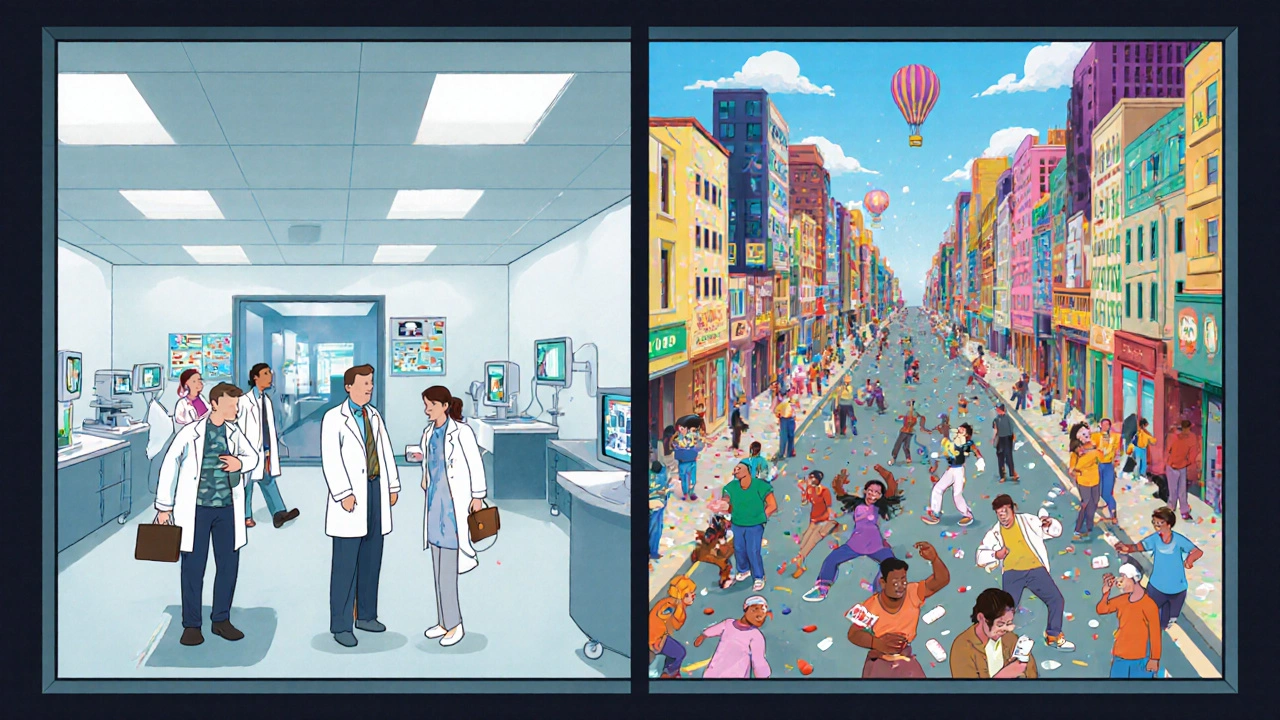
Clinical trials are designed to answer one clear question: Does this treatment work under perfect conditions? To get that answer, researchers control everything-patient selection, dosing, follow-up schedules, even what other medications people can take. That’s why they’re the gold standard for approval. But here’s the catch: the people in these trials aren’t like most patients. A 2023 study in the New England Journal of Medicine found that only 20% of cancer patients seen in real clinics actually qualified for the trials testing the drugs they were prescribed. Why? Too many other health issues. Too old. Too overweight. Too many medications. Even race played a role-Black patients were excluded at rates 30% higher than White patients, not because of their disease, but because of systemic barriers like transportation, work schedules, or distrust in the system. These trials also exclude people with kidney or liver problems, diabetes, or heart conditions. In real life, 70% of adults over 65 have at least three chronic conditions. But in trials, they’re often left out. So when a drug says it reduces tumor size by 40% in a trial, that number might not mean much for someone with diabetes, high blood pressure, and arthritis.What Real-World Outcomes Actually Show
Real-world outcomes come from everyday practice. They’re pulled from electronic health records, insurance claims, wearable devices, and patient registries. These sources track over 270 million Americans through systems like Optum and IQVIA. Unlike trials, real-world data doesn’t care if you’re healthy-it cares if you’re alive, functioning, and not in the hospital. A 2024 study in Scientific Reports compared 5,734 diabetic kidney disease patients from clinical trials with 23,523 from real-world records. The differences were stark. Trial data was collected every 3 months, perfectly timed. Real-world data? It came whenever someone visited a doctor-sometimes every 2 months, sometimes every 8. Completeness? Trial data had 92% of the key measurements. Real-world? Only 68%. That’s not a flaw-it’s reality. People miss appointments. They don’t always take their pills. They get sick with something else. And that’s exactly why real-world outcomes matter. They show you what happens when the drug leaves the lab and enters the messy world of human life. A drug might lower blood pressure in a trial, but in the real world, it might cause dizziness that leads to falls in elderly patients. That’s not a failure of the drug-it’s a failure of the trial to reflect real life.The Hidden Gaps Between Trials and Reality
The biggest gap isn’t in the numbers-it’s in the assumptions. Clinical trials assume patients will follow instructions perfectly. Real life doesn’t. People forget pills. They can’t afford them. They don’t have transportation to clinics. They’re scared of side effects. These aren’t minor details-they’re the reason some drugs that work in trials fail in practice. Take a drug approved for advanced lung cancer. In a trial, patients are carefully selected: younger, no other diseases, good liver function. They get the drug on schedule. They’re monitored weekly. In the real world, a 72-year-old with heart disease and a part-time job might get the drug every 6 weeks instead of every 3. They skip doses when they’re too tired. They stop taking it when their insurance denies coverage. The drug’s effectiveness? It drops. Not because the drug changed-but because the conditions changed. And then there’s bias. Real-world data is messy. People who use certain drugs might be wealthier, healthier, or more connected to care. Those who don’t? They might be uninsured, undocumented, or living in rural areas. Without careful statistical tools-like propensity score matching-researchers can’t tell if a drug worked, or if the people who took it were just more likely to survive anyway.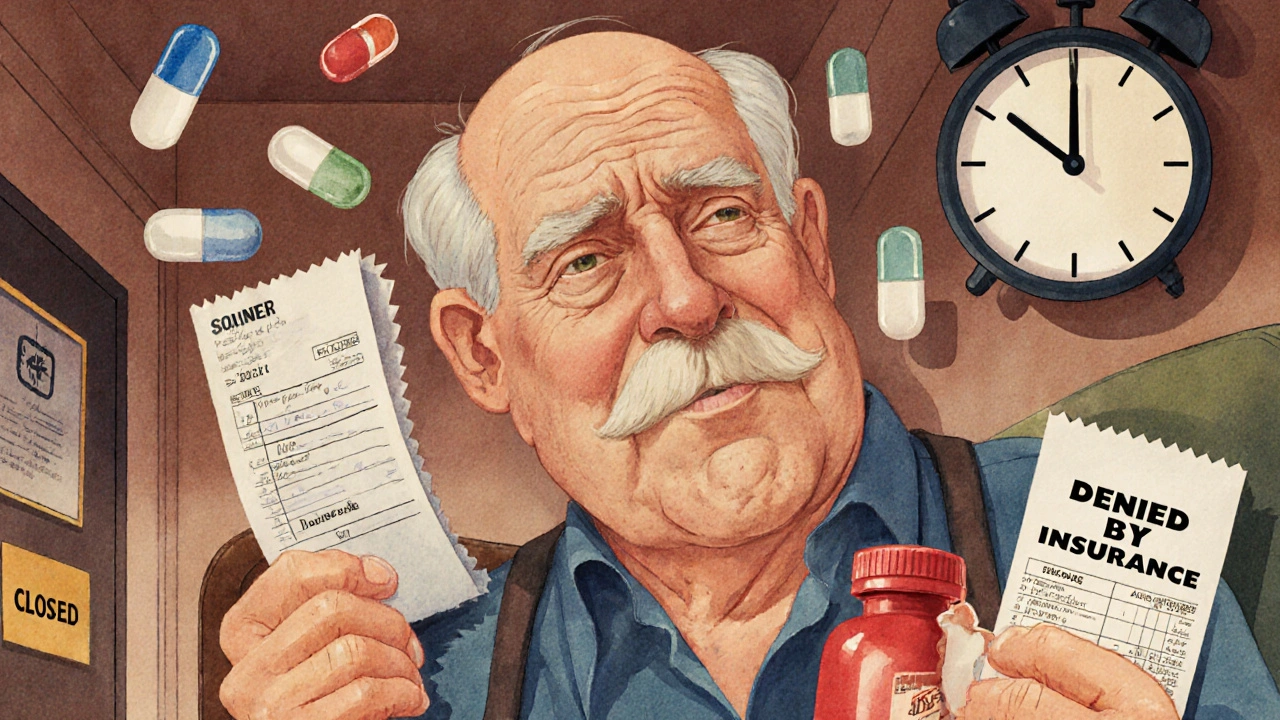
How Regulators Are Catching Up
The FDA didn’t start taking real-world data seriously until 2016, with the 21st Century Cures Act. Since then, they’ve approved 17 drugs partly based on real-world evidence-up from just one in 2015. The European Medicines Agency (EMA) is even further ahead: 42% of their post-approval safety studies now use real-world data, compared to 28% at the FDA. But regulators aren’t throwing out clinical trials. Dr. Robert Califf, former FDA commissioner, made it clear: “Real-world evidence can complement traditional clinical trial data, but it cannot replace the rigor of randomized controlled trials for initial efficacy determinations.” Trials still answer the first question: Does it work? Real-world data answers the second: Does it work for people like me? Now, hybrid trials are emerging. The FDA’s 2024 draft guidance encourages designs that mix both approaches-using trials to prove safety and real-world data to show how it performs in diverse populations. This isn’t about choosing one over the other. It’s about using both.Why Real-World Data Is Growing Fast
The global real-world evidence market is projected to grow from $1.84 billion in 2022 to $5.93 billion by 2028. Why? Because everyone’s asking the same question: Is this worth the cost? Insurance companies like UnitedHealthcare and Cigna now require real-world data before covering expensive new drugs. Oncology leads the way-45% of real-world studies focus on cancer, because trials there are expensive, slow, and often unethical (you can’t give a placebo to someone with terminal cancer). Rare diseases? 22% of RWE studies-because you can’t recruit enough patients for a traditional trial. Companies like Flatiron Health spent 5 years and $175 million building a database of 2.5 million cancer patients across 280 clinics. Roche bought them for $1.9 billion. That’s not just a business deal-it’s proof that real-world data has value.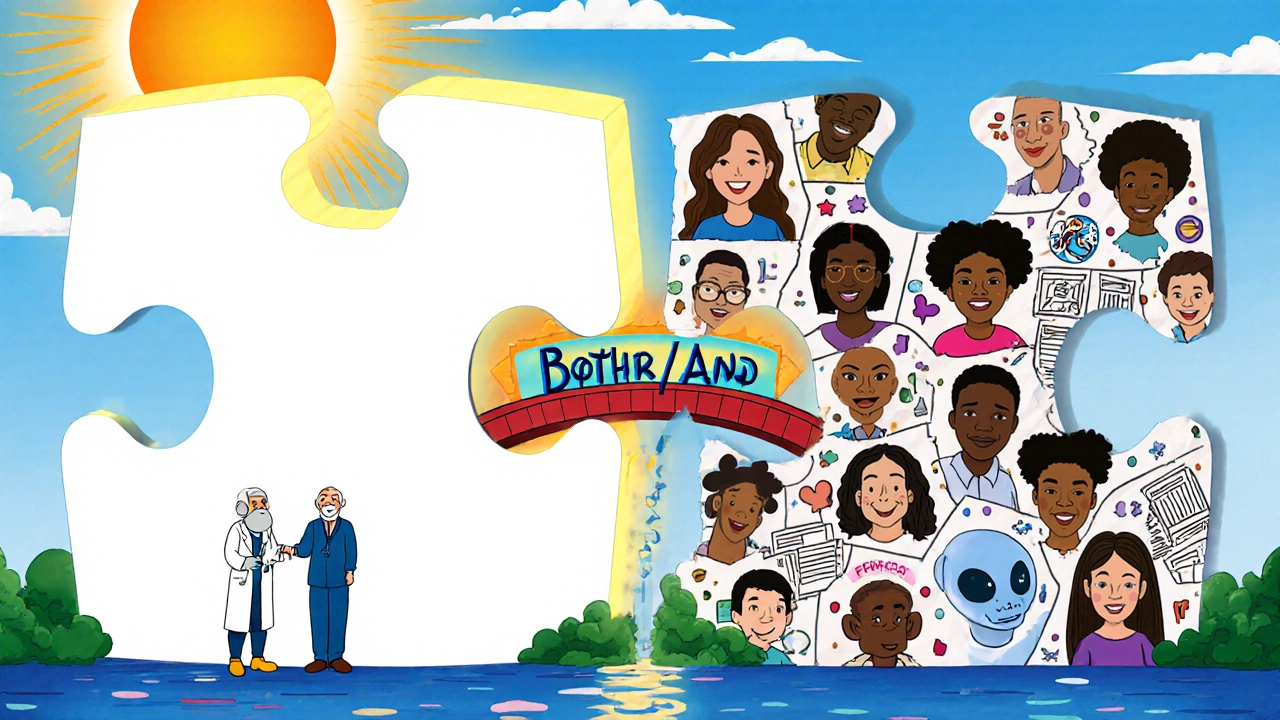
What’s Holding Real-World Data Back
Despite the growth, real-world data still has big problems. The U.S. has over 900 different electronic health record systems that don’t talk to each other. Data is fragmented. Privacy laws like HIPAA and GDPR make sharing hard. Only 35% of healthcare organizations have teams trained to analyze this data properly. And then there’s reproducibility. A 2019 Nature study found only 39% of real-world studies could be repeated because the methods weren’t clear enough. Some studies claimed a drug worked-others said it didn’t. Same data. Different analysis. That’s why the 2022 VALID Health Data Act is trying to set standards for quality and transparency. Dr. John Ioannidis from Stanford warns that the rush to use real-world data has outpaced the science. He’s seen cases where RWE studies contradicted clinical trials-not because the trials were wrong, but because the real-world analysis missed key confounders.The Future: Not Either/Or, But Both/And
The future isn’t clinical trials or real-world outcomes. It’s clinical trials and real-world outcomes working together. Trials tell you what a drug can do. Real-world data tells you what it actually does. One is a controlled experiment. The other is a live observation. You need both. AI is helping bridge the gap. Google Health’s 2023 study showed AI could predict treatment outcomes from EHR data with 82% accuracy-better than traditional trial analysis. That’s not replacing trials. It’s making them smarter. The NIH’s HEAL Initiative, with $1.5 billion, is using real-world data to find alternatives to opioids. Pfizer and other drugmakers now design trials using real-world data to pick patients more likely to respond-cutting trial size by 15-25% without losing accuracy. This isn’t a revolution. It’s an evolution. The goal isn’t to ditch the old system. It’s to fix its blind spots.What This Means for Patients
If you’re taking a new drug, don’t assume the trial results are your results. Ask your doctor: “Was this tested on people like me?” If the answer is no, ask what the real-world data says. Doctors need both sets of data. Trials give them confidence. Real-world outcomes give them context. Together, they help make better decisions-not just about drugs, but about lives. The truth is simple: medicine isn’t perfect. Neither are trials. Neither is real-world data. But when you use them together, you get closer to the truth than either one alone.Why do clinical trials exclude so many patients?
Clinical trials exclude patients to reduce variables and make results clearer. They often remove people with other health conditions, older adults, or those taking multiple medications. This helps researchers see if the drug works under ideal conditions. But it also means the results don’t reflect how most people actually use the drug in real life.
Can real-world data replace clinical trials?
No. Real-world data can’t replace clinical trials for proving a drug is safe and effective for the first time. Trials use randomization and control groups to isolate the drug’s effect. Real-world data shows how the drug performs in messy, everyday conditions-but it can’t prove cause and effect the same way. Both are needed.
Why is real-world data considered less reliable?
Real-world data isn’t collected under controlled conditions. Patients miss appointments, forget meds, or get other treatments. Data is incomplete, inconsistent, and often biased. Without advanced statistical tools to adjust for these issues, results can be misleading. That’s why quality control and transparency are critical.
How do insurance companies use real-world outcomes?
Insurance companies use real-world data to decide whether to cover expensive drugs. If a drug works well in trials but real-world data shows it leads to more hospital visits or side effects in older patients, insurers may limit coverage. About 78% of U.S. payers now use real-world evidence in formulary decisions.
What’s the biggest challenge in using real-world data?
The biggest challenge is data fragmentation. There are over 900 different electronic health record systems in the U.S., and most don’t share data. Privacy laws, lack of standardization, and limited expertise make it hard to combine and analyze data reliably. Only 35% of healthcare organizations have dedicated teams to handle it.
Are real-world studies faster and cheaper than clinical trials?
Yes. Clinical trials, especially Phase III, can cost $19 million and take 2-3 years. Real-world studies using existing data can be done in 6-12 months at 60-75% lower cost. But they require strong data infrastructure and analytics skills to avoid bias and errors.
Real-world data isn't perfect, but neither are trials. We've been pretending controlled environments reflect reality for decades. Time to stop pretending.
Big Pharma loves real-world data… until it shows their drug causes more falls in seniors. Then it’s ‘methodological flaws’ and ‘confounding variables.’ 🤡
clinical triels are a farce. they exclude everyone who actually needs the drug then act shocked when it doesnt work in the real world. also why is black people getting excluded? oh right capitalism.
The exclusion criteria in trials are statistically sound but ethically unsustainable. We optimize for internal validity at the cost of external applicability. That’s not progress-it’s myopia.
I love how we’re finally starting to listen to patients instead of just lab results. Real life isn’t a controlled environment-it’s messy, human, and real. Let’s design medicine for that.
My dad’s on a new cancer med. The trial said 40% tumor shrinkage. He got dizzy, missed two doses, and his insurance denied refills after month two. The ‘results’ didn’t mention any of that. We need better data-not just prettier graphs.
Trials measure efficacy… real-world data measures survival. One asks: ‘Does it work?’ The other asks: ‘Does it let them live?’ We’re treating numbers like they’re people. They’re not. People are.
It’s funny how we treat clinical trials like gospel and real-world data like gossip. But if you think about it, the gospel was written by a tiny subset of the population. The gossip? That’s everyone else talking after the fact. Maybe the gossip’s more honest.
My sister’s a nurse. She sees patients skip meds because they can’t afford them or don’t have rides. Trials don’t see that. Real life does. We need to stop pretending everyone’s got a research coordinator on speed dial.
Real-world evidence requires rigorous statistical adjustment to account for selection bias, confounding, and missing data. Without proper methodology, conclusions are misleading. We must prioritize analytical transparency over speed.
What if the real failure isn’t the trial or the real-world data-but our belief that medicine can be reduced to a single number? We want a 40% reduction. A 92% data completeness. A clean answer. But human bodies don’t work like that. They’re messy. They’re inconsistent. They’re alive. Maybe we’re asking the wrong question entirely. Maybe we need to stop chasing perfect data and start accepting imperfect people.