
Cost Barriers to Medication Adherence and How to Get Help
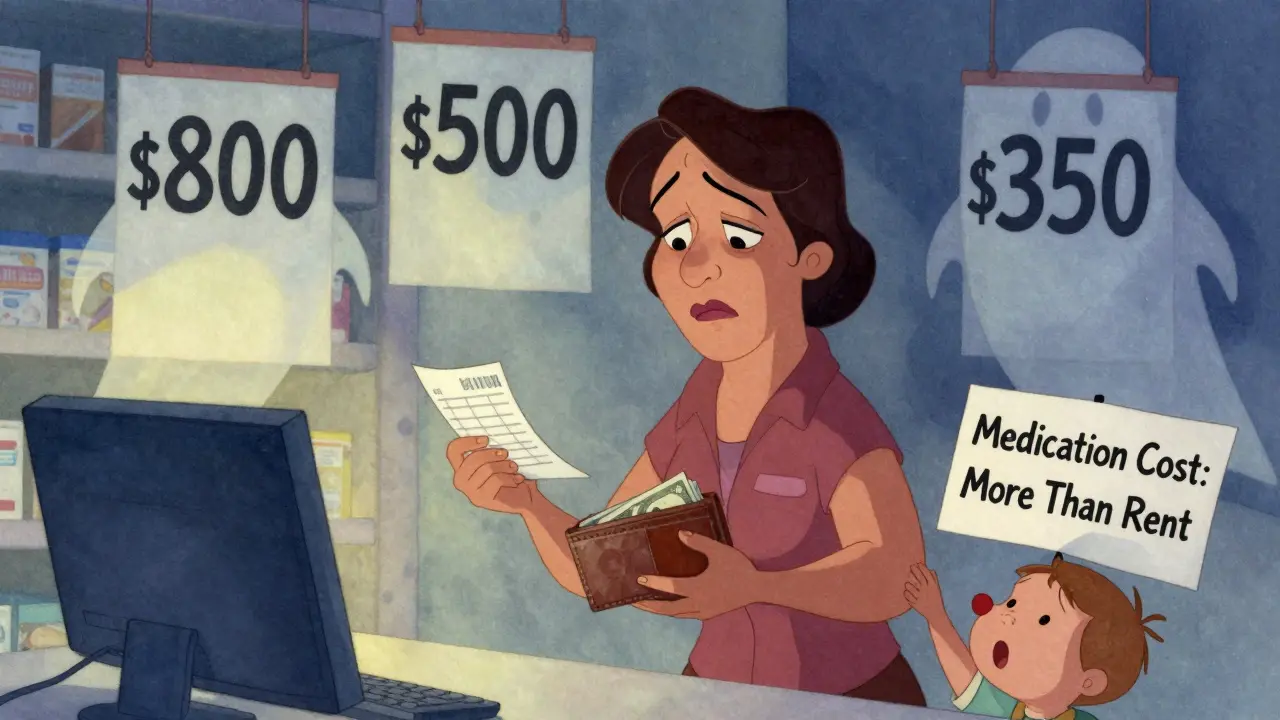
Every year, medication adherence fails for millions of people-not because they don’t care, but because they can’t afford it. You take your pills every day. You know they’re important. But when the pharmacy bill hits $200 for a 30-day supply, and you’ve already skipped lunch this week to make rent, what do you do? Skip a dose? Split a pill? Delay refilling? These aren’t choices people make lightly. They’re survival tactics born out of broken systems.
Why Cost Stops People From Taking Their Medicine
The numbers don’t lie. In 2021, 8.2% of working-age adults in the U.S. didn’t fill a prescription or took less than prescribed because of cost, according to the CDC. That’s over 1 in 12 people. For older adults on Medicare, it’s even worse-14.4% reported skipping doses or delaying refills due to price. And it’s not just about insulin or cancer drugs. It’s blood pressure pills, cholesterol meds, diabetes treatments-everything you need to stay alive. A 2022 analysis of 71 studies found that 84% showed a direct link between higher out-of-pocket costs and worse adherence. When a copay jumps from $10 to $50, adherence drops by 15-20%. That’s not a small change. That’s someone going from taking their medicine 90% of the time to only 70%. And when adherence falls below 80%, your risk of hospitalization, complications, and death goes up dramatically. Cardiovascular medications are especially sensitive to cost. People with high blood pressure or heart disease are more likely to stop taking their pills when prices rise than those with diabetes or cancer. Why? Because the effects aren’t immediate. You don’t feel sick right away if you skip a beta-blocker. So you tell yourself, “I’ll skip today-I’ll be fine.” But over time, those skipped doses add up. That’s how you end up with a stroke or a heart attack. And it’s not just the price of the pill. It’s the whole system: deductibles, coinsurance, tiered formularies, surprise price changes at the counter. One patient told Kaiser Health News she pays $350 a month for her meds after Medicare Part D. That’s more than her monthly phone bill. She chooses between medicine and groceries. That’s not a lifestyle choice. That’s a public health crisis.Real People, Real Stories
Reddit threads are full of stories like this: “I’m on insulin. Insurance says my copay is $30. The pharmacy says $800. I split my vials in half and stretch them out.” Another: “I have asthma. My inhaler costs $400. I use an old one from 2020 that’s barely working.” These aren’t outliers. They’re the norm. A 2022 Sermo survey found that 41% of patients experienced “sticker shock” at the pharmacy-what their doctor said the cost would be, and what they actually paid, were wildly different. Doctors don’t always know the real price. Insurance networks change. Pharmacy rebates aren’t passed on. The system is opaque, and patients pay the price. One woman with type 2 diabetes went from taking her insulin only 60% of the time to 95% after enrolling in a manufacturer’s patient assistance program. Her cost dropped from $500 a month to $25. That’s not magic. That’s policy. That’s intervention.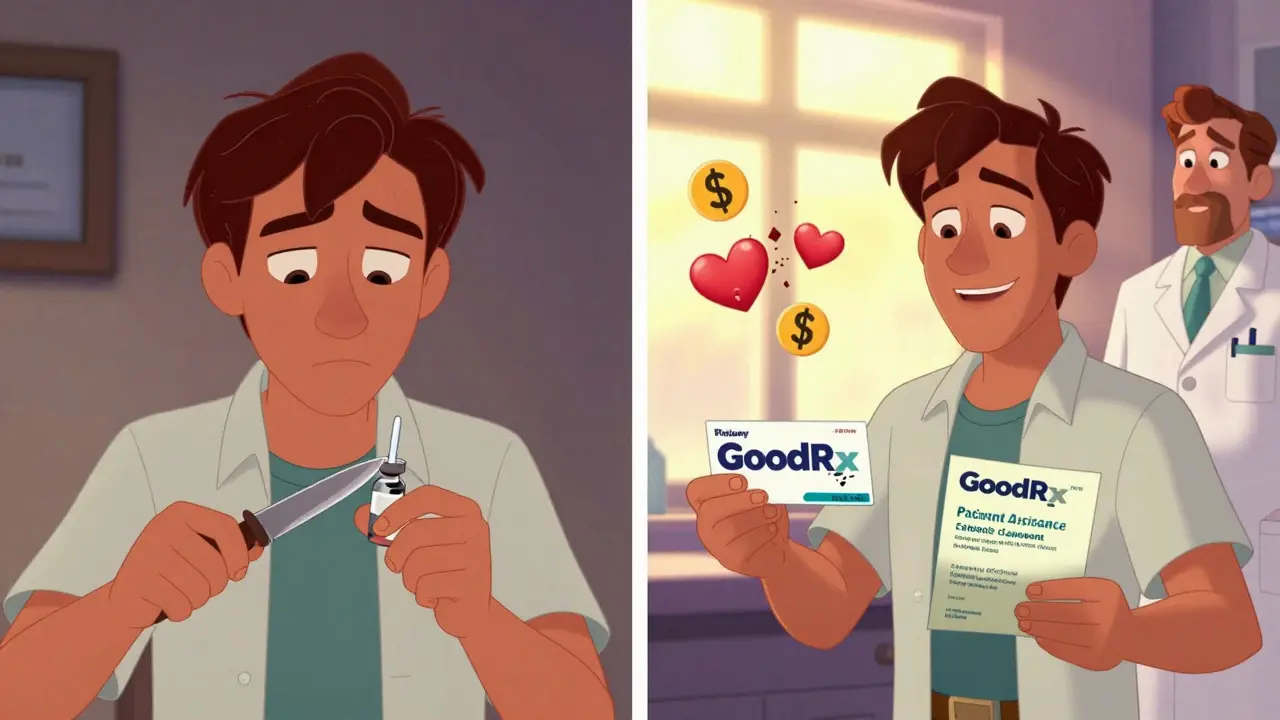
What You Can Do Right Now
You don’t have to accept this. There are real, working solutions-and they’re accessible if you know where to look. Ask your doctor before they write the script. The American Medical Association says doctors should check your insurance formulary before prescribing. If they don’t, ask: “Is there a cheaper alternative on my plan?” “Is there a generic?” “Can we try a 90-day supply?” Mail-order pharmacies often cut costs by 20-30% because you’re buying in bulk. A 90-day supply of metformin might cost $15 instead of $45 for three 30-day fills. Use GoodRx or SingleCare. These apps compare prices across local pharmacies. In 2023, 35 million Americans used them monthly. For many medications, they offer discounts of 50-80%. You don’t need insurance. You just need a phone. A 30-day supply of lisinopril? $4 at Walmart. $12 at CVS. $80 without a coupon. GoodRx shows you the lowest price nearby. Apply for patient assistance programs. Pharmaceutical companies run these for people who can’t afford their drugs. Eligibility is usually based on income under 400% of the federal poverty level ($55,520 for one person in 2023). These programs aren’t hard to get. You fill out a form, provide proof of income, and sometimes get your meds delivered for free or $5/month. In 2022, these programs helped 1.8 million Americans. The Partnership for Prescription Assistance can help you find the right one. Check if you qualify for Medicare’s Extra Help. If you’re on Medicare and have limited income, Extra Help covers up to $5,000 in annual drug costs. You might not even know you’re eligible. Apply through Social Security. It’s free. It takes 10 minutes. Ask for samples. About 32% of cost-conscious patients get free samples from their doctor. It’s not a handout-it’s a bridge. A sample of your blood pressure pill can get you through a tough month until you find a better price or get approved for assistance.What’s Changing in 2025 and Beyond
The Inflation Reduction Act is making real changes. Starting in 2025, Medicare Part D will cap out-of-pocket drug costs at $2,000 a year. That’s huge. Before, people could pay $10,000 in a bad year. The “donut hole” is gone. And for the first time, seniors can pay for high-cost meds in monthly installments instead of one big bill. More doctors are talking about cost. A 2023 Medscape survey found that 65% now routinely ask patients about affordability-up from 42% in 2019. That’s progress. But it’s not enough. Real-time benefit tools (RTBTs) are supposed to show doctors the exact price of a drug during the visit. But a 2022 study found 37% of those estimates were off by more than $10. The tech is there. The data isn’t reliable yet. Meanwhile, insulin prices are still 368% higher than they were in 2007, even though making it hasn’t gotten more expensive. Generic drugs are helping-1,123 were approved in 2022 alone. But many life-saving drugs still have no competition.
What This Means for You
You are not alone. You are not lazy. You are not failing. You’re caught in a system designed to profit from illness, not cure it. But you have power. Start by asking three questions:- Can this medication be replaced with a cheaper one on my plan?
- Can I get a 90-day supply through mail order?
- Is there a patient assistance program for this drug?
People keep saying 'just ask your doctor' like it's that simple. Doctors are overworked and paid by the system that's killing you. They don't know the real price either. I've had prescriptions changed mid-fill because the pharmacy got a new rebate deal. No one tells you. You just get charged more. And GoodRx? Try using it when your local pharmacy refuses to honor it because 'it's not insurance.' They laugh at you. Then you're stuck paying $80 for a pill that should cost $5.
Medicare Part D caps at $2k? Cute. Meanwhile, insulin still costs $300. The system isn't broken. It's working exactly as designed. Profit over people. Always.
I come from India where even basic meds are affordable because the government negotiates prices. I don't understand why the US lets corporations decide who lives and who dies. Is it really that hard to cap prices? We don't let people sell water at $100 a bottle during a drought. Why do we let them do it with medicine?
Let me tell you what's really going on. Big Pharma doesn't just raise prices. They buy up competitors, kill generics, and pay off regulators. The FDA approves every new drug but blocks the cheap ones. The whole system is a front for a global cartel. You think GoodRx helps? Nah. They're owned by the same banks that fund the drug companies. Even the 'patient assistance programs' are PR stunts. They only help 1.8 million? There are 40 million struggling. They want you to think you have options. You don't. You're being manipulated.
The data presented in this post is both compelling and methodologically sound. The correlation between out-of-pocket expenditures and nonadherence is statistically robust across multiple peer-reviewed studies. That said, the proposed solutions-while pragmatically useful-are symptomatic interventions. The structural issue lies in the privatization of healthcare delivery and the absence of price regulation under antitrust statutes. Until pharmaceutical monopolies are dismantled through legislative action, no app or coupon will resolve the fundamental inequity.
Oh wow you actually believe all this? The government is giving out free medicine now? Next they'll tell us the moon landing was real. I know a guy whose cousin's neighbor got a $5 insulin script. Then the pharmacy charged him $200 because they 'forgot' to apply the coupon. That's how it works. They let you think you're winning so you don't riot. The real solution? Burn it all down. Then we'll see who's really in charge.
THIS IS THE NIGHTMARE THEY DON'T WANT YOU TO SEE. Every time you skip a pill, you're not just risking your health-you're feeding the machine. They want you weak. They want you scared. They want you choosing between insulin and rent because that's how they control you. And the worst part? Your doctor is probably on their payroll. They don't care if you live or die. They care about your insurance premiums. I've seen it. I've lived it. I've cried in the parking lot of CVS because I couldn't afford my blood pressure meds. And now you're telling me to use GoodRx? That's not help. That's a bandage on a severed artery. The system is designed to kill you slowly so they can profit from your suffering. Wake up. You're not alone. But you're being lied to.
Why are Americans so shocked? In Nigeria, we pay for meds out of pocket and survive. No insurance, no subsidies. You buy what you can. You share. You barter. You go without. This isn't about cost. It's about entitlement. You expect everything handed to you. Learn to adapt. The system doesn't owe you anything. Your life is yours to manage, not someone else's problem to fix.
I’ve been on statins for 12 years. I use GoodRx. Got them down to $4. I also call my pharmacy every month to ask for the cash price-it’s almost always cheaper than my copay. I don’t tell anyone because it feels like I’m gaming the system. But I’m not. I’m just trying to stay alive. If you’re struggling, just ask. Pharmacies will help if you’re polite. It’s not magic. Just persistence.
Hey, I was in the same boat. Splitting pills, skipping doses. Then I found a local nonprofit that helped me apply for patient assistance. Got my meds for $5 a month. No drama. No guilt. Just help. If you’re reading this and scared-reach out. There are people who want to help. You don’t have to do this alone. One pill at a time, you get your life back. You got this.