
FDA Safety Standards: How Generic Drugs Match Brand Name Quality
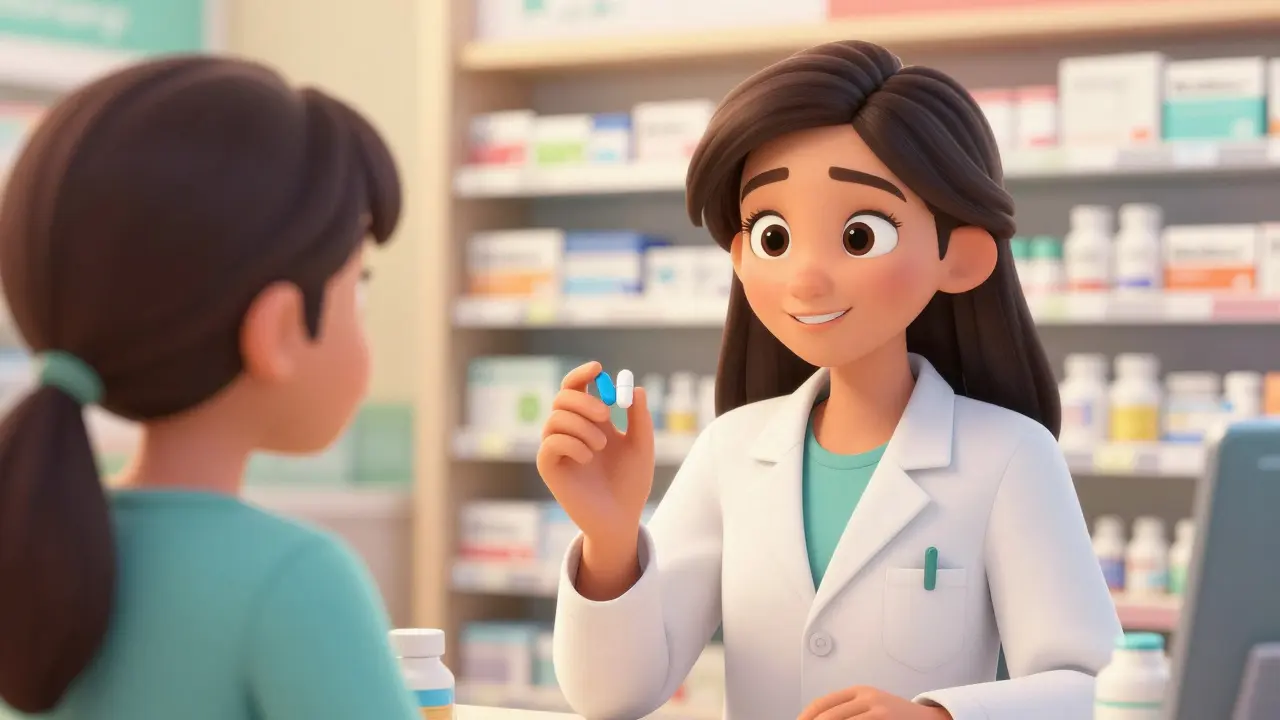
Ever wonder why your pharmacist suggests a generic version of your medication? It might look different-maybe a white pill instead of a blue one-but the core promise is that it works exactly like the brand name. This isn't just a guess; it's the result of a rigorous legal and scientific framework managed by the FDA is the U.S. Food and Drug Administration, the federal agency responsible for protecting public health by ensuring the safety, efficacy, and security of human and veterinary drugs. . To keep your medicine safe, the agency enforces a set of rules that ensure a generic isn't just "similar," but therapeutically identical to the original.
The Legal Shortcut: Understanding the ANDA Pathway
When a company creates a brand new drug, they have to spend years and billions of dollars on clinical trials to prove it's safe. Generic manufacturers don't have to repeat those massive human trials. Instead, they use a streamlined process called the Abbreviated New Drug Application (ANDA). This pathway allows them to skip the preclinical animal tests and large-scale efficacy trials because the Reference Listed Drug (RLD)-the brand name version-has already proven the drug's safety and effectiveness.
However, "abbreviated" doesn't mean "easy." To get an ANDA approved, the manufacturer must prove the generic is a mirror image of the brand in terms of its active chemistry. They must demonstrate pharmaceutical equivalence, meaning the drug has the same active ingredient, strength, dosage form, and route of administration. If the brand is a 20mg tablet taken by mouth, the generic must be a 20mg tablet taken by mouth. No shortcuts allowed.
The Science of Bioequivalence: Does it Actually Work?
The biggest question people have is whether the drug actually gets into the bloodstream the same way. The FDA requires proof of Bioequivalence, which is the analytical demonstration that a generic drug delivers the same amount of active ingredient into the bloodstream at the same rate as the brand name drug. . To prove this, manufacturers conduct studies with healthy volunteers, measuring two key metrics: Cmax (the peak concentration of the drug in the blood) and AUC (the total exposure to the drug over time).
The FDA's rule of thumb is strict: the 90% confidence interval for these measurements must fall between 80% and 125% of the brand name's performance. While that range might seem wide, it's a statistical safeguard to ensure the drug behaves predictably in the human body. For drugs with a Narrow Therapeutic Index (NTI)-medications where a tiny change in dose can be dangerous, like warfarin or levothyroxine-the FDA tightens the screws. For these, the acceptable window is narrowed to 90-111%, leaving almost zero room for variance.
| Requirement | Brand Name (NDA) | Generic (ANDA) |
|---|---|---|
| Clinical Trials | Full Phase I, II, III trials | Not required (leverages RLD data) |
| Active Ingredient | Newly developed/proven | Must be identical to RLD |
| Manufacturing | cGMP Compliant | cGMP Compliant |
| Bioequivalence | Establishes the baseline | Must match RLD (80-125% range) |
| Labeling | Original creation | Must be "the same as" RLD |
Manufacturing Quality and the War on Impurities
A drug is only as good as the factory that makes it. The FDA mandates that all generics follow Current Good Manufacturing Practices (cGMP), which are systems that ensure products are consistently produced and controlled according to quality standards. This involves meticulous records of cleaning, equipment calibration, and staff training. If a factory's records are messy, the drug doesn't ship.
Then there's the issue of impurities. When chemicals are synthesized, "side-products" can occur. The FDA uses international guidelines (like ICH Q3B) to ensure these impurities don't reach toxic levels. For instance, the Threshold of Toxicological Concern for certain genotoxic impurities is set as low as 1.5 mcg per day. This means the FDA isn't just looking at what's in the drug, but also what *isn't* supposed to be there.
Where Generics Can Differ: The "Inactive" Stuff
If the active ingredient must be the same, why do some generics feel different? The answer lies in the Inactive Ingredients. These are the fillers, dyes, flavors, and binders that hold the pill together or make it taste better. While the active drug must be identical, the FDA allows manufacturers to use different inactive ingredients.
For most people, this makes no difference. But for someone with a severe allergy to a specific dye or a sensitivity to lactose (often used as a filler), a generic might cause a reaction that the brand name doesn't. This is the most common reason a patient might "feel" a difference between two therapeutically equivalent drugs. It's not that the medicine isn't working; it's that the "packaging" inside the pill is different.
The Challenge of Complex Generics
Not all drugs are simple tablets. Complex Generics-like inhalers, eye drops, or injectable biologics-are much harder to replicate. For a metered-dose inhaler, the FDA doesn't just care about the drug; they care about the particle size. If the particles are too big, they hit the back of the throat instead of deep in the lungs.
Because of this complexity, the FDA reports a much higher rejection rate (about 25% higher) for these types of ANDAs. For these products, the agency often requires more than just a blood test. They might demand comparative clinical endpoint studies or mechanistic in vitro testing to prove the delivery system actually works as intended.
Real-World Evidence and Patient Experience
Does the data match the experience? Generally, yes. A study of 38,000 Medicare beneficiaries published in JAMA Internal Medicine found no statistically significant difference in clinical outcomes between brand and generic statins. Similarly, the American Academy of Family Physicians has affirmed that generics are equally effective for everything from epilepsy to heart disease.
However, human experience is nuanced. In communities like the r/pharmacy subreddit, users of levothyroxine often report feeling a difference between brands. This is likely because thyroid hormones are NTI drugs, and even the FDA's strict 90-111% window can be felt by highly sensitive patients. It's a reminder that while the FDA safety standards are rigorous, individual biology can still react to the subtle differences in inactive ingredients or manufacturing tolerances.
Are generic drugs actually as safe as brand names?
Yes. The FDA requires generic drugs to have the same active ingredient, strength, dosage form, and route of administration as the brand name. They must also pass bioequivalence tests to prove they deliver the drug into the bloodstream at the same rate and extent.
Why do some generics look different from the brand version?
The FDA allows generic manufacturers to use different inactive ingredients, such as dyes, flavors, and fillers. This means the color, shape, and taste can vary, but the active medication that treats your condition remains identical.
What is the "Orange Book"?
The Orange Book is an FDA publication that lists all approved drug products. It identifies which generic drugs are "therapeutically equivalent" to the brand name. An "AB" rating in the Orange Book means the generic is considered equivalent in every way that matters for patient health.
Can a generic drug be less effective?
In terms of the active ingredient, no. However, for a very small number of people, differences in inactive ingredients can affect how a drug is absorbed or cause an allergic reaction, which may feel like the drug is less effective.
How does the FDA monitor generic drugs after they are approved?
The FDA uses a Risk-Based Facility Assessment program to inspect manufacturing plants, including those overseas. They also monitor adverse event reports and can require manufacturers to update safety labeling if new risks are discovered.
What to do if you're concerned about your generic
If you feel a difference after switching to a generic, don't stop taking your medication. Instead, take these steps:
- Check the inactive ingredients: Look at the patient package insert for both the brand and generic. See if there is a filler or dye you are sensitive to.
- Talk to your doctor about NTI: If you are taking a Narrow Therapeutic Index drug (like warfarin), ask your doctor if you should stick to one specific manufacturer to avoid small fluctuations.
- Consult the pharmacist: Ask if the generic you are receiving is "AB rated" in the Orange Book. This confirms the highest level of therapeutic equivalence.
- Report side effects: If you experience a genuine adverse reaction, report it via the FDA MedWatch program to help the agency monitor safety.