
Gastritis and H. pylori Treatment: What You Need to Know Today
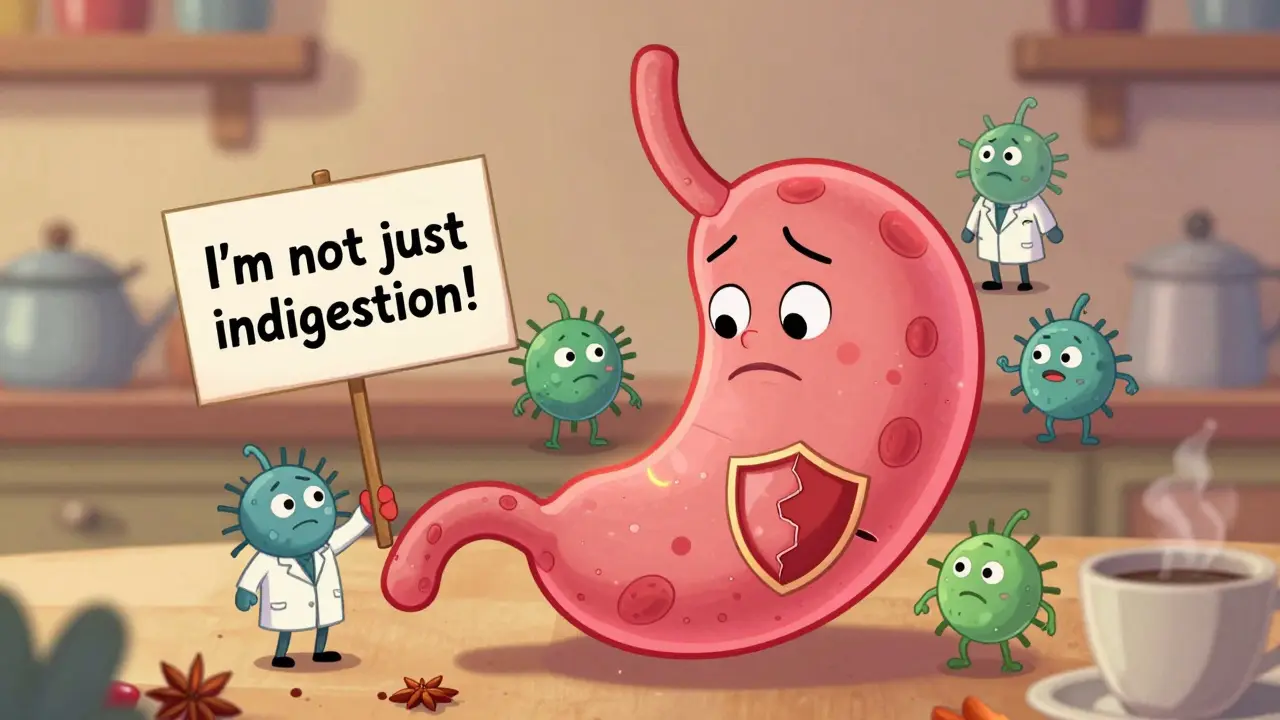
When your stomach feels like it’s on fire after eating, or you’re constantly bloated and nauseous, it’s easy to blame stress or spicy food. But if these symptoms stick around, you might be dealing with gastritis-inflammation of the stomach lining. It’s more common than most people realize, and in many cases, it’s caused by a tiny bacterium called Helicobacter pylori. This isn’t just a minor upset stomach. Left untreated, it can lead to ulcers, bleeding, or even increase your risk of stomach cancer.
What Exactly Is Gastritis?
Gastritis isn’t one single disease. It’s a group of conditions where the stomach’s protective lining becomes inflamed. This lining, called the mucosa, normally shields your stomach from the strong acids and enzymes it uses to digest food. When it breaks down, those same acids start eating away at the stomach wall, causing pain, burning, and nausea. There are two main types: erosive and nonerosive. Erosive gastritis means there are actual breaks or sores in the lining-these can bleed, leading to black, tarry stools or vomiting blood. Nonerosive gastritis doesn’t show visible damage, but the cells underneath are still inflamed and changing. Over time, this can lead to atrophic gastritis, where the stomach lining thins and stops producing acid and digestive enzymes properly. About half of all people with chronic gastritis don’t even know they have it. Symptoms can be so mild they’re mistaken for indigestion. But when you start seeing signs like persistent upper belly pain, frequent nausea, vomiting, or loss of appetite, it’s time to look closer.H. pylori: The Silent Culprit Behind Most Cases
In 70 to 90% of gastritis cases linked to ulcers, the cause is Helicobacter pylori. This spiral-shaped bacterium lives in the stomach and can survive in acid by burrowing into the mucus layer. It doesn’t just cause irritation-it tricks the immune system into attacking the stomach lining, creating long-term inflammation. The discovery of H. pylori in 1982 by Australian scientists Barry Marshall and Robin Warren changed everything. Before that, doctors thought stress and diet were the main causes. Marshall even drank a culture of the bacteria to prove it caused gastritis-he got sick within days. They won the Nobel Prize in 2005 for this breakthrough. H. pylori spreads through contaminated food, water, or close contact. It’s more common in places with poor sanitation, but it’s still found in developed countries like Australia and the U.S. About 1 in 5 adults here carries it, and most don’t know. The real danger? If you’re infected and don’t treat it, your risk of developing stomach cancer jumps by 6 to 8 times.How Do You Know If You Have H. pylori?
You can’t diagnose H. pylori just by symptoms. That’s why doctors rely on tests:- Urea breath test: You drink a special liquid and then breathe into a bag. If H. pylori is present, it breaks down the substance and releases carbon dioxide you exhale. This test is 95% accurate.
- Stool antigen test: Looks for H. pylori proteins in your poop. Simple, non-invasive, and reliable.
- Endoscopy with biopsy: A camera is inserted through your mouth to look at your stomach. Tiny tissue samples are taken and checked under a microscope. This is the gold standard, especially if there’s bleeding or weight loss.
How Is H. pylori Treated?
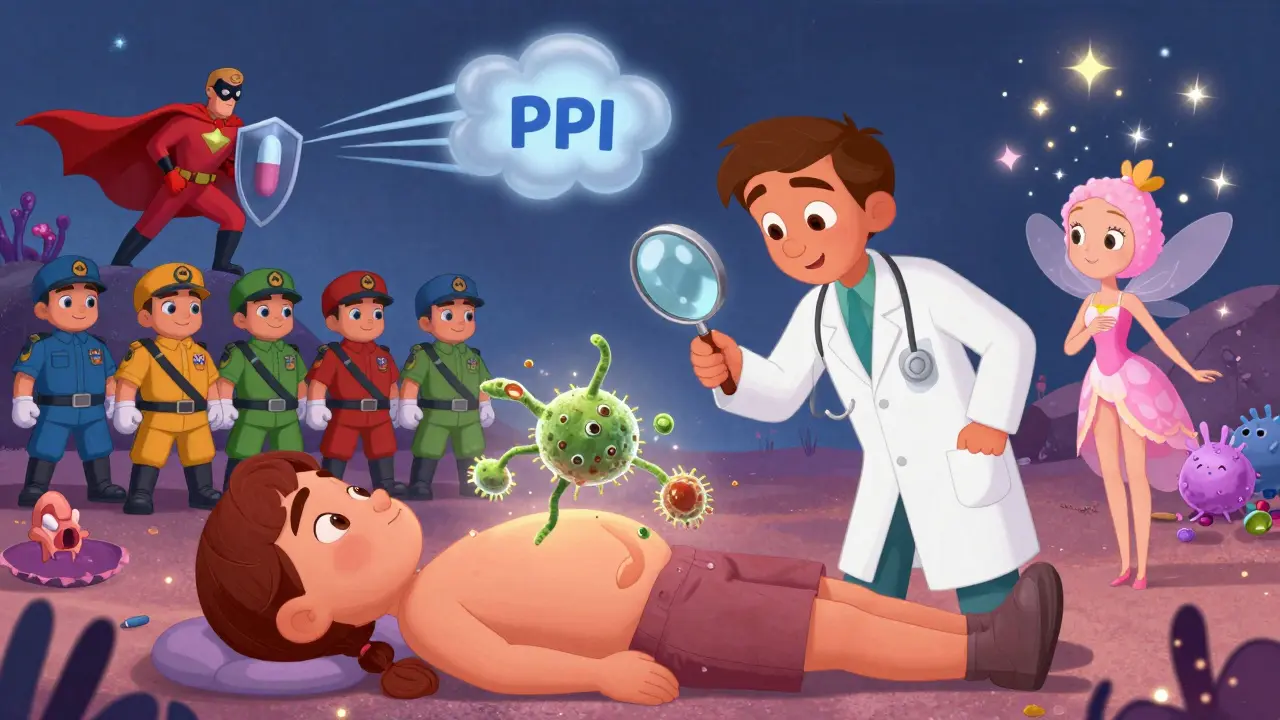
Treating H. pylori isn’t as simple as popping an antibiotic. Because the bacteria are tough, you need a combo of drugs-usually a triple or quadruple therapy-for 10 to 14 days. The standard treatment is:- A proton pump inhibitor (PPI) like omeprazole or esomeprazole-this reduces acid so antibiotics work better.
- Two antibiotics, commonly amoxicillin and clarithromycin.
- Bismuth quadruple therapy: PPI + bismuth + metronidazole + tetracycline. This works better where clarithromycin resistance is high.
- Vonoprazan-based therapy: A newer acid blocker approved in 2022, it’s stronger than PPIs and has shown 90%+ success rates in trials, even after failed treatments.
What About Other Causes of Gastritis?
Not all gastritis comes from H. pylori. Other common triggers include:- NSAIDs: Painkillers like ibuprofen, naproxen, or even daily aspirin. These block protective chemicals in the stomach lining. About 25-30% of gastritis cases are linked to these drugs.
- Alcohol: More than 30 grams a day (about 2 standard drinks) doubles your risk.
- Stress: Severe physical stress from burns, surgery, or critical illness can cause acute erosive gastritis.
- Autoimmune gastritis: Your immune system attacks your own stomach cells. This is rare-only 0.1% of people-but it leads to vitamin B12 deficiency and anemia. You’ll need lifelong B12 shots or supplements.
- Food allergies: Eosinophilic gastritis is rare but linked to allergic reactions, especially in kids.
What Helps Beyond Medicine?
Medication fixes the cause, but lifestyle changes help your stomach heal faster and prevent future problems:- Stop alcohol: Within 2 weeks of cutting out alcohol, symptoms drop by 60% in people with alcohol-related gastritis.
- Quit smoking: Smoking slows healing and increases acid production. Quitting improves healing rates by 35%.
- Eat smaller meals: Large meals stretch the stomach and increase acid. Smaller, frequent meals are easier on the lining.
- Avoid trigger foods: Spicy, acidic, or fried foods don’t cause gastritis, but they can irritate an already inflamed stomach. Pay attention to what makes your symptoms worse.
- Manage stress: While stress doesn’t cause H. pylori, it can make symptoms feel worse. Simple breathing exercises or walking daily helps.
When to Worry: Red Flag Symptoms
Most gastritis is manageable. But some signs mean you need emergency care:- Black, tarry stools (melena)-sign of internal bleeding
- Vomiting blood or material that looks like coffee grounds
- Sudden, severe abdominal pain
- Unexplained weight loss or persistent vomiting
- Fatigue, dizziness, or shortness of breath-signs of anemia from chronic bleeding
What Happens After Treatment?
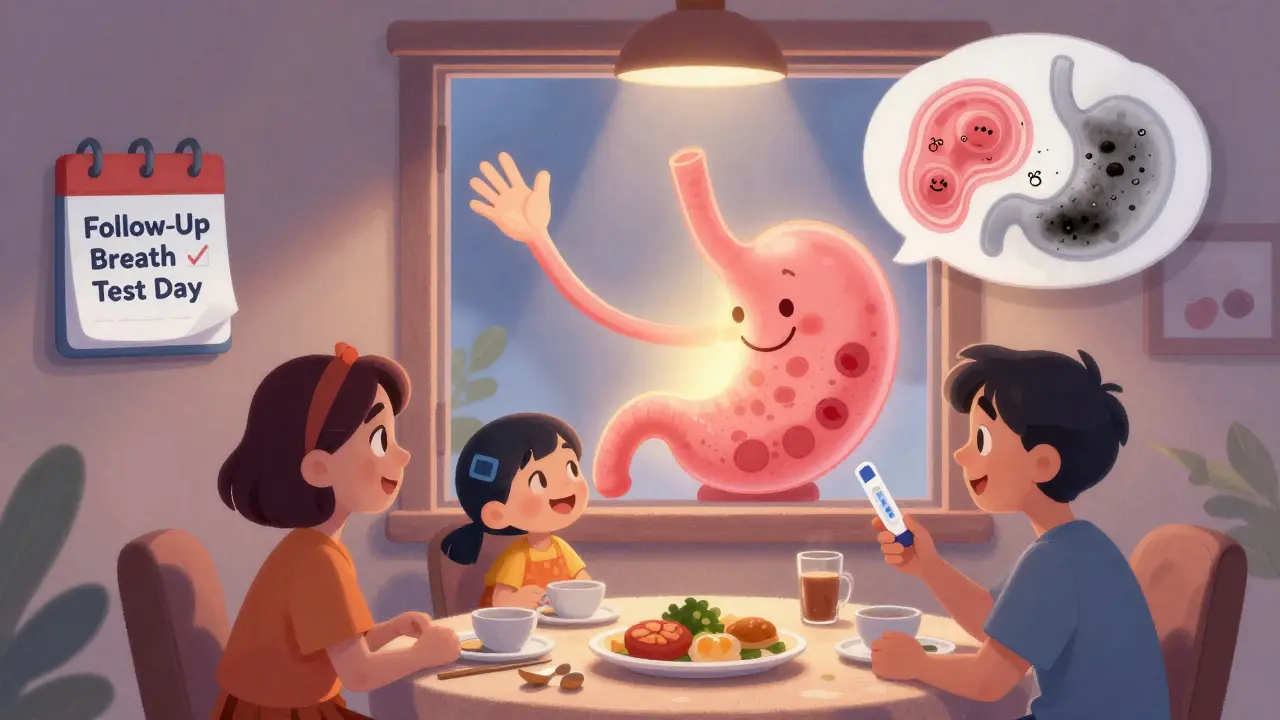
Once H. pylori is gone, the stomach lining usually heals within weeks. But if you had long-term damage-like atrophic gastritis-you might need ongoing monitoring. Some people develop low stomach acid, which affects nutrient absorption. That’s why follow-up with your doctor matters. Also, many people worry about stopping PPIs. If you’ve been on them for months or years, suddenly stopping can cause rebound acid reflux. That’s not the infection coming back-it’s your stomach overproducing acid after being suppressed. The fix? Taper off slowly under medical supervision.Is Everyone Treated for H. pylori?
Not necessarily. If you’re infected but have no symptoms and no family history of stomach cancer, some doctors recommend watchful waiting. The American Gastroenterological Association says treating asymptomatic people in low-risk areas may not be worth the side effects of antibiotics. But in Australia, where stomach cancer rates are rising slightly and antibiotic resistance is growing, most gastroenterologists now recommend testing and treating H. pylori if found-even without symptoms. It’s a preventive move. Studies show treating H. pylori cuts gastric cancer risk by half.What’s Next for Gastritis Treatment?
Research is moving fast. Scientists are now looking at H. pylori’s genetic makeup to predict which strains are more dangerous. Trials are testing personalized treatments based on the specific bacteria you carry-so you get the right antibiotics the first time. New drugs like vonoprazan are changing the game. And there’s growing interest in probiotics to reduce antibiotic side effects. One study showed that taking Lactobacillus strains during treatment cut diarrhea rates by 40%. The goal? Make treatment simpler, more effective, and less likely to fail.Can gastritis go away on its own?
Sometimes, especially if it’s mild and caused by a one-time trigger like alcohol or NSAIDs, yes. But if it’s caused by H. pylori, it won’t go away without treatment. The bacteria stick around for years unless you kill them. Ignoring it can lead to ulcers, bleeding, or even stomach cancer. Don’t assume it’ll fix itself.
Are proton pump inhibitors safe long-term?
For short-term use-like 4 to 8 weeks to heal gastritis-they’re very safe. Long-term use (over a year) can slightly increase the risk of bone fractures, low magnesium, and certain infections like C. diff. But the risks are low compared to the dangers of untreated gastritis. If you need long-term acid control, work with your doctor to use the lowest effective dose and reassess every 6 to 12 months.
Can I test for H. pylori at home?
Yes, stool antigen test kits are available over the counter in some countries, including Australia. They’re reliable if used correctly. Breath tests are harder to do at home because they require special equipment and lab analysis. If you suspect H. pylori, talk to your doctor first-they can order the right test and interpret the results properly.
Why does H. pylori treatment make me feel worse?
The antibiotics can cause side effects like diarrhea, nausea, metallic taste, or bloating. That’s normal. About 60% of people report these during treatment. Don’t stop taking the meds unless it’s severe. Taking probiotics (like Lactobacillus) during treatment can reduce side effects. If vomiting or severe diarrhea happens, call your doctor-they may adjust your regimen.
How long until I feel better after starting treatment?
Most people notice less pain and nausea within 3 to 5 days of starting PPIs and antibiotics. But that doesn’t mean the bacteria are gone. You still need to finish the full 10-14 day course. Full healing of the stomach lining can take 4 to 8 weeks. Don’t judge success by how you feel-judge it by the follow-up test.
Okay but let’s be real - if you’ve been popping ibuprofen like candy for your back pain, no wonder your stomach feels like it’s been through a war. I was there. Took me three ER visits and a biopsy to realize it wasn’t ‘stress’ - it was my daily Advil habit. Switched to acetaminophen, started a PPI, and boom - 80% better in two weeks. Don’t ignore the little signs. Your gut isn’t just ‘sensitive,’ it’s screaming for help.
Also - probiotics during antibiotics? Non-negotiable. I took Lactobacillus daily and didn’t get a single case of that awful antibiotic diarrhea. Game changer.
And yes, H. pylori can be silent. I tested positive with zero symptoms. My mom had stomach cancer. So I got treated anyway. Worth it.
Oh sweet baby Jesus, another ‘H. pylori is the devil’ post. Let me guess - you got your breath test done at CVS and now you’re convinced you’re one antibiotic away from immortality? Newsflash: 30% of Americans carry H. pylori and never get sick. Your ‘treat everything’ mindset is why we have antibiotic-resistant superbugs.
And vonoprazan? That’s a $1000/month drug in the US. You think the average person can just ‘switch’ to it? Wake up. This isn’t a TED Talk. It’s a broken healthcare system pretending to care.
While the medical advancements regarding H. pylori eradication are indeed remarkable, one must also consider the broader anthropological and sociological context in which this pathogen persists.
Historically, H. pylori has coexisted with human populations for over 60,000 years. Its near-ubiquity in pre-industrial societies suggests not merely pathogenicity, but potentially symbiotic functions - perhaps modulation of gastric acidity to protect against enteric pathogens. The modern eradication paradigm, while clinically effective, may inadvertently disrupt a co-evolved microbial equilibrium.
Thus, while treatment is warranted in symptomatic or high-risk individuals, a blanket ‘test-and-treat’ policy may reflect more about our contemporary fear of microbial life than about genuine clinical necessity. The balance between intervention and ecological humility remains an open question.
Just had my follow-up breath test last week - negative! 14 days of triple therapy felt like hell. Metallic taste 24/7, diarrhea that made me question my life choices, and my partner had to carry me to the bathroom twice. But I did it. No shortcuts.
Also - if you’re on NSAIDs daily, talk to your doctor about switching to celecoxib or adding misoprostol. I didn’t know that was an option until my GI doc mentioned it. Saved my stomach.
And yes, quitting smoking helped more than I expected. My bloating vanished in 3 weeks. Who knew?
OMG I had this and I didn’t know!! I thought I was just stressed and eating too much pizza but nooo it was H. pylori and now I’m on meds and I feel like a new person!! I cried when the test came back positive because I thought I was dying but now I’m like OMG I’m gonna live!!
Also I started drinking bone broth and it fixed everything!!
so i got tested after my cousin told me about her h pylori thing and turns out i had it too even though i felt fine
my doctor said i could wait but i was scared so i did the treatment
the antibiotics made me so tired but i did it
now i eat smaller meals and drink chamomile tea and i feel better than ever
also i stopped drinking coffee and my stomach stopped growling at 3am
if you think its just indigestion maybe get tested just in case
you never know
Just got my stool test results back - positive 😱
Started treatment yesterday. Took the first dose with a banana and a huge glass of water. Felt like a spy in a movie.
Probiotic on deck 🤞
Also - why is everyone so scared of the breath test? It’s just a bag and a weird drink. I did mine at home with a kit. Easy.
Anyone else doing this? Let’s share updates 👇
Oh please. You all think this is some revolutionary breakthrough? H. pylori has been around since the Stone Age. The real problem? Doctors are lazy. They don’t want to spend 20 minutes explaining why you need to take four pills at different times of day. So they just prescribe the easiest combo - clarithromycin - and when it fails, they blame you.
And don’t get me started on ‘probiotics fix everything.’ That’s marketing, not medicine. Most probiotics don’t survive stomach acid. The ones that do? Barely affect H. pylori.
Here’s the truth: if you’re asymptomatic and low-risk, leave it alone. Your microbiome isn’t a battlefield. It’s a neighborhood. And you’re not the mayor.
In India, we see a lot of gastritis from spicy food and poor water quality. But H. pylori is still the hidden killer. My uncle had it for 15 years - no symptoms. Then one day, bleeding. Cancer. We lost him.
Now I tell everyone: if you have stomach pain that doesn’t go away, get tested. No shame. No waiting. It’s not about fear - it’s about responsibility.
And yes, the treatment is tough. But it’s 14 days. Your life? It’s decades.
So you say to get tested. But what if you can’t afford it? Or don’t have insurance? Or your doctor won’t order it unless you’re ‘symptomatic enough’? This whole post reads like a drug ad for PPIs and vonoprazan.
Meanwhile, people are choosing between food and meds. This isn’t science - it’s privilege.
i think its good to know about h pylori but dont stress too much
my mom had it and she just ate rice and bananas and drank coconut water and it went away
maybe medicine helps but maybe your body can heal too
listen to your gut not just the doctor
peace