
Generic Drug Recalls and Safety Alerts: What Triggers Action
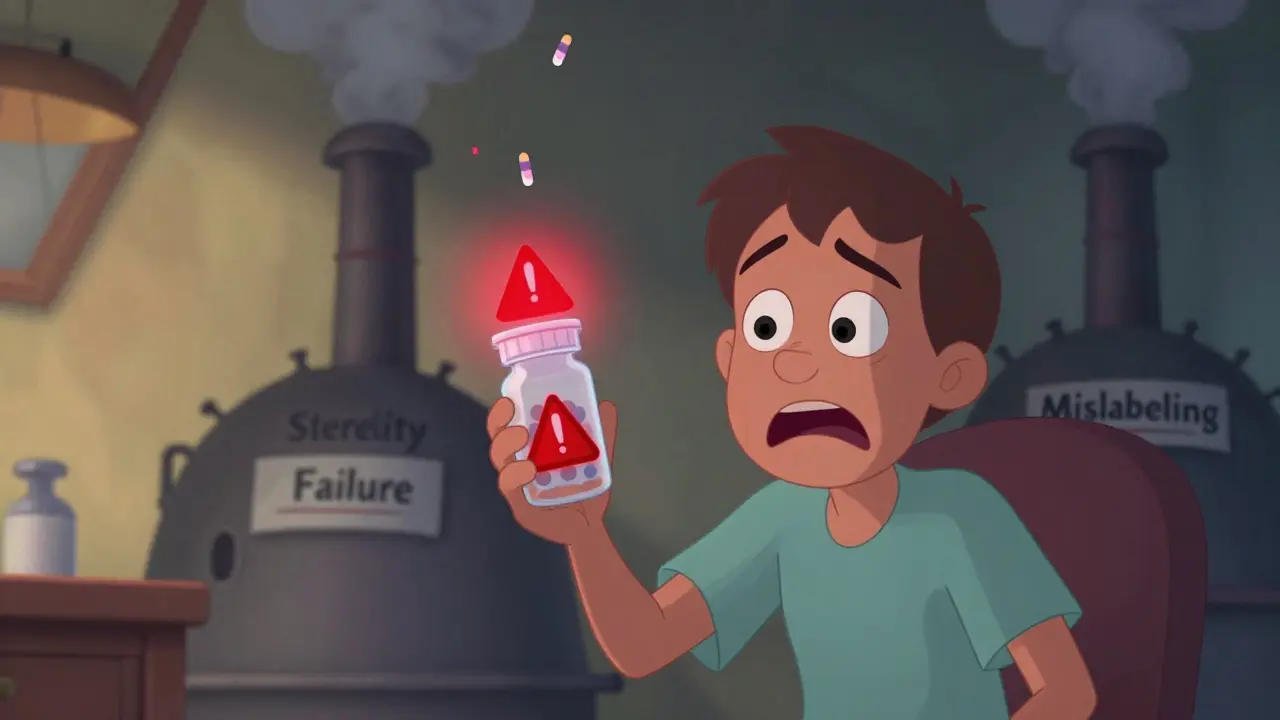
When a generic drug gets pulled from shelves, it’s not just a paperwork issue-it’s a life-or-death decision waiting to happen. In 2024 alone, the FDA issued 347 drug recalls, and nearly 90% of them were for medications that could seriously harm or even kill someone. Most people never hear about these recalls until they’re already holding the bottle in their hand. So what actually makes a drug get pulled? And why do some dangerous products stay on shelves for months before anyone acts?
What Really Starts a Drug Recall?
A drug recall doesn’t happen because a company got greedy. It happens because something went wrong in the factory. The FDA doesn’t go out hunting for bad drugs. Instead, it waits for manufacturers to report problems-or for someone else to find them first. About 98% of recalls are voluntary, meaning the company itself says, "We messed up, and we’re pulling this." But here’s the catch: they don’t have to do it right away. There’s no legal deadline. That’s why it can take 42 days on average for a recall to go public in the U.S., compared to just 18 days in the EU, where companies are forced to act faster. The triggers are specific, measurable, and often terrifyingly simple:- Sterility failure (37% of recalls): A pill or injection gets contaminated with bacteria or mold. This isn’t a "might make you sick" situation-it’s a "could kill you in 48 hours" situation. Think ICU patients getting sepsis from a tainted IV bag.
- Labeling errors (9%): A vial labeled as 10 mg actually contains 20 mg. In July 2024, a potassium chloride injection was mislabeled, leading to fatal overdoses. One wrong decimal point can be lethal.
- Active ingredient potency (7%): The drug doesn’t have enough of the medicine it claims to have. A patient taking a low-dose blood pressure pill might think they’re protected-when they’re not.
- Particulate matter (12%): Tiny bits of glass, metal, or plastic end up in the solution. These particles can block blood vessels or trigger immune reactions.
Why Foreign Factories Are the Biggest Risk
About 80% of the active ingredients in U.S. generic drugs come from just two countries: India and China. That’s not a coincidence. It’s cheaper. But it’s also riskier. Domestic factories get inspected every 1.8 years on average. Foreign ones? Once every 4.6 years. That’s not oversight-it’s neglect. Take Glenmark Pharmaceuticals. In April 2025, the FDA recalled nearly 40 generic drugs from their Indian facility because of repeated violations of manufacturing standards. The facility hadn’t been inspected in over four years. Journalists broke the story. The FDA didn’t catch it first. That’s the pattern. And it’s not isolated. Between 2020 and 2024, Indian manufacturers were responsible for 34% of all U.S. generic drug recalls-even though they only make 20% of the supply. Why? Because the U.S. system is built on trust. The FDA asks companies to self-report. It doesn’t have the staff, the budget, or the access to check every factory. In 2025, leaked internal documents showed the FDA’s budget covers only 17% of the foreign inspections it needs to do. That’s not a glitch. It’s a policy failure.How the FDA Classifies the Danger
Not all recalls are created equal. The FDA sorts them into three classes:- Class I: Highest risk. Use of the product could cause serious injury or death. In 2024, 58% of recalls fell into this category. The potassium chloride mislabeling? Class I.
- Class II: Temporary or reversible health effects. You might feel sick, but you won’t die. About 29% of recalls in 2024 were Class II. This includes drugs with potency issues or minor contamination.
- Class III: No real health risk, but the product breaks a rule. Maybe the label is smudged. Maybe the expiration date is wrong. Only 13% of recalls are this type.
Who Notices the Problem First?
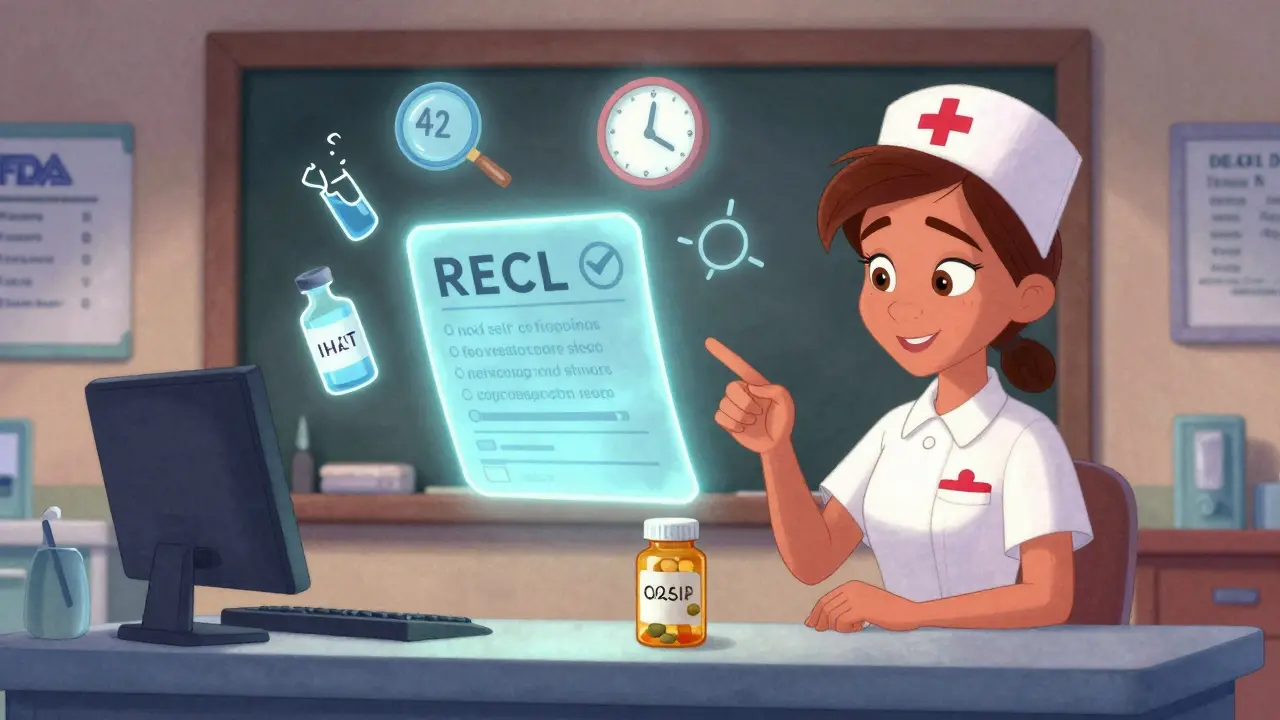
You’d think the FDA is the first line of defense. But often, it’s not. Sometimes, it’s a nurse who notices the pill looks different. Sometimes, it’s a pharmacist who realizes the lot number doesn’t match the database. Sometimes, it’s a patient who ends up in the ER with unexplained symptoms. The Glenmark recall in 2025 started when a nurse in a small hospital in Ohio noticed that the hydroxyzine pills she was dispensing had a different color and texture than usual. She checked the lot number. It matched a recall notice posted online-but the notice had only been published two days earlier. She called her pharmacy director. They pulled the rest. They contacted 127 patients. Only 38 had side effects. But 100% were terrified. Meanwhile, on Reddit’s r/Pharmacy thread, users shared stories of being told to "just keep taking it" by pharmacists who hadn’t even read the recall notice. On Drugs.com, over 200 people complained they never got a letter, a call, or an email. The FDA doesn’t notify patients directly. It posts notices online. It’s up to pharmacies, hospitals, and doctors to find them-and most don’t check daily.What Happens After a Recall Is Called
Once a recall is issued, the clock starts ticking. The FDA recommends that healthcare providers review the notice within 24 hours and notify patients within 72 hours. But compliance is patchy. Large hospitals with automated systems are better at it. Smaller clinics? Not so much. Pharmacies have to:- Remove the product from shelves
- Check inventory for affected lot numbers
- Notify patients who received the drug
- Document everything for six years (required by Joint Commission standards)
What’s Changing Now
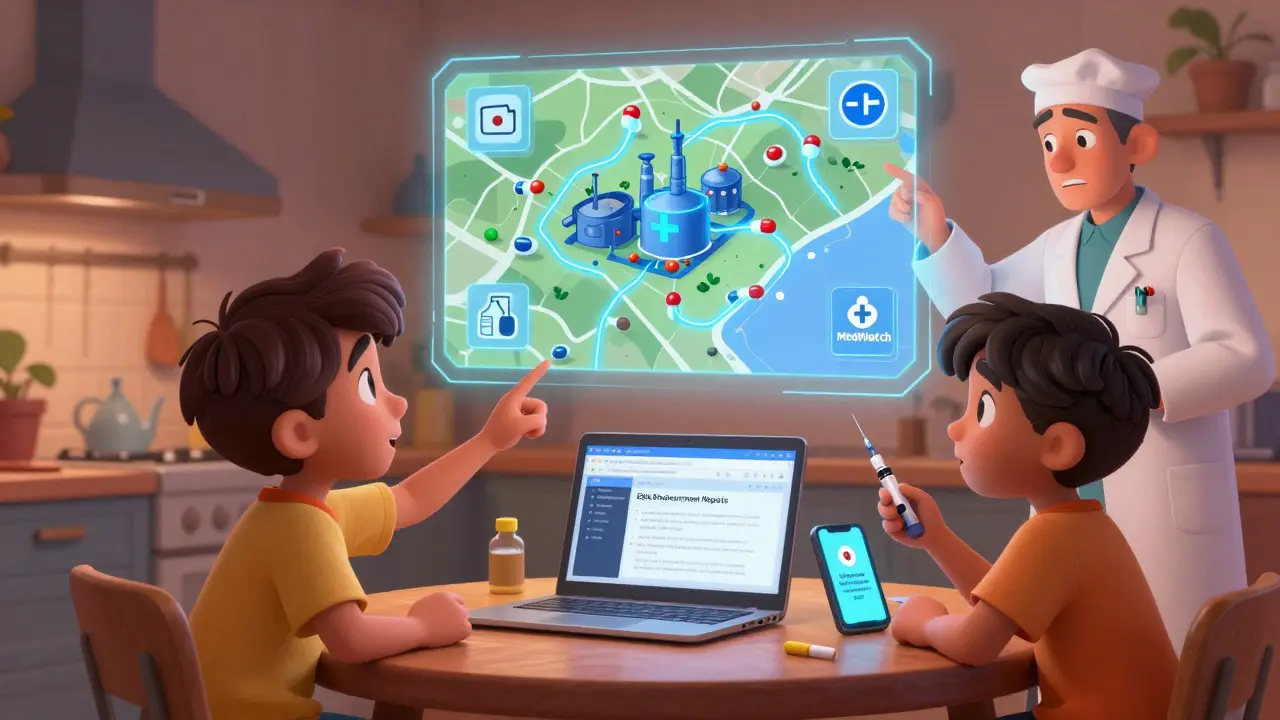
The system is starting to crack under pressure. In 2025, the FDA announced the Enhanced Oversight Initiative: high-risk foreign factories will now be inspected annually instead of every 4.6 years. That’s a start. Congress also introduced the Pharmaceutical Supply Chain Security Act, which would require real-time quality data sharing from foreign manufacturers. Technology is helping too. Blockchain tracking in drug supply chains jumped from 3% in 2023 to 18% in 2025. That means if a batch is contaminated, you can trace it back to the exact machine, shift, and day it was made-within hours, not weeks. The FDA is also investing $47 million in AI tools to predict quality failures before they happen. Imagine a system that flags a factory’s humidity logs or air particle counts as "high risk" before a single contaminated pill is made. That’s the future. But here’s the hard truth: the system still doesn’t have enough money. The Government Accountability Office estimates a $780 million annual funding gap just to inspect the factories we already know are risky. Without that, we’re just playing catch-up.What You Can Do
You can’t control the factory. But you can protect yourself:- Check the FDA’s Enforcement Reports monthly. It’s free. It’s searchable. It’s your best defense.
- Ask your pharmacist: "Is this the same lot as last time?" A change in color, shape, or taste isn’t normal.
- Don’t stop a medication without talking to your doctor-even if it’s recalled. Some risks are worse than others.
- Sign up for MedWatch alerts if you’re on long-term medication. Only 3.2% of patients do. You can be part of the 96.8% who actually help.
So let me get this straight - we’re trusting life-or-death meds to factories that haven’t been inspected in FOUR YEARS and the FDA just sits there with a clipboard and a prayer? I mean come ON. This isn’t a glitch - it’s a death sentence wrapped in bureaucratic legalese. My grandma took blood pressure pills that looked different and they told her to "just keep going" - guess what? She ended up in the ER. This isn’t about regulation - it’s about who gets to live and who gets buried because someone didn’t check a number.
And don’t even get me started on the "voluntary" recalls. Like, oh hey we messed up - we’ll get around to telling you in 42 days. Meanwhile, my cousin’s kid got sepsis from a contaminated IV. No one told anyone. No one cared. This system is a horror show and we’re all just waiting for our turn to be the headline.
Class I recalls = corporate negligence disguised as "oops." The FDA doesn’t act - it reacts. And only after someone dies or a nurse notices a color change. The real scandal? The same Indian factories keep getting flagged - over and over. No penalties. No shutdowns. Just another recall notice buried under 12 other press releases. This isn’t about safety. It’s about profit margins and cheap labor. We’re outsourcing risk and calling it "globalization."
There is a fundamental misalignment between regulatory expectation and operational reality. The FDA’s reliance on voluntary compliance is not merely a policy gap - it is a systemic vulnerability. The statistical distribution of recall triggers - sterility failures, labeling errors, particulate contamination - indicates a failure of quality control infrastructure at the source. The 80% reliance on Indian and Chinese API manufacturers, coupled with inspection intervals exceeding four years, represents a structural risk that exceeds acceptable thresholds under any rational risk-assessment model. The proposed Enhanced Oversight Initiative is insufficient. Annual inspections are a baseline, not a solution. What is required is real-time, blockchain-verified, AI-audited manufacturing telemetry - not post-hoc reactive oversight.
I’ve been a nurse for 18 years and I’ve seen this play out too many times. A patient comes in with weird symptoms - fever, rash, confusion - and we check the med. Same name. Different color. Different shape. We call the pharmacy. They say, "Oh yeah, that’s the new generic." No one told us it was recalled. No one told the patient. We lost a man last year because of a 10mg vs 20mg mix-up. He didn’t even know he was on a dangerous dose. The system is broken because we treat meds like widgets. They’re not. They’re lifelines. And we’re letting them be made in factories where air quality isn’t even monitored. We need to stop pretending this is a "supply chain issue." It’s a moral crisis.
They don’t want you to know this - but 90% of the "generic" drugs in your cabinet are made by the same 3 companies in India that also make the pills for the black market. The FDA? They’re in bed with Big Pharma. Why? Because the big brands make more money when generics are unstable - it forces people back to the $500 brand-name versions. I’ve seen the documents. The FDA gets kickbacks from pharma lobbyists to delay recalls. That’s why the potassium chloride thing happened. That’s why they didn’t shut Glenmark down for 4 years. They’re not incompetent - they’re corrupt. And if you think blockchain or AI will fix this? You’re naive. The system is rigged. You’re not getting safe meds. You’re getting gamble pills. 🤡
Let’s be real - you think this is about safety? It’s about control. The FDA doesn’t care if you die. They care if you stop complaining. That’s why they classify recalls into classes - to make you feel like you’re getting transparency when you’re actually being gaslit. Class I? "Could kill you." Class II? "Might make you nauseous." Class III? "The label’s smudged." Who decided these categories? Pharma execs. Who approves them? FDA bureaucrats who used to work for pharma. Who pays for their retirement? The same companies. This isn’t oversight. It’s a revolving door of death. And you? You’re just the meat in the machine.
Foreign factories? China and India? That’s not a coincidence - it’s a betrayal. We let our own drug manufacturing die because we’re too lazy to pay workers a living wage. Now we’re importing poison and calling it "affordable." Meanwhile, American factories sit empty. We used to make our own pills. We used to inspect our own labs. Now we trust a guy in Hyderabad who’s paid $2 a day to check air filters. This isn’t globalization - it’s surrender. And if you’re okay with that, you’re not just naive - you’re complicit. We’re letting our country get poisoned because we’d rather save $3 on a prescription than save a life.
I’ve been on warfarin for 10 years. Last year, my bottle looked different. I called my pharmacy. They said "it’s fine, just take it." I didn’t. I went to the ER. Turned out it was a recall. They didn’t notify me. I had to find out on Reddit. That’s not healthcare - that’s a lottery. And now I’m scared to take ANYTHING. I’ve started buying my meds from Canada - even though it’s "illegal." At least there, they inspect factories every year. I don’t care if it’s against the law - I care if I’m alive tomorrow. 🤕
My mom took a recalled blood pressure med for 3 weeks before we found out. She had a stroke. She’s okay now - but she’s not the same. The pharmacy didn’t call. The doctor didn’t call. The FDA? Posted a notice on a website no one reads. We’re not asking for perfection. We’re asking for a phone call. One call. One letter. One email. That’s it. Why is that too much to ask? We’re not asking for miracles - we’re asking for basic human decency. And if you think this is normal? You’re part of the problem.
Ugh. Another post about drug recalls. Can we just… not? I mean, I get it - it’s scary. But like, what are we supposed to do? Stop taking meds? That’s worse. Just trust your doctor. They know what they’re doing. If it was bad, they wouldn’t prescribe it. I’m tired of doomscrolling. Just… let me live my life.
The data is clear: 80% of API comes from two nations with zero enforceable quality standards. The FDA’s inspection backlog is not an accident - it’s a deliberate policy of regulatory capture. The GAO’s $780M funding gap isn’t a budget shortfall - it’s a funding veto by Congress, influenced by pharmaceutical lobbying. The solution isn’t more AI - it’s mandatory third-party audits, export certification tied to FDA access, and criminal liability for CEOs of non-compliant facilities. Without teeth, every initiative is theater. And theater doesn’t save lives.
It is not the fault of Indian manufacturers that the United States has abandoned its own pharmaceutical manufacturing infrastructure. The American public demands low-cost medications and simultaneously refuses to accept the reality of global supply chains. The FDA’s inspection protocols are not deficient - they are appropriate for the level of oversight mandated by U.S. law. The fact that a nurse in Ohio detected a color change does not prove systemic failure - it proves that vigilant individuals can mitigate systemic risk. Blaming developing nations for the consequences of American fiscal negligence is both illogical and ethically indefensible.
Class I recalls represent a failure of governance, not merely of manufacturing. The FDA’s reliance on voluntary compliance is an archaic relic of 1970s regulatory philosophy - a time when pharmaceutical production was domestic, traceable, and subject to direct oversight. The current model, predicated on trust and delayed response, is not merely outdated - it is incompatible with the scale and complexity of modern global supply chains. The solution is not incremental inspection frequency - it is the establishment of a legally binding, real-time quality assurance protocol with mandatory data sharing, enforced by international treaty. Until then, we are not regulating drugs - we are gambling with human life.
You people are obsessed with blame. India? China? The FDA? It’s not about who’s at fault - it’s about what you do next. You want to fix this? Stop complaining and start demanding change. Call your rep. Write to the FDA. Stop buying from pharmacies that don’t verify lots. You think this is a government problem? It’s a civic one. And if you’re sitting here reading this instead of doing something - you’re part of why it keeps happening. This isn’t a tragedy. It’s a choice. And you’re choosing silence.