
Hashimoto's Thyroiditis: Understanding Autoimmune Hypothyroidism and TSH Monitoring

Hashimoto’s thyroiditis is the most common reason people end up with an underactive thyroid. It’s not just a simple hormone problem-it’s your immune system turning against your own thyroid gland. This autoimmune attack slowly destroys the gland’s ability to make thyroid hormone, leading to fatigue, weight gain, brain fog, and a host of other symptoms. What makes it tricky is that the damage happens over years, often without clear warning signs. By the time most people feel sick, their thyroid has already lost a lot of function. The good news? It’s manageable. And the key to managing it isn’t guessing at how you feel-it’s tracking your TSH levels accurately and consistently.
How Hashimoto’s Turns Your Immune System Against Your Thyroid
In Hashimoto’s, your body produces antibodies that target thyroid tissue. The two most common ones are thyroid peroxidase antibodies (TPOAb) and thyroglobulin antibodies. When these antibodies attack, your thyroid becomes inflamed, swollen, and eventually scarred. This process doesn’t happen overnight. Many people have these antibodies for years before their thyroid hormone levels drop enough to cause symptoms. That’s why doctors don’t just test for TSH-they check for antibodies too, especially if TSH is elevated but still in the borderline range.Women are 5 to 10 times more likely to develop Hashimoto’s than men. It often shows up between ages 30 and 50, though it can strike at any age. Family history matters-if someone in your immediate family has an autoimmune disease like type 1 diabetes, lupus, or rheumatoid arthritis, your risk goes up. Environmental triggers like chronic stress, viral infections, or iodine excess can push the condition into action, but the root cause is always immune dysfunction.
Why TSH Is the Gold Standard for Monitoring
When your thyroid isn’t making enough hormone, your pituitary gland tries to fix it by pumping out more TSH-thyroid-stimulating hormone. That’s why TSH is the first test doctors order. High TSH means your thyroid isn’t responding. Low TSH means you’re getting too much hormone replacement.For most adults with Hashimoto’s, the goal is to get TSH between 0.4 and 4.0 mIU/L. But that’s not a one-size-fits-all number. The American Thyroid Association and the American Association of Clinical Endocrinologists agree: TSH is the single best indicator of whether your levothyroxine dose is right. You don’t need to check T4 or T3 levels regularly once you’re on treatment. Why? Because TSH responds more precisely to small changes in hormone levels than T4 does. If your TSH is in range, your body is likely getting what it needs.
There are exceptions. For pregnant women, the target is tighter. In the first trimester, TSH should stay under 2.5 mIU/L. If you’re planning pregnancy and have Hashimoto’s, you should start with a lower dose of levothyroxine before conceiving and get tested every 4 weeks until week 20. Your body’s demand for thyroid hormone spikes during pregnancy, and even a small drop can affect fetal brain development.
Starting Levothyroxine: How Dosing Works
Levothyroxine (LT4) is the standard treatment. It’s a synthetic version of T4, the main hormone your thyroid makes. Your body converts T4 into T3, the active form, as needed. That’s why levothyroxine works better than combination T4/T3 therapies for most people.Doctors usually start with 1.4 to 1.8 micrograms per kilogram of body weight. For a 70 kg (154 lb) adult, that’s about 100 mcg per day. But if you’re over 60, have heart disease, or haven’t been on hormone replacement before, they’ll start lower-often 25 to 50 mcg. The goal is to avoid stressing your heart while slowly bringing your levels up.
It takes 6 to 8 weeks for your TSH to stabilize after any dose change. That’s because levothyroxine has a long half-life-about 7 days-and your pituitary gland needs time to adjust its TSH output. That’s why you can’t rush dose adjustments. Taking extra pills because you feel worse this week won’t help-it’ll just make your TSH bounce around and delay finding the right dose.
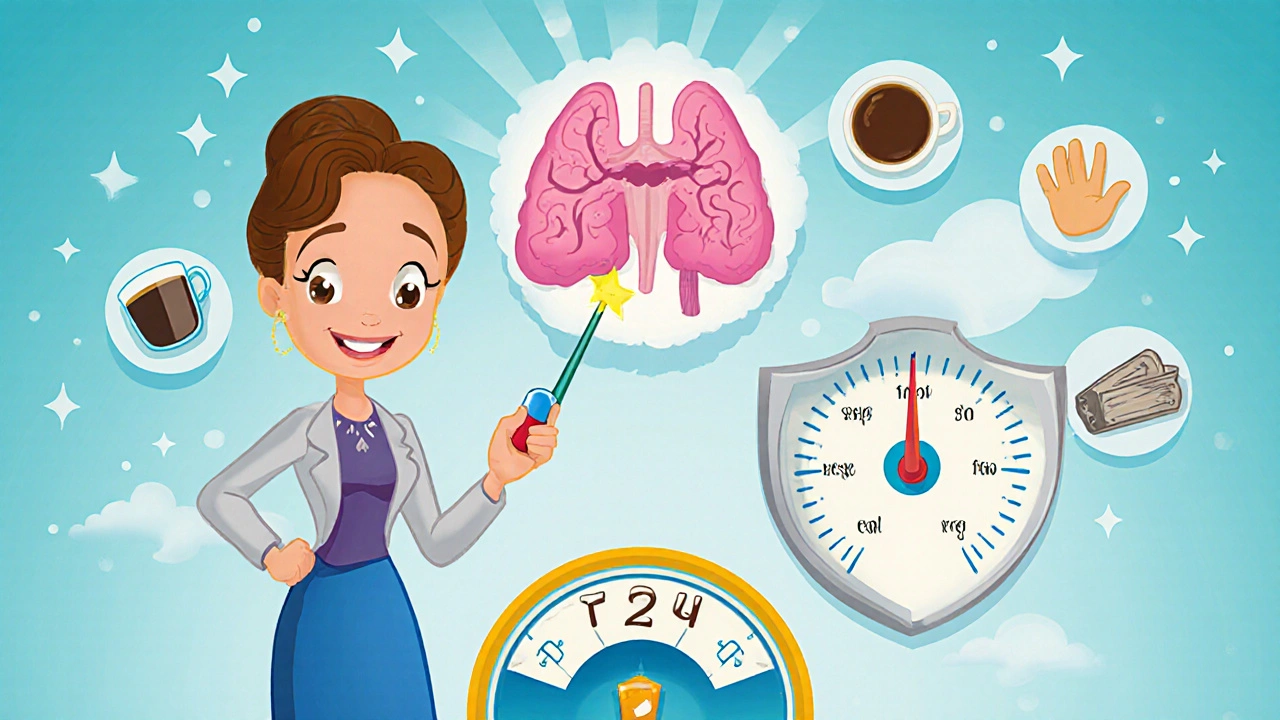
When and How Often to Test TSH
After starting levothyroxine, your first TSH test should be at 6 to 8 weeks. If your dose needs adjusting, you’ll repeat the test another 6 to 8 weeks later. Once your TSH is stable and you’re feeling well, annual testing is enough for most people.But there are times you need more frequent checks:
- Starting or stopping estrogen pills, birth control, or hormone replacement therapy
- Beginning or ending iron, calcium, or proton pump inhibitor (PPI) use-these can block levothyroxine absorption
- Weight changes over 10%-more body mass means you need more hormone
- Pregnancy or planning to become pregnant
- Switching brands of levothyroxine-even generics can vary slightly in absorption
Some patients report frustration with the 6- to 8-week wait. Reddit forums are full of people saying, “I feel awful, but I have to wait two months to adjust my dose.” But here’s the thing: testing more often doesn’t help. Your body needs time to respond. Jumping between doses too quickly can cause your TSH to swing wildly, making you feel worse.
What Your Symptoms Tell You (And What They Don’t)
Symptoms matter-but not as a replacement for TSH. If you’re tired, gaining weight, or feeling depressed, and your TSH is above 4.0, that’s a sign your dose is too low. If you’re anxious, losing weight without trying, or having heart palpitations, and your TSH is below 0.4, you’re probably over-replaced.But here’s the catch: some people feel fine with a TSH of 3.5. Others feel awful at 2.0. That’s because optimal TSH varies by person. The 2023 JAMA study found that people with a certain gene variant (DIO2) do better with TSH targets in the lower half of normal-0.4 to 2.0 mIU/L. If you’re still symptomatic despite a “normal” TSH, talk to your doctor about adjusting toward the lower end. You’re not imagining it.
Don’t rely on antibody levels to track progress. TPOAb levels can stay high for years-even after your thyroid function is perfectly controlled. Testing them repeatedly doesn’t change your treatment. The American Thyroid Association says it clearly: “Repeating thyroid antibody levels is not needed.”
What’s New in Hashimoto’s Management
New research is making treatment more personal. The FDA approved the first home TSH test (ThyroChek) in 2021, which could eventually let patients monitor their levels between doctor visits. But labs still recommend professional testing for accuracy, especially at low TSH levels.Pregnancy guidelines are evolving too. New trimester-specific targets are being adopted: under 2.5 in the first trimester, under 3.0 in the second and third. This reflects better understanding of how the placenta affects thyroid hormone needs.
Combination T4/T3 therapy is still not recommended for routine use. A 2022 Cochrane Review looked at 11 studies and found no consistent benefit over levothyroxine alone. Most patients do better with T4 only.
Manufacturing standards for levothyroxine improved after the FDA’s 2018 guidelines. Before that, switching between brands could cause TSH spikes because potency varied. Now, generics are held to tighter standards, making treatment more predictable.
Living With Hashimoto’s: Practical Tips
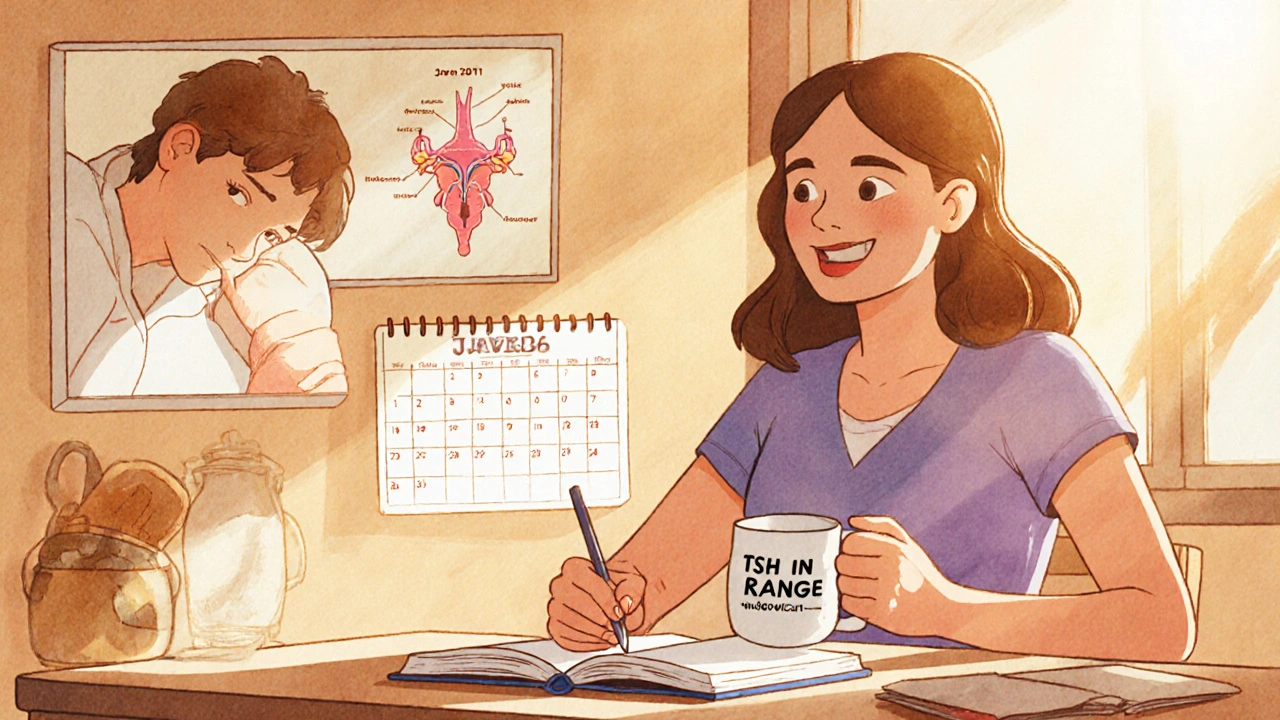
- Take levothyroxine on an empty stomach, at least 30-60 minutes before breakfast. Coffee, calcium, and iron can block absorption. - Avoid taking supplements within 4 hours of your pill. Many multivitamins contain iron or calcium. - Keep a symptom journal. Note energy levels, sleep, mood, and weight. Bring it to appointments. - Don’t panic over a single high TSH. One test doesn’t define your treatment. Look at trends over months. - If your doctor won’t adjust your dose despite symptoms and high TSH, seek a second opinion. Endocrinologists specialize in this, but many GPs manage it well too.Hashimoto’s isn’t curable-but it’s completely manageable. You don’t need to feel tired all the time. You don’t need to gain weight without reason. With the right dose of levothyroxine and consistent TSH monitoring, you can live without symptoms. The key is patience, consistency, and trusting the data-not just how you feel on a given day.
Can Hashimoto’s thyroiditis be cured?
No, Hashimoto’s thyroiditis cannot be cured. It’s a lifelong autoimmune condition. Once the thyroid tissue is damaged, it doesn’t regenerate. But it can be effectively managed with daily levothyroxine medication. Most people achieve full symptom relief and normal thyroid function with consistent treatment and proper TSH monitoring.
Why do I need to take levothyroxine for life?
Your immune system has destroyed much of your thyroid’s ability to produce hormones. Levothyroxine replaces the missing T4 hormone your body needs to function. Without it, you’ll develop symptoms of hypothyroidism-fatigue, weight gain, depression, cold intolerance, and more. Taking it daily keeps your metabolism, energy, and brain function normal. It’s not a cure, but it’s essential for daily health.
Can I stop taking levothyroxine if I feel better?
No. Feeling better means your dose is working-not that your thyroid has healed. Stopping levothyroxine will cause your TSH to rise again within weeks, and symptoms will return. Your thyroid can’t recover from the autoimmune damage. Lifelong replacement is necessary. Never stop or change your dose without medical supervision.
Why does my TSH keep changing even though I take the same dose?
Many factors affect how your body absorbs levothyroxine. Changes in diet, supplements (like iron or calcium), medications (like PPIs or estrogen), weight, or even the brand of generic you’re using can cause small shifts in TSH. Pregnancy, illness, or stress can also temporarily alter hormone needs. That’s why regular testing is important-even if you’re on a stable dose.
Should I get tested for thyroid antibodies every year?
No. Once Hashimoto’s is diagnosed by elevated TPOAb levels, repeating antibody tests adds no value for treatment. Antibody levels don’t predict how well your medication is working or whether your condition is getting worse. They stay high even when your thyroid function is perfectly controlled. The only test you need to monitor is TSH.
Is it safe to take iodine supplements with Hashimoto’s?
Generally, no. While iodine is needed for thyroid hormone production, excess iodine can trigger or worsen autoimmune attacks in Hashimoto’s. Most people in developed countries get enough iodine from salt, dairy, and seafood. Supplements like kelp, iodine drops, or multivitamins with iodine can push your immune system into overdrive, increasing antibody levels and worsening inflammation. Avoid them unless your doctor specifically recommends them.
What to Do Next
If you’ve been diagnosed with Hashimoto’s, make sure you’re getting TSH tested at least once a year-or more often if your dose changed recently. Keep a record of your results and symptoms. If you’re still tired, gaining weight, or feeling down despite a “normal” TSH, ask your doctor about targeting the lower end of the range. Don’t accept feeling unwell as just part of aging. With the right dose and consistent monitoring, you can feel like yourself again.If you’re not yet diagnosed but have symptoms like persistent fatigue, unexplained weight gain, dry skin, or brain fog-get your TSH checked. Early diagnosis means earlier treatment, fewer complications, and better quality of life.
Finally someone gets it TSH is the only thing that matters stop chasing T3 T4 and antibodies
I was diagnosed five years ago and felt like a different person after finding the right dose. It’s not magic but consistency makes all the difference. Don’t give up.
So let me get this straight you want me to believe some lab number is more important than how I actually feel? I’ve been on levothyroxine for eight years and my TSH is ‘normal’ but I still feel like a zombie. Your advice is why people die waiting for test results.
Oh wow another person who thinks TSH is the gospel. Let’s ignore the fact that 40% of patients with ‘normal’ TSH still have debilitating symptoms. The real issue here is that endocrinologists are lazy and refuse to look beyond the algorithm. You’re not helping anyone by parroting guidelines written by committees who’ve never met a real patient.
took me 3 years to find a doctor who listened. i started keeping a journal and brought it to every appointment. it made all the difference. dont let anyone tell you your symptoms arent valid.
In India we dont have access to regular testing many people just take pills and hope for the best. TSH is important but what about those who cant even afford a test every year? Your advice is for rich countries only.
It is imperative to underscore that the American Thyroid Association’s guidelines are grounded in rigorous meta-analyses and longitudinal studies. Deviating from evidence-based protocols risks iatrogenic harm. TSH remains the gold standard for a reason.
My doctor refused to adjust my dose even though I was crying every day and gaining 20 pounds in 6 months. I had to threaten to go to the press before he finally listened. This system is broken. They treat us like numbers not humans.