
Home Hemodialysis: Schedules, Training, and Outcomes Explained
What Is Home Hemodialysis?
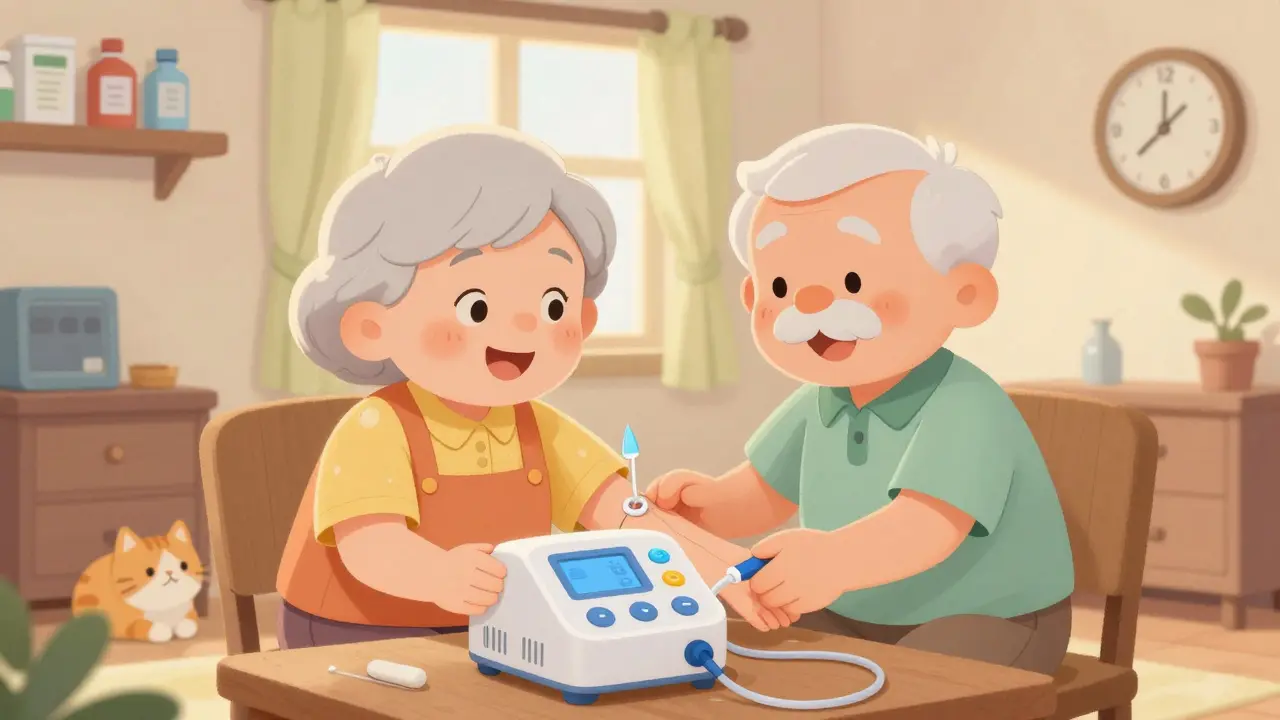
Home hemodialysis means doing your dialysis treatments in your own house instead of going to a clinic three times a week. It’s not just a convenience-it’s a different way of managing kidney failure that can change how you feel every day. Patients who choose this option use a machine to filter waste and extra fluid from their blood, just like in-center dialysis, but they do it on their own schedule, often more frequently and for longer periods.
The machines used today are far simpler than the ones from decades ago. Companies like Fresenius and NxStage made them smaller, quieter, and easier to use. You don’t need a hospital room. A corner of your living room or spare bedroom with a dedicated power outlet, water line, and drain is enough. But it’s not just about the machine. Success depends on training, support, and sticking to a routine.
How Long Does Training Take?
Training for home hemodialysis isn’t a quick online course. It’s hands-on, intensive, and usually lasts between three and eight weeks. Some people finish in as little as three weeks if they’ve already practiced self-needling during in-center sessions. Others take up to 12 weeks, especially if they’re learning everything from scratch.
You and your care partner-usually a spouse, family member, or close friend-both go through the same training. You’ll learn how to set up the machine, connect the tubing, insert needles into your fistula or graft, monitor your blood pressure, track fluid removal, and respond to alarms. You’ll also learn how to clean the machine, order supplies, store them properly, and recognize warning signs like low blood pressure or air in the lines.
Medicare covers up to 25 training sessions, which helps cover the cost. But the real measure of readiness isn’t time-it’s competence. Programs like the one at the University of Washington use virtual reality simulators to practice needle insertion before touching a real patient. Those who train this way hit 92% competency rates, compared to 78% with traditional methods.
The biggest hurdle? Self-needling. About 45% of trainees find inserting the needles into their own access the most stressful part. But with practice, most get used to it. Many say it becomes routine-like brushing your teeth.
What Are the Different Schedules?
Home hemodialysis isn’t one-size-fits-all. There are three main schedules, each with different benefits:
- Conventional home hemodialysis: Three times a week, 3-4 hours per session. This looks like in-center dialysis, but you do it at home-maybe early morning or late at night. It’s a good starting point if you’re new to home therapy.
- Short daily home hemodialysis: Five to seven times a week, 2-3 hours per session. This is where real improvements happen. Studies show people on this schedule have 28% lower risk of dying compared to those on standard in-center dialysis. Blood pressure improves, heart strain drops, and you feel less tired.
- Nocturnal home hemodialysis: Done while you sleep, 3-7 nights a week, 6-10 hours per session. This slow, long treatment clears toxins more completely. Patients often see phosphate levels drop by 42%, meaning they need fewer phosphate-binder pills-sometimes 3 fewer per day. Many report sleeping better, eating more freely, and having more energy.
The key difference? Frequency and duration. More frequent, longer treatments mean your body isn’t overwhelmed between sessions. You’re not bouncing between extreme highs and lows in fluid and toxins. That’s why survival rates are better and quality of life improves.

Who Needs a Care Partner?
Almost every home hemodialysis program requires a trained care partner. You cannot dialyze alone. This isn’t a suggestion-it’s a safety rule. The Maryland Department of Health and other agencies state clearly: “The patient cannot dialyze alone, but must ALWAYS have a trained partner or spouse present during treatment.”
Your care partner learns everything you do: setting up, starting the machine, handling alarms, recognizing symptoms like cramping or dizziness, and even performing emergency stops. They’re your backup, your eyes, and your hands when you’re tired or dizzy.
But here’s the hard truth: about 30% of people who want to do home dialysis don’t have someone who can or will be their partner. That’s a major barrier. Some try to train a friend or neighbor, but it’s not easy. Relationships can get strained. On Reddit’s kidney community, 41% of users said their home dialysis routine caused tension with their care partner.
There are exceptions. Portable machines like the NxStage System One can be used solo under strict conditions, but they require extra training, special equipment, and approval from your doctor. Solo treatment is rare, not standard.
What Do You Need at Home?
You don’t need a whole new room, but you do need a dedicated space. Think 6 feet by 6 feet-enough to fit the machine, storage shelves, and room to move safely. The machine needs a dedicated 120-volt, 20-amp electrical circuit. No extension cords. No sharing outlets with other big appliances.
Water is critical. Your machine needs purified water. Most homes need a reverse osmosis (RO) system installed near the sink. It must be tested monthly for bacteria and chemicals. You’ll keep logs of chlorine levels, water pressure, and cleaning schedules. Your clinic will check these regularly.
Plumbing is another factor. You’ll need a drain line that can handle the waste fluid-usually a special adapter that connects to your sink or laundry tub. Water pressure must be between 40 and 80 psi. If your house is older, you might need a plumber to upgrade your lines.
Supplies? You’ll get deliveries every 2-4 weeks: dialysis solution bags, needles, tubing, alcohol wipes, bandages, and cleaning supplies. You’ll need to store them in a clean, dry area. Some people use a small closet or cabinet just for dialysis items.
What Are the Real Outcomes?
People who do home hemodialysis don’t just live longer-they live better.
A 2019 review in the American Journal of Kidney Diseases found home dialysis patients scored 37% higher on quality-of-life surveys than those doing in-center treatments. They reported less fatigue, fewer cramps, and more freedom to work, travel, or spend time with family.
Survival data from the U.S. Renal Data System shows home hemodialysis patients have a 15-20% lower risk of death compared to those on standard in-center dialysis. But here’s the catch: that advantage is strongest with frequent or nocturnal schedules. If you’re only doing three sessions a week, the benefit shrinks.
One study found nocturnal patients needed 3.2 fewer phosphate-binder pills per day. That’s not just convenience-it’s fewer stomach problems, less cost, and better bone health.
Dr. Steven Weisbord from the University of Pittsburgh says the biggest predictor of success isn’t technical skill-it’s psychological readiness. Are you anxious? Do you feel overwhelmed? Do you have someone to lean on? Those factors matter more than how fast you can set up the machine.

Why Isn’t Everyone Doing It?
If home dialysis is better, why is it still so rare? Only 12% of U.S. dialysis patients use it. Here’s why:
- Not every clinic offers it. The NIDDK says only 12% of dialysis centers in the U.S. even have home training programs.
- Training is expensive and time-consuming. Nephrologists say 71% of centers lack enough staff to train patients properly. Medicare pays for training, but not enough to cover the staff hours needed.
- Doctors still default to in-center. Many nephrologists aren’t trained to push home dialysis as a first option. They assume patients won’t want it-or can’t handle it.
- Travel is hard. Standard machines aren’t portable. If you want to visit family across the country, you have to plan ahead and find a clinic that can take you. Portable machines help, but they’re not widely available yet.
But things are changing. The 2021 Advancing American Kidney Health initiative aimed for 80% of new patients to start on home dialysis or transplant by 2025. We’re nowhere near that. But new FDA-approved machines like the WavelinQ endoAVF system and expanded use of the NxStage System One are making it easier.
Starting in 2025, Medicare will pay based on patient outcomes-not just where the treatment happens. That could push more clinics to invest in home programs. If you’re doing well at home, they get paid more. That’s a game-changer.
What Do Patients Really Say?
On forums like AAKP and Reddit, home dialysis users are honest. Here’s what they say:
- Pros: 92% love the schedule flexibility. 85% say they have more energy. 78% save at least 10 hours a week by skipping clinic trips.
- Cons: 67% hate machine alarms in the middle of the night. 58% struggle with keeping track of supplies. 52% feel trapped by their care partner’s availability.
- Biggest surprise: Many say they wish they’d started sooner. One woman wrote: “I thought I’d be too scared. Turns out, I was more scared of staying on in-center dialysis.”
The emotional shift is real. People go from feeling like patients to feeling like people again. They cook dinner. They go to their grandkid’s soccer game. They sleep through the night. That’s not just medical success-that’s life.
Is Home Hemodialysis Right for You?
Ask yourself these questions:
- Do you have someone reliable who can be with you during every treatment?
- Are you comfortable learning new technology and following strict routines?
- Can you handle the responsibility of managing your own care?
- Do you want more control over your schedule and diet?
- Are you willing to make small changes to your home for space and plumbing?
If you answered yes to most of these, home hemodialysis could be a better fit than in-center treatment. Talk to your nephrologist. Ask if your clinic offers training. If they don’t, ask them to refer you to a center that does. You deserve a treatment that fits your life-not the other way around.