
How Clinician Communication Shapes Patient Beliefs About Generic Medications
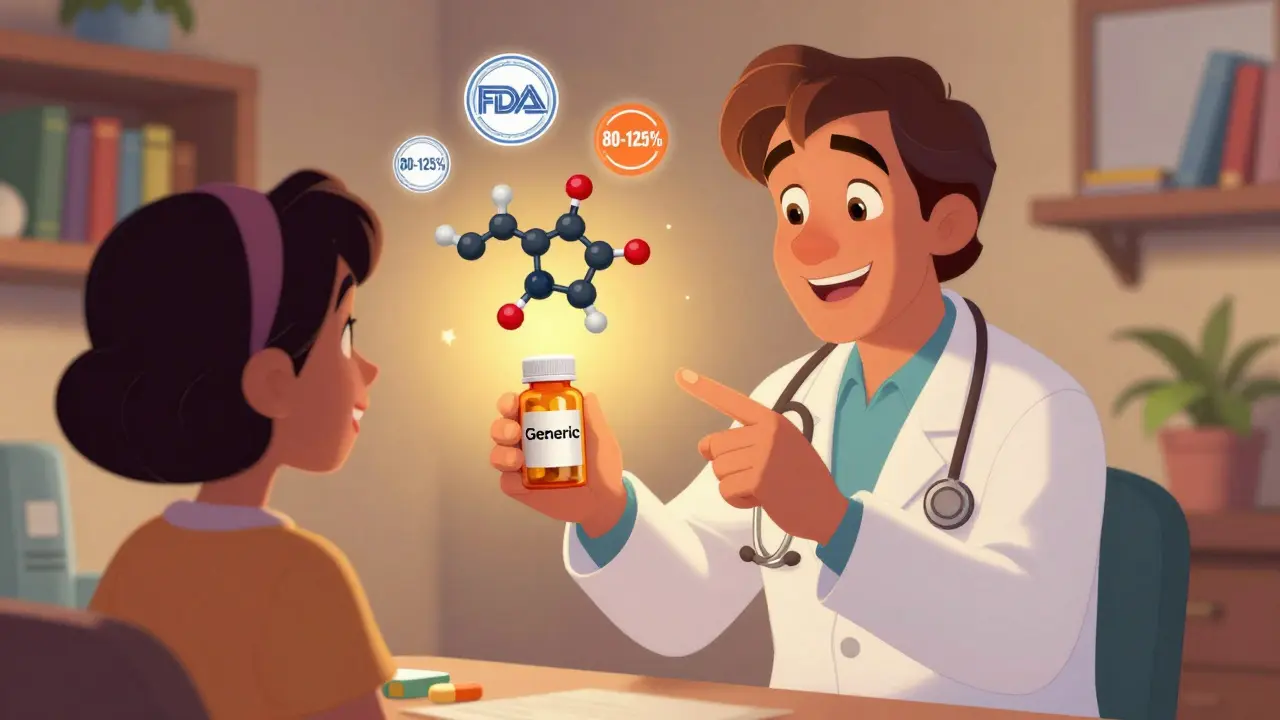
When your doctor hands you a prescription for a generic drug, you might not think twice-unless they say nothing at all. That silence speaks louder than any label on the pill bottle. Many patients assume generic medications are inferior, cheaper versions of the real thing. But the truth? They’re not. The generic medications you get at the pharmacy have the same active ingredients, same dosage, same safety profile as the brand-name version. The only difference? Price. And yet, patient skepticism persists-not because of science, but because of how clinicians talk (or don’t talk) about them.
Communication Is the Biggest Factor in Accepting Generics
A 2011 study of nearly 2,000 patients found something surprising: whether someone accepted a generic drug had almost nothing to do with cost, personal beliefs about safety, or even how much they trusted their doctor. The one thing that made the biggest difference? Whether their clinician actually talked to them about it. Patients who received even a brief explanation were 37% more likely to stick with the generic. That’s not a small boost. That’s a game-changer. It’s not about giving a lecture. It’s about saying the right thing at the right time. One patient in a 2023 Reddit thread shared how their cardiologist spent 10 minutes showing them FDA data on amlodipine-explaining that the generic version was identical to Norvasc, and even admitting he took generics himself. That patient has been on the generic for two years with zero issues. Contrast that with a Healthgrades review from 2022: a patient stopped taking their generic blood pressure medication after their pharmacist said, “Some people react to generics.” No data. No reassurance. Just a shrug. The result? Three weeks without treatment.Why Patients Think Generics Don’t Work
The FDA requires generics to be bioequivalent-meaning they deliver the same amount of active ingredient into the bloodstream within an 80-125% range of the brand. That’s not a loophole. That’s science. It’s the same standard used for brand-name drugs. But patients don’t know that. A 2015 study found nearly 30% believed brand-name drugs were more effective. Over half said their doctor never discussed generics. And 52% said their pharmacist didn’t either. That gap isn’t about ignorance. It’s about missed opportunities. When a clinician says, “Let’s try the generic and see how it goes,” they’re not being helpful. They’re planting doubt. That phrase implies uncertainty. It tells the patient, “I’m not sure this will work either.” And guess what happens? The body responds. A 2019 JAMA study showed patients who received clear, confident communication about generics reported 28% fewer side effects-like headaches or nausea-after switching. Why? Because expectation shapes experience. If you believe the generic will make you feel worse, your brain finds a way to make that true. That’s the nocebo effect. And it’s real.What Effective Communication Actually Looks Like
There’s a proven formula for turning skepticism into trust. Four key points must be covered:- Same active ingredient. “This pill has the exact same medicine as the brand name. It’s not a copy. It’s the same drug.”
- FDA approval means it works. “The FDA requires these to be as effective as the brand. They test them just as hard.”
- Cost savings matter. “This will save you about 80%-that’s $100 a month instead of $500.”
- Address fears head-on. “Some people worry about generics because they’ve heard rumors. But if you’ve taken the brand before, this will work the same way.”
One Size Doesn’t Fit All
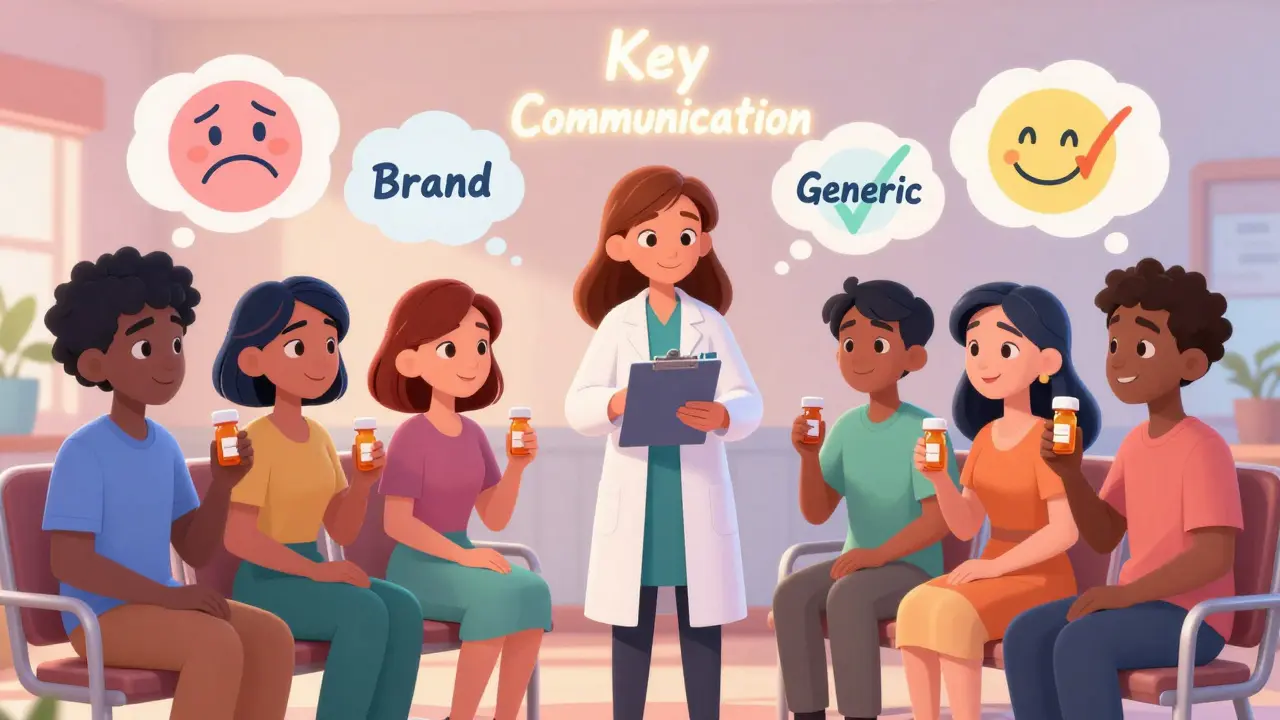
Not all patients respond the same way. A 2016 NIH survey found non-Caucasian patients were 1.7 times more likely to distrust generics. Patients earning under $30,000 a year were 2.3 times more likely to insist on brand names. Why? Past experiences. Marketing. Cultural beliefs. A 2021 study showed that when clinicians used culturally competent language-tailoring examples, using familiar terms, acknowledging real concerns-skepticism dropped by 41%. A simple script won’t work if it doesn’t match the patient’s world. One patient might need to hear, “This is what your insurance wants you to take.” Another might need, “Your cousin took this and it worked fine.” The message stays the same. The delivery changes.When Silence Costs More Than Money
In 2022, Americans filled 8.9 billion prescriptions. Ninety percent of them were generics. But only 23% of total drug spending went to them. That’s because brand-name drugs cost 10 times more. Generics save $37 billion a year. And yet, brand preference requests have climbed from 12% in 2010 to 23% in 2022. Why? Because communication hasn’t kept up. Only 38% of physicians and 52% of pharmacists consistently talk to patients about generics. Meanwhile, 78% of positive patient reviews about generics mention communication as the reason they trusted the switch. Eighty-nine percent of negative reviews blame poor or no communication. The cost isn’t just financial. It’s clinical. Patients who stop taking their meds because they think the generic won’t work end up back in the ER. They risk heart attacks, strokes, uncontrolled diabetes. That’s not just a bad experience. It’s a failure of care.
Tools Are Here. Adoption Isn’t.
The tools to fix this exist. Kaiser Permanente’s “Generic First” program used mandatory training and standardized scripts to push generic use to 94%. They saved $1.2 billion in one year. Epic Systems launched a “Generic Confidence Score” in 2024 that pops up during EHR visits, reminding doctors to cover the four key points. The FDA now offers free patient materials in 12 languages. Medicare is starting to tie reimbursement to whether providers document these conversations. But adoption is slow. Why? Time. Many doctors say they don’t have 30 seconds. A 2020 study found the average time spent discussing generics was just 1.2 minutes. But training shows you can do it in under a minute. You don’t need a long talk. You need a clear one.What You Can Do as a Patient
If you’re handed a new pill and feel unsure, ask:- “Is this the same medicine as the brand name?”
- “Has the FDA approved it to work the same way?”
- “Why is it cheaper?”
- “Have you taken this yourself?”
It’s Not About Money. It’s About Trust.
Generics aren’t second-rate. They’re science-backed, cost-effective, and just as safe. The problem isn’t the drug. It’s the conversation. When clinicians treat communication as a routine step instead of a clinical intervention, patients lose. When they treat it like part of the treatment plan-like prescribing the right dose or timing the refill-patients win. The future of affordable care depends on it. As complex generics like inhalers and injectables enter the market, trust will matter more than ever. If we don’t fix how we talk about these drugs, we’ll keep losing patients-not to bad medicine, but to bad messaging.Do generic medications work as well as brand-name drugs?
Yes. The FDA requires generic medications to contain the same active ingredients, in the same strength, and to work the same way in the body as the brand-name version. They must meet strict bioequivalence standards-delivering between 80% and 125% of the brand’s blood concentration. This isn’t a guess. It’s tested in clinical trials. Thousands of studies confirm generics are equally effective.
Why do some people feel worse after switching to a generic?
Often, it’s not the drug-it’s the expectation. This is called the nocebo effect. If a patient believes the generic won’t work or will cause side effects, their brain can trigger real symptoms like headaches or nausea. A 2019 JAMA study found patients who received clear, confident communication about generics reported 28% fewer side effects than those who didn’t. The drug didn’t change. The message did.
Should I ask my doctor about switching to a generic?
Absolutely. You have the right to know your options. Ask if a generic version is available, if it’s appropriate for your condition, and why the doctor recommends it. If they say, “It’s cheaper,” ask follow-up questions: “Is it the same medicine?” “Has it been tested?” “Will it work the same way?” Don’t accept silence. Good communication is part of good care.
Are there cases where generics don’t work as well?
For the vast majority of drugs-like blood pressure pills, statins, or antibiotics-generics are identical in effect. There have been rare exceptions, like a 2012 issue with a generic version of bupropion, where manufacturing inconsistencies caused temporary problems. But those are outliers. The FDA now requires stricter testing for complex generics, and any issues are quickly addressed. The risk of a generic failing is far lower than the risk of not taking your medicine at all because you believe it won’t work.
Why do pharmacists sometimes not explain generics?
Time, training, and workflow. Many pharmacists are overwhelmed, and communication about generics isn’t always built into their routine. But that’s changing. Training programs now show that even a 60-second explanation increases acceptance by 24 percentage points. The American Pharmacists Association now provides ready-made scripts and tools to make this easier. If your pharmacist doesn’t explain, ask. You’re not being difficult-you’re being proactive about your health.
Can I ask for the brand name instead of the generic?
Yes, you can. But ask why. If your doctor says the brand is necessary for your condition-like in epilepsy or thyroid disorders-then it’s worth discussing. But if the reason is just “I’ve always prescribed it,” that’s not enough. Generics are the standard of care. Unless there’s a clear medical reason, choosing the brand means paying more for the same medicine.
Doctors act like prescribing a generic is some kind of favor they're doing you. It's not. It's the standard. The FDA doesn't approve junk. If your pill looks different, that's the manufacturer, not the medicine.
It is an absolute disgrace that the American public has been misled into believing that pharmaceutical regulation is anything less than rigorous. The FDA's bioequivalence standards are not merely scientific-they are legally binding, peer-reviewed, and subject to international harmonization. To suggest otherwise is not just incorrect-it is dangerously patriotic.
I had the same thing happen with my cholesterol med. Doctor just said 'try the generic' and walked out. I ended up googling everything and found out the same active ingredient was used. Now I take it without a second thought. Funny how a two-sentence explanation would’ve saved me three days of panic.
Same drug. Same results. Just cheaper.
Stop overthinking it.
Let’s be real here-most people don’t understand pharmacology, and that’s fine. But when you have a doctor who treats the conversation about generics like an afterthought, you’re not just risking patient compliance-you’re enabling a system that treats human beings like cost centers. I’ve seen patients stop their meds because their doctor said ‘it’s basically the same’-as if ‘basically’ is good enough for something that keeps them alive. That’s not negligence. That’s malpractice by omission. And the worst part? The system rewards it. Insurance companies push generics. Doctors get paid the same whether they explain it or not. So why bother? Because someone’s life might depend on it. And if you’re the one who didn’t say a word? You’re part of the problem.
It’s wild how something so simple-talking to your patient-can have such a huge impact. I’ve seen the difference in my own family. One relative was scared of generics. Another got a clear explanation and never looked back. Communication isn’t fluff. It’s medicine.
Belief shapes biology. If you think it won’t work, your body listens. The nocebo effect isn’t in your head-it’s in your nerves, your hormones, your stress response. We treat the pill, but we ignore the story behind it. Maybe the real prescription isn’t the drug. It’s the words that come with it.
Don’t be fooled. The FDA is a puppet of Big Pharma. Generics are filled with fillers and inactive ingredients that aren’t tested. The ‘bioequivalence’ range? That’s a loophole designed to let cheap foreign labs slip in substandard drugs. You think your blood pressure med is the same? Ask yourself-who made it? Where? And why does the brand name cost ten times more? Coincidence? Or a controlled market? The truth is buried under jargon. Wake up.
Thank you for this thoughtful and well-researched piece. 🙏 The distinction between clinical efficacy and patient perception is one of the most profound yet overlooked aspects of modern healthcare. I believe that cultural competence in communication is not merely an ethical imperative but a clinical necessity. May we all strive to speak with clarity, humility, and compassion.
It's worth noting that the FDA's bioequivalence criteria-80–125% AUC and Cmax-are derived from statistically powered, double-blind, crossover trials under fasting conditions. The therapeutic window for most small-molecule drugs is sufficiently wide to accommodate this variance without clinical consequence. That said, the variance is not uniformly distributed across drug classes; for narrow-therapeutic-index agents (e.g., levothyroxine, warfarin, phenytoin), the data still supports non-inferiority, but requires more vigilant monitoring. The real issue isn't pharmacokinetics-it's the failure of provider education and patient-facing communication infrastructure.
OMG YES. I used to be terrified of generics until my pharmacist sat me down and said, ‘Honey, your blood pressure pill is the same exact molecule your doctor used to give you-just without the fancy packaging and marketing team.’ I cried. Not because I was sad-because I finally felt seen. That 60-second chat saved me $80 a month and my sanity. If you’re a provider reading this: don’t just hand out pills. Hand out trust. It’s cheaper than ER visits.
I swear, this is why I stopped trusting doctors. I switched to a generic and started getting these awful headaches. I told my doctor and they just said, ‘It’s probably stress.’ Then I found out the pharmacist told someone else the generic ‘can cause weird reactions.’ So now I’m stuck paying $500 a month for the same damn pill. I’m not crazy. I’m just tired of being treated like a guinea pig. And now my anxiety is worse because I don’t know what’s real anymore. This system is broken.
My dad took a generic heart med for 5 years. Never had a problem. He said the doctor just told him, ‘Same medicine, less money.’ That’s all he needed. Simple. Clear. No drama. Works every time.