
How Dextromethorphan (DXM) Abuse Happens with OTC Cough Syrups
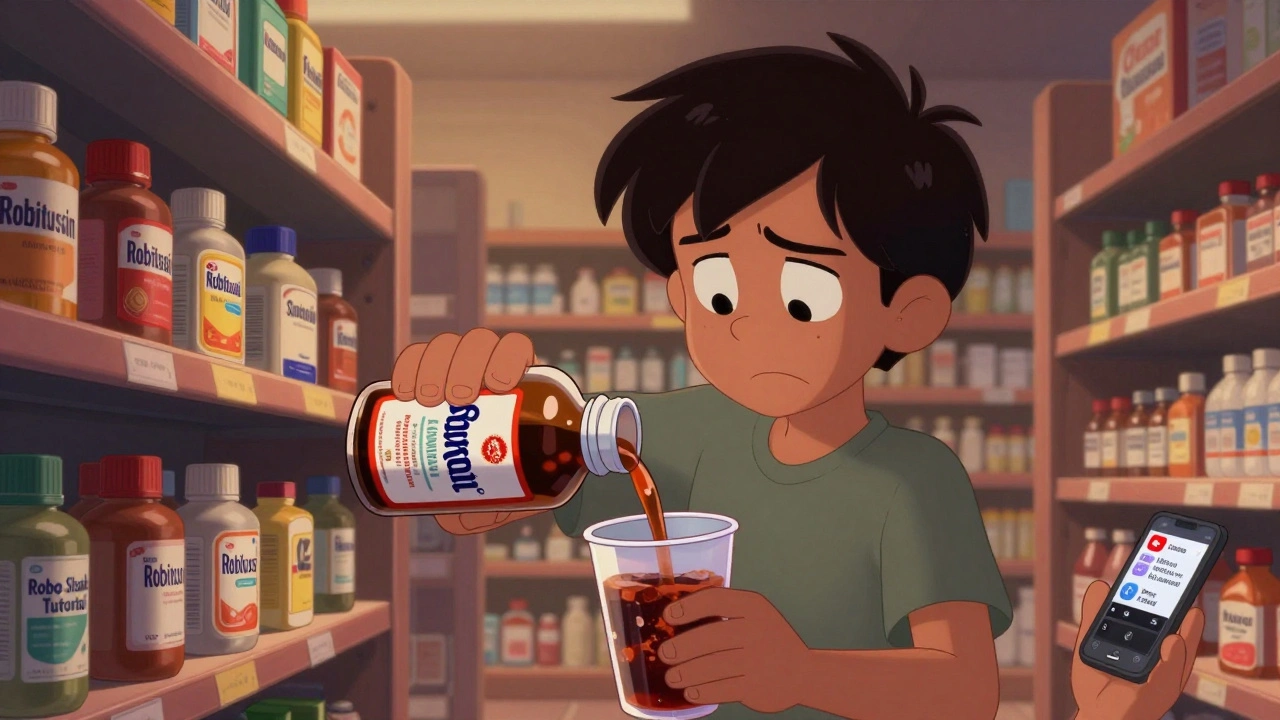
Every year, thousands of teens and young adults swallow bottles of cough syrup-not because they’re sick, but because they’re trying to get high. The drug they’re chasing is dextromethorphan, or DXM, a common ingredient in over-the-counter cold and flu remedies. It’s legal. It’s cheap. And it’s sitting right there on the pharmacy shelf next to pain relievers and throat lozenges. But when taken in massive doses, DXM doesn’t just stop a cough-it rewires your brain, distorts reality, and can land you in the emergency room.
What Is Dextromethorphan, Really?
Dextromethorphan is a synthetic cough suppressant first approved by the FDA in 1958. Unlike codeine, it doesn’t relieve pain or cause physical dependence when taken as directed. That’s why drugmakers added it to more than 100 OTC products-from Robitussin DM and NyQuil to DayQuil, Coricidin, and Dimetapp. You’ll find it labeled as “DM,” “Tuss,” or “Cough Suppressant” on the bottle. The normal dose? 15 to 30 milligrams every 4 to 8 hours. That’s it. Enough to quiet a stubborn cough. Nothing more.
But here’s the problem: at doses 5 to 50 times higher, DXM starts acting like a dissociative drug-similar to ketamine or PCP. People who abuse it call it “robo tripping,” “dexing,” or “candy.” At 240 mg or more, users report out-of-body experiences, blurred vision, slurred speech, and hallucinations. Some say they feel like they’re floating. Others describe being trapped inside their own heads. It’s not a party trick. It’s a neurological overload.
How Do People Abuse It?
Abuse doesn’t start with a lab or a dealer. It starts with a bottle of cough syrup bought with cash at the corner store. Teens and young adults often drink entire bottles-or multiple bottles-in one sitting. Some mix it with soda or alcohol to mask the bitter taste. Others use a method called the “robo shake”: drink a huge amount of syrup, then force yourself to throw up to get rid of the sugar and other ingredients while letting the DXM absorb through the stomach lining.
More advanced abusers skip the syrup entirely. They buy DXM powder online or extract it from pills using simple chemical methods. YouTube videos and underground forums have detailed guides on how to do it. Once purified, DXM can be snorted, swallowed in capsules, or even injected. Pure DXM powder is far more dangerous than syrup. One wrong scoop-and you’ve overdosed.
The Plateaus: What Happens When You Take Too Much
DXM abuse isn’t random. Users follow a pattern called “plateaus,” each one triggered by a specific dosage range:
- First plateau (100-200 mg): Mild euphoria, slight dizziness, warmth, and altered perception. Like a heavy buzz.
- Second plateau (200-400 mg): Distorted sounds and colors, blurred vision, nausea, and loss of coordination. People start feeling detached from their bodies.
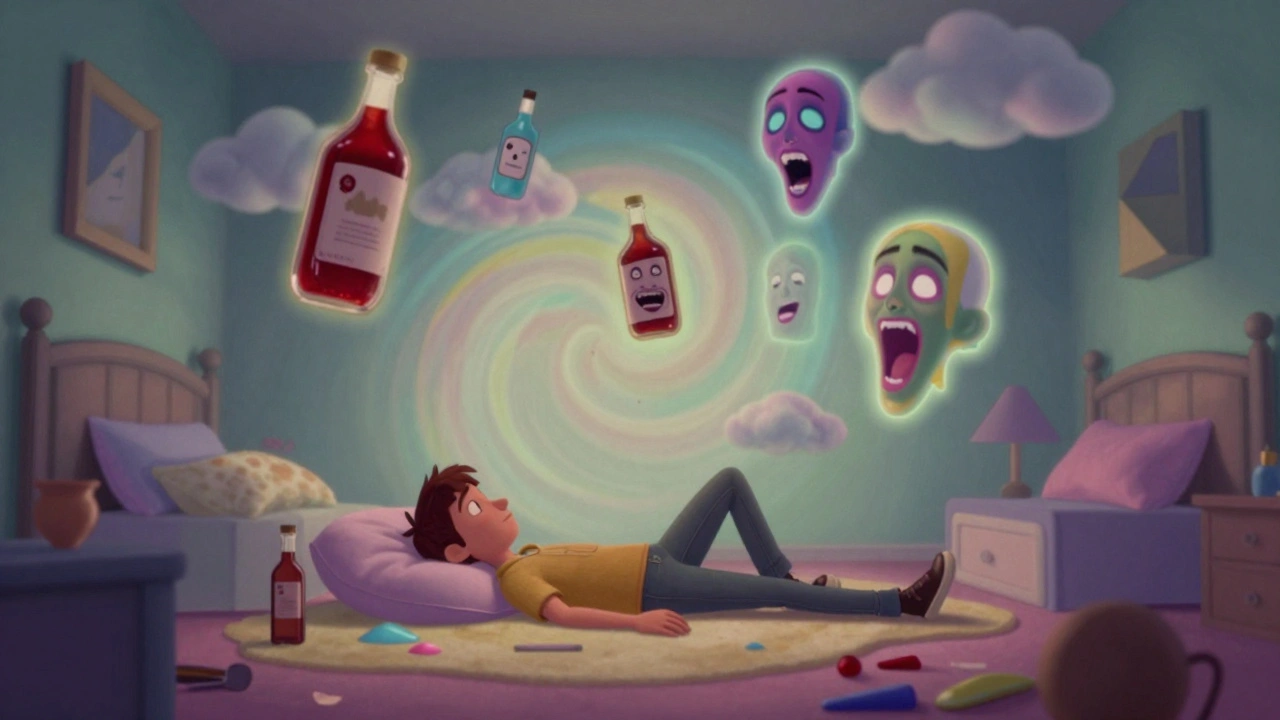
- Third plateau (400-600 mg): Intense dissociation. Users feel like they’re floating, watching themselves from outside. Hallucinations begin. Some can’t speak or move.
- Fourth plateau (600+ mg): Complete loss of touch with reality. Out-of-body experiences, delusions, paranoia, and sometimes psychosis. This is where brain damage, seizures, and death become real risks.
These aren’t myths. They’re documented effects from emergency room reports and medical journals. The National Institute on Drug Abuse found that 3% of teens admit to abusing DXM-containing cough syrup at least once. That’s 1 in 30. And many do it repeatedly.
The Hidden Dangers: When DXM Turns Deadly
DXM alone can cause vomiting, rapid heartbeat, high blood pressure, and seizures. But the real danger comes when it’s mixed with other substances. Many cough syrups already contain acetaminophen, antihistamines, or decongestants. Taking extra doses means overdosing on those too. Acetaminophen overdose can destroy your liver. Antihistamines can cause coma.
Combine DXM with alcohol? That’s a death sentence. Both depress the central nervous system. Together, they can shut down breathing. The Mount Sinai Health Library has documented multiple teen deaths from this combo.
And then there’s MDMA, cocaine, or antidepressants. Mixing DXM with these can trigger serotonin syndrome-a life-threatening surge of brain chemicals that causes fever, muscle rigidity, and organ failure. One case study from 2022 involved a 17-year-old who died after taking DXM and ecstasy together. He had no history of drug use. Just a bottle of Robitussin and a friend’s advice: “Take four.”
Why Is It So Easy to Abuse?
Because no one thinks it’s a drug. Parents don’t lock up cough syrup. Pharmacies don’t require ID. Teens don’t see it as “drugs” like cocaine or heroin. They see it as medicine. And that’s the trap.
It’s cheap. A bottle of Coricidin HBP Cough & Cold costs less than $5. A single bottle can contain enough DXM for a full trip. Compare that to a gram of marijuana or a pill of Adderall. DXM is the poor man’s hallucinogen. It’s accessible, legal, and unregulated-at least for now.
The Drug Enforcement Administration (DEA) has watched this trend for years. In 2004, they warned that DXM abuse was rising and that it might soon be classified as a controlled substance. That hasn’t happened yet. But some states have moved. New Mexico, for example, passed laws restricting sales to minors. Other states require pharmacies to keep DXM products behind the counter. But enforcement is patchy. And online sales of pure DXM powder are growing fast.
What Does Recovery Look Like?
Not everyone who abuses DXM becomes addicted. Many try it once, have a terrifying experience, and never touch it again. But for others, it becomes a pattern. The National Institute on Drug Abuse says DXM can lead to psychological dependence. Users report cravings, anxiety when they can’t get it, and withdrawal symptoms like irritability and insomnia.
Treatment isn’t always medical. Many cases resolve on their own once the person stops using. But for those who’ve been abusing it for months or years, therapy is essential. Cognitive behavioral therapy helps them understand why they turned to DXM in the first place-whether it was boredom, trauma, peer pressure, or mental health struggles.
And here’s the hard truth: hospitals don’t have a “DXM antidote.” Treatment is supportive-monitoring heart rate, controlling seizures, managing vomiting, and waiting for the drug to leave the system. Survival depends on how fast someone gets help. If you or someone you know takes too much, call 911. Don’t wait. Don’t assume they’ll “sleep it off.”
What Parents and Educators Should Know
If you’re a parent, check your medicine cabinet. Look for bottles with “DM” on the label. Ask your kids what they’ve heard about “robo.” Don’t assume they’re too smart to try it. The teens who abuse DXM aren’t the ones skipping school or wearing all black. They’re the honor students, the athletes, the quiet ones.
Teachers and school counselors need to talk about it too. DXM abuse isn’t just a “drug problem.” It’s a public health blind spot. Most school drug programs don’t even mention OTC medications. That needs to change.
And if you’re a teen reading this? If you’ve ever taken more than the label says, you’re not alone. But you’re also not invincible. One bad trip can change your life-or end it.
DXM is safe when used correctly. But when it’s used to escape, to feel something, to get high-it becomes a weapon. And like any weapon, it’s only as dangerous as the person holding it.
my cousin did this once and woke up in the ER screaming about his socks talking to him. no joke. i still don't get why he thought it was a good idea.
the fact that you can buy this stuff next to aspirin is insane. my local pharmacy doesn't even ask for ID. how is this legal? 🤡
my heart goes out to anyone who's been through this. i used to work in ER and saw way too many kids come in after 'robo tripping'. it's not a party, it's a cry for help. 💔
they’re hiding the truth. Big Pharma doesn’t want you to know DXM is a gateway. The DEA knows this. The FDA knows this. But they let it slide because the profit margins on cough syrup are too good. And don’t get me started on the YouTube tutorials… they’re not just videos, they’re recruitment tools. 🕵️♂️
i remember trying it once in college. thought i was being clever. ended up sitting on my bathroom floor for 6 hours thinking my cat was a government spy. never again. 🤦♂️
in india we have this same problem with codeine syrups but no one talks about it. everyone thinks it's just 'medicine' until someone stops breathing. the government does nothing. the pharmacies sell it like candy. what a joke
you know what’s wild? the fourth plateau sounds exactly like what people describe after DMT or ayahuasca. but instead of a spiritual experience, it’s just a chemical breakdown. and nobody gets to come back with wisdom. they just come back with brain fog and a new fear of mirrors
Let me be clear: DXM abuse is a symptom of a society that has abandoned meaningful connection. Teenagers aren't seeking euphoria-they're seeking transcendence. And when the world offers them nothing but sugar-coated chemicals, what else can they do? 🧘♂️
i just want to say thank you for writing this. my sister got hooked on it last year. she’s okay now, but we almost lost her. this post is the kind of thing we needed back then.
of course this is happening. we live in a world where you can buy a 1000mg capsule of pure DXM on eBay with a fake ID. the fact that this isn't classified as a Schedule II drug is proof that our entire regulatory system is broken. the elite don't care because their kids aren't drinking Robitussin.
there’s something deeply tragic about how we treat pain. we don’t teach kids how to sit with discomfort, so they reach for chemicals that make them forget they have bodies. DXM isn’t the problem. It’s the silence. The loneliness. The lack of someone saying, ‘I see you.’
we treat addiction like a moral failure instead of a cry for belonging. and until we do that, no law or pharmacy shelf will fix this.
as a mental health clinician, i can confirm: DXM abuse is often comorbid with untreated anxiety and dissociative tendencies. the plateau model? that’s not just pharmacology-it’s a neurological mirror of emotional detachment. recovery isn’t about stopping the drug. it’s about rebuilding the self that felt unworthy of existing without it.
it’s just a cough syrup. until it’s not.