
How the FDA Ensures Generic Drug Safety Through Manufacturing Oversight
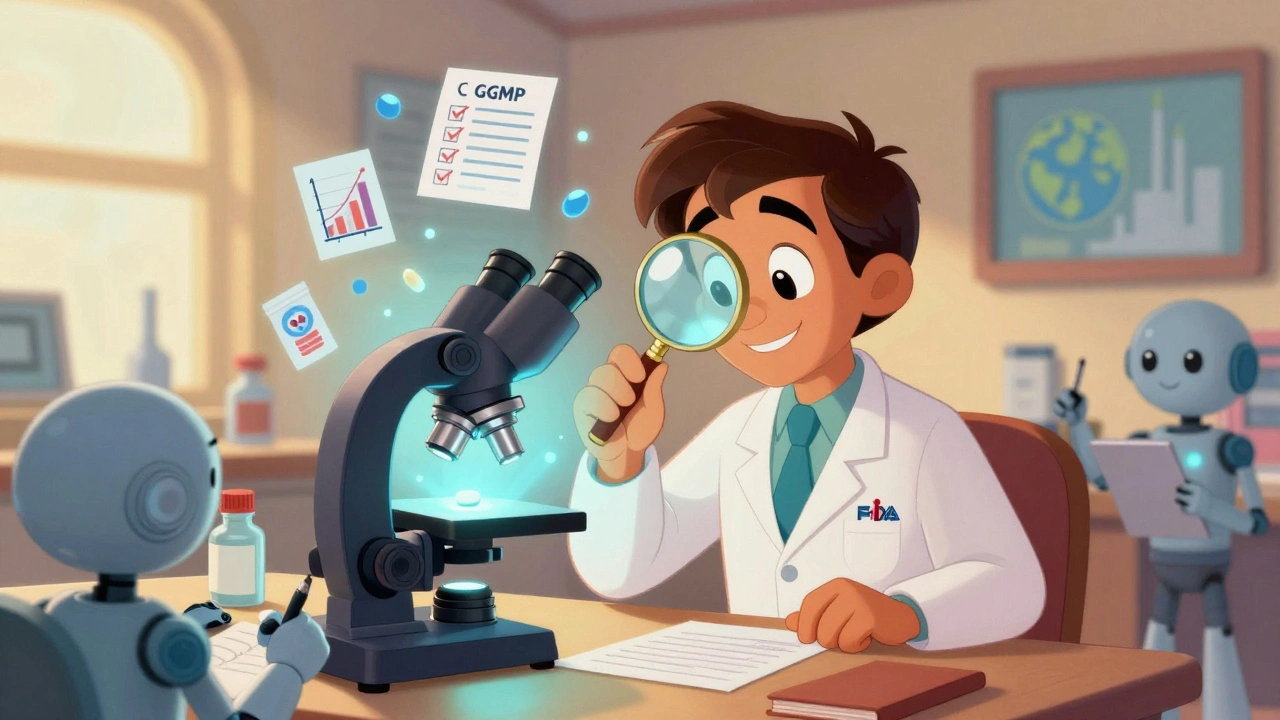
When you pick up a generic pill at the pharmacy, you expect it to work just like the brand-name version. You don’t want to wonder if it’s weaker, less safe, or made in a facility with poor standards. The truth is, generic drugs are held to the same strict standards as brand-name drugs - and the FDA makes sure of it. But how? It’s not magic. It’s a detailed, multi-layered system of inspections, reviews, and ongoing surveillance that starts long before the drug hits the shelf and never really stops.
Approval Isn’t Just a Formality - It’s a Deep Dive
The FDA doesn’t approve generic drugs the same way it approves new ones. Brand-name drugs go through years of clinical trials to prove they’re safe and effective. Generic drugs don’t need to repeat those trials. Instead, they use a shortcut called the Abbreviated New Drug Application (ANDA). But don’t let the word “abbreviated” fool you. The process is still intense.For a generic drug to get approved, it must prove it’s bioequivalent to the brand-name version - meaning it delivers the same amount of active ingredient into your bloodstream at the same rate. The FDA requires this to be within 90-110% of the original. That’s not a guess. It’s measured through controlled studies with real people. If the numbers are off, the application gets rejected.
But bioequivalence is just one part. The FDA also checks the drug’s ingredients, strength, dosage form, and labeling. Every word on the label must match the brand-name drug. No hidden warnings. No misleading claims. Even the color and shape of the pill are reviewed to avoid confusion.
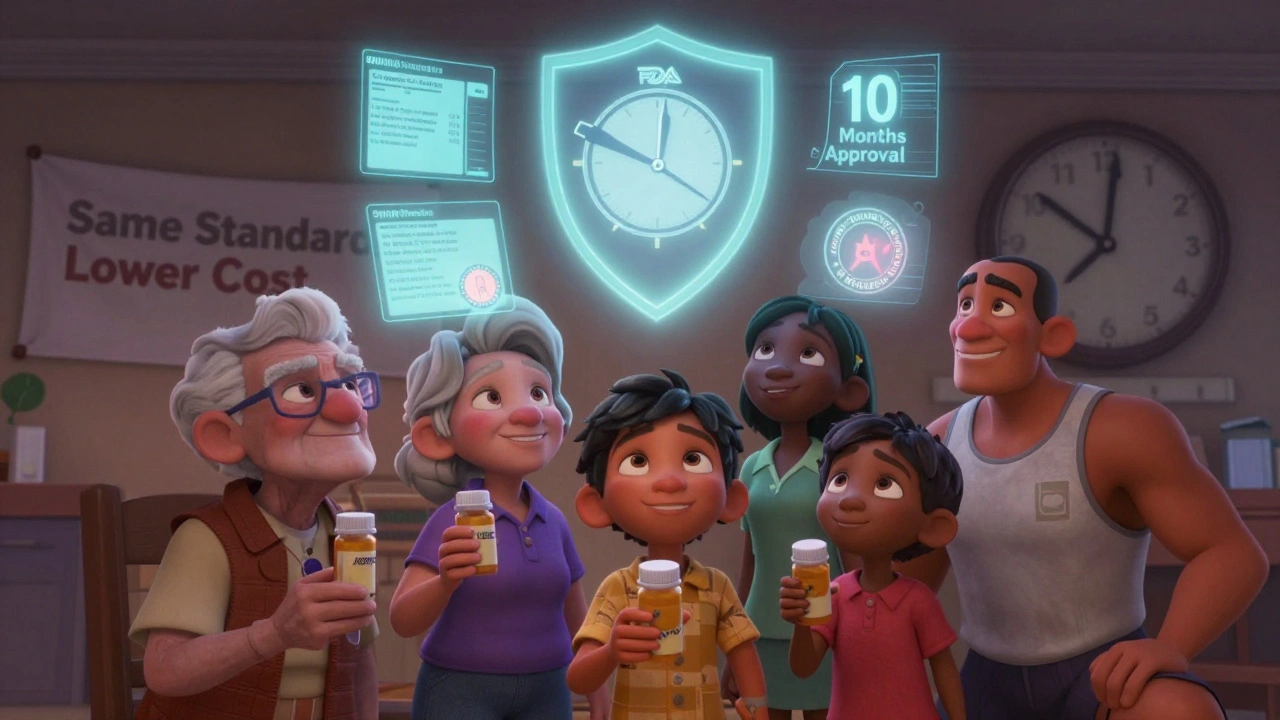
And then there’s the manufacturing site. Before approval, the FDA inspects every facility that makes the drug - whether it’s in Ohio or India. If the plant doesn’t follow Current Good Manufacturing Practices (cGMP), the application gets a complete response letter. That means the company has to fix the problems and resubmit. Some applications go through multiple rounds of review. One cycle can take months. The whole process used to take over two years. Thanks to user fees under GDUFA, it’s now under 10 months for most applications.
Manufacturing Rules: No Room for Cut Corners
The FDA doesn’t just look at the final product. It watches how it’s made. Every step of the process is regulated under cGMP rules. These aren’t suggestions. They’re legal requirements.First, raw materials must be tracked from the moment they arrive. If a supplier sends contaminated powder, the FDA needs to know where it came from, who used it, and which batches were affected. That’s called traceability. Without it, a single bad batch could reach thousands of patients.
Second, every manufacturing step has a written procedure. Mixing, drying, coating, packaging - each one is documented and monitored. Machines are calibrated. Temperatures are logged. Humidity is controlled. If a parameter goes out of range, the batch is quarantined. No exceptions.
Third, every batch of finished product is tested in a lab. The FDA requires validated methods to confirm the drug contains the right amount of active ingredient, is free from harmful impurities, and won’t break down too quickly on the shelf. Impurities? Even tiny amounts of unexpected chemicals are flagged. The Office of Pharmaceutical Quality reviews these using the same standards applied to brand-name drugs.
These aren’t theoretical rules. In 2019, FDA inspections found quality issues in 15% of foreign generic drug plants - compared to just 8% in the U.S. That’s why inspections are no longer random. They’re risk-based. A plant with past violations gets visited more often. A plant with clean records gets less frequent checks - but still gets checked.

Global Supply Chain, Local Standards
Over 80% of the active ingredients in U.S. generic drugs come from outside the country - mostly India and China. That means the FDA has to inspect facilities halfway around the world. In 2021, the agency conducted 1,082 inspections globally. By 2025, that number is expected to hit 1,500 thanks to increased funding under GDUFA III.It’s not easy. Travel costs, language barriers, and political hurdles make foreign inspections complex. But the FDA doesn’t cut corners. Inspectors are trained to spot the same problems everywhere: falsified records, unclean equipment, lack of proper training, or skipping tests. In one case, a facility in India was caught retesting failed batches until they passed - a clear violation. The FDA shut down imports from that site.
The Drug Supply Chain Security Act (DSCSA) adds another layer. By 2023, every prescription drug in the U.S. must have an electronic track-and-trace system. That means if a problem arises, the FDA can pinpoint exactly which boxes are affected - down to the individual bottle. No more guessing. No more recalls that sweep up millions of safe pills.
What Happens After Approval?
Many people think once a drug is approved, the FDA walks away. That’s not true. In fact, the real work often starts after approval.The FDA monitors all drugs on the market through MedWatch, a system where doctors, pharmacists, and patients can report side effects. Each year, the agency receives about 1.3 million reports. Some of those involve generic drugs. If a pattern emerges - say, more reports of dizziness or liver problems with a specific generic version - the FDA’s Division of Clinical Safety and Surveillance investigates.
They don’t just look at the reports. They cross-check them with sales data, pharmacy records, and even social media chatter. If a generic version is causing more issues than the brand-name drug, the FDA can take action. That could mean updating the label to add a warning, requiring the manufacturer to run new studies, or even asking for a voluntary recall.
In 2021, the FDA took regulatory action on over 200 generic drugs based on post-market data. That includes issuing “Dear Healthcare Provider” letters - official notices sent to doctors warning them about potential risks. These aren’t rare. They’re part of the system.
Why This Matters - Real Numbers, Real Impact
Generic drugs make up 90% of all prescriptions filled in the U.S. But they cost only 23% of what brand-name drugs do. In 2022 alone, they saved the healthcare system $313 billion. That’s not just a statistic. That’s money in people’s pockets. It’s insulin that’s affordable. Blood pressure pills that don’t require rationing. Antibiotics that aren’t out of reach.But that savings only works if the drugs are safe. If people lose trust in generics because of quality issues, they’ll pay more for brand names - or skip treatment entirely. The FDA’s oversight system exists to prevent that.
Every time a generic drug is approved, inspected, or monitored, it’s because someone - a chemist, an inspector, a pharmacist - made sure it met the same standard as the original. There’s no compromise. No shortcuts. No exceptions.
What’s Next?
The FDA is now focusing on harder-to-copy drugs - things like inhalers, injectables, and topical creams. These aren’t simple pills. Their performance depends on complex delivery systems. The agency has launched the Complex Generic Drug Products Initiative to create specific guidance for these. In 2023, they released new bioequivalence recommendations for over 2,800 drug products - a 40% increase since 2018.And the system keeps evolving. With GDUFA III, the FDA is investing in real-time data tools that can flag potential problems faster. They’re training more inspectors. They’re partnering with international regulators to share data. The goal? To make sure that no matter where a generic drug is made, it meets the same U.S. standard.
Generic drugs aren’t second-rate. They’re rigorously tested, closely watched, and constantly monitored. The FDA doesn’t just approve them - it stands behind them.
Are generic drugs as safe as brand-name drugs?
Yes. The FDA requires generic drugs to have the same active ingredient, strength, dosage form, and route of administration as the brand-name version. They must also prove bioequivalence - meaning they work the same way in the body. The agency reviews manufacturing quality, labeling, and safety data just as strictly as it does for brand-name drugs.
Does the FDA inspect foreign generic drug factories?
Yes. The FDA inspects both U.S. and foreign manufacturing sites. In 2021, over half of the inspections were conducted overseas. By 2025, the agency plans to conduct 1,500 inspections annually, with a focus on high-risk facilities. Foreign plants are held to the same cGMP standards as U.S. ones.
How does the FDA know if a generic drug causes side effects after it’s on the market?
The FDA uses MedWatch, a system that collects reports of adverse events from doctors, pharmacists, and patients. It also analyzes pharmacy sales data and uses proactive data tools to spot unusual patterns. If a generic drug shows more side effects than expected, the FDA investigates and can update labels, require new studies, or request a recall.
Why do some generic drugs look different from the brand-name version?
The active ingredient must be identical, but inactive ingredients - like color, flavor, or filler - can differ. These don’t affect how the drug works. The FDA allows differences in appearance to avoid trademark issues, but the drug’s performance, safety, and strength are unchanged.
What happens if a generic drug factory fails an FDA inspection?
If a facility fails an inspection, the FDA can refuse to approve new products from that site. It can also block imports of already-approved drugs. In serious cases, the agency issues a warning letter and requires the company to fix the issues before resuming production. Some plants are shut down entirely until they meet standards.
So let me get this straight - we’re trusting pills made in India with the same rigor as ones made in Ohio? And somehow, that’s not a joke? 😏
Anyway, I’ve been taking generics for 12 years. No weird side effects. No magic tricks. Just cheaper pills that work. FDA’s doing something right.
Bro, you have NO idea how bad it is out here. I work in a pharma lab in Hyderabad, and let me tell you - half the time, the raw materials are just dust with a label. The FDA thinks they’re inspecting, but they send some guy who speaks zero Hindi, gets served chai, and signs off because ‘the building looks clean.’
And don’t even get me started on the ‘bioequivalence’ studies - they use 20 healthy college kids who’ve never taken a pill before, then extrapolate to 300 million Americans. That’s not science, that’s a lottery.
And the worst part? The same plant that made the batch you took last week? It’s now making insulin for diabetics in Nebraska. No one’s checking if the vials were washed with the same water used to clean the toilets. 😅
Yeah sure, the FDA ‘monitors’ things. But if you think they’re catching anything real, you’re delusional. They inspect 1,500 plants a year? There are over 10,000 global facilities making generic drugs. That’s like checking 15% of your house for mold and calling it a home inspection.
And don’t even mention GDUFA - that’s just Big Pharma paying the FDA to look the other way. You think they want generics to be safe? They want them to exist so you stop complaining about $500 insulin.
Wake up.
It’s worth noting that the FDA’s cGMP framework for generics is aligned with ICH Q7 guidelines - which are globally harmonized. The bioequivalence thresholds (90–110% AUC and Cmax) are statistically validated and based on pharmacokinetic modeling, not arbitrary thresholds.
What’s often misunderstood is that ‘same active ingredient’ doesn’t mean ‘identical formulation’ - excipients can vary, which is why some patients report different tolerability, but not efficacy.
The real issue isn’t regulatory failure - it’s supply chain opacity. That’s why DSCSA is such a critical step forward. Real-time traceability reduces recall scope by >90%.
Oh wow, the FDA is ‘standing behind’ generics. How noble. Next they’ll be handing out gold stars to the factories that don’t falsify batch records.
Let’s be real - if you’ve ever had a generic that made you feel like a zombie or gave you a rash, you’re not ‘imagining it.’ You’re just one of the 80% of people who don’t report it because ‘it’s probably just me.’
And yes, I know the FDA ‘inspects.’ But they inspect after the fact. By then, the damage is done. And the company? They just reapply with a new lab coat.
Just wanted to say I really appreciate how thorough this breakdown is. I used to think generics were sketchy, but after reading this, I get it now. The system’s not perfect, but it’s way more robust than most people realize.
Also, props to the inspectors traveling all over the world - that’s not an easy job. Respect.
For anyone worried about foreign manufacturing: think of it like this - the FDA doesn’t care where you’re from, they care if you follow the rules. And if you’re cutting corners, they’ll find you.
They’ve shut down entire plants in China and India for things like backdating logs or skipping dissolution tests. That’s not ‘overreach’ - that’s accountability.
And the fact that they’re now focusing on complex generics like inhalers? That’s next-level science. You’re not just matching a pill - you’re matching a delivery system. It’s like replicating a jet engine with a toy car.
Keep trusting the process. The data doesn’t lie.
Let’s be honest - this whole system is a cover-up. The FDA is in bed with the pharmaceutical conglomerates. Did you know the same people who write the GDUFA guidelines used to work for Pfizer? And those ‘inspections’? They’re scheduled. The plants clean up for a week, then go back to normal.
And the ‘medwatch’ reports? They’re buried. I’ve seen the internal emails - they classify 90% of generic-related adverse events as ‘non-actionable.’
Meanwhile, your kid’s asthma inhaler? Made in a factory where the workers don’t wear gloves. And you’re supposed to be grateful it’s $5?
Wake up. This isn’t safety. It’s corporate theater.
One might reasonably infer, from the foregoing exposition, that the regulatory architecture underpinning the approval and surveillance of generic pharmaceuticals in the United States is, in principle, both comprehensive and scrupulous. However, one cannot help but observe that the operational reality - particularly with regard to foreign inspection frequency and resource allocation - remains disproportionately attenuated relative to the scale of global manufacturing. A more robust and adequately funded inspectional regime would, one presumes, engender greater public confidence. As it stands, the system is, at best, a compromise.