
How to Discuss Generic Medications with Patients: A Provider’s Practical Guide
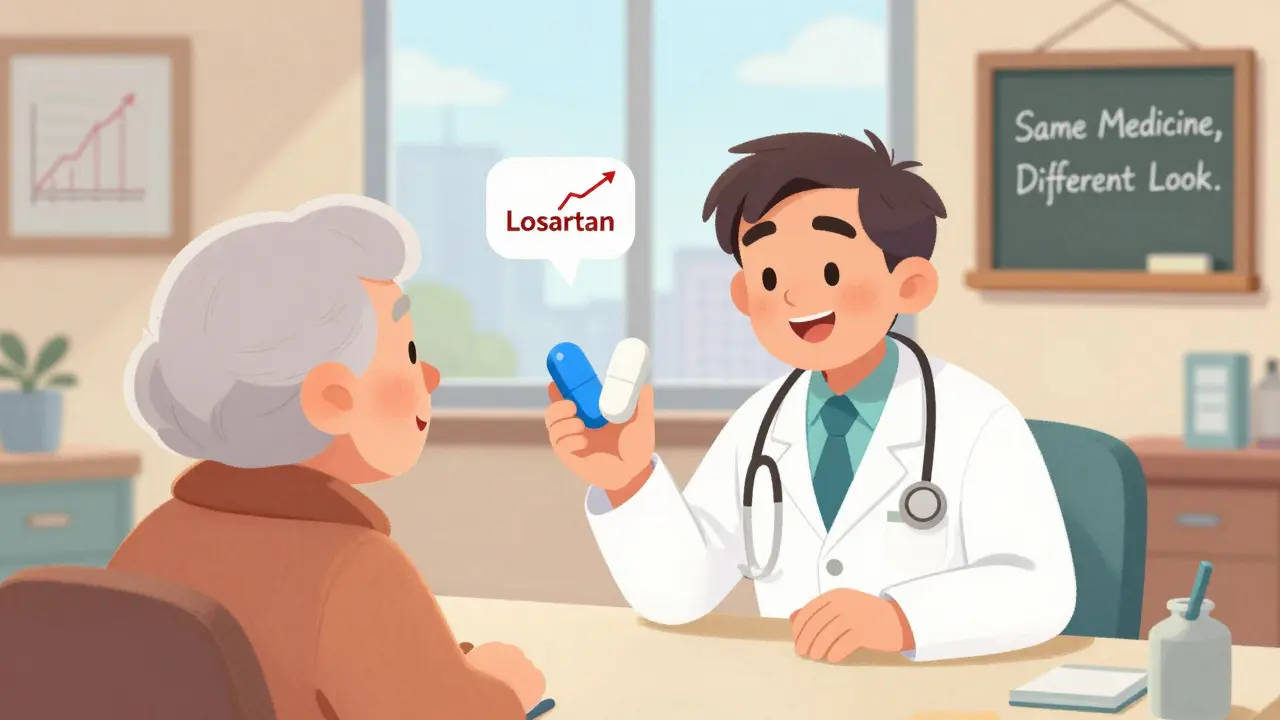
When you switch a patient from a brand-name drug to a generic, it’s not just a paperwork change. It’s a conversation that can make or break their health. Many patients worry: Is this really the same medicine? If they don’t trust the answer, they might skip doses, stop taking it altogether, or blame the drug when their condition doesn’t improve-even when the problem is non-adherence, not ineffectiveness.
Why Patients Doubt Generics
Most patients don’t know how generics are approved. They see a different color, shape, or size on the pill bottle and assume it’s inferior. One patient told me, "The blue pill made my blood pressure drop. The white one? Nothing happened." In reality, both pills had the same active ingredient-losartan. The difference? Inactive ingredients like dyes or fillers. These don’t affect how the drug works, but they can change how the pill looks or even how it tastes. A 2023 survey found that 63% of patient concerns about generics come from appearance changes. Another 27% are about effectiveness. Only 10% stem from past bad experiences. But even one bad experience-like a headache after switching-can stick in someone’s mind, especially if no one explained why the pill looked different. And it’s not just patients. Some doctors avoid mentioning generics because they fear pushback. But research shows that when providers talk about generics clearly and early, patients are more likely to stick with the treatment.What Generics Really Are
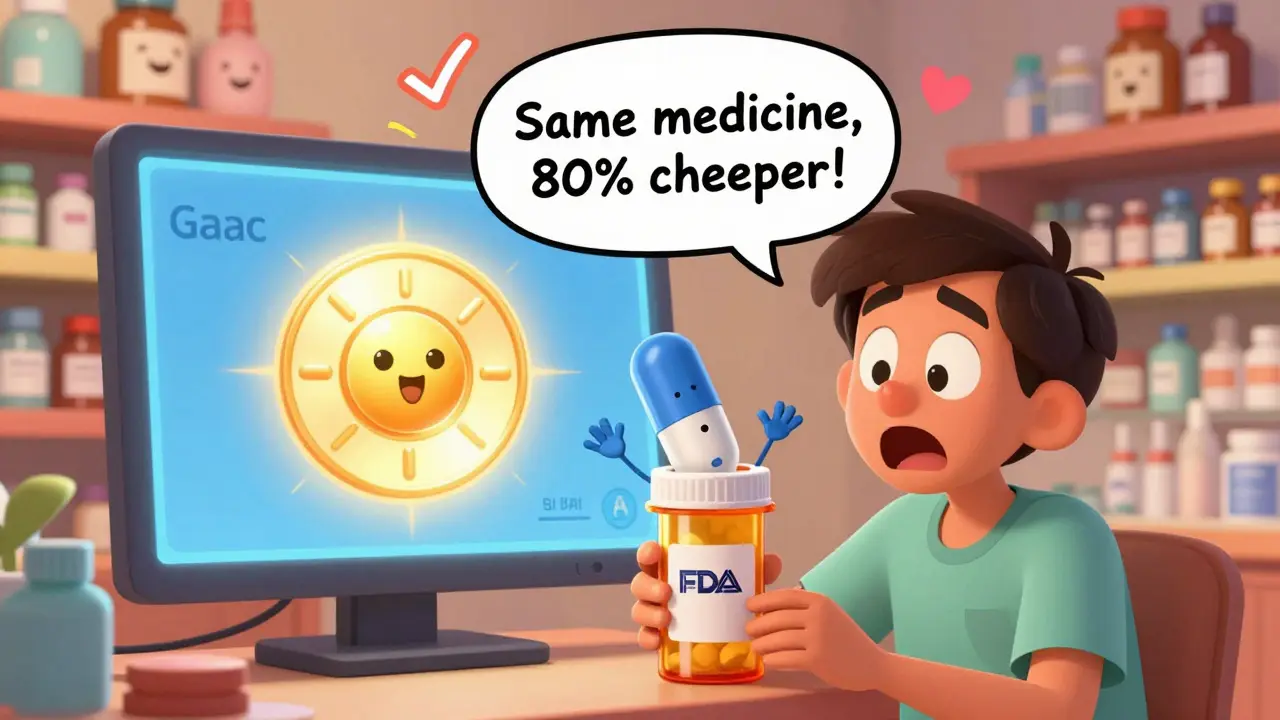
A generic drug isn’t a copy. It’s an FDA-approved version of a brand-name drug that must meet the same strict standards. The active ingredient? Identical. The strength? Exact. The way it’s taken-pill, injection, patch? The same. The FDA requires generics to deliver the same amount of medicine into the bloodstream at the same rate as the brand. That’s called bioequivalence. The acceptable range? 80% to 125% of the brand’s performance. That’s not a wide gap-it’s tight enough to ensure safety and effectiveness. Manufacturers don’t repeat expensive clinical trials. Instead, they prove their version works the same way as the original. That’s why generics cost 80-85% less. A brand-name statin might cost $300 a month. The generic? $15. For someone on Medicare or with high deductibles, that difference isn’t just money-it’s whether they can afford to take it every day. The FDA inspects generic manufacturing plants just as often as brand-name ones. In fact, many brand-name companies make their own generics under different labels. These are called authorized generics. They’re chemically identical to the brand, just sold without the marketing.When Generics Work Best
Generics shine in long-term conditions: high blood pressure, diabetes, cholesterol, depression, asthma. These are diseases where taking the medicine every day matters more than the brand name. Studies show that patients who switch to generics for chronic conditions often improve adherence because they can actually afford the pills. A 2022 study found that Medicare patients saved an average of $1,269 a year using generics. One woman switched from brand-name Crestor to generic rosuvastatin and cut her monthly cost from $320 to $12. She told her pharmacist, "I used to skip doses when my card got declined. Now I never miss one. I feel better than I have in years." For drugs with a narrow therapeutic index-like warfarin, levothyroxine, or phenytoin-doctors sometimes hesitate. Small changes in blood levels could matter. But the FDA requires extra scrutiny for these. All approved generics meet the same bioequivalence standards. The real risk isn’t the generic itself-it’s switching between multiple generic manufacturers without monitoring. If a patient is stable on one generic, don’t switch them unless necessary.The TELL Framework: How to Talk About Generics
The American Pharmacists Association recommends a simple, four-step method called TELL:- Tell them the generic has the same active ingredient. Use plain language: "This pill has the exact same medicine in it as your old one."
- Explain why it looks different. "Trademark laws mean the shape and color have to be different. Think of it like Coca-Cola and its store-brand cola-same taste, different packaging."
- Listen to their concerns. Don’t assume. Ask: "What are you worried about?" or "Have you had trouble with generics before?" Let them talk. Often, the fear is about cost, not science.
- Link it to their goals. "This change means you’ll save $300 a month. That’s enough for groceries, or a bus pass to get to your appointments."
What Not to Say
Avoid phrases like:- "It’s just as good." (Too vague. Patients hear "just" as "not really.")
- "The doctor ordered it." (Shifts blame. They’ll feel powerless.)
- "Everyone takes generics." (Makes them feel like a statistic.)
- "I’ve seen this work well for others with your condition."
- "This is what the FDA says is equivalent. I’m confident it will work for you too."
- "Let’s check in next month to see how you’re feeling."
Use the Teach-Back Method
After explaining, ask the patient to explain it back in their own words. "Can you tell me how you’ll describe this to your spouse?" Or, "What will you say if your neighbor asks why you switched pills?" Studies show this simple technique improves understanding by 40%. It catches misunderstandings before they become non-adherence. If they say, "It’s cheaper, so it’s weaker," you know you need to clarify again.Document the Conversation
Don’t assume the patient remembers what you said. Note in their chart: "Discussed generic substitution for metformin. Patient expressed concern about appearance change. Explained FDA bioequivalence standards. Patient agreed to trial. Follow-up scheduled in 4 weeks." This protects you legally, but more importantly, it helps other providers understand the patient’s history. If they come back saying, "This generic didn’t work," you’ll know you already addressed this-and what was said.
What to Do When They Still Say No
Some patients will refuse. That’s okay. Don’t push. But don’t give up either. Offer alternatives:- "Would you be open to trying a different generic manufacturer? Some brands make their own generics-same formula, different look."
- "We can check if your insurance covers the brand at a lower copay."
- "Let’s try the generic for one month. If you don’t feel the same, we’ll switch back."
The Bigger Picture
Generics aren’t just about saving money. They’re about access. In 2022, 90% of all prescriptions filled in the U.S. were generics. That’s up from 19% in 1984. The reason? The Hatch-Waxman Act made it possible. It saved the healthcare system $373 billion last year alone. But that number means nothing if patients don’t take the pills. Your job isn’t just to prescribe or dispense. It’s to make sure the medicine gets used. The FDA is now funding video-based patient education tools to help. Early results show combining video with a 3-minute conversation increases patient acceptance by 31%. You don’t need fancy tech. Just a phone, a clear explanation, and the willingness to listen.What’s Next
Biosimilars-complex generics for biologic drugs like insulin or rheumatoid arthritis treatments-are coming fast. The FDA has approved 43 so far. These are harder to explain because they’re not exact copies. But the same rules apply: transparency, listening, linking to goals. The future of healthcare isn’t just about new drugs. It’s about using what we already have-safely, effectively, and affordably. Generics are a huge part of that. But they only work if patients understand them.Are generic medications really as effective as brand-name drugs?
Yes. The FDA requires generics to have the same active ingredient, strength, dosage form, and route of administration as the brand-name drug. They must also prove bioequivalence-meaning they deliver the same amount of medicine into the bloodstream at the same rate. A review of 47 studies involving over 9,000 patients found no clinically significant difference in effectiveness between generic and brand-name cardiovascular drugs.
Why do generic pills look different from brand-name ones?
Trademark laws require generic manufacturers to make their pills look different from the brand-name version. This prevents confusion and protects the brand’s identity. The difference is only in color, shape, size, or inactive ingredients like dyes or fillers. These don’t affect how the medicine works-only how it looks or tastes.
Can switching to a generic cause side effects?
Side effects from switching are rare and usually tied to inactive ingredients, not the active drug. For example, someone allergic to a dye in one generic version might react to that specific pill. But this isn’t because the medicine is weaker-it’s because of the filler. If a patient reports new symptoms after switching, check the inactive ingredients. Switching to a different generic manufacturer may resolve it.
Are generics safe for chronic conditions like high blood pressure or diabetes?
Absolutely. Generics are the standard of care for chronic conditions. Studies show patients are more likely to take their medication consistently when it’s affordable. For example, switching from a $300 brand-name statin to a $15 generic can turn a patient who skips doses into someone who takes it daily. The key is communication-patients who understand why they’re switching are far more likely to stick with it.
What should I do if a patient refuses a generic because they think it’s "inferior"?
Don’t argue. Ask why they think that. Often, it’s because they’ve heard myths or had a bad experience with a different pill. Use the TELL method: Tell them it’s the same medicine, Explain the appearance difference, Listen to their concern, and Link the savings to their personal goals-like paying rent or buying groceries. Offer to try a different manufacturer or an authorized generic. Sometimes, just knowing they have a choice makes them more willing to try.
Do generics take longer to work than brand-name drugs?
No. The FDA requires generics to work at the same speed as the brand-name version. Bioequivalence testing ensures the medicine enters the bloodstream at the same rate and reaches the same level. If a patient says the generic "takes longer," it’s likely because they’re comparing it to a different formulation, or they’re experiencing placebo effects or psychological resistance to the change.
I used to think generics were sketchy until my mom switched from Lipitor to atorvastatin and saved $280/month. She didn’t even notice the difference-same pill, different color. Now she laughs at people who refuse them. The real issue? Doctors don’t explain it. They just hand over the script and walk away.
In India, generics are life. 💊 My uncle has diabetes-he’d be dead if he had to pay for brand-name metformin. We call them 'copy pills' 😅 but they work better than some fancy imported stuff. FDA standards? Yeah, we trust them. Also, the guy who makes the generic? He’s probably your neighbor. No corporate greed here.
Bioequivalence is defined as 80–125% AUC and Cmax relative to the reference product. This is not a 'wide gap'-it’s a tightly controlled pharmacokinetic window. The FDA’s ANDA pathway ensures therapeutic equivalence through rigorous in vitro and in vivo testing. The perception gap stems from cognitive bias, not pharmacological inadequacy.
I’m a nurse and I swear by generics. But I’ve seen patients panic when the pill changes color-like it’s magic or something. One guy thought the white pill was 'fake' because it didn’t have the same smell as the blue one. I had to explain that the smell came from the filler, not the medicine. He cried. I cried. We both got a new prescription.
I find it appalling that people still believe generics are inferior. It’s not just ignorance-it’s a failure of education. You’d never buy a knockoff Rolex and expect it to tell time better than the real one. But somehow, with pills, we’re all willing to gamble with our health because we’re too lazy to read the FDA’s 200-page guidance document. Shameful.
I switched my dad to generic lisinopril last year. He was scared at first-said the new pill made him feel 'off.' We sat down, I showed him the FDA page, and explained the dye thing. He started taking it again. Three months later? He says he feels better than he has in five years. And he saved $300. That’s not just a pill. That’s dignity.
I used to be one of those people who refused generics. Then I got laid off. Suddenly $300/month for my blood pressure med? Not happening. I tried the generic. Nothing happened. Literally. No side effects. No weird dreams. Just… my BP stayed down. I felt like an idiot. Why did I waste 3 years paying extra? I’m telling everyone now.
I’ve been a pharmacist for 18 years. I’ve seen people cry because they can’t afford their meds. Then I hand them the generic. Their face lights up. It’s not magic. It’s justice. And yeah, sometimes a patient gets a different filler and gets a rash. That’s not the drug’s fault-it’s the dye. Switch the brand. Done. We fix it. But we can’t fix it if we don’t talk.
The TELL framework is clinically sound.
The notion that generics are 'equivalent' is a regulatory fiction. While the active ingredient may be identical, the excipient profile is not subject to the same scrutiny. The FDA's bioequivalence thresholds are statistically permissive and clinically insufficient for patients with polypharmacy or compromised metabolic pathways. This is not science-it's cost containment dressed in lab coats.
I love this. Seriously. I work with homeless patients. Most of them get their meds from free clinics. They don’t care about the brand. They care about feeling better. And guess what? The generic works. I’ve seen people go from barely getting out of bed to walking their dog again. It’s not about the pill. It’s about hope. And hope doesn’t come with a logo.
I used to be a pharmacist. Now I’m a former pharmacist. Why? Because I watched too many people die because they couldn’t afford their meds. And then I watched the same people get the generic and live. The system isn’t broken. It’s designed to make you sick so you’ll keep buying expensive pills. Generics? They’re the only thing keeping people alive.
I’ve been on 7 different generics for my thyroid. Every time I switch, I feel like a lab rat. One made me jittery. Another made me sleepy. Another made me cry for no reason. I’m not crazy. I’m just tired of being someone’s cost-saving experiment. This isn’t science. It’s roulette.