
How to Use an Epinephrine Auto-Injector for Anaphylaxis: Step-by-Step Guide
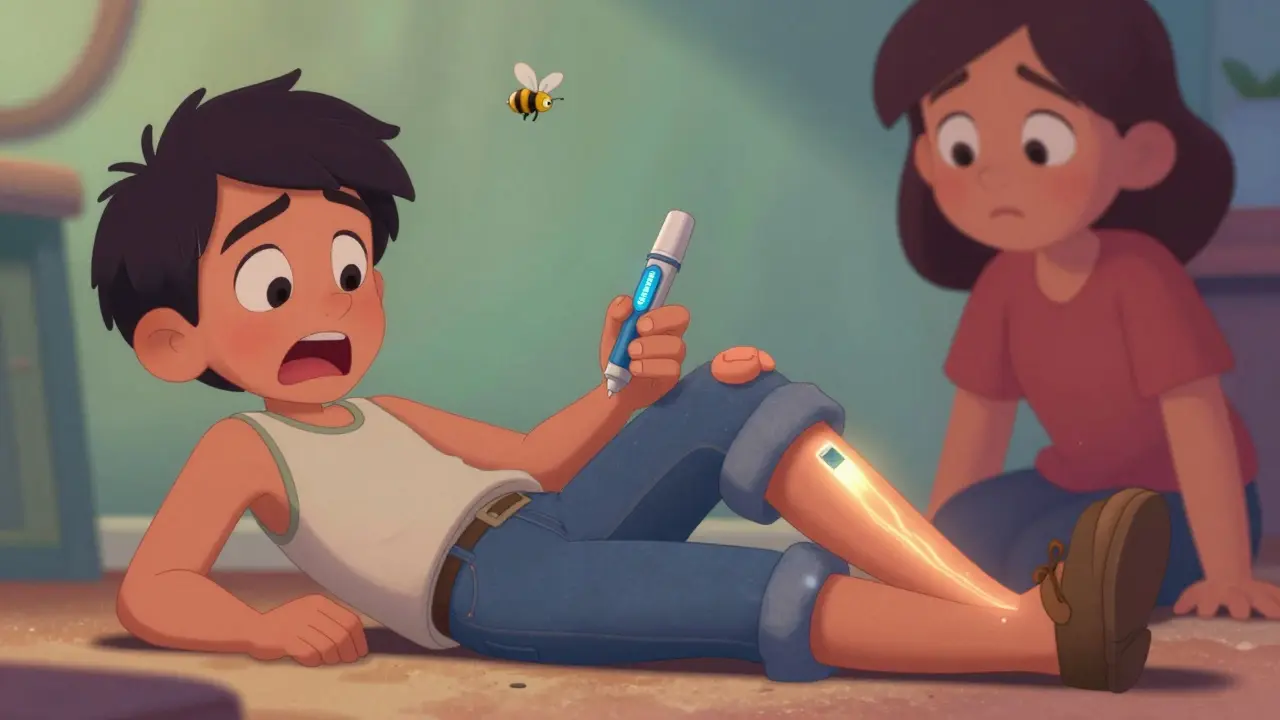
When your body goes into anaphylaxis, you don’t have minutes-you have seconds. A bee sting, a bite of peanut, or even a sip of milk can trigger a reaction that shuts down your airway, drops your blood pressure, and can kill you in under 10 minutes. The only thing that can stop it? Epinephrine. And if you or someone you love has a severe allergy, knowing how to use an epinephrine auto-injector isn’t just helpful-it’s life-or-death.
What Happens During Anaphylaxis?
Anaphylaxis isn’t just a bad rash or a stuffy nose. It’s your immune system going into overdrive, flooding your body with chemicals that cause your blood vessels to leak, your airways to swell, and your heart to struggle. Symptoms can show up in seconds: hives, swelling of the lips or tongue, wheezing, dizziness, vomiting, or a feeling like you’re going to pass out. Some people feel a strange sense of doom before anything else shows up. That’s your body screaming for help. The key is speed. If you wait to see if it gets worse, you might wait too long. Antihistamines like Benadryl won’t cut it. They might help with a mild itch, but they do nothing to stop the collapse of your breathing or circulation. Epinephrine is the only medication that reverses the worst effects of anaphylaxis. It tightens blood vessels to raise your blood pressure, opens your airways so you can breathe, and keeps your heart pumping. Studies show giving epinephrine within 5 to 15 minutes of symptom onset cuts your risk of dying by 75%.How Epinephrine Auto-Injectors Work
These devices are simple by design-because in a panic, you need something that works without thinking. Inside each injector is a tiny spring-loaded needle filled with a precise dose of epinephrine. When you trigger it, the needle shoots out, delivers the medicine into your thigh muscle, and retracts automatically. You don’t need to aim precisely. The thigh is the best spot because it’s thick, easy to reach, and has good blood flow to get the drug into your system fast. There are a few brands out there: EpiPen (the most common), Auvi-Q (which talks you through each step), Adrenaclick (cheaper but needs a two-step activation), and Neffy (a nasal spray, needle-free, but harder to use correctly). EpiPen is used in over 85% of cases in the U.S. because it’s widely known, but that doesn’t mean it’s perfect. Many people still don’t use it right.Step-by-Step: How to Use an Epinephrine Auto-Injector
Follow these steps exactly. Don’t skip anything. Even small mistakes can delay the medicine or stop it from working.- Recognize the signs. If someone has trouble breathing, swelling in the face or throat, feels faint, or breaks out in hives after eating or being stung-assume it’s anaphylaxis. Don’t wait for all symptoms.
- Grab the injector. Remove it from its carrier. Don’t fumble. Know where it is before you need it. Keep it at room temperature (between 15°C and 30°C). Don’t leave it in a hot car or a freezing backpack.
- Remove the safety cap. For EpiPen, that’s the blue cap on the end. Pull it straight off. Don’t squeeze the sides or you might trigger it accidentally. Many people injure themselves this way-by pressing the orange tip while holding it in their pocket or purse.
- Position the person. Have them lie flat on their back. If they’re vomiting or having trouble breathing, turn them onto their side. Never let them stand or walk. Standing during anaphylaxis can cause sudden fainting and injury.
- Place the injector on the outer thigh. You can inject through clothing if needed-jeans, leggings, even thick pants. The injector is designed to pierce fabric. Aim for the middle of the outer thigh, halfway between the hip and knee. Don’t inject into the buttocks, stomach, or arms. Those areas absorb the drug too slowly.
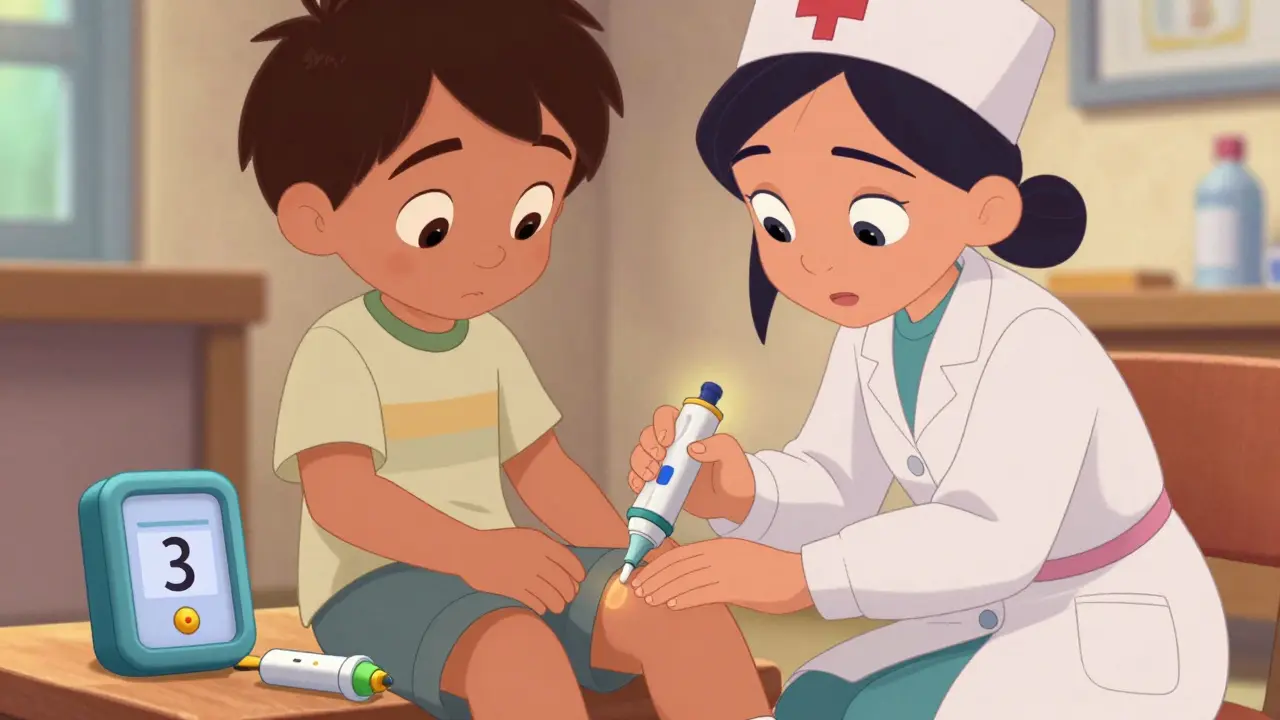
- Push hard and hold. Press the injector firmly against the thigh until you hear a click. Keep it pressed in for 3 full seconds. This is where most people fail. They push, hear the click, and pull away too soon. The medicine needs those 3 seconds to fully deliver. For kids, hold their leg steady with your other hand.
- Remove and massage. Take the injector away. Rub the injection site for 10 seconds. This helps the medicine absorb faster.
- Call emergency services. Even if they feel better, call 911 or your local emergency number immediately. Anaphylaxis can come back hours later-this is called a biphasic reaction. And you need to get to a hospital for monitoring. Don’t wait. Don’t drive yourself.
- Give a second dose if needed. If symptoms don’t improve after 5 to 10 minutes-or if they get worse-use a second injector. Always carry two. Most people only have one on them, but guidelines say two are essential.
Common Mistakes People Make
Even trained people mess this up. Here’s what goes wrong most often:- Waiting too long to use it. People think, “Maybe it’s just a rash,” or “I’ll wait and see.” That’s the biggest killer.
- Not holding it in long enough. Most people hold it for less than 2 seconds. You need 3.
- Injecting in the wrong place. Abdomen, arm, or buttocks don’t work as well. The thigh is the only reliable spot.
- Forgetting to call for help. People think, “I used the shot, I’m fine.” You’re not fine. You need a hospital.
- Not carrying two. If one dose doesn’t work, you need another. One isn’t enough.
Training and Practice
You can’t learn this by reading a pamphlet. You need to practice. Get a trainer device-these are plastic, non-functional versions that feel just like the real thing. Practice on yourself or a family member every few months. Use a timer to make sure you hold it for 3 seconds. Do it while wearing clothes. Do it in the dark. Do it when you’re stressed. Train like your life depends on it-because it does. Schools, workplaces, and daycare centers should have epinephrine on hand and staff trained to use it. In Australia, schools are required to have a plan for allergic students, but not all staff know how to use the device. If you’re a parent, ask: “Who’s trained? When’s the last drill?”What About the New Nasal Spray?
Neffy, the needle-free nasal spray approved in 2023, is a big deal for people terrified of needles. But it’s not easier to use. You have to spray one dose into each nostril while tilting your head back and breathing normally. In tests, 32% of people used it wrong during emergencies. It’s also more expensive and not yet widely available. For now, auto-injectors are still the gold standard.Storage and Expiry
Epinephrine breaks down over time. Check the expiration date every time you get a refill. Most devices last 18 months. Don’t keep them in your glove box, by the window, or in the fridge. Heat and cold ruin them. Keep them in a cool, dark place-like your purse, backpack, or bedside table. If the liquid inside looks brown or cloudy, throw it out. Even if it hasn’t expired, it might not work.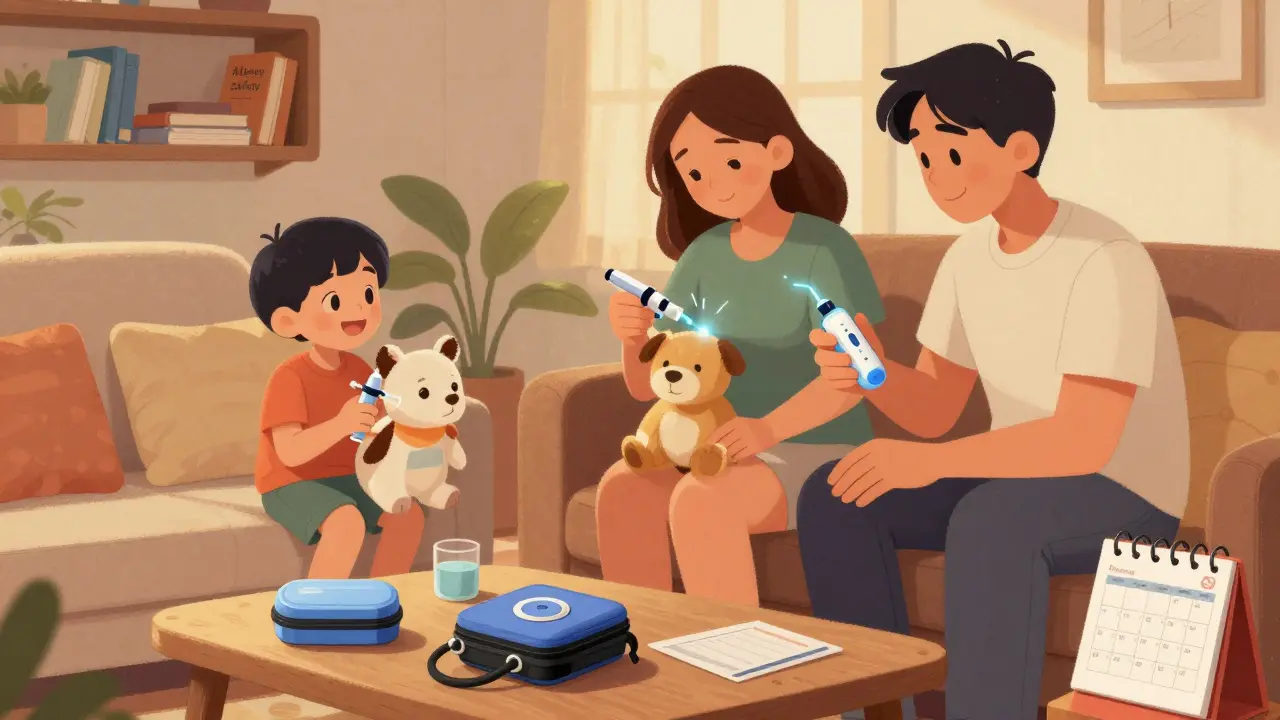
Cost and Access
EpiPen costs around $700 without insurance in the U.S. Adrenaclick is cheaper-under $200-but harder to use. Auvi-Q has voice guidance but is rarely stocked. Insurance often covers part of it, but many people still pay hundreds out of pocket. If cost is a barrier, ask your doctor about patient assistance programs. Some manufacturers offer free devices to those who qualify. Don’t skip this because of price. One life is worth more than any bill.What to Do After Using It
Even if you feel better, go to the hospital. Anaphylaxis can rebound. You might need more treatment: oxygen, IV fluids, steroids, or a second round of epinephrine. The hospital will monitor you for at least 4 to 6 hours. Bring your used injector with you-it helps doctors know what you took and when. Also, replace your injector right away. Once used, it’s done. Don’t wait for your prescription to refill. Keep a spare at work, at school, in your car, and at a friend’s house.Final Thought: Be Ready
Anaphylaxis doesn’t wait for a convenient time. It doesn’t care if you’re at a restaurant, on a plane, or at a school play. If you have a severe allergy, you’re not just carrying a device-you’re carrying your safety net. Know how to use it. Practice often. Teach your family. Make sure your friends know where it is. And never, ever delay.The difference between life and death isn’t always a miracle. Sometimes, it’s just someone who didn’t hesitate.
Can you use an epinephrine auto-injector on yourself?
Yes. In fact, you should. Most anaphylactic reactions happen suddenly, and you’re often the first person to notice the symptoms. Training yourself to use the injector quickly and correctly is critical. Practice with a trainer device until you can do it without looking. Keep it accessible at all times-in your pocket, bag, or car.
Can you inject through clothing?
Absolutely. The needle is strong enough to pierce jeans, pants, or even thick fabric. Don’t waste time removing clothing during an emergency. Just press the injector firmly against the outer thigh and activate it. The manufacturer tests this on multiple layers of clothing, and it works reliably.
What if you accidentally inject yourself?
If you accidentally trigger the injector on your finger, hand, or another area, go to the emergency room immediately. Epinephrine in the wrong spot can cause tissue damage or severe side effects. Call 911 or have someone drive you. Don’t wait. Even if you feel fine, the dose was meant for the thigh, and the effects can be dangerous elsewhere.
Is it safe to use an expired epinephrine injector?
It’s better than nothing-if you have no other option. Expired epinephrine loses potency over time, but studies show it still retains some effectiveness even years past the expiration date. If someone is having a severe reaction and you only have an expired injector, use it. Don’t wait for a new one. Then get to a hospital immediately. Never rely on expired devices, but in a crisis, they can buy time.
Can children use epinephrine auto-injectors?
Yes, and they often need them. There are two doses: 0.15 mg for children weighing 33-66 lbs (15-30 kg), and 0.3 mg for those over 66 lbs. Parents and caregivers should be trained to use the device on children. Always hold the child’s leg steady during injection. Schools and daycare centers should have trained staff and access to devices for at-risk children.
Why do you need to call 911 after using epinephrine?
Epinephrine treats the symptoms, but it doesn’t cure the reaction. Anaphylaxis can return hours later (biphasic reaction), and you might need additional treatment like oxygen, IV fluids, or steroids. Emergency responders can monitor your condition and transport you safely. Never assume you’re out of danger just because you used the shot.
Okay but let’s be real - if you’re not carrying two EpiPens like your life depends on it (spoiler: it does), you’re basically playing Russian roulette with a peanut butter sandwich 🤡💉
Also, why is everyone still using the EpiPen when Auvi-Q literally talks you through it? Are we all just too lazy to upgrade? I’m not judging… I’m just saying. 😅
I used to be terrified of needles until my nephew had his first reaction at daycare. Now I keep a trainer in my purse and practice every time I wait for coffee. That click? It’s the sound of peace of mind. 🙏
And yeah, injecting through jeans? Total game-changer. No time for fashion choices when your kid’s face is swelling. Just press and hold. 3 seconds. Not 2. Not 2.5. THREE. 💪
This is so important. My sister’s allergic to shellfish and we all learned how to use the injector together - even my dad, who thinks ‘medicine’ means ibuprofen. 😅
Now we have one in the car, one at her apartment, and one at my place. It’s not overkill - it’s smart. And yes, expired ones are better than nothing. I’d rather use a 3-year-old EpiPen than watch someone gasp for air.
Thanks for laying this out so clearly. Seriously.
Used one on my cousin last year at a BBQ. He was fine after but we still went to the ER. No regrets. The hardest part was not panicking. Practice makes it less scary.
Also - don’t store it in your glovebox. Learned that the hard way. Liquid looked like tea. Threw it out. Got a new one same day.
Just keep it cool. Simple.
Wow. Someone actually wrote a guide that doesn’t sound like it was drafted by a corporate marketing intern? Shocking.
But let’s be honest - 85% of people still use it wrong. You think a 7-year-old with a peanut allergy is gonna hold it for 3 seconds? Nah. They’ll poke their sibling’s thigh and scream. And the school nurse? Probably still thinks Benadryl is the answer.
Also Neffy? Cute. But if you can’t spray two doses without sneezing, you’re not ready. Just use the pen. Stop chasing novelty.
My daughter had her first reaction at 18 months. We were at Target. I didn’t even know she was allergic until she turned blue.
They gave us the EpiPen and said ‘just press and hold’ - no training, no demo, no nothing. I cried in the parking lot.
Now I do mock drills every Sunday with her stuffed animals. She’s 5 now and she yells ‘CLICK AND HOLD!’ when she sees a bee.
It’s weird. It’s intense. But it’s our normal now.
And yes - we have two. Always two. Even in her little backpack with the dinosaurs.
Don’t wait until it’s too late. Please.
Just got my second EpiPen refill this week. Insurance only covers one at a time. Had to pay $180 out of pocket for the second one. Worth every penny.
My wife’s allergic to tree nuts. We’ve had two near-misses in the last year. Both times, she used it right away. Both times, we went to the ER. Both times, we were lucky.
Don’t wait. Don’t hope. Don’t ask if it’s ‘really’ anaphylaxis. If there’s doubt - inject.
And if you’re a parent, teacher, or friend of someone with allergies - learn this. It’s not optional.
One sentence: If you have a severe allergy, you’re not just carrying a device - you’re carrying your lifeline.
Practice with the trainer. Keep two. Inject through clothes. Hold for three. Call 911. No exceptions.
And if you know someone who’s scared of needles? Show them this. It’s not magic. It’s science. And it works.
Now go grab your trainer. Do it now. I’ll wait.