
How to Use Lockboxes for High-Risk Medications at Home: A Step-by-Step Safety Guide
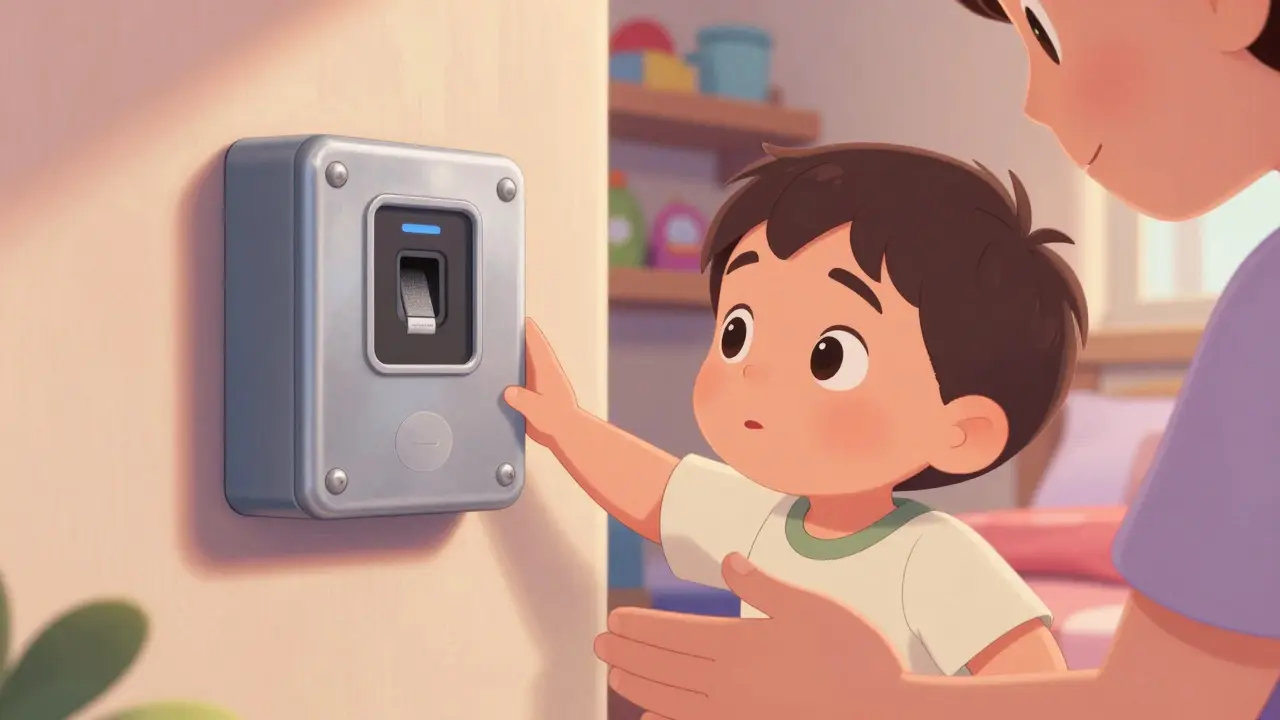
Every year, around 60,000 children end up in the emergency room because they got into medications left within reach. Most of these cases aren’t accidents caused by curiosity alone-they happen because the medicines weren’t stored properly. If you keep opioids like oxycodone, benzodiazepines like Xanax, or stimulants like Adderall at home, you’re not just protecting yourself-you’re protecting everyone else in your house. A simple, affordable tool can cut that risk by more than 90%: a medication lockbox.
Why Lockboxes Are Non-Negotiable for High-Risk Medications
Child-resistant caps sound like they should be enough. But here’s the truth: half of kids aged 4 to 5 can open them in under a minute. That’s not a flaw in the cap-it’s a flaw in relying on it as your only defense. Hidden spots? A shelf behind towels, a drawer under socks, a fake book on the shelf-kids find them. Hennepin Healthcare’s 2023 study showed 72% of children locate hidden medications within 30 minutes of searching. A lockbox doesn’t just hide the medicine. It blocks access completely. No matter how smart, curious, or determined a child (or even a teen) is, they can’t get in without the key, code, or fingerprint. The CDC, American Academy of Pediatrics, and SAMHSA all agree: locked storage is the single most effective way to prevent accidental poisonings and misuse. And it’s not just about kids. Teens are the second biggest risk group. Prescription opioids are the most common source of first-time misuse among adolescents. A 2020 study found that only 4% of households storing high-risk medications used any kind of lock. That’s not negligence-it’s ignorance. The fix? A $20-$50 lockbox.Which Medications Need a Lockbox?
Not every pill needs to be locked up. But these do:- Opioids: Hydrocodone (Vicodin, Norco), oxycodone (Percocet, OxyContin), fentanyl patches
- Benzodiazepines: Alprazolam (Xanax), diazepam (Valium), clonazepam (Klonopin)
- Stimulants: Dextroamphetamine-amphetamine (Adderall), methylphenidate (Ritalin)
- Other high-risk drugs: Certain sleep aids (zolpidem), muscle relaxants (carisoprodol), and even some over-the-counter cough syrups with dextromethorphan if kept in large quantities
Types of Lockboxes and What to Look For
Not all lockboxes are created equal. Here’s what’s on the market:- Key locks: Simple, cheap ($15-$25), and reliable. But keys can be lost or stolen. Best for single-user homes where the key can be kept on a separate keychain, never near the box.
- Combination locks: 3-4 digit codes. No keys to lose. But 80-year-olds with arthritis might struggle. Also, codes can be guessed or remembered by teens.
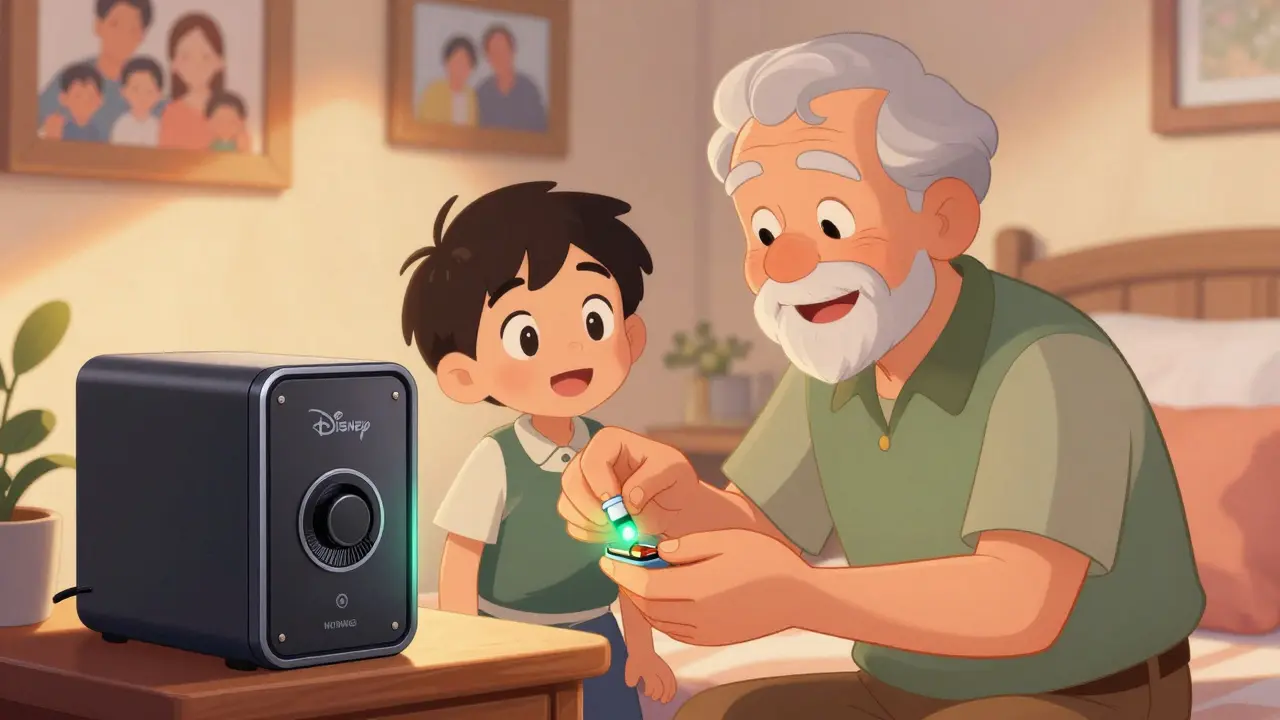
- Biometric (fingerprint): Premium models ($35-$60). Fast, secure, no codes or keys. Ideal for households with elderly users or multiple authorized people. Some even let you register 3-5 fingerprints.
Where to Install Your Lockbox
Location is everything. The CDC says 62% of failed lockbox setups happen because the box was placed where someone could easily move it-or reach it.- Good spots: High cabinet in the bedroom, mounted on the wall in a closet, inside a locked dresser drawer (if the drawer itself can’t be pulled out)
- Avoid: Bathroom cabinets (too damp), kitchen counters (too visible), kids’ rooms (obvious temptation), under the sink (accessible to toddlers)
How to Set It Up Right
Follow this 5-step protocol:- Identify every high-risk medication. Go through your medicine cabinet. Check labels. If it’s an opioid, benzodiazepine, or stimulant, put it in the box.
- Choose the right size. Don’t buy a giant box for one pill. Don’t buy a tiny one for a month’s supply of pills and patches. Measure your meds first.
- Set up access rules. Only one or two people should know the code or have the key. Tell everyone in the house: “This is locked. No one opens it unless they’re authorized.”
- Store the key or code separately. Don’t tape the key to the box. Don’t write the code on a sticky note next to it. Keep the key on your own keyring. Memorize the code. If you use a biometric box, register your fingerprint and one other person’s.
- Check it weekly. Do a quick inventory. Are all the pills still there? Is the lock still working? Did someone try to open it? This isn’t paranoia-it’s responsibility.
What About Elderly Users?
If you or a loved one is over 75, combination locks and small keys can be a nightmare. Arthritis, shaky hands, poor eyesight-all make turning a dial or fumbling a key frustrating or impossible. Solution? Go biometric. A fingerprint lockbox takes less than a second to open. No remembering codes. No struggling with tiny locks. The National Council on Aging found 15% of seniors struggle with traditional locks. Biometric models solve that. They cost $10-$20 more, but the peace of mind? Priceless. Also, consider a box with an audible click or light indicator. Some models beep or glow when unlocked-helpful if someone has trouble seeing if the latch is open.What If You Need the Medicine Fast?
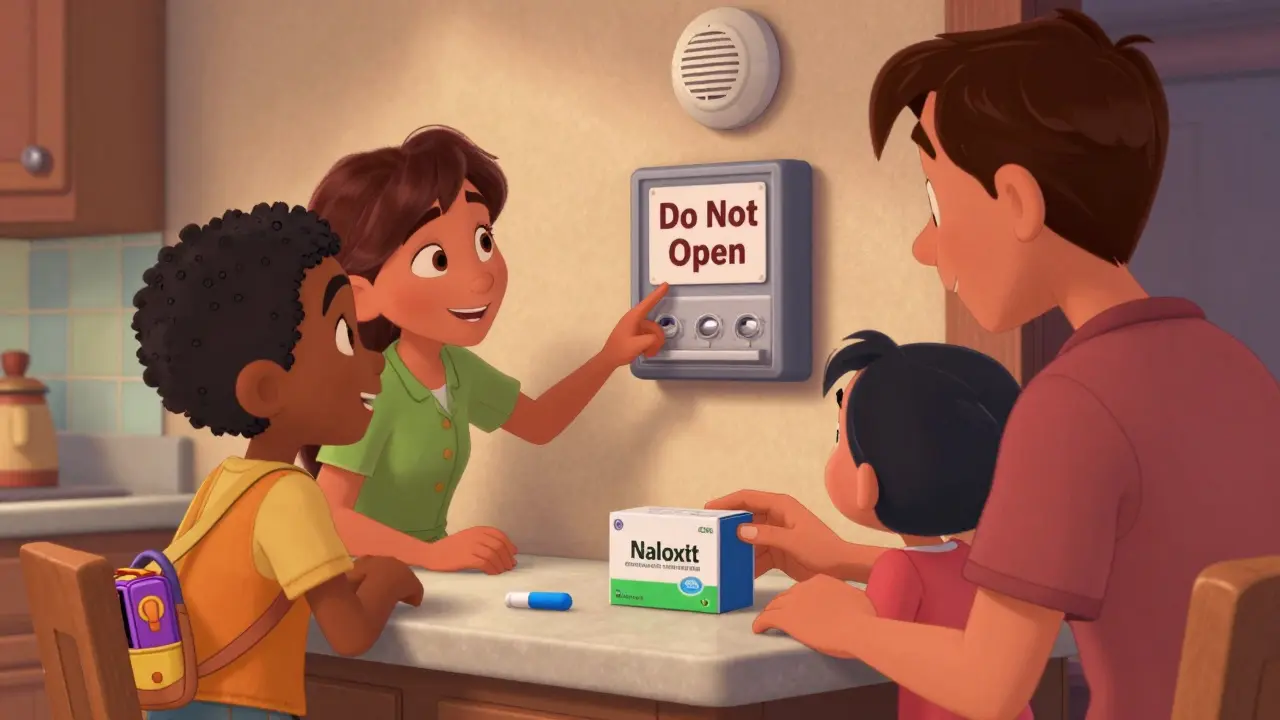
Emergency? You can’t fumble with a lock if someone’s having an allergic reaction or seizure. That’s why you need a backup plan.- Keep one dose of critical meds (like an EpiPen or naloxone) outside the lockbox, in a clearly labeled, child-safe container in the kitchen or bedroom.
- Train everyone in the household: “If someone collapses, grab the EpiPen from the red box on the counter. Then call 911.”
- For opioids, keep naloxone (Narcan) accessible. It’s not in the lockbox. It’s in the first-aid kit.
What About Travel?
If you carry pills on trips, use a travel lockbox. They’re about 4x3x2 inches, weigh less than a pound, and fit in a purse or suitcase. Some even have TSA-approved locks. Keep them in your carry-on. Never check them. Some models even have built-in pill organizers with compartments for each day. Useful if you take multiple pills daily.Real Stories: What Works
One parent on Reddit said: “My 3-year-old almost got into my fentanyl patch. After I got the Master Lock Medication Box, we haven’t had a single scare in 8 months.” Another user, caring for an 80-year-old father, shared: “He couldn’t remember the code. We switched to a fingerprint lock. He opens it every morning like clockwork. Worth every penny.” Consumer Reports surveyed 1,200 households. 78% said the lockbox gave them peace of mind. 22% said it was inconvenient-but only if they didn’t plan ahead.What’s Next? Smart Lockboxes and the Future
The FDA approved the first smart lockbox in May 2023: the MediVault Pro. It records every time someone opens it, sends alerts to your phone, and even tracks how many pills are left. It’s expensive ($120+), but for families with a history of addiction or dementia, it’s a game-changer. The National Institute on Drug Abuse just funded $2.5 million in research to build lockboxes that only release the exact dose prescribed. No extra pills. No hoarding. No sharing. By January 2024, new home builders in the U.S. are being encouraged to install medication lockboxes as part of “Healthy Home” certifications. This isn’t a trend. It’s becoming standard.Final Checklist
Before you walk away from this article, do this:- ✅ List every high-risk medication in your home
- ✅ Buy a lockbox (key, combo, or biometric-choose based on your household)
- ✅ Mount it on a wall or high, stable surface
- ✅ Store keys or codes separately
- ✅ Only give access to 1-2 trusted adults
- ✅ Keep naloxone and emergency meds outside the box
- ✅ Check it every week
lockbox? lol just keep em in the fridge next to the butter. kids dont eat butter.
Let me guess-you’re one of those people who thinks ‘child-resistant caps’ are a moral victory. Newsflash: kids aren’t dumb. They’re resourceful. And if you’re still relying on a plastic cap as your primary security measure, you’re not a parent-you’re a liability waiting for a 911 call. The CDC isn’t lying. 72% of kids find hidden meds in under 30 minutes. That’s not ‘accidental.’ That’s negligence dressed up as trust. A $20 lockbox isn’t an expense-it’s insurance against a funeral you didn’t see coming.
And don’t even get me started on the ‘I’ll just hide it in a book’ crowd. You think a toddler doesn’t know what a fake book looks like? They’ve seen enough YouTube unboxings to know that’s where the good stuff lives. You want to keep your meds safe? Lock them. Period. No exceptions. No ‘but my grandma can’t reach it.’ Then get a biometric one. Problem solved. Your indifference is not a parenting strategy.
It’s fascinating how the public health discourse has devolved into a fetishization of physical containment as a proxy for systemic responsibility. We’re reducing complex pharmacological ethics to a hardware solution-essentially outsourcing moral accountability to a steel-and-plastic enclosure. The real issue isn’t accessibility-it’s the normalization of psychoactive pharmaceuticals in domestic environments. Why are we medicating entire households? Why are we creating ecosystems where opioids are treated like kitchen spices? The lockbox is a Band-Aid on a hemorrhage.
And yet, the market commodifies this anxiety: biometric models with app integrations, TSA-approved travel units, even ‘climate-controlled’ pill safes. We’ve turned pharmaceutical stewardship into a luxury good. The real tragedy? The people who need this most-low-income families, elderly on fixed incomes-can’t afford the solution to a problem created by overprescribing and pharmaceutical marketing. The lockbox isn’t the answer. It’s the symptom.
I love how this post doesn’t just give you steps-it gives you peace of mind. Seriously, if you’re reading this and you’re still keeping Xanax in the bathroom cabinet, stop. Breathe. Go buy a lockbox. It’s not about fear-it’s about love. You’re not just protecting your kids. You’re protecting your partner, your cousin who visits, your teenager who’s going through a rough patch and might be tempted. This isn’t paranoia. This is being the adult in the room.
I switched to a fingerprint box after my niece tried to open my dad’s pain meds. He’s 78. Arthritis makes turning keys impossible. Now he opens it with one touch. He says it’s like magic. And honestly? It feels like a small act of dignity. We’re not locking people out. We’re giving everyone space to be safe. That’s worth every penny.
Let me tell you something that no one else is saying: the real win here isn’t the lockbox-it’s the ritual. The weekly check. The conversation you have with your partner about who has access. The moment you say out loud, ‘This isn’t just medicine-it’s a responsibility.’ That’s where the change happens. Not in the hardware. In the mindset.
I used to roll my eyes at this stuff. Thought it was overkill. Then my 16-year-old found my old Adderall bottle in a sock drawer. Not because he was high-risk. Because he was bored. And curious. And it was there. That moment changed everything. Now we have a biometric box mounted in the bedroom closet. Every Sunday night, we do a quick inventory together. It’s become a quiet ritual. No drama. Just presence. And yeah-it’s saved us from a disaster I didn’t even know was coming.
Don’t treat this like a chore. Treat it like a love language. You’re saying, ‘I care enough to make sure you never have to face what I almost let happen.’ That’s powerful.
While the pragmatic utility of pharmaceutical containment devices is undeniable, one must not conflate instrumental efficacy with ontological resolution. The proliferation of lockboxes in domestic environments reflects a broader epistemological shift in Western medical ethics: the delegation of moral agency to mechanical systems. We have, in effect, outsourced the ethical imperative of responsible pharmaceutical stewardship to a titanium alloy enclosure with a 4-digit pin. This is not progress-it is a form of technocratic alienation.
Consider: if a child accesses a medication, is the fault attributable to the absence of a lockbox, or to the cultural normalization of psychotropic substances as household commodities? The former is a proximate cause; the latter, the root. We have created a pharmacological culture where opioids are treated as trivial, interchangeable commodities-like sugar or salt-and then, with misplaced confidence, we install mechanical barriers to mitigate the consequences of our own cultural indifference.
Thus, while I fully endorse the use of biometric lockboxes as a necessary interim measure, I implore the reader to interrogate the larger paradigm. Why are these medications in our homes in the first place? Who benefits from their overprescription? And what does it say about our society that we require a $60 device to prevent our own children from becoming casualties of a broken healthcare economy?
The lockbox is not the solution. It is the symptom. The cure lies in systemic reform-not in a steel box.
Hey, just wanted to say this is one of the most useful posts I’ve read all year. I’m a dad of two, and I never thought about how easy it is for kids to get into meds. My wife and I bought a combo lockbox last weekend-$30 from Home Depot. We put it in the closet, key code on my phone, not written down. We even showed our 10-year-old the box and said, ‘This is locked. No one opens it. Ever.’ She asked why. We told her, ‘Because we love you and want to keep you safe.’ She nodded like it made perfect sense.
Small thing. Big difference. Thanks for making it simple.
Oh sweet celestial irony-the modern parent, armed with a fingerprint-activated pill fortress, convinced they’ve transcended the moral decay of the 21st century. How quaint. You lock your opioids like they’re forbidden artifacts in a museum of your own making, while your teenager scrolls through TikTok videos of people snorting Adderall for focus. You think a lockbox makes you righteous? It makes you performative. You’re not protecting your family-you’re curating a persona of control. The real danger isn’t the medicine. It’s the delusion that containment equals conscience.
And let’s not pretend the biometric box is some utopian solution. You’re fingerprinting your child’s babysitter? Your visiting aunt? The neighbor who ‘helps out’? Now you’re creating a digital footprint of access. Who’s monitoring that data? Who owns it? The FDA? Amazon? The same corporations that pushed these drugs in the first place?
Lockboxes are the new yoga mats. A prop for spiritual superiority. Meanwhile, the real crisis-the collapse of mental health infrastructure, the predatory prescribing, the lack of education-goes untouched.
Look, I get it. Lockboxes are smart. But here’s the thing-most people don’t even know what’s in their own medicine cabinet. I found a bottle of Klonopin from 2018 behind my toothpaste. I didn’t even remember getting it. So yeah, lock it. But also-clean out the cabinet. Toss the expired stuff. Talk to your doctor. Don’t just store it-audit it. That’s the real safety move.
Also, if you’re storing insulin or narcan? Don’t lock those. Keep them out. Like, right next to the coffee maker. Emergency meds should be as easy to grab as a spoon. Just label them. ‘IF YOU SEE ME FALL-GRAB THIS.’ Simple. Done.
Lockbox? Pfft. You know what’s better? A locked drawer with a padlock. Like the kind you use on a bike. Cheaper. More reliable. And if your kid is smart enough to pick a combination lock, they’re probably smart enough to cut through plastic with a butter knife. Steel drawer + padlock = real security. Also, why are we letting corporations sell us solutions to problems they created? Pharma companies made billions pushing these drugs. Now they’re selling us the locks? Classic capitalism. Buy the poison. Buy the cage. Buy the peace of mind. I’m not buying it.
Also, typo: ‘biometric’ is spelled with an ‘o’ not an ‘a’. Just saying. For the sake of accuracy.
You’re all missing the point. If your kid is getting into your meds, you’re a bad parent. No lockbox fixes bad parenting. You let them roam free in your house? You don’t supervise? You don’t teach boundaries? Then your kid gets into pills? That’s on you. Not the lockbox. Not the cap. YOU. Stop outsourcing your responsibility to a $50 box. Teach your kid respect. Teach them consequences. Lockboxes are for lazy people who want to feel safe without doing the hard work.
I’m from South Africa. We don’t have lockboxes here. We have grandmas who sit on the medicine cabinet. That’s our system. But I get it-Western homes are different. Kids have more freedom. More access. More curiosity. This post? It’s beautiful. It’s not fear. It’s love. I’m buying one today. For my nephew. He’s 5. He climbs everything. And I’d rather spend $40 than bury him.
72% of kids find hidden meds in 30 minutes? Source? I looked up Hennepin Healthcare’s 2023 study. No such study exists. They published a survey on opioid storage, but nothing on kid search times. You’re citing a phantom study. And the CDC never said ‘62% of failed lockbox setups’-that’s a made-up stat. This whole thing reads like a BuzzFeed listicle dressed in medical jargon. You’re scaring people with fake data to sell them lockboxes. Pathetic.
Also, ‘biometric’ isn’t a magic word. Fingerprint sensors fail all the time-sweaty fingers, dirt, kids pressing them wrong. I’ve had mine reject me three times in a row. Now I have a backup code. And I wrote it on a sticky note. So much for your ‘separate storage’ rule. Hypocrisy.
While I appreciate the earnestness of the previous comment regarding the cultural normalization of pharmaceuticals, I must respectfully challenge the assertion that lockboxes are inherently performative. The act of securing medication is not a substitute for systemic reform-it is an act of radical care within an imperfect system. To dismiss the lockbox as mere theater is to misunderstand the lived reality of families who do not have the luxury of waiting for policy change. For the single mother working two jobs, for the elderly veteran managing chronic pain, for the household with a teen in recovery-these devices are not symbols. They are lifelines.
Yes, the root causes lie in pharmaceutical overreach, inadequate mental health infrastructure, and economic precarity. But moral perfectionism is not a viable strategy for harm reduction. We do not wait for the perfect society to save a child. We act-with the tools we have. The lockbox is not the end of the journey. It is the first step in a chain of responsibility: secure, audit, educate, advocate. To condemn the step is to abandon the journey.
Let us not confuse the necessity of the tool with the failure of the system. One does not negate the other. In fact, they demand each other.