
Litigation in Generic Markets: How Patent Disputes Delay Affordable Medicines
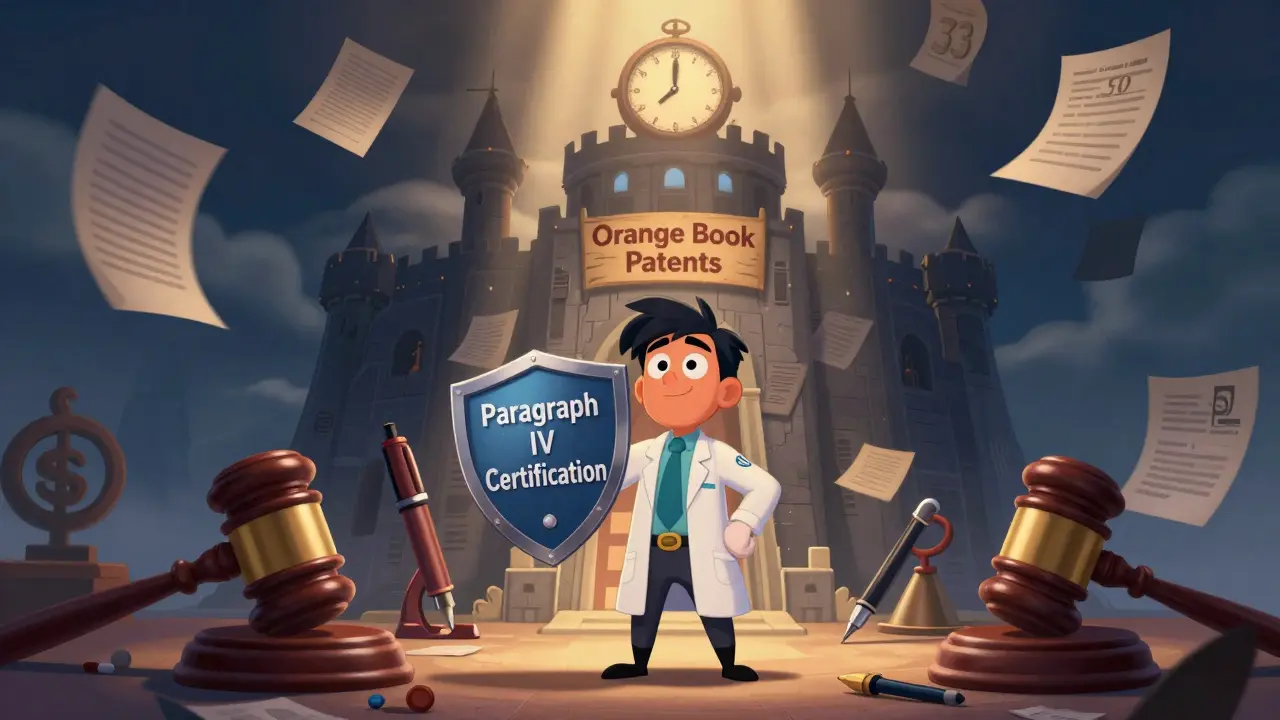
When a generic drug company tries to bring a cheaper version of a brand-name medicine to market, it doesn’t just face scientific hurdles-it faces a legal minefield. Behind every delayed generic drug is a web of patents, lawsuits, and settlements that can hold back affordable medicine for years. This isn’t about innovation anymore. It’s about extending monopolies through legal tactics that have little to do with the actual invention.
How the System Was Supposed to Work
The Hatch-Waxman Act of 1984 was meant to balance two goals: reward drug makers for innovation, and let generics enter the market quickly after patents expire. It created a clear path: generic companies file an Abbreviated New Drug Application (ANDA), and if they believe a brand-name patent is invalid or not infringed, they file a Paragraph IV certification. That’s a legal notice saying, "We’re coming, and we think your patent doesn’t stand up." Once that notice is filed, the brand-name company has 45 days to sue. If they do, the FDA is forced to delay approval of the generic for up to 30 months-no matter how weak the patent is. That delay isn’t a punishment. It’s a built-in feature of the system. And it’s been exploited.The Orange Book: A Tool for Delay, Not Transparency
The FDA’s Orange Book lists every patent tied to a brand-name drug. On paper, it’s a public record. In practice, it’s become a weapon. Brand companies list patents that have nothing to do with the actual medicine. Take ProAir HFA, an asthma inhaler. Teva filed a generic version. The brand company, AstraZeneca, listed six patents covering the inhaler’s dose counter-a mechanical part that tracks how many puffs are left. That’s not the drug. That’s the delivery device. In early 2025, Judge Chesler in New Jersey ruled those patents didn’t qualify. The law says only patents claiming the active ingredient, formulation, method of use, or manufacturing process can be listed. The dose counter? Irrelevant. The ruling sent shockwaves through the industry. Analysts at Skadden estimated 15-20% of all Orange Book listings might be invalid under this standard. But here’s the problem: companies keep listing them anyway. The Association for Accessible Medicines found brand firms routinely use patents on packaging, delivery systems, or even software apps to keep generics out. These aren’t protecting innovation. They’re protecting profits.Serial Litigation: The Patent Thicket Strategy
One patent isn’t enough. So brand companies file more. And more. And more. Take Eliquis, the blood thinner. It has 67 patents. Semaglutide (Ozempic, Wegovy) has 152. Oncology drugs average 237. These aren’t all new inventions. Many are minor tweaks-different dosages, packaging changes, or manufacturing tweaks filed years after the original patent. This is called a "patent thicket." It’s a wall of patents designed to confuse, exhaust, and delay. The tactic? File one lawsuit. Wait for the 30-month stay to expire. Then file another lawsuit using a different patent. Reset the clock. Repeat. Some drugs have seen delays of 7 to 10 years after their core patent expired. Patients pay more. Insurance companies pay more. The system doesn’t work.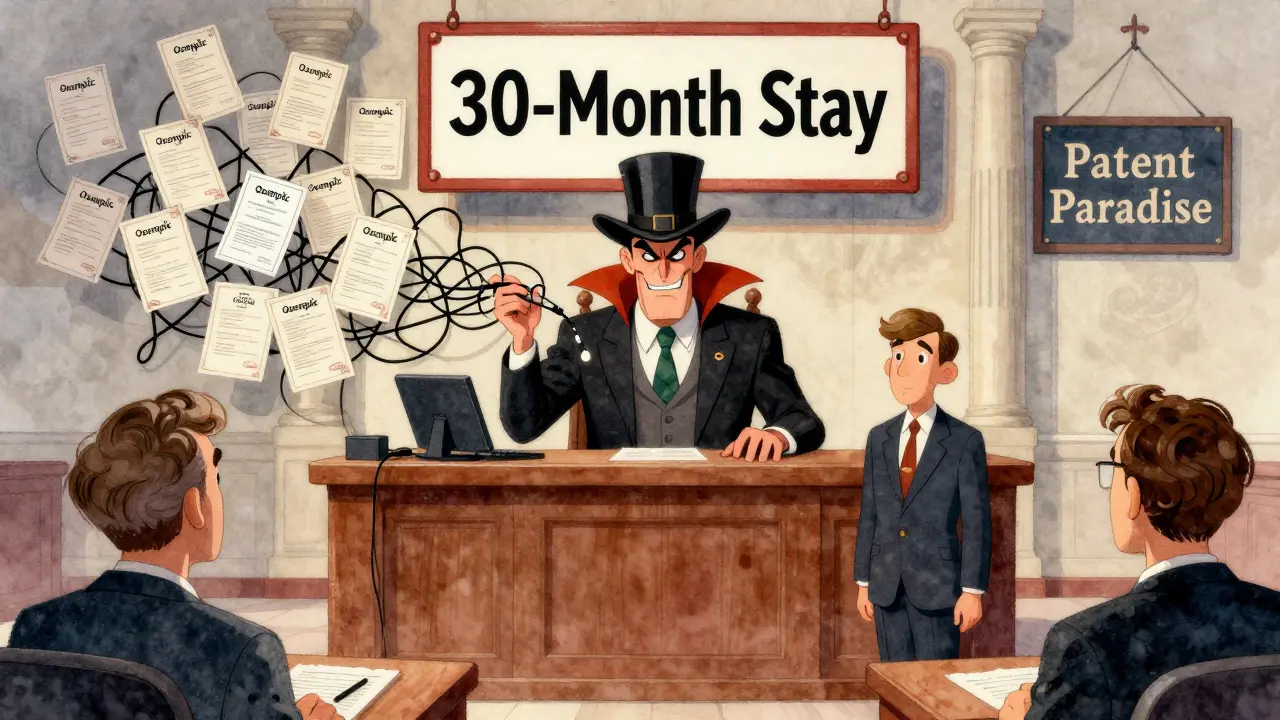
Who’s Winning? The Courts and the Venue Game
Not all courts are created equal. The Eastern District of Texas has become the go-to venue for brand-name companies. In 2024, 38% of all patent cases were filed there. Why? It’s known for fast-track procedures, juries sympathetic to patent holders, and judges with deep experience in IP law. It’s not the most convenient location for most defendants-but it’s the most effective. Compare that to the District of Delaware, which used to be the favorite. Or the Northern District of California, where tech cases dominate. Generic companies don’t get to pick the venue. Brand companies do. And they pick the one where they’re most likely to win-or at least, to drag out the case. This isn’t justice. It’s forum shopping. And it’s costing the U.S. healthcare system $13.9 billion a year, according to the FTC. That’s money spent on expensive brand drugs when cheaper generics could have been available.Settlements: Pay-for-Delay or Faster Access?
Here’s the twist: some lawsuits end in settlements. And some of those settlements actually get generics to market faster. The IQVIA Institute found that, on average, patent settlements sped up generic entry by more than five years before the patent expired. That’s because the generic company gets paid to enter early. The brand company avoids a risky trial. Everyone wins-except maybe the public, if the payment is too high. The FTC calls these "pay-for-delay" deals. They argue that if a generic company gets paid to stay out of the market, it’s anti-competitive. The FTC has challenged over 300 improper Orange Book listings in 2024 alone. In May 2025, they sent warning letters to 200 more patents across 17 drugs, targeting companies like Teva and Amgen. But here’s what the FTC doesn’t say: if you threaten to ban all settlements, generic companies might stop filing Paragraph IV challenges altogether. John T. O’Donnell, an industry analyst, put it bluntly: "If you limit a generic drug manufacturer’s ability to settle cases, that manufacturer does not settle fewer cases-it submits fewer ANDAs." The truth? Settlements are messy. Some are fair. Some are shady. But banning them outright could make things worse.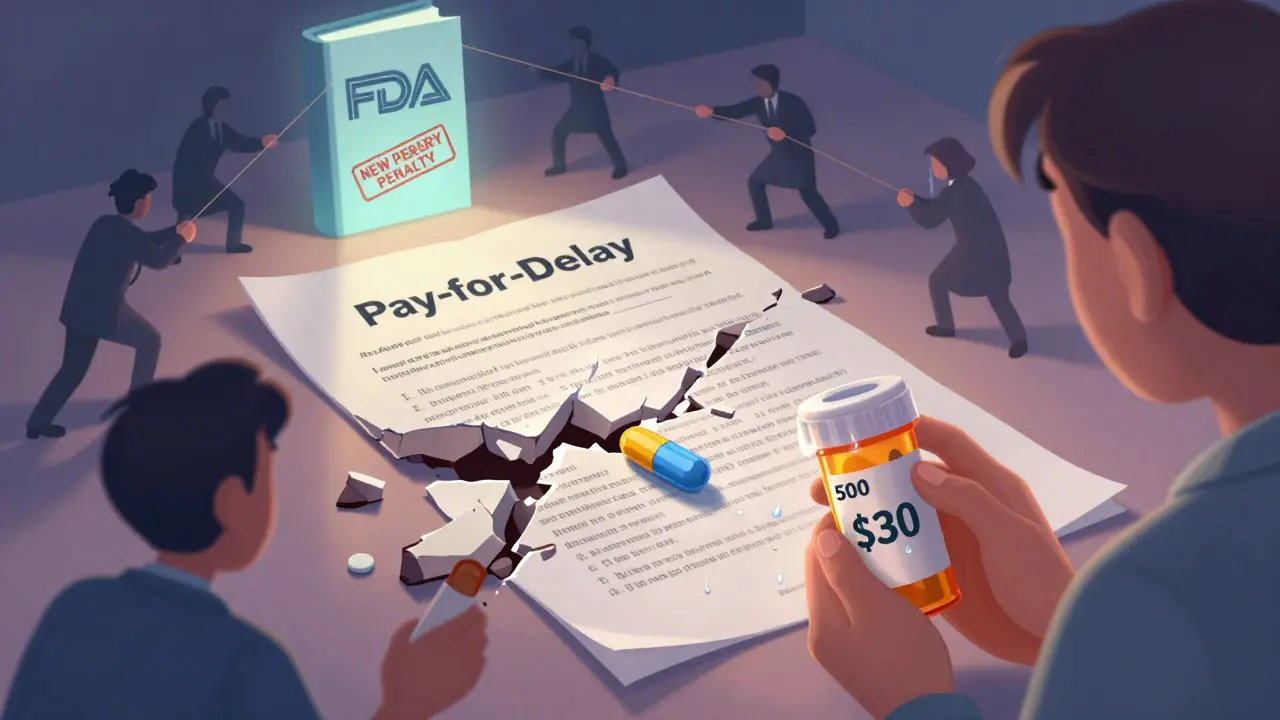
What’s Changing? Regulatory Pressure and New Tools
The tide is turning. The FDA is pushing new rules that will require brand companies to certify under penalty of perjury that every patent they list in the Orange Book meets the legal standard. That’s huge. Right now, there’s no real penalty for listing junk patents. Soon, there will be. The FTC and Department of Justice held joint listening sessions in March 2025. Twelve generic manufacturers testified about companies listing patents on inhaler valves, blister pack designs, and even the color of pills. These aren’t drug patents. They’re delay tactics. Meanwhile, generic companies are turning to the Patent Trial and Appeal Board (PTAB). Inter partes reviews (IPRs) let them challenge patents outside of court. IPR filings against pharma patents jumped 47% from 2023 to 2024. But the Supreme Court’s April 2025 decision in Smith & Nephew v. Arthrex made it harder for generic companies to qualify for IPRs. Now they need to show direct harm-which isn’t always easy.The Future: More Lawsuits, More Complexity
The numbers don’t lie. Patent litigation in the U.S. rose 22% in 2024. Damages awarded hit $4.3 billion. Law firms like Fish & Richardson and Quinn Emanuel saw 35-40% revenue growth in patent litigation last year. This isn’t slowing down. Biosimilars-generic versions of biologic drugs-are the next battleground. These drugs are complex. They’re expensive. And they come with an average of 78 patents per product, compared to 37 for traditional pills. The litigation will be longer. More expensive. More confusing. The FDA’s proposed rule in 2026 could clean up the Orange Book. But it won’t fix the core problem: the system still gives brand companies too much power to delay competition.What This Means for Patients
You don’t need to understand patent law to feel its impact. If your prescription for a blood thinner, asthma inhaler, or diabetes drug costs $500 when a generic version could cost $30-you’re paying the price of litigation. The delay isn’t accidental. It’s designed. Every 30-month stay, every junk patent, every settlement that buys time-it adds up. Patients wait. Families pay more. The system isn’t broken. It’s working exactly as the brand companies planned. The question isn’t whether patent protection matters. Of course it does. Innovation needs reward. But when the reward becomes a 10-year delay on affordable medicine, something’s wrong. The fix won’t come from the courts alone. It needs Congress to rewrite the rules. The FDA to enforce them. And patients to demand better.What is a Paragraph IV certification?
A Paragraph IV certification is a legal statement filed by a generic drug company with the FDA, declaring that a brand-name drug’s patent is either invalid or won’t be infringed by the generic version. Filing this triggers a 30-month stay on FDA approval if the brand company sues within 45 days.
Why is the Orange Book controversial?
The Orange Book lists patents tied to brand-name drugs, but companies often list patents for non-essential parts like delivery devices, packaging, or software-things that don’t relate to the actual medicine. This stretches patent protection beyond what the law allows and delays generic competition.
What is "pay-for-delay"?
Pay-for-delay is a settlement where a brand-name drug company pays a generic manufacturer to delay launching its cheaper version. The FTC considers this anti-competitive, but some studies show these deals can still get generics to market faster than if no settlement occurred.
Why is the Eastern District of Texas so important in patent cases?
It’s known for fast trials, experienced judges, and juries that often favor patent holders. Since 2024, 38% of all pharmaceutical patent lawsuits have been filed there, making it the top venue for brand companies trying to delay generic entry.
How do patent thickets affect generic drug access?
Patent thickets-dozens or even hundreds of overlapping patents on a single drug-make it nearly impossible for generic companies to navigate without facing lawsuits. Companies like Eliquis and Ozempic have 67 and 152 patents respectively, creating legal barriers that delay affordable versions for years.
Can generic companies challenge patents outside of court?
Yes. Through Inter Partes Review (IPR) at the Patent Trial and Appeal Board (PTAB), generic companies can ask the federal government to review and cancel weak patents. IPR filings rose 47% from 2023 to 2024, but recent Supreme Court rulings have made it harder to qualify for these reviews.
What’s the impact of delayed generic drugs on healthcare costs?
The FTC estimates improper patent listings delay generic competition for about 1,000 drugs each year, costing the U.S. healthcare system $13.9 billion annually. Patients pay more, insurers pay more, and public programs like Medicare and Medicaid foot the bill.
Man, this whole system is just a rigged game. I get that innovation needs protection, but when a company patents the damn *dose counter* on an inhaler? That’s not innovation-that’s greed in a lab coat. 🤦♂️
The Hatch-Waxman Act was designed to balance innovation and access but has been weaponized into a corporate shield. The FDA must enforce its own rules with teeth or admit complicity in pharmaceutical monopolies. This is not a legal issue-it is a moral failure of regulatory capture.
Let’s be real-generic companies are just parasites waiting for the brand to do all the R&D heavy lifting. If you can’t afford your meds, that’s your problem, not Big Pharma’s. Stop whining about patents and get a better job.
Patent thickets are the ultimate corporate jujitsu-turning IP law into a labyrinth where the only winners are the litigation lawyers and the shareholders. The Orange Book isn’t a registry-it’s a minefield rigged with semantic landmines. And the PTAB? Now it’s got one hand tied behind its back thanks to Smith & Nephew. This isn’t capitalism-it’s legal feudalism.
There’s a deeper truth here: innovation shouldn’t be measured in patent counts but in lives improved. When a child with asthma can’t breathe because their inhaler costs $500, we’ve lost sight of medicine’s purpose. The law isn’t broken-it’s been hijacked. We need to realign incentives, not just fix loopholes.
It is unacceptable that American taxpayers subsidize patent abuse through inflated drug prices. The United States government must act decisively to eliminate fraudulent Orange Book listings and abolish venue shopping in patent litigation. This is a national security issue for public health.
Oh look, another woke manifesto disguised as policy analysis. The real problem? People think drugs should be cheap. Newsflash: nothing is free. If you want innovation, pay for it. Otherwise, go live in a cave and chew willow bark.
im not a lawyer but this sounds like a total scam. why would you patent a counter on an inhaler?? that’s like patenting the handle on a coffee mug. my cousin’s dad works at a pharmacy and he says people are crying over prices. this is messed up
One might ask whether the moral weight of life-saving access outweighs the economic incentive of patent exclusivity. The answer, if we are honest, is not found in statutes but in our collective conscience. If we allow profit to eclipse compassion, we are no longer a society-we are a market.
Let’s not pretend this is about patients. This is about rent-seeking behavior masquerading as intellectual property. The entire pharma-industrial complex is a Ponzi scheme built on regulatory arbitrage and litigation theater. The real innovation here is in extracting wealth, not curing disease.
Look, I’ve read every word of this, and honestly, I’m not even mad anymore-I’m just exhausted. The system is so grotesquely designed that even the people who designed it probably don’t fully understand the consequences. We have a 1984 law trying to manage 2025-level corporate warfare, and the courts are just the battleground where lawyers in suits play chess with people’s lives. And don’t get me started on the Eastern District of Texas-why does it feel like the entire legal system is being outsourced to a single courthouse that’s basically a patent law theme park? I mean, come on. We’re not in a Tom Clancy novel. This is real life. People are dying because someone’s accountant figured out how to stretch a patent by filing one on the color of the pill. The color. Of. The. Pill. And we’re still debating whether settlements are good or bad? We’ve lost the plot.
Wow what a shocker-pharma companies are greedy. Who knew? Next you’ll tell me water is wet and lawyers charge by the hour
They’re not delaying generics-they’re delaying your entitlement. You want cheap medicine? Stop having diabetes. Stop breathing. Stop existing. Problem solved.