
Long-Term Opioid Use: How It Affects Hormones and Sexual Function
Opioid Hormone Risk Calculator
Hormone Disruption Risk Assessment
Based on research showing 63% of men on long-term opioids develop hypogonadism, this tool helps you understand your personal risk level.
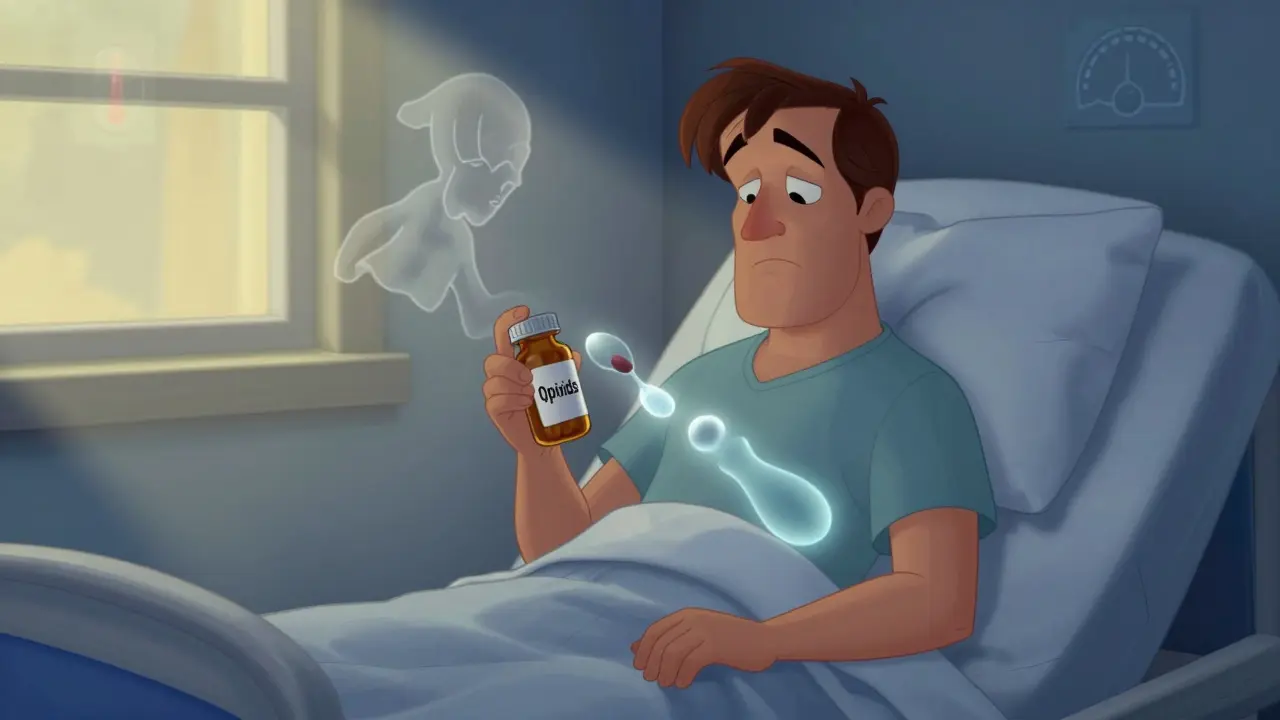
When you're living with chronic pain, opioids can feel like a lifeline. But what happens after months or years of daily use? For many, the real cost isn't just tolerance or dependence-it's a quiet, often ignored collapse in hormones and sexual health. This isn't rare. It's common. And it's rarely talked about in the doctor's office.
How Opioids Break Your Hormone System
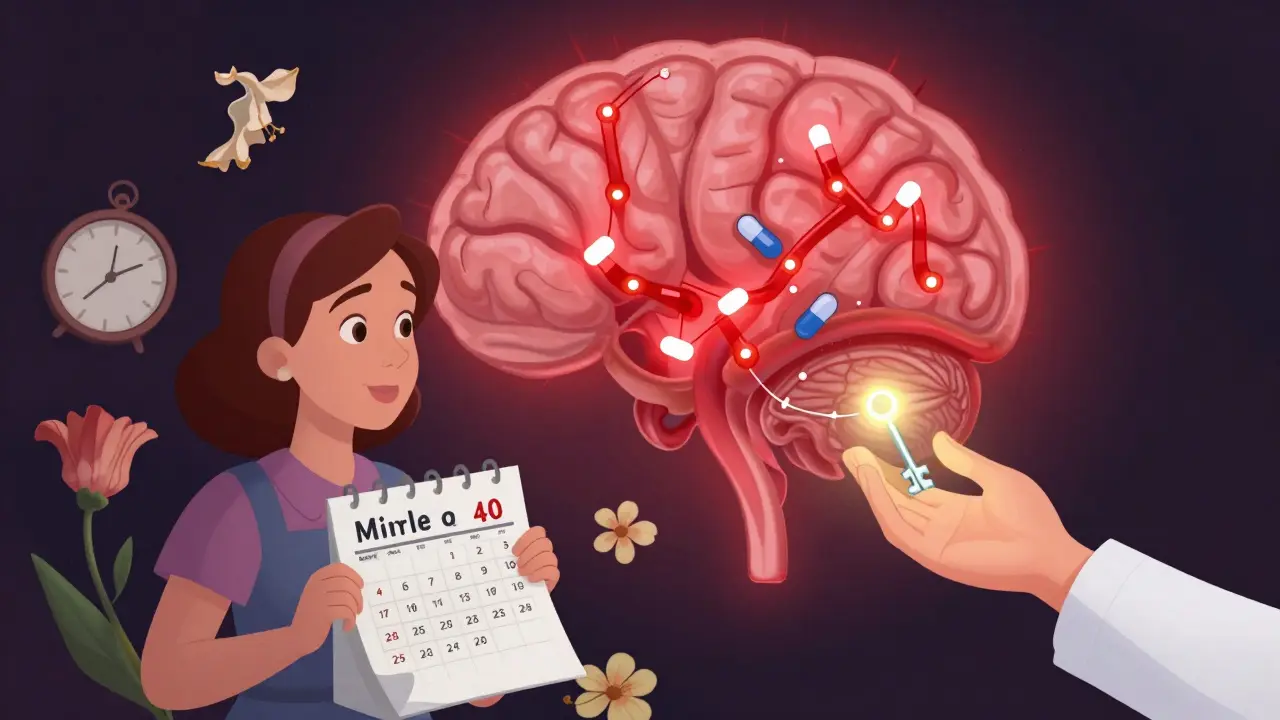
Opioids don’t just dull pain. They mess with your brain’s control center for hormones. Specifically, they hit the hypothalamic-pituitary-gonadal (HPG) axis-the system that tells your body to make testosterone, estrogen, and other key sex hormones. When opioids bind to receptors in the hypothalamus, they shut down the signal for gonadotropin-releasing hormone (GnRH). No GnRH means no luteinizing hormone (LH). And without LH, your testes or ovaries stop making enough sex hormones.
This isn’t theoretical. A 2020 meta-analysis in the Journal of Clinical Endocrinology and Metabolism found that 63% of men on long-term opioid therapy developed biochemical hypogonadism-meaning their testosterone levels dropped below 300 ng/dL. Some saw levels plummet by 30-50% within just 30 days. Even low doses-60 to 120 morphine milligram equivalents (MME) per day-can trigger this. Higher doses? Almost guaranteed.
Women aren’t spared. While estrogen levels often stay normal, testosterone drops significantly. And because testosterone plays a role in libido, energy, and mood in women too, the effects are real. Up to 87% of premenopausal women on chronic opioids develop menstrual problems-some stop getting periods entirely, others get irregular cycles. These aren’t side effects you can ignore. They’re signs your body’s internal chemistry is out of balance.
Sexual Function Takes a Hit
If your hormones are down, your sex life follows. For men, the most common complaints are low libido, erectile dysfunction, and reduced sperm count. On Reddit’s r/ChronicPain, a 2022 thread with nearly 250 comments showed that 89% of male respondents reported sexual problems within six months of starting opioids. One user wrote: "My testosterone dropped to 180 ng/dL. My doctor didn’t test it until I brought it up. Took six months to get help."
For women, the impact is just as personal. A 2021 survey of 342 women on chronic opioids found that 78% lost interest in sex, 63% had irregular periods, and 41% felt their depression worsen. Many assumed these changes were just part of living with pain. But they’re not. They’re direct results of the drugs.
Doctors often miss this. In the same survey, 67% of patients said their providers dismissed their concerns as "normal aging" or "just depression." But if your testosterone is low and you’re on opioids, it’s not just in your head-it’s in your blood.
What’s the Alternative?
Opioids still have a place-for acute pain after surgery, for cancer pain, for end-of-life care. But for most chronic non-cancer pain? They’re a poor long-term choice. The American Pain Society’s 2019 guidelines say as much: don’t start opioids first. Try physical therapy, cognitive behavioral therapy, or antidepressants like duloxetine instead.
And the data backs this up. A 2022 study in Pain Medicine found that gabapentinoids caused testosterone drops in only 12% of men-far below opioids’ 63%. NSAIDs like ibuprofen? Minimal hormonal impact. Even acetaminophen, while not perfect, doesn’t wreck your endocrine system like morphine or oxycodone.
And now, new options are emerging. In 2023, the FDA approved Belbuca (buprenorphine buccal film), which showed 40% lower rates of hormone disruption than traditional opioids in clinical trials. It’s not a cure, but it’s a step toward safer pain control.
What Can You Do?
If you’re on long-term opioids and noticing changes in your sex drive, energy, mood, or menstrual cycle, you’re not alone-and you’re not imagining it. Here’s what to do:
- Ask for a testosterone blood test. If you’re male and on opioids for more than 90 days, get your total testosterone checked. Do it before starting if possible. Repeat every 6 months.
- Track your menstrual cycle. If you’re a woman and your period stops or becomes unpredictable, mention it. Don’t wait for your doctor to ask.
- Ask about testosterone replacement. For men with confirmed low testosterone, TRT (testosterone replacement therapy) improves libido and erectile function in 70-85% of cases. It’s not a magic fix-it requires monitoring for risks like polycythemia-but it can restore quality of life.
- Consider non-opioid options. Ask your pain specialist about physical therapy, nerve blocks, mindfulness-based stress reduction, or even low-dose naltrexone. A 2024 Cleveland Clinic study showed that combining low-dose naltrexone with reduced opioid doses improved testosterone levels by 25-35% in 68% of patients.
- Don’t quit cold turkey. Stopping opioids abruptly can cause severe withdrawal. Work with your doctor to taper safely. One study found 73% of people who tried to quit on their own went back to their old dose within 90 days.

Why This Is Still Overlooked
Despite clear guidelines from the Endocrine Society since 2019-mandating testosterone screening for all men on chronic opioids-only 38% of primary care doctors do it regularly, according to a 2023 JAMA Internal Medicine study. Why? Because it’s uncomfortable. Because patients don’t bring it up. Because doctors assume it’s "just depression" or "getting older."
The reality? Sexual dysfunction from opioids is a medical condition, not a personal failure. And ignoring it isn’t just neglect-it’s substandard care. The Endocrine Society says so. The FDA says so. And patients are saying so too.
U.S. Pain Foundation reports that 65% of chronic pain patients feel their sexual health concerns are ignored. That’s a system failure. Not a personal one.
The Bigger Picture
The global market for non-opioid pain treatments is growing fast-projected to hit $59 billion by 2027. Meanwhile, the testosterone replacement market is surging too, partly because of opioid-induced hypogonadism. This isn’t just about sex. It’s about energy, sleep, muscle mass, bone density, and mental clarity. Low testosterone from opioids can lead to osteoporosis, fatigue, and increased risk of heart disease.
And the research gap? It’s still wide for women. Only 2% of opioid trials include proper female sexual function assessments. That’s unacceptable. We know opioids hurt women’s hormones. We just haven’t studied how to fix it well enough.
But change is coming. In January 2024, the Endocrine Society updated its guidelines to include clearer protocols for monitoring and treating opioid-induced endocrinopathy. The NIH just allocated $15.7 million in 2024 to study non-opioid alternatives and ways to reverse these side effects. The tide is turning.
You don’t have to choose between pain relief and a healthy sex life. But you do have to speak up. Ask for the test. Ask for the alternative. Ask for help. Your body is trying to tell you something. Listen.
Do all opioids cause hormonal problems?
Not all equally, but most do. Morphine, oxycodone, hydrocodone, and fentanyl have the strongest effects. Even low doses (60-120 MME/day) can suppress testosterone. Buprenorphine (like Belbuca) appears to cause less disruption-about 40% less in recent studies-but it’s not risk-free. No opioid is hormone-neutral.
Can testosterone replacement therapy help with opioid-induced sexual dysfunction?
Yes, for men. When testosterone levels are restored to normal ranges, 70-85% of men see improvement in libido, erectile function, and energy. TRT doesn’t fix the opioid use, but it fixes the hormone deficiency it caused. It’s not a cure for addiction, but it’s a necessary part of restoring quality of life. Monitoring for side effects like increased red blood cell count is required.
Why don’t doctors test for low testosterone in opioid patients?
Many don’t know the guidelines. Others avoid uncomfortable conversations. Some assume symptoms are due to depression or aging. But the Endocrine Society’s 2019 and 2024 guidelines clearly state that failing to screen for opioid-induced hypogonadism is substandard care. Patient advocacy is key-ask for the test. If your doctor refuses, ask for a referral to an endocrinologist.
Are there safe alternatives to opioids for chronic pain?
Yes. For most non-cancer chronic pain, physical therapy, cognitive behavioral therapy (CBT), acupuncture, and certain antidepressants (like duloxetine or amitriptyline) work better long-term than opioids. Gabapentinoids help with nerve pain. NSAIDs are safer for joint pain. Even low-dose naltrexone, when combined with reduced opioids, can maintain pain control while improving hormone levels. The goal isn’t to eliminate pain entirely-it’s to manage it without wrecking your hormones.
Can women get hormone therapy for opioid-related sexual dysfunction?
Options are limited but not nonexistent. While estrogen replacement isn’t typically needed, some clinicians use off-label testosterone patches (1-2 mg daily) to restore libido. Studies show 50-60% improvement in sexual desire. But research is sparse-only 2% of opioid trials include proper female sexual function data. If you’re a woman on opioids and losing interest in sex, bring it up. Ask for a testosterone blood test. You deserve answers.
Is it safe to stop opioids if I have hormonal side effects?
Never stop opioids abruptly. Withdrawal can be severe and dangerous. Work with your doctor to taper slowly-usually over weeks or months. A 2022 Cleveland Clinic study showed that 73% of people who tried to quit on their own returned to their original dose within 90 days. The safest path combines tapering with alternative pain strategies and, if needed, hormone replacement. Your body needs time to recover its natural hormone production.
You people are pathetic. You take a drug that literally shuts down your biology, then act shocked when your sex life dies? This isn't a tragedy-it's a consequence. You wanted relief, so you traded your hormones for a numbed-out existence. Now you want a medal? Get off the opioids or accept the price. No one's forcing you to stay on them. Stop whining and take responsibility.
Hey, I get it. I’ve been there. Chronic pain is a monster, and opioids feel like the only thing keeping you alive. But you’re right-no one talks about this. I started on oxycodone for back pain, and within a year, I couldn’t even look at my wife the same way. Low energy, zero drive, felt like a ghost. I asked my doc for a test-turns out my T was at 190. We switched me to buprenorphine, started TRT, and added physical therapy. It’s been 18 months. My T’s back to 650, I’m sleeping better, and I actually want to be intimate again. It’s not magic, but it’s possible. You don’t have to live like this.
This is what happens when you let science become a religion. We used to endure pain with grit. Now we want a pill that fixes everything without cost. But biology doesn’t care about your comfort. It’s a system. You break it, you pay. And now we’ve got a whole generation of men walking around like walking dead zombies, too numb to care, too lazy to quit. The real epidemic isn’t pain-it’s the surrender to chemical escape. You think TRT is the answer? No. The answer is learning to live with discomfort. That’s what made men great. Not pills. Not hormones. Grit.
Wait-let me get this straight: You’re telling me that 63% of men on long-term opioids develop hypogonadism? And 87% of women get menstrual disruption? And doctors are dismissing it as ‘depression’ or ‘aging’? And you’re surprised people aren’t speaking up? You’re not just reporting data-you’re documenting a systemic medical betrayal. I’ve had three doctors tell me my fatigue and low libido were ‘just stress.’ I had to demand a blood test myself. And when I did? My testosterone was 210. I was 34. This isn’t just negligence-it’s malpractice. And the fact that only 38% of docs screen for it? That’s not ignorance. That’s indifference. And indifference kills.
OMG I’m so glad someone finally said this 😭 I’ve been on opioids for 5 years for fibro, and my sex drive vanished. I thought it was me-like, ‘oh I’m just not sexy anymore.’ Turns out my T was half of what it should be. I started using a 2mg patch (off-label, but my endo said it’s fine) and now I actually want to kiss my husband again. 💋 Also, Belbuca? Game-changer. No more ‘opioid fog’ and my energy’s back. If you’re on opioids and feel like a zombie who forgot how to feel pleasure-GET TESTED. You’re not broken. Your body’s just been hijacked. 💪❤️
My doc never mentioned any of this. I was on 120 MME for 2 years. Lost libido, gained weight, felt like a shell. Got tested after reading this. T was 220. Started TRT. Took 4 months to feel normal again. I didn't know it was the meds. I thought i was just getting old. You're right. We need to talk about this more.
They told me it was depression. I believed them. Until I started crying during sex because I couldn't feel anything-not pleasure, not connection, not even shame. That’s when I knew. It wasn’t my mind. It was my chemistry. And I wasn’t weak. I was poisoned. I’m not proud of being on opioids. But I’m proud of asking for help. And now? I’m not just surviving. I’m alive again.
The data presented here is both compelling and deeply concerning. The convergence of clinical evidence, patient testimony, and epidemiological trends suggests a widespread, under-recognized iatrogenic condition. The failure of primary care providers to adhere to established endocrine guidelines constitutes a significant breach in the standard of care. It is imperative that medical education, institutional protocols, and patient advocacy initiatives be realigned to prioritize the screening, diagnosis, and treatment of opioid-induced endocrinopathy as a non-negotiable component of chronic pain management. Patient dignity and physiological integrity must be restored as central tenets of clinical practice.