
Metformin and Alcohol: What You Need to Know About Lactic Acidosis Risk

Metformin-Alcohol Risk Assessment Tool
Your Risk Assessment
This tool helps you understand potential risks when combining metformin with alcohol. It's for informational purposes only and does not replace medical advice.
Important notes:
- Lactic acidosis is rare but potentially fatal
- Symptoms can progress quickly
- No safe alcohol threshold is proven
- Never ignore unusual symptoms
- Avoid alcohol completely if you have kidney issues
When you take metformin for type 2 diabetes, you’re doing everything right-managing your blood sugar, staying active, watching your diet. But if you’re also having a drink or two, especially on occasion, you might not realize you’re putting yourself at risk for something serious: lactic acidosis. It’s rare, yes. But when it happens, it can be deadly. And alcohol? It’s not just a hangover waiting to happen-it’s a hidden trigger that can turn a safe medication into a danger zone.
What is lactic acidosis, and why should you care?
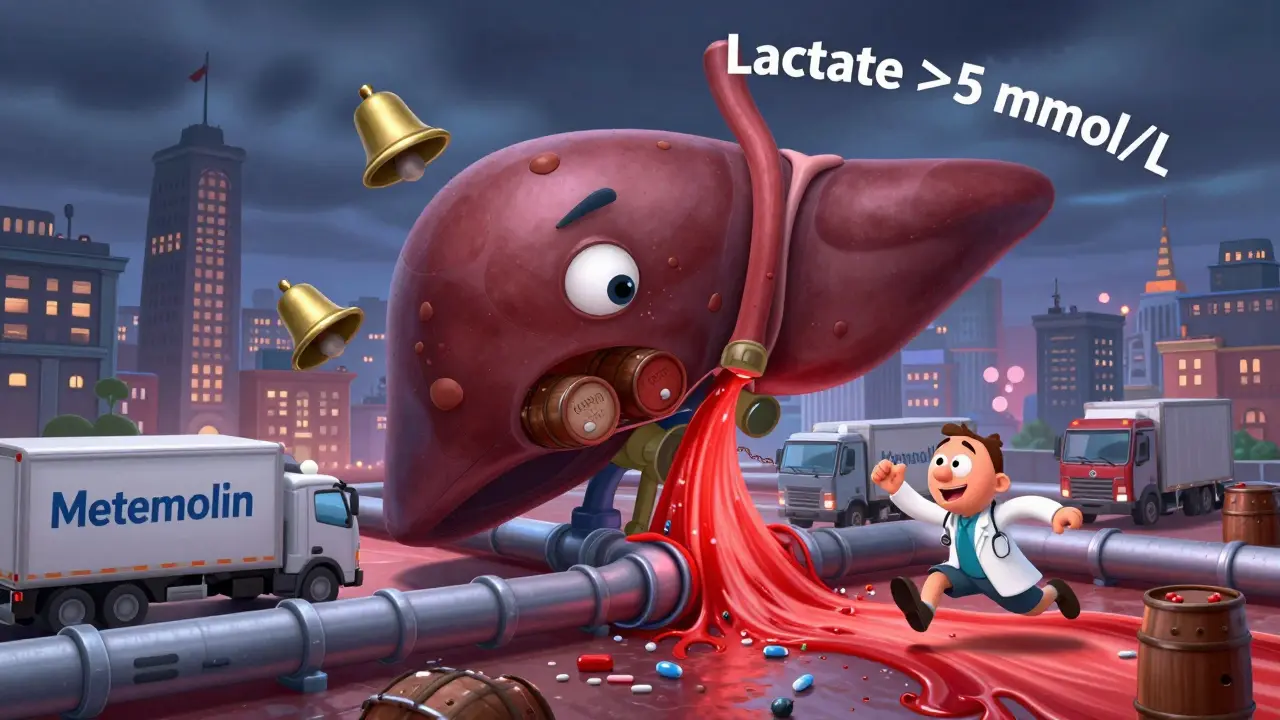
Lactic acidosis isn’t just a fancy medical term. It’s when your blood becomes too acidic because too much lactic acid builds up. Normally, your body makes a little bit of lactate during exercise or stress. But when things go wrong-like when metformin and alcohol team up-it can spike to dangerous levels. A reading above 5 mmol/L is a red flag. At that point, your body starts shutting down. Symptoms? Muscle pain so bad it feels like cramps on steroids, trouble breathing, nausea that won’t quit, and a weird feeling like you can’t get enough air-even when you’re sitting still.
Here’s the scary part: 30% to 50% of people who develop this condition don’t survive. And the worst part? Many people ignore the early signs. They think, “It’s just a bad hangover.” But lactic acidosis doesn’t wait. It moves fast. And if you’re on metformin, your liver and kidneys are already working harder than normal to clear the drug. Add alcohol into the mix, and they’re overwhelmed.
How metformin and alcohol work together to create risk
Metformin doesn’t cause lactic acidosis on its own-not in healthy people. The risk is tiny: about 0.03 cases per 1,000 people each year. That’s like winning a very bad lottery. But alcohol? It changes the game. When you drink, your liver uses up a molecule called NAD+ to break down ethanol. That same molecule is needed to clear lactic acid from your blood. So while your liver is busy processing drinks, it stops cleaning up lactate. Meanwhile, metformin is still sitting in your system, nudging your body to make even more of it.
Think of it like a clogged drain. Metformin adds water to the sink. Alcohol turns off the pump. The water rises. And when it overflows? That’s lactic acidosis. Even people with normal kidney function-no diabetes complications, no other health issues-can get hit. A case study from 2024 followed a 65-year-old man who drank heavily after a party. He had no kidney problems. His metformin dose was low. But after 10 shots? He ended up in the ICU with lactate levels at 6.2 mmol/L. That’s above the danger line.
Why the FDA warns you-loudly
The U.S. Food and Drug Administration (FDA) doesn’t issue black box warnings lightly. That’s their strongest possible alert. And metformin has one-right there on the label-for lactic acidosis, specifically tied to alcohol. The warning says: “Avoid excessive alcohol intake.” No numbers. No “one drink is fine.” Just a hard stop. Why? Because there’s no safe threshold proven in studies. What’s “excessive”? Is it two beers? Three glasses of wine? A weekend binge? The answer: we don’t know. And that’s the problem.
Compare this to newer diabetes drugs like semaglutide or empagliflozin. They have different risks-nausea, UTIs, maybe weight loss. But none of them carry this specific, life-threatening interaction with alcohol. Metformin is unique. And that’s why doctors still recommend it as first-line therapy: it’s cheap, effective, and safe-for most people. But “most” doesn’t mean “all.”
What real patients have experienced
Online forums are full of stories that sound like horror movies. One user on Healthline, “DiabetesWarrior42,” drank six beers after dinner, took their metformin as usual, and woke up with muscle spasms so severe they couldn’t stand. Their lactate level? 6.2 mmol/L. They spent two days in the ER. Another Reddit user, “SugarFreeLife,” said they were fine with two glasses of wine-until a bachelor party. Ten shots later, they couldn’t breathe. Their muscles locked up. They thought they were dying. They were lucky they called 911.
Survey data from GoodRx shows 78% of metformin users cut back on alcohol because they’re scared of lactic acidosis. And 42% of them named it as their top concern-not weight gain, not GI upset, but this rare, silent killer. What’s worse? Many people don’t even know the symptoms. A 2023 analysis found that 68% of patients who ended up in the hospital with lactic acidosis first thought their symptoms were just a hangover. That delay? It can be fatal.
What experts say-and what they don’t
Doctors are caught between two truths. On one hand, metformin saves lives. On the other, alcohol can turn it into a time bomb. Dr. Robert A. Rizza from Mayo Clinic says moderate drinking-one drink a day for women, two for men-might be okay if your kidneys are healthy. But he adds: “Any binge drinking? Forget it.” Dr. John B. Buse, former president of the American Diabetes Association, says the clinical picture is poorly defined because it’s so rare. But when it hits? “It can be rapidly fatal without immediate intervention.”
The European Medicines Agency is even clearer: acute alcohol intoxication is a direct risk factor. That means if you’re drunk, you’re in danger-even if you’ve never had a problem before. And the American Diabetes Association’s 2023 guidelines don’t give a number. They just say: “Avoid excessive alcohol.” So you’re left guessing. And that’s not good enough.
What you should actually do
Here’s the truth: no one can tell you exactly how much alcohol is safe with metformin. But here’s what you can do:
- Avoid binge drinking at all costs. That’s four or more drinks in two hours for women, five or more for men. This isn’t about moderation. This is about survival.
- Never drink on an empty stomach. Alcohol lowers blood sugar. Metformin lowers blood sugar. Together? You could pass out-or worse.
- Don’t drink during the first 4 to 8 weeks after starting metformin. Your body is adjusting. Adding alcohol now is asking for trouble.
- Know your symptoms. Unusual muscle pain? Trouble breathing? Nausea that won’t go away? Stomach pain that feels different than usual? Go to the ER. Don’t wait. Don’t text your doctor. Go.
- Get your B12 checked. Metformin and alcohol both lower vitamin B12. Long-term deficiency can damage nerves and cause numbness, tingling, or even memory loss. Ask your doctor for a simple blood test once a year.
And if you’re trying to cut back? You’re not alone. More than 7 in 10 metformin users have already done it. That’s not fear-it’s wisdom.
What’s changing? What’s coming?
New extended-release metformin pills hit the market in 2023. They cause less stomach upset, but the lactic acidosis risk? Still there. The same warning. Same black box.
Right now, a major study called the MALA-Prevention Study (NCT04892345) is enrolling 5,000 people with type 2 diabetes across the U.S. and Europe. They’re tracking exactly how much alcohol leads to lactic acidosis. Results? Not until late 2025. Until then? We’re flying blind.
Experts are calling for better guidelines. But until then, the safest choice is simple: if you’re on metformin, treat alcohol like a grenade with a loose pin. Don’t pull it.
What about other diabetes meds?
If you’re scared of this interaction, you’re not stuck with metformin. Newer drugs like GLP-1 agonists (semaglutide, liraglutide) or SGLT2 inhibitors (empagliflozin, dapagliflozin) don’t carry this risk. They’re more expensive. They might cause nausea or more bathroom trips. But they don’t team up with alcohol to poison your blood. If you’re drinking regularly and worried, talk to your doctor about switching. Your life is worth more than the cost of a pill.
Final reality check
You’re not being paranoid. You’re being smart. Metformin is one of the most prescribed drugs in the world-150 million prescriptions a year in the U.S. alone. It’s saved millions. But it’s not magic. And alcohol? It doesn’t care how well you manage your diabetes. It only cares about your liver. And when it teams up with metformin? It turns your body’s natural cleanup system into a broken machine.
There’s no perfect answer. No magic number. But there is one rule that never changes: if you’re drinking heavily, you’re playing Russian roulette with your metabolism. And you don’t have to.
It is imperative to recognize that the confluence of metformin and alcohol represents a biochemical betrayal of physiological equilibrium. The liver, that noble organ of detoxification, is not merely overwhelmed-it is systematically subverted. To equate this with mere "hangover" is to commit a category error of the gravest kind. The FDA's black box warning is not hyperbole; it is a clinical imperative grounded in pathophysiological reality. One must ask: if we tolerate such risks in the name of social convenience, what moral foundation remains for our public health? We are not merely managing diabetes-we are stewarding life itself.
Let’s deconstruct this with some systemic epidemiology. The 0.03 cases per 1,000/year baseline is statistically negligible, but the confounding variable here is not alcohol per se-it’s polypharmacy + hepatic metabolic suppression. Alcohol’s NAD+ depletion is a proximal trigger, but the real vector is mitochondrial dysfunction in Type 2 diabetics with subclinical fatty liver. The FDA’s vagueness is a liability. We need dose-response curves, not moral panic. Also-why no mention of genetic polymorphisms in ALDH2 or SLC22A1? This is reductionist fearmongering dressed as public health.
Y’all act like alcohol and metformin are dating and someone’s gonna get stabbed at the prom. Look-I’ve been on this med for 8 years, have a beer on Friday night, never once felt like my insides were turning to soup. And yeah, I know the stats. But let’s be real-people die from slipping in the shower, too. Should we ban showers? The real issue? Doctors don’t tell you this shit until you’re already in the ER. If you’re gonna drop a black box warning, at least give us numbers. "Don’t drink" is useless. "Don’t drink more than 2 drinks in 4 hours if you’re over 60 and your creatinine is above 1.2"? Now we’re talking. Also-B12 check? YES. That’s the real silent killer. Not the booze. Not the metformin. The deficiency. Fix that first.
I just want to say thank you for writing this. I was diagnosed last year and had no idea about any of this. I cut out alcohol completely after reading this. It’s scary how little your doctor tells you. I appreciate the clarity.
It’s weird, right? Like, you take this pill every day like it’s your morning coffee-calm, routine, mundane-and then you find out it’s got this hidden landmine in it, waiting for you to crack open a beer or two on a Friday night. And you’re not even doing anything crazy. Just having a glass of wine with dinner. But then you read about that guy in the case study-65, no kidney issues, just 10 shots-and you realize: it doesn’t care how "responsible" you are. It doesn’t care if you’ve been good with your diet, if you walk every day, if you track your carbs. One night. One lapse. And your body just… stops. It’s not dramatic. It’s not loud. It just… stops. And by the time you notice, it’s too late. I used to think "rare" meant "not for me." Now I know: rare doesn’t mean safe. It just means you’re the one who didn’t know.
HOW DARE YOU SAY "MODERATION" IS OKAY? You’re not just risking your life-you’re risking everyone around you. What if you pass out in the car? What if you collapse at work and your coworkers have to perform CPR? You think you’re being cool? You’re being a liability. And don’t give me that "I’ve been fine for years" crap. Luck is not a medical strategy. If you’re on metformin and you drink, you’re not a diabetic-you’re a ticking bomb. And if you’re the kind of person who needs to be told "don’t drink," then maybe you shouldn’t be drinking at all. Period. End of story. No exceptions. No "but I only have one glass." One glass is one glass too many when your liver’s already fighting a war you don’t even see.
Thank you for highlighting the B12 point. I had no idea metformin and alcohol both drain it. I’ve had tingling in my hands for months and thought it was carpal tunnel. Got tested last month-B12 was at 180. Started supplements and it’s already better. This article saved me from nerve damage. Please, everyone: ask for your B12. It’s a simple blood test. Don’t wait until you’re numb.
omg i just relized i been drinking wine with my metformin for 3 years 😭 i thought it was fine bc i only have 2 glasses! i went to the doc today and they said my lactic acid was normal but i’m still scared. i quit alcohol for now. also i think we need more awareness in india too, no one talks about this here. my auntie on metformin drinks daily and says "it’s just wine, beta". we need to change this culture. thanks for this post!!
One sentence: If you’re drinking and on metformin, you’re gambling with your liver-and you’re already losing.
So, here’s the thing-people say "avoid alcohol" but no one says "how much is too much?" I get the warning, but I need numbers. Like, is 3 oz of whiskey okay? What about a 12-oz IPA? Is it the volume? The ethanol content? The timing? I’m not asking for permission-I’m asking for science. Also, I think the FDA should update their label to say "avoid alcohol within 8 hours of taking metformin"-that’s something actionable. Right now? It’s just fear. No guidance. And that’s not helpful.
bro this is so true i live in india and we think alcohol is fine if you dont get drunk but i had a friend on metformin who had 3 pegs and ended up in hospital with acidosis. no one told him. even doctors here dont explain this properly. i started telling everyone now. also, dont forget to check your creatinine and liver enzymes yearly. its not just about sugar. your liver is your silent guardian. treat it right.
Let me tell you what I saw in the ER last year. A 52-year-old man. Took his metformin at 7 a.m. Had a celebratory drink at 8 p.m. Thought he was fine. Woke up at 3 a.m. with cramps so bad he was screaming. Couldn’t breathe. Thought it was a heart attack. By the time they got him in? Lactate at 7.1. ICU. Ventilator. Two weeks in the hospital. His wife said he’d been drinking like this for years. "It’s just wine," she told me. No. It’s not just wine. It’s a chemical grenade. And if you’re on metformin? You’re holding it. You don’t get to say "I’ll be careful." You don’t get a second chance. This isn’t a suggestion. It’s a death sentence waiting for the right trigger. And the trigger? It’s not always a binge. Sometimes? It’s just one.