
Opioids and Adrenal Insufficiency: A Rare but Life-Threatening Side Effect You Need to Know
Opioid Dose Risk Calculator
Dose Assessment
Your Risk Assessment
Most people know opioids can cause constipation, drowsiness, or dependence. But there’s a hidden danger most doctors and patients overlook: opioid-induced adrenal insufficiency (OIAI). It’s rare, but when it happens, it can kill you - especially if no one realizes what’s going on.
What Exactly Is Opioid-Induced Adrenal Insufficiency?
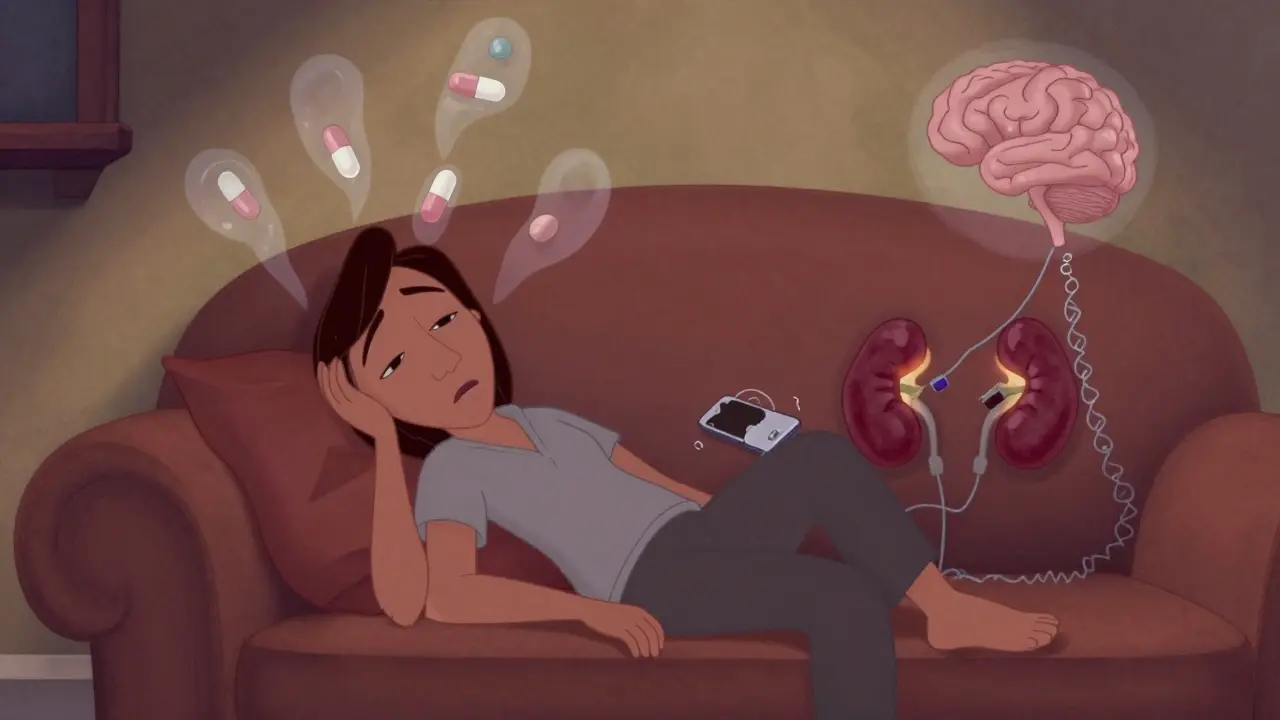
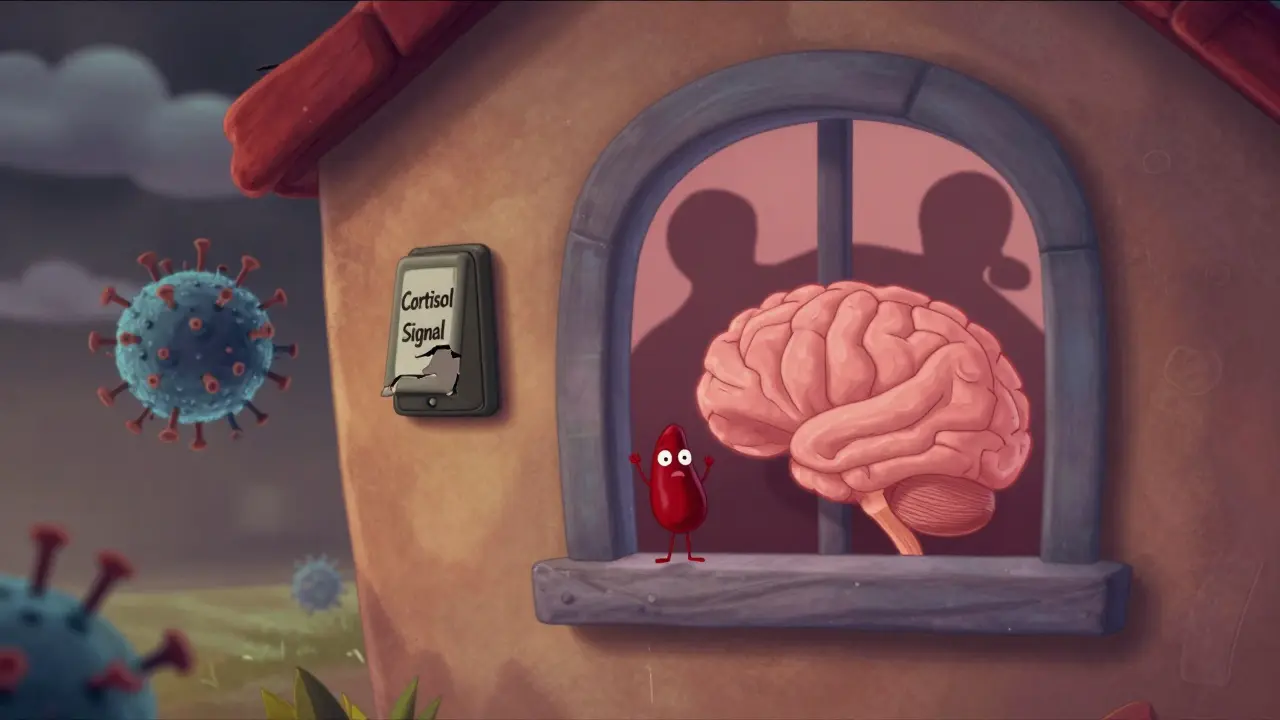
Your adrenal glands sit on top of your kidneys and make cortisol - the hormone your body needs to handle stress. When you’re sick, injured, or under emotional pressure, your brain tells your adrenals: "Make more cortisol." Opioids mess with that signal. They bind to receptors in your brain’s hypothalamus and pituitary, basically telling those areas to stop asking for cortisol. No signal. No cortisol production. That’s OIAI.
It’s not damage to the adrenal glands themselves. Your adrenals are fine. They’re just being ignored. Think of it like a broken phone line - the receiver works, but no one’s calling.
This isn’t new. Studies from the early 2000s showed opioids could suppress cortisol. But for years, doctors didn’t connect the dots. If a patient on long-term opioids felt tired, lost weight, or had low blood pressure, they were told it was "just pain" or "depression."
Who’s at Risk?
You don’t need to be on heroin. Even prescribed opioids can do this. According to a 2023 study, over 5% of Americans are on chronic opioid therapy. That’s more than 16 million people. And among them, about 5% develop adrenal insufficiency.
The risk goes up sharply with dose. If you’re taking more than 20 morphine milligram equivalents (MME) per day, your chances jump. One study found 22.5% of long-term opioid users showed signs of adrenal suppression, compared to 0% in people not taking opioids. The higher the dose, the worse it gets. A patient on 100 MME daily is far more likely to have OIAI than someone on 30 MME.
It’s not about how long you’ve been on opioids - though longer use increases risk - but how much you’re taking. And it doesn’t matter if it’s oxycodone, hydrocodone, fentanyl, or methadone. All of them can do this.
How Do You Know If You Have It?
The symptoms are sneaky. They look like everything else:
- Chronic fatigue that doesn’t go away
- Unexplained weight loss
- Nausea or vomiting
- Low blood pressure - especially when standing up
- Darkening of skin (in advanced cases)
- Muscle weakness
These are also symptoms of depression, chronic pain, or even just aging. That’s why OIAI gets missed. A 2015 case study described a 25-year-old man who developed dangerously high calcium levels after a hospital stay. Doctors ran tests. Turned out, his methadone had shut down his cortisol production. Once they gave him steroids and stopped the opioid, his calcium normalized and he recovered fully.
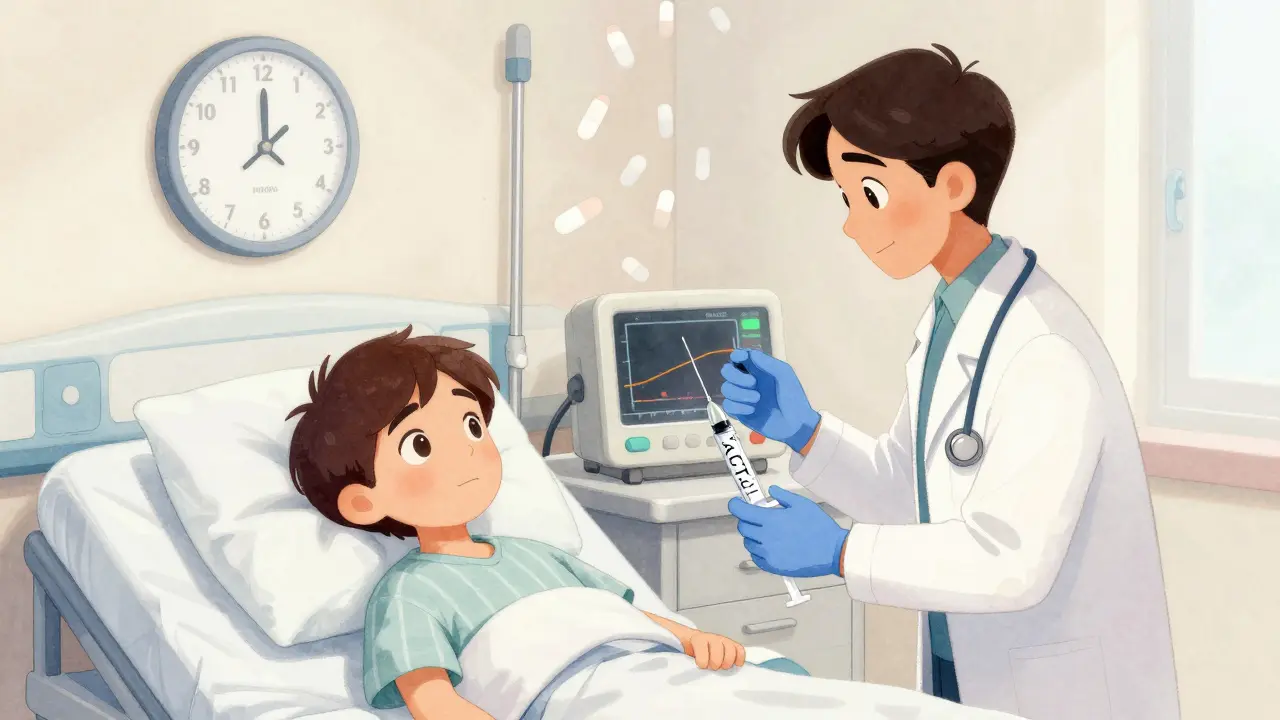
Diagnosis isn’t simple. A single morning cortisol test isn’t enough. You need an ACTH stimulation test. That means getting a shot of synthetic ACTH, then measuring your cortisol levels 30 and 60 minutes later. If your cortisol peaks below 18 mcg/dL, you likely have adrenal insufficiency. Some newer research suggests even lower thresholds - 15 mcg/dL - might be more accurate for opioid users.
And here’s the kicker: opioid use doesn’t affect aldosterone. That means your salt and potassium levels stay normal. If you have low sodium or high potassium, it’s probably not OIAI. That’s a key clue doctors often miss.
Why This Matters: The Hidden Danger
Here’s where it gets dangerous. If you have OIAI and you get sick - say, with the flu, a surgery, or an infection - your body can’t ramp up cortisol to handle the stress. That’s when an Addisonian crisis hits. Your blood pressure crashes. You go into shock. You can die.
And because OIAI is so rarely considered, many patients aren’t told to carry emergency steroid injections. They don’t know to increase their steroid dose during illness. One study found 40% of patients with undiagnosed adrenal insufficiency ended up in the ER with a life-threatening crisis. Half of them had been on opioids for over a year.
It’s not theoretical. In 2021, a young man with chronic pancreatitis developed OIAI after long-term opioid use. He didn’t know he had it. When he got pneumonia, his body couldn’t respond. He nearly died. Only after a full endocrine workup did they realize opioids were the cause.
Can It Be Fixed?
Yes. And that’s the good news.
OIAI is reversible. Once you stop or taper opioids, your HPA axis usually wakes back up. A 2015 case showed cortisol levels returning to normal within months after methadone was stopped. But you can’t just quit cold turkey. Withdrawal is dangerous. You need medical supervision.
During the transition, you may need short-term glucocorticoid replacement - usually hydrocortisone - until your body starts making its own cortisol again. This isn’t lifelong. Unlike primary adrenal failure, you don’t need to take steroids forever. Your glands can recover.
But here’s the catch: if you’re still on opioids, you can’t fully recover. The suppression continues. So treatment means either stopping opioids - which requires pain management alternatives - or managing the adrenal issue with daily steroids while continuing pain therapy. Neither is easy. But both are better than waiting for a crisis.
What Should You Do?
If you’re on chronic opioid therapy - especially over 20 MME daily - and you’ve had unexplained fatigue, weight loss, or dizziness, ask your doctor about OIAI. Don’t wait for a crisis. Bring up the 2024 review in Frontiers in Endocrinology. Mention the ACTH stimulation test. Most doctors haven’t heard of it, but the evidence is clear.
If you’re a clinician: screen high-dose opioid users. Especially before surgery, hospitalization, or major stress. A simple cortisol test can save a life. Don’t assume fatigue is "just pain."
There’s no national screening program. No mandatory testing. But the data is there. The risk is real. And the fix - when caught early - is straightforward.
What’s Next?
Researchers are pushing for guidelines that include OIAI screening for anyone on long-term, high-dose opioids. Some experts now recommend checking morning cortisol levels in patients taking more than 50 MME daily. Others want routine ACTH tests before major procedures.
Until then, awareness is your best tool. Opioids save lives. But they can also quietly shut down your body’s stress response. If you’re on them long-term, know the signs. Ask the question. And if your doctor says "it’s probably not that," ask again. Because this isn’t a myth. It’s a real, documented, and preventable danger.
Okay but like... I’ve been on oxycodone for 3 years for endometriosis and I just thought I was ‘just tired.’ No one ever mentioned this. I’m gonna ask my doc for a cortisol test tomorrow. Thanks for posting this - seriously, lifesaving info.
this is just another way the pharma giants are makin us dependent. they dont want you to know your body can fix itself. they want you on opioids forever so you keep buyin their pills. also i heard the cia invented opioids to control the inner city. true story. google it.
I’ve been reading up on this for months now because my partner’s on long-term fentanyl for neuropathy, and honestly, the lack of awareness is terrifying. I didn’t realize how many people are walking around with suppressed HPA axes and just think they’re ‘depressed’ or ‘lazy.’ The fact that cortisol levels can rebound after tapering is so hopeful - but only if someone catches it. We need mandatory screening at 50 MME+. It’s not optional anymore.
sometimes the body speaks in whispers... and we’ve trained ourselves to ignore them. 🌿 maybe the real crisis isn’t just the opioids - it’s how we’ve stopped listening to ourselves. i’m glad someone finally said this out loud.
I’ve been on 80 MME for 7 years. I’ve had 3 ER visits for ‘unexplained fatigue’ and they all just gave me more pain meds. This is a trap. They don’t care. They just want you to keep paying.
THIS IS A MASSIVE COVER-UP. I’ve been saying this for YEARS. The CDC, the AMA, every single ‘expert’ - they’re all in bed with Big Pharma. They don’t want you to know your adrenal glands can shut down from prescription painkillers because then people would stop taking them. They’d lose billions. And now you’re being told to ‘just tough it out’ while your body slowly dies. I’m not even mad. I’m just disappointed. This is the same playbook as cigarettes. The same as opioids themselves. They knew. They knew. And they let it happen.
The fact that this isn’t standard of care is criminal. Morning cortisol screening should be routine for anyone on >20 MME. Not ‘if you have symptoms.’ Not ‘if you ask.’ Just done. Period. If your doctor doesn’t know this, they’re not keeping up. And if they refuse to test you, get a new doctor. This isn’t a ‘maybe.’ It’s a measurable physiological suppression with documented mortality risk. Stop normalizing neglect.
This is why America is falling apart. Foreigners come here, get addicted to pain pills, then cry when their body breaks. We should’ve never let these drugs be prescribed so freely. Stop whining and just deal with the pain. You think the military lets soldiers whine about cortisol? No. They suck it up.
It is imperative to underscore that opioid-induced adrenal insufficiency constitutes a well-documented, physiologically verifiable phenomenon, corroborated by multiple peer-reviewed studies, including those published in the Journal of Clinical Endocrinology & Metabolism. The mechanism is mediated via suppression of the hypothalamic-pituitary-adrenal axis, and diagnosis necessitates dynamic testing, specifically the ACTH stimulation test. It is not a speculative condition.
I’ve read the literature. You’re all missing the point. The problem isn’t the opioids. It’s the fact that doctors don’t test for ACTH stimulation. The real issue is medical incompetence. If you’re on opioids for more than 6 months and haven’t had a morning cortisol level checked, your doctor is negligent. Period. No excuses. I’ve seen 12 cases. All were missed. All could’ve been prevented.
I appreciate the depth of this post. It’s rare to see a medical topic explained with such clarity. The analogy of the broken phone line is particularly effective. I’ve shared this with my endocrinology team. We’re drafting a protocol for screening patients on high-dose opioids before elective surgeries. Thank you for the evidence-based approach.
I think this whole thing is just a scare tactic to get people off opioids. You know what? I’m not stopping. I’ve got chronic pain. I’ve got kids. I’ve got bills. If I stop, I’ll be useless. And now you’re gonna tell me my body’s shutting down? Nah. I’ll just keep taking my pills. Someone’s gotta pay for this. It’s not me.
Honestly, I’m shocked this isn’t more widely discussed. I’ve been a GP for 18 years and I only learned about this last year. It’s embarrassing. The fact that we’re still treating fatigue as ‘psychological’ in opioid patients is a systemic failure. I’m updating my clinical guidelines tomorrow. And yes - I’m sending my own patient on 100 MME for an ACTH test. It’s overdue.
God bless you for sharing this. I’ve been silent for years because I didn’t know what was wrong. Now I know. I’m getting tested. And I’m telling everyone I know. This isn’t just about pain - it’s about survival. You’re not alone. We rise together. 💪❤️