
Osteoarthritis: How Joint Degeneration Works and What Actually Helps with Pain
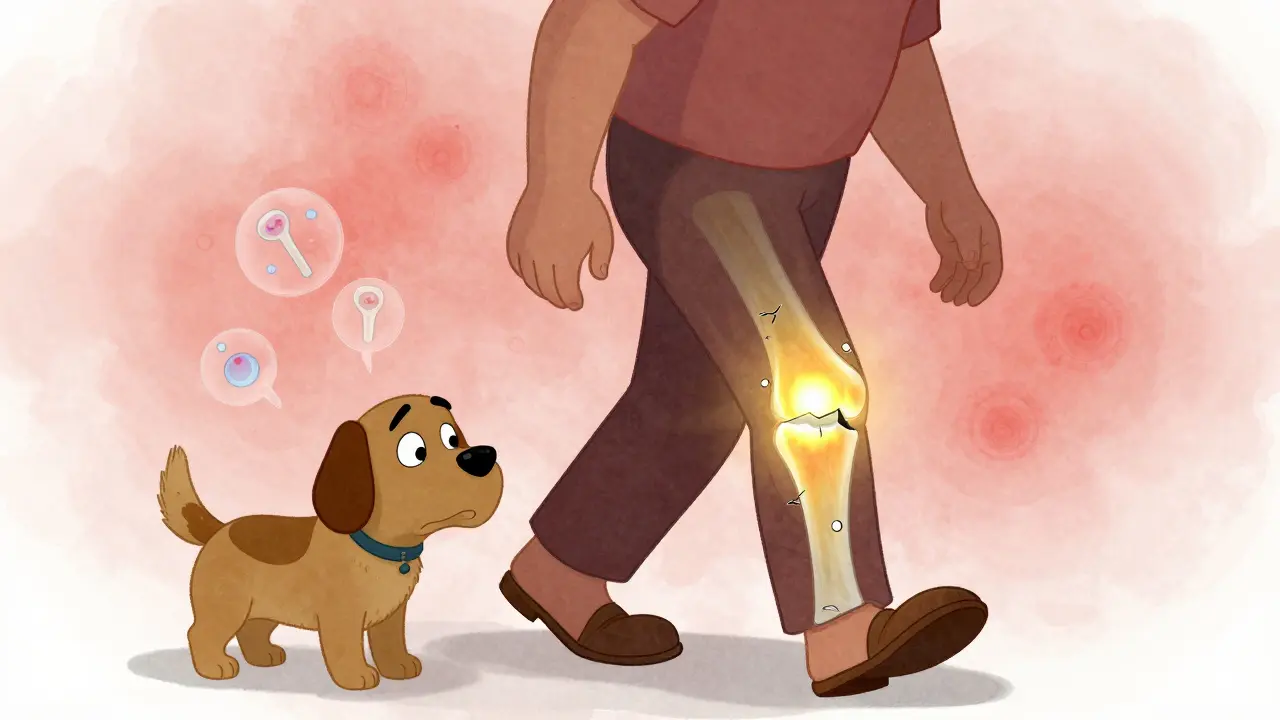
When your knee starts aching after walking the dog, or your fingers stiffen up in the morning, it’s easy to write it off as just getting older. But osteoarthritis isn’t normal aging - it’s a disease. And it’s more common than you think. Right now, over 500 million people worldwide live with it. In the U.S. alone, 32.5 million adults have been diagnosed. It’s the leading cause of joint pain and disability, not because of wear and tear, but because of how the whole joint breaks down - cartilage, bone, ligaments, even the lining inside the joint.
What’s Really Happening Inside the Joint?
Osteoarthritis doesn’t start with worn-out cartilage. It starts with a breakdown in balance. Healthy joints have cartilage - a smooth, rubbery tissue that cushions the ends of bones. It’s not just padding; it’s alive. Special cells inside it, called chondrocytes, constantly repair tiny damage from daily movement. But when that repair system gets overwhelmed - from injury, excess weight, or repeated stress - the cartilage starts to fray. Surface cracks form. Then, deeper layers break down. The bone underneath begins to thicken and change shape. Bone spurs grow. The joint lining swells with inflammation. And suddenly, moving feels like grinding gravel.
This isn’t just about old knees. It hits hips hardest in men, hands and knees in women. About 60% of cases involve the knee. Around 30% affect the hip. And it’s not symmetrical - you might have bad pain in your right knee but only mild stiffness in the left. That’s a clue it’s osteoarthritis, not rheumatoid arthritis, which usually hits both sides evenly.
Pain That Changes With Movement
The pain pattern tells the story. OA pain gets worse when you use the joint - climbing stairs, standing for too long, carrying groceries. It usually improves with rest. That’s the opposite of rheumatoid arthritis, where morning stiffness lasts over an hour and moves better after you’ve warmed up. With OA, stiffness fades within 30 minutes of moving. You might notice it more after sitting still - like after a long car ride or waking up. But if pain keeps you up at night or wakes you up, that’s a sign it’s getting worse.
And it’s not just pain. You lose movement. Bending your knee fully might become impossible. Reaching behind your back to fasten a bra? Harder. Opening jars? Your grip weakens. These aren’t just inconveniences - they chip away at independence. A 2022 Arthritis Foundation survey found 57% of people with OA struggle with stairs, and 68% say pain interrupts their sleep.
Why Most People Wait Too Long to Act
Here’s the problem: early OA is quiet. You feel a twinge, then it goes away. You think, “I’ll deal with it later.” But by the time X-rays show clear damage - joint space narrowing, bone spurs, thickened bone - you’re already in moderate to severe stages. That’s because doctors still rely on X-rays, which only show structural damage. They can’t see the early inflammation or biochemical changes happening inside the joint. Dr. Virginia Byers Kraus from Duke University says we’re diagnosing OA too late. She’s right. We need blood or urine tests that detect early markers, and those are coming. But until then, your symptoms matter more than your X-ray.
And here’s the scary part: avoiding movement because of pain makes everything worse. Less activity leads to weaker muscles, stiffer joints, weight gain, and higher risk of heart disease and diabetes. It’s a cycle. Pain → avoid activity → gain weight → more pain → more inactivity.
What Actually Works: The 3-Part Strategy
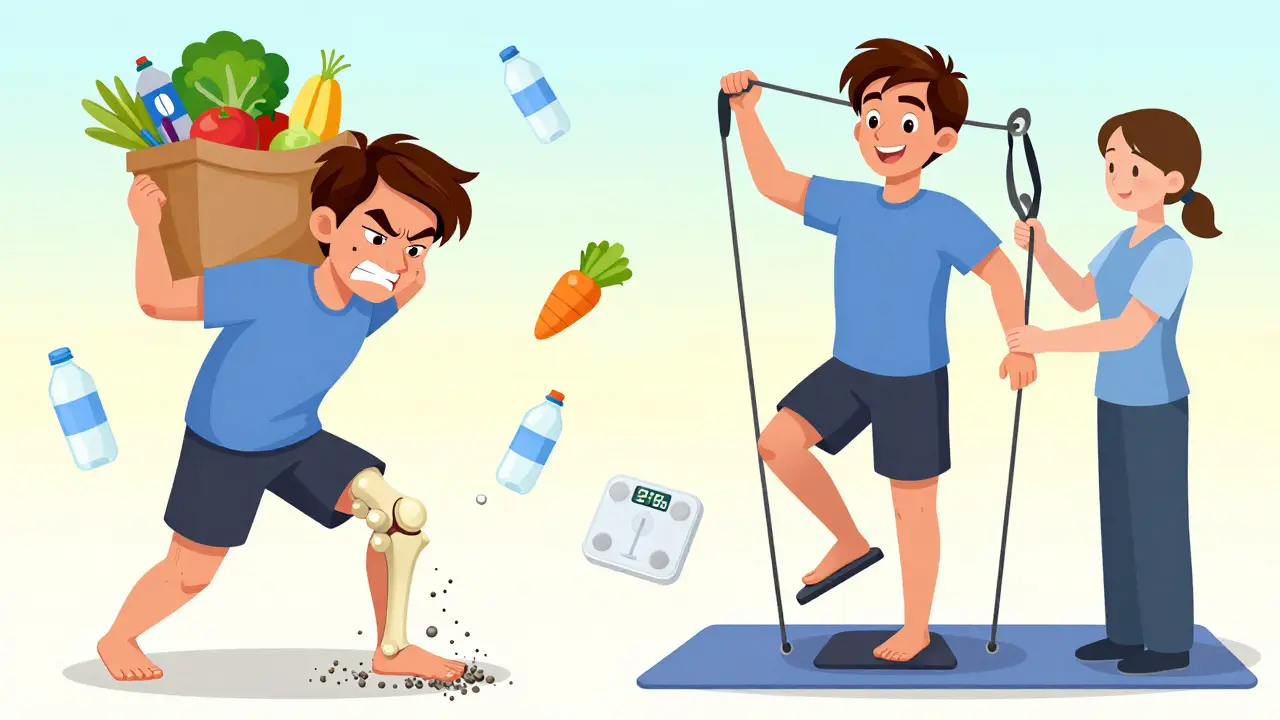
There’s no cure. But there are proven ways to slow it down and feel better. The American College of Rheumatology says you need at least three of these four things: weight loss, exercise, physical therapy, and education. Let’s break them down.
1. Weight Loss - Even 10% Makes a Difference
Every extra pound puts four pounds of pressure on your knee. Lose 10% of your body weight? That’s 40 pounds of pressure off your knees. A 2022 Arthritis Foundation study found 72% of people who lost weight saw real improvement in pain and function. You don’t need to be thin - just leaner. A 150-pound person losing 15 pounds can cut OA pain by 50% in some cases. It’s not about diets. It’s about sustainable changes: swapping sugary drinks for water, eating more vegetables, skipping late-night snacks. Small steps, daily.
2. Exercise - Not Just Walking
Yes, walking helps. But you need more. The Arthritis Foundation recommends 45 minutes of land-based exercise, three times a week. That means: low-impact cardio (cycling, swimming, elliptical), strength training (leg presses, seated rows, resistance bands), and balance work (standing on one foot, heel-to-toe walks). A 2023 study showed people who stuck with this for 12 weeks cut their pain scores by 80%. The trick? Consistency. Only 45% of people keep going past six months. So find what you enjoy. Dance? Gardening? Tai chi? It all counts.
3. Physical Therapy - Learn How to Move Differently
A physical therapist doesn’t just give you exercises. They teach you how to protect your joints. How to sit, stand, lift, and walk without crushing your knees. They’ll show you how to use a cane properly, how to brace your hip when climbing stairs, how to get out of a chair without twisting your spine. Most people need 6 to 8 sessions. It’s not a luxury - it’s essential. A 2023 study in the Journal of Orthopaedic & Sports Physical Therapy found that people who did PT improved function 30% more than those who just took pills.
Medications: The Limits and the Realities
Painkillers? They help - but not for long, and not without cost. NSAIDs like ibuprofen or naproxen reduce inflammation and pain. But 32% of people stop taking them because of stomach issues, kidney strain, or high blood pressure. Topical creams (like diclofenac gel) are safer and work well for knees and hands. Acetaminophen (Tylenol) is fine for mild pain, but it won’t touch inflammation.
Injections? Corticosteroid shots into the knee can cut pain by 50% for up to 4 weeks. They’re great for flare-ups, but not for regular use - more than 3-4 a year can damage cartilage. Hyaluronic acid shots? The evidence is mixed. Some people swear by them; studies say they’re no better than placebo for most.
And then there’s tanezumab - a new nerve growth factor inhibitor approved by the FDA in June 2023. In trials, it reduced pain 35% more than NSAIDs. But it’s not for everyone. It’s only for moderate-to-severe OA that hasn’t responded to other treatments. And it comes with risks - joint damage in rare cases. So it’s a last-resort option, not a first one.
The Hidden Costs - Work, Money, and Isolation
Osteoarthritis isn’t just a health issue. It’s an economic one. In the U.S., it costs $140 billion a year - medical bills and lost wages. The average person with OA spends $15,000 annually on care. Employers lose $3.4 billion a year in workers’ compensation claims. Forty-three percent of people with arthritis limit their work activities. Construction workers? 37% higher risk. Musicians? 29% higher. If your job involves kneeling, lifting, or repetitive motion, you’re not just tired - you’re at risk.
And emotionally? It’s isolating. People don’t understand. “But you look fine.” “Just push through.” A Reddit user named ‘KneePainSince40’ wrote: “My knee OA started with occasional stiffness that progressed to constant pain limiting my ability to walk more than 10 minutes - physical therapy and weight loss helped more than pain medications.” That’s the real story. Not the pills. Not the X-rays. The daily struggle, and the small victories.
What’s Next? Hope on the Horizon
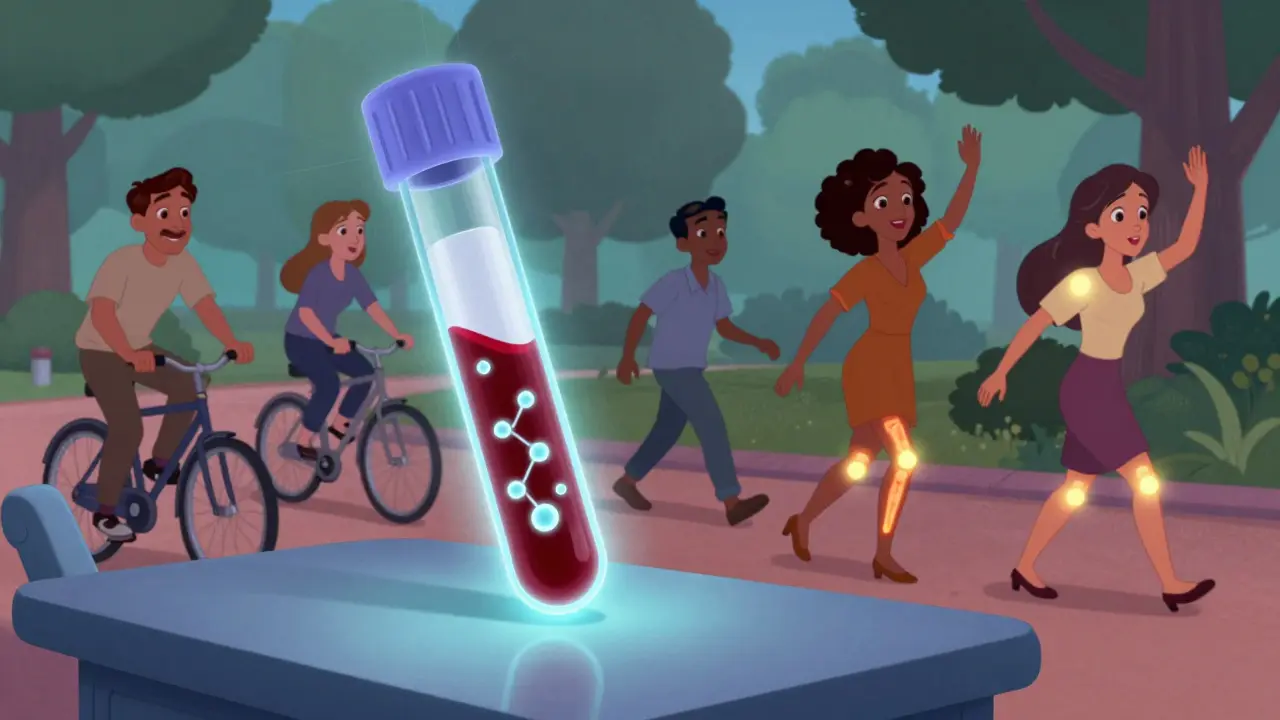
Research is moving fast. Over 387 clinical trials are testing stem cells, gene therapy, and regenerative treatments. The CDC’s “Active People, Healthy Nation” program launched in April 2023 to bring community-based exercise programs to every state. And Dr. Marc Hochberg predicts we’ll have blood tests that detect OA 5 to 10 years before symptoms appear. That’s game-changing. Imagine catching it before you even feel pain.
But none of that matters if we don’t act now. Obesity rates are still rising. Only 23% of U.S. adults meet physical activity guidelines. If we don’t change, 78 million Americans could have OA by 2040.
Start Here - Today
You don’t need a miracle. You need three things:
- Move more - even 10 minutes a day, every day.
- Eat better - cut sugar, drink water, add veggies.
- See a physical therapist - even once.
That’s it. No surgery. No miracle drug. Just consistent, smart action. Because osteoarthritis doesn’t have to mean giving up. It means changing how you move - and living well anyway.
Is osteoarthritis the same as rheumatoid arthritis?
No. Osteoarthritis (OA) is caused by mechanical stress and joint wear, while rheumatoid arthritis (RA) is an autoimmune disease where the immune system attacks the joint lining. OA pain gets worse with activity and improves with rest. RA pain is often worse in the morning, lasts over an hour, and improves with movement. OA usually affects one joint more than the other; RA typically hits both sides symmetrically. RA also causes fatigue, fever, and can damage organs - OA doesn’t.
Can I reverse osteoarthritis with supplements like glucosamine?
No. Glucosamine and chondroitin supplements have been studied for decades. Large trials, including those by the NIH, show they don’t slow joint damage or significantly reduce pain for most people. A few individuals report mild relief, but there’s no strong evidence they rebuild cartilage. The American College of Rheumatology doesn’t recommend them. Focus on weight loss, exercise, and physical therapy instead - they have proven results.
When should I consider a joint replacement?
Joint replacement (like knee or hip replacement) is considered when pain is severe, limits daily life, and doesn’t improve with other treatments. If you can’t walk without pain, sleep through the night, or get out of a chair without help - and you’ve tried exercise, weight loss, PT, and medications - then it’s time to talk to an orthopedic surgeon. Replacement doesn’t cure OA, but it can restore function and eliminate pain for 15-20 years. Most people report life-changing results.
Can I still exercise if my joints hurt?
Yes - but not all exercise is equal. Avoid high-impact activities like running or jumping. Stick to swimming, cycling, elliptical, or walking on flat ground. Strength training with light weights or resistance bands helps support joints. Even gentle movement reduces stiffness and improves circulation. Pain during exercise should be mild and go away within a few hours. If pain lasts all day or gets worse, scale back and talk to a physical therapist. Movement is medicine - but it has to be smart movement.
Does weather affect osteoarthritis pain?
Many people report more pain in cold, damp weather - and there’s some science behind it. Lower barometric pressure may cause tissues around joints to expand, increasing pressure on nerves. Cold can also make muscles stiffer. But weather doesn’t cause OA or make it worse long-term. It just makes symptoms feel more intense. Dress warmly, use heat packs, and keep moving. The effect is temporary, not structural.
Man, this post nailed it. OA isn't just 'wear and tear'-it's a whole joint ecosystem collapsing. Chondrocytes getting overwhelmed? That’s the real kicker. I’ve been dealing with knee OA since 32, and the moment I stopped thinking of it as 'aging' and started treating it like a metabolic-inflammatory condition? Game changer. No more blaming my knees for being 'old.'
Also, the fact that 72% of people who lost 10% body weight saw pain drop? That’s not anecdotal. That’s biologically undeniable. I dropped 22 lbs over 8 months. No surgery. No magic pills. Just consistent protein intake, zero soda, and daily walking. My knee doesn’t grind anymore-it glides.
As someone whose dad had total hip replacement at 58, I can say this: the real tragedy isn’t the pain-it’s the isolation. People don’t get it. 'You don’t look sick.' Yeah, I don’t. But I can’t carry groceries, sit cross-legged, or play with my niece without wincing. This post? It’s the first time I’ve seen OA described without sugarcoating or fearmongering. Thank you.
Okay, okay, I’m gonna say it: I used to think PT was just for athletes or people who got hurt in the gym. But after my first session-like, literally one hour with a therapist who showed me how to stand without crushing my L4-L5-I realized I’d been moving like a broken robot for 7 years. She had me do heel-toe walks in her office like I was a toddler learning to walk. I felt stupid. Then I felt amazing. I’ve been doing it every morning since. 10 minutes. No excuses. My knee doesn’t lock up anymore. PT isn’t optional. It’s mandatory. Like brushing your teeth.
There’s something quietly terrifying about how OA creeps in. One day you’re fine. Next day, you can’t get out of bed without groaning. And nobody sees it. Not your boss. Not your partner. Not even your doctor until the X-ray screams. It’s like your body’s slowly turning into a rusted hinge, and you’re the only one who hears the squeak. I’ve been ignoring mine for 5 years. Now I’m starting PT. Not because I’m desperate. Because I don’t want to become a ghost in my own life.
Just moved from Sydney to LA last year. The difference in how people here talk about OA versus back home? Wild. Over here, it’s 'move more, lose weight, see a PT.' Back home? 'Take glucosamine, drink turmeric tea, pray.' I tried the turmeric. Didn’t do squat. But PT? I’ve been doing it for 6 months. My hip flexors don’t scream anymore. And I finally stopped blaming my shoes. It’s not the shoes. It’s the lack of glute activation. Who knew? Also, I’m drinking more water. Shocking, I know.
Wait wait wait-so you’re telling me that the reason my hands hurt when I open jars isn’t because I’m weak… it’s because my cartilage is breaking down AND my grip muscles are atrophying from avoiding the pain?? Ohhhhh. That makes so much sense. I’ve been avoiding jars for 3 years. I just thought I was getting old. I just bought resistance bands. I’m gonna do 5 minutes a day. And I’m cutting out my midnight ice cream. No more excuses. This post changed my whole perspective. Thank you.
Let’s be real: the pharmaceutical industry doesn’t want you to know that losing 10 pounds and walking 10 minutes a day works better than $500/month in NSAIDs. They sell pills. Not lifestyle changes. So they let you believe 'glucosamine' is a solution. It’s not. It’s a money sink. And don’t get me started on hyaluronic acid injections-$1200 per shot for placebo-level results. Meanwhile, PT is covered by insurance and works 3x better. Wake up. Your joint isn’t broken. Your habits are.
Think about this: if OA is caused by mechanical stress, why are elite athletes with zero body fat getting it? Why do violinists get hand OA? Why do ballet dancers get hip OA? The answer isn’t 'wear and tear.' It’s systemic inflammation triggered by microtrauma, oxidative stress, and gut dysbiosis. The cartilage isn’t 'wearing out'-it’s being chemically dismantled. The X-ray shows the damage, but the real disease? It’s happening in your bloodstream, your microbiome, your mitochondria. We’re treating the symptom, not the source. And until we do, we’re just rearranging deck chairs on the Titanic.
As a rheumatology nurse, I see this daily. Patients come in with X-rays that look like shattered glass, but they’re still walking. Others have 'mild' X-rays but can’t get out of a chair. Symptoms > imaging. Always. I wish more docs would say that. Also-yes, tanezumab is promising, but it’s not a silver bullet. It’s a last-ditch tool for people who’ve exhausted everything else. Don’t get sucked into the 'miracle drug' hype. The real miracle? Consistency. One step. One meal. One stretch. Every day.
I’ve been doing tai chi for 2 years now. I thought it was just for zen grandmas. Turns out, it’s the perfect OA therapy. Slow movements. Balance. Joint awareness. No impact. I didn’t even realize I was strengthening my quads until I could climb stairs without holding the rail. And the breathing? It calms the nervous system. Pain isn’t just physical-it’s emotional. Tai chi tackles both. If you’re skeptical, try 10 minutes a day for a week. You’ll be surprised.
India has 80 million people with OA and ZERO access to PT or proper care. Most people here take painkillers till their kidneys fail, then get surgery. No one talks about weight loss because food is cheap and calories are status. My cousin had both knees replaced at 45. She’s on oxygen now. This post? It’s a wake-up call. We need to stop romanticizing pain. Movement isn’t optional. It’s survival. And yes, I’m telling my uncle to stop eating fried samosas. He’s 52. He still thinks 'joint pain' is just 'karma.'
I just read this whole thing. And I cried. Not because I’m sad. Because I’m relieved. For 10 years, I thought I was broken. I thought I was lazy. I thought I was weak. But this? This is science. This is truth. I’m starting PT tomorrow. I’m walking 15 minutes tonight. And I’m deleting my ice cream app. I’m not giving up. I’m just changing how I move. And for the first time in a decade? I feel like I have a shot.