
OTC Cold Medicine Safety in Children: Age Limits and Risks
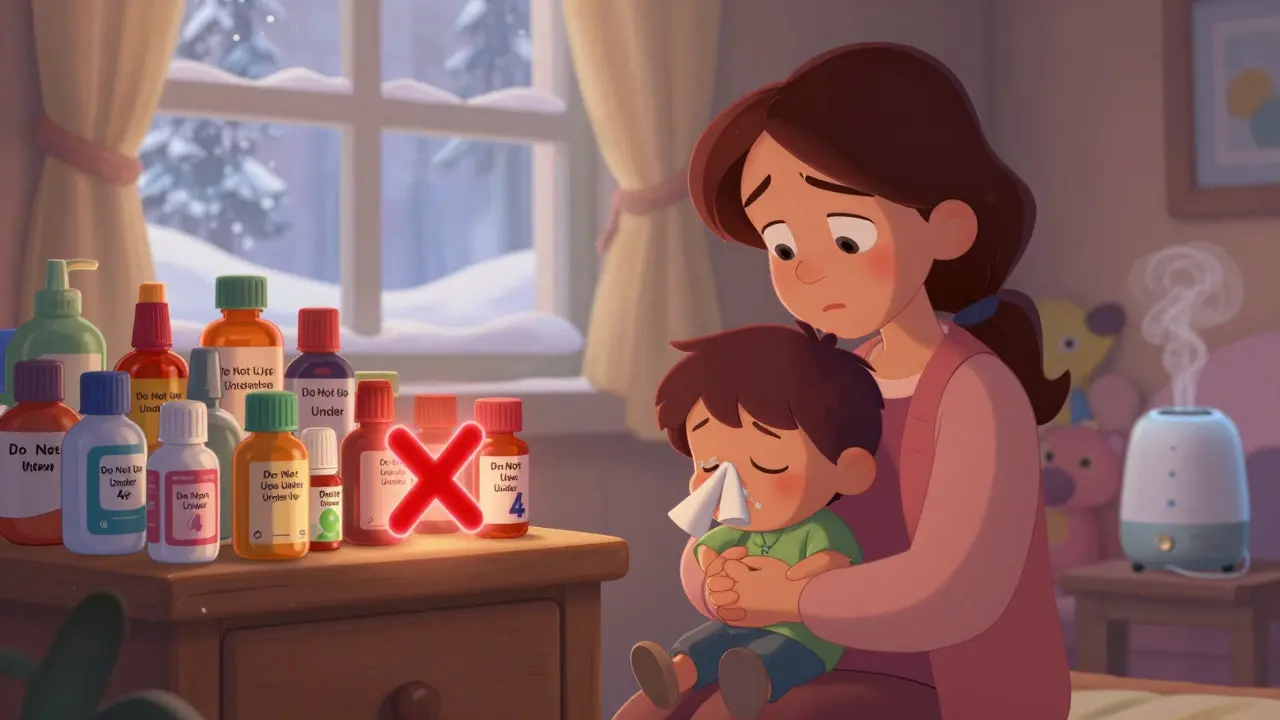
Every winter, parents reach for the medicine cabinet when their child starts coughing and sniffles. It’s natural to want to help them feel better-fast. But what many don’t realize is that OTC cold medicine for children under 4 can be dangerous, and even for older kids, the benefits are tiny compared to the risks.
Why OTC Cold Medicine Doesn’t Work for Young Kids
The truth is, these medicines don’t actually cure colds. They’re meant to relieve symptoms like coughing, runny nose, or congestion. But studies show they barely help children under 12. In fact, the U.S. Food and Drug Administration (FDA) reviewed the data back in 2008 and found no proof that these products work better than a placebo in young kids. The manufacturers couldn’t prove effectiveness in clinical trials. And yet, millions of doses were still given every year. The problem isn’t just that they don’t work-it’s that they can hurt. Between 2004 and 2005, about 5.2% of all reported drug-related emergencies in children came from cough and cold medicines, according to the National Poison Data System. These weren’t just minor reactions. Kids ended up in the hospital with fast heart rates, seizures, trouble breathing, or even coma. A 2019 study in Pediatrics tracked over 1,500 cases of bad reactions in kids under 12. Two-thirds involved children under 2 years old. More than 70% of those kids needed hospital care.The Age Limits: Why 4 Is the Hard Line
In 2008, major drugmakers like Johnson & Johnson, Procter & Gamble, and GlaxoSmithKline agreed to stop marketing OTC cold medicines for children under 4. The FDA backed this decision. Today, every bottle of Children’s Robitussin, Dimetapp, or Mucinex says clearly: Do not use in children under 4 years of age. But here’s the catch: many parents still give it anyway. A 2021 survey by the American Academy of Pediatrics found that 38% of parents gave cold medicine to kids under 4. Why? Most said they thought their doctor recommended it. But when researchers checked medical records, only 17% had actually talked to a doctor. The rest were following old habits, advice from friends, or labels that seemed vague. Some products even warn against use under 6 or 12. That’s because the risks don’t just disappear after age 4. Young children’s bodies process drugs differently. Their livers and kidneys aren’t fully developed. A dose that’s safe for a 6-year-old might be too much for a 4-year-old-even if they’re the same weight. That’s why age-based dosing is flawed. The American Academy of Pediatrics has been pushing for weight-based dosing since 2014. Why? Because two 5-year-olds can weigh 30 pounds or 50 pounds. Giving them the same amount of medicine based only on age can lead to errors of 23% to 37%.What’s Actually in These Medicines?
Most OTC cold medicines for kids are multi-ingredient. That’s part of the danger. A single bottle might contain:- An antihistamine (like diphenhydramine or brompheniramine) to dry up a runny nose
- A decongestant (like pseudoephedrine or phenylephrine) to unclog sinuses
- A cough suppressant (like dextromethorphan) to quiet the cough
- An expectorant (like guaifenesin) to loosen mucus
What Parents Are Doing Wrong-and How to Fix It
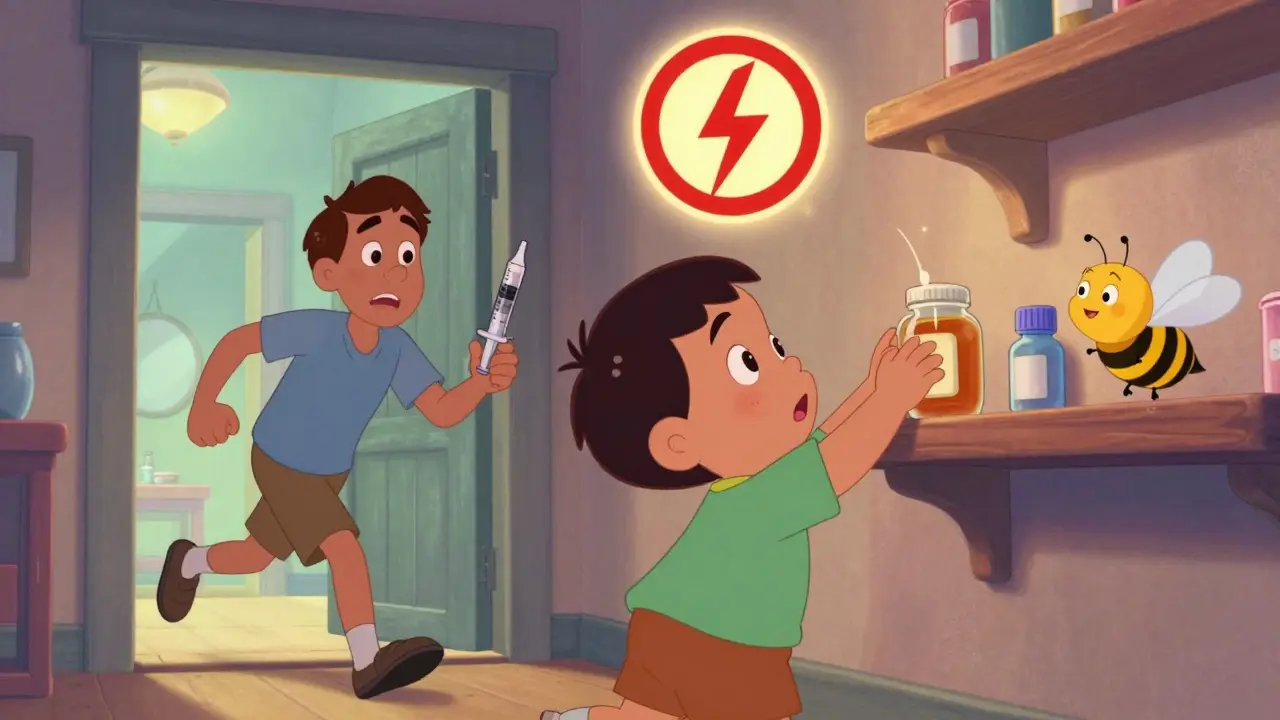
Here’s what goes wrong most often:- Using a kitchen spoon to measure liquid medicine
- Giving medicine every 4 hours when the label says every 6
- Assuming "more is better" when symptoms don’t improve
- Using adult medicine and cutting the dose in half
What Actually Works for a Sick Child
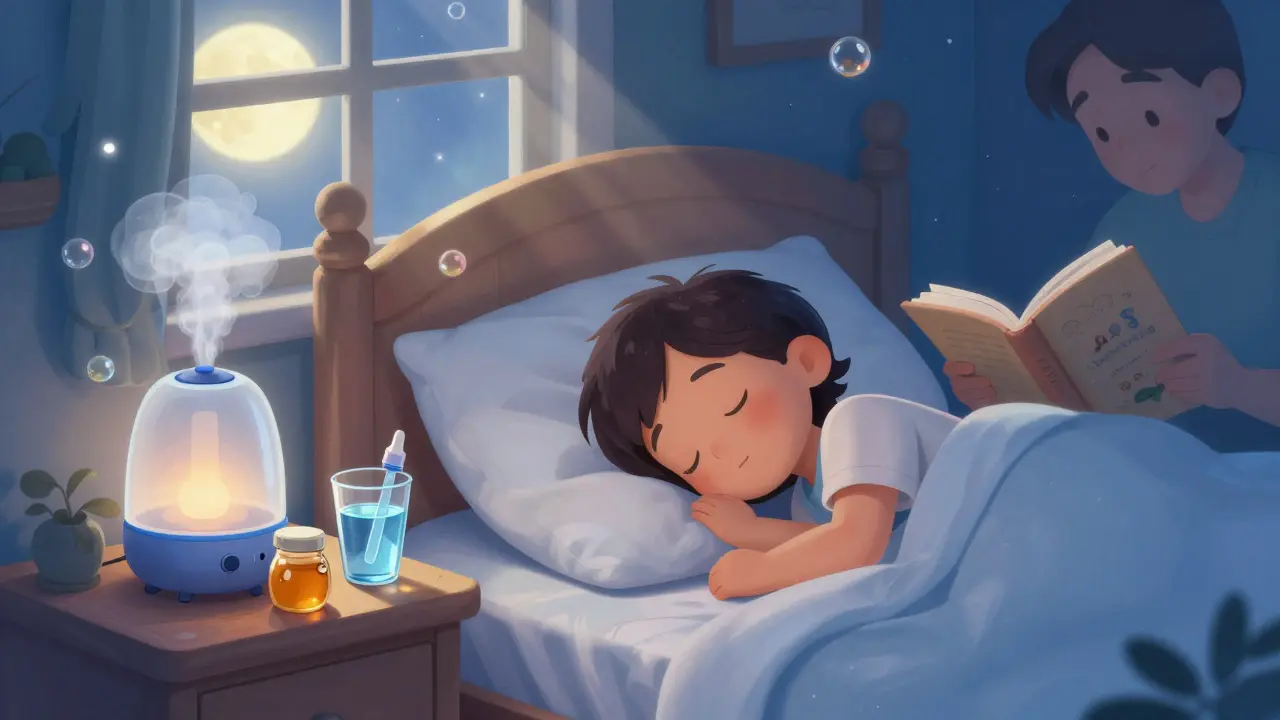
You don’t need medicine to help your child feel better. Here’s what the American Academy of Pediatrics and CDC recommend instead:- Saline nasal drops - Use 2-3 drops in each nostril, then gently suction with a bulb syringe. This helps babies and toddlers breathe easier. Do this before meals and bedtime.
- Honey - For kids over 1 year old, give 2.5 mL (half a teaspoon) of honey before bed. A 2018 Cochrane review found it reduced cough frequency by 36% compared to no treatment. It’s safer and more effective than cough syrup for kids this age.
- Hydration - Offer water, breast milk, or formula more often. Add about 50 mL per kilogram of body weight each day. Dehydration makes congestion worse.
- Humid air - Run a cool-mist humidifier in their room. Keep the humidity between 40% and 60%. Moist air loosens mucus and soothes irritated throats.
- Rest - Let them sleep as much as they need. Sleep is the best medicine for recovery.
What About Older Kids? Is It Safe Then?
Some doctors say dextromethorphan might help older kids-ages 6 to 11-with nighttime coughs. But even then, the benefit is small. One study showed it might reduce coughing by about 10% more than a placebo. Not a cure. Not a big difference. And the risks? Still there. Sleepiness, dizziness, upset stomach. The American College of Chest Physicians says no OTC cough medicine should be used for kids under 12. Their 2022 guidelines say the risk-benefit ratio is unfavorable in all pediatric age groups. That’s a strong statement. It means even if a little bit of relief is possible, the chance of harm is too high to justify it. And don’t forget: the FDA banned codeine and hydrocodone from all pediatric cough medicines in 2018. Those drugs can cause life-threatening breathing problems in kids. Even prescription ones are off the table.The Bigger Picture: Why This Keeps Happening
The market for pediatric OTC cold medicine has dropped from $1.2 billion in 2007 to $840 million in 2022. That’s because parents are slowly learning. But the industry still markets these products aggressively. Labels are confusing. Packaging looks like candy. Flavors are sweet. Ads show happy kids sleeping through the night. Meanwhile, Poison Control centers get over 12,000 calls a year about kids getting into cold medicine. Over 40% of those cases involve children ages 1 to 2. That’s the peak age for accidental overdose. Kids are curious. They can open bottles. They don’t know the difference between medicine and juice. Experts are pushing for changes: standardized dosing cups with flow restrictors that only let out 5 mL at a time. That could cut overdose risk by 82%. The FDA is also working on new rules that would require manufacturers to prove safety and effectiveness for kids before selling any OTC product. Those rules could be final by mid-2025.Bottom Line: Skip the Medicine, Use What Works
Your child’s cold will get better on its own. Most colds last 7 to 10 days. OTC cold medicines won’t speed that up. They won’t prevent complications. They won’t stop the spread. But they can cause serious harm. For kids under 4: Don’t give OTC cold medicine. Period. For kids 4 to 11: Don’t give it unless your doctor says so-and even then, use the lowest dose possible for the shortest time. For all ages: Use saline, honey (if over 1), hydration, humidity, and rest. These are proven, safe, and effective. It’s hard to watch your child suffer. But reaching for the medicine cabinet isn’t the answer. The real care is in the quiet moments: holding them, reading to them, keeping them hydrated, and waiting it out.Can I give my 3-year-old children’s cough medicine if I cut the dose in half?
No. Cutting adult doses or doubling up on children’s doses is dangerous. Children’s bodies metabolize drugs differently than adults. Even a small overdose can cause seizures, rapid heart rate, or breathing problems. The label says "Do not use under 4" for a reason. There is no safe way to give these medicines to a 3-year-old.
What should I do if my child accidentally takes too much cold medicine?
Call Poison Control immediately at 1-800-222-1222. Do not wait for symptoms to appear. Even if your child seems fine, some reactions can be delayed. Have the medicine bottle handy when you call-this helps them identify the ingredients and dosage. If your child is unconscious, having trouble breathing, or having a seizure, call 911 right away.
Is honey really safe for toddlers?
Yes, but only for children over 1 year old. Honey can contain spores of a bacteria called Clostridium botulinum, which can cause infant botulism in babies under 12 months. That’s why it’s never safe for infants. For toddlers and older kids, the digestive system is mature enough to handle it safely. One-half teaspoon before bed can reduce nighttime coughing better than many OTC syrups.
Why do some pharmacies still sell these medicines if they’re unsafe?
They’re still legal to sell for children 4 and older, and manufacturers are required to follow updated labeling rules. But just because something is legal doesn’t mean it’s safe or effective. The FDA doesn’t ban these products outright because they’re not classified as drugs in the same way as prescriptions. Instead, they rely on voluntary industry guidelines and warning labels. That’s why reading labels carefully is so important.
Are natural or herbal cold remedies safe for kids?
Many so-called "natural" remedies aren’t tested for safety in children. Essential oils, echinacea, and elderberry supplements can cause allergic reactions, liver damage, or interactions with other medications. The FDA doesn’t regulate supplements like it does medicines. Stick to proven methods: saline, honey, fluids, and rest. If you’re considering anything herbal, talk to your pediatrician first.
Parents are just lazy. If you can't handle a sick kid without popping pills, maybe you shouldn't have had children. I've raised three kids with nothing but honey, saline drops, and cuddles. No medicine. No drama. They're all healthy adults now. Stop treating your kids like lab rats.
Why are we even having this conversation? In India, we give cough syrup to 2-year-olds every winter and nobody dies. Your FDA is overregulated and paranoid. If your kid gets sick, give them something to feel better - not a lecture on pharmacology. This is America’s overthinking problem in a bottle.
I get it - you’re scared. But the truth is, most parents just want to help. I used to give my daughter cough syrup until I read the label and realized it had three active ingredients I didn’t even know about. Now I use saline drops before bed, a humidifier, and honey if she’s over 1. It’s not glamorous, but she sleeps better and I sleep better too. No side effects. No ER trips. Simple works.
THIS IS A BIG PHARMA SCAM. 😡 They don’t want you to know the truth - these medicines are safe if you know what you’re doing. The FDA is just protecting profits from the $200 billion ‘natural remedies’ industry. Honey? Really? That’s what they want you to believe? Wake up. They banned codeine because it’s too effective - not because it’s dangerous. They’re scared of real medicine.
Oh wow, so now we’re supposed to believe honey is medicine? Next they’ll say rubbing garlic on the feet cures pneumonia. I gave my kid Robitussin at 2 and he turned into a superhero. No joke. He slept 8 hours straight. The FDA doesn’t know anything. They banned it because they’re scared of big pharma… or maybe they’re just paid off by the honey lobby. 🤡
While the empirical evidence presented in the original post is methodologically sound and aligns with current pediatric clinical guidelines, it is imperative to recognize that behavioral patterns among caregivers are often shaped by sociocultural norms, anecdotal experience, and institutional trust deficits. The persistence of noncompliance with labeling directives reflects a systemic failure in risk communication rather than parental negligence alone.
Thank you for this. 💙 I used to panic every time my son had a cold and reach for the syrup. Then I read your post and tried the honey + saline method. He slept through the night for the first time in weeks. I cried. Seriously. I wish I’d known this sooner. Everyone needs to see this.
It’s not about being a good parent. It’s about being a responsible one. Giving medicine you know is ineffective and potentially harmful isn’t love - it’s denial. The fact that 38% of parents still do this after all the data is terrifying. We’re not just failing our kids - we’re normalizing dangerous behavior. And no, honey doesn’t fix everything. But at least it won’t kill them.