
Pharmacist Substitution Authority: Understanding Scope of Practice in the U.S.
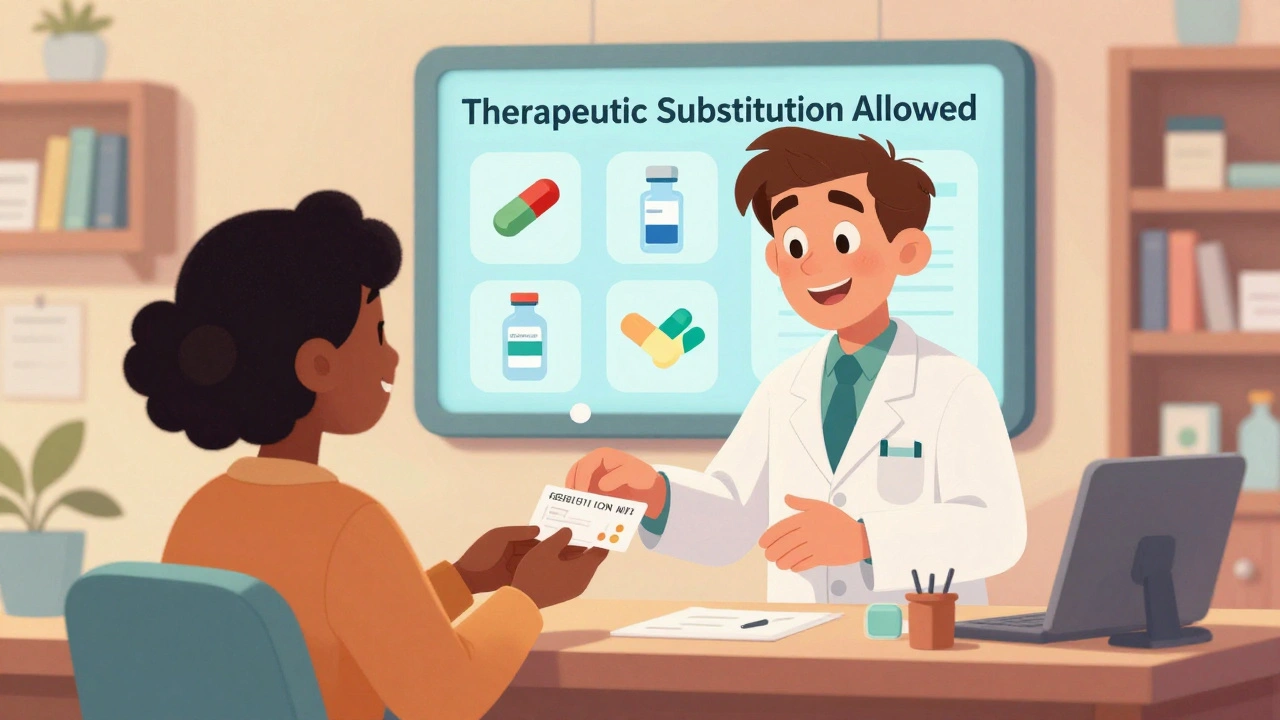
When you pick up a prescription at the pharmacy, you probably assume the pharmacist is just filling what the doctor ordered. But in many parts of the U.S., that’s no longer the whole story. Today, pharmacists can do far more than count pills. In some states, they can switch your brand-name drug for a cheaper generic, change your medication to another in the same class, or even write a new prescription for birth control, flu shots, or nicotine patches-without calling your doctor. This isn’t science fiction. It’s pharmacist substitution authority, and it’s changing how millions of people get care.
What Exactly Is Pharmacist Substitution Authority?
Pharmacist substitution authority means the legal right for pharmacists to make changes to a prescription under specific rules. It’s not a free-for-all. Each state sets its own limits. But the core idea is simple: if a pharmacist sees a better, safer, or more affordable option-and the law lets them-they can act. The most common form is generic substitution. This is allowed in all 50 states. If your doctor writes a prescription for Lipitor, and a generic version of atorvastatin is available, the pharmacist can give you the generic unless the doctor specifically writes “dispense as written.” No extra permission needed. It’s routine, fast, and saves patients and insurers money. But beyond generics, things get more complex. Some states let pharmacists do therapeutic interchange. That means swapping one drug for another in the same class-not just the same chemical, but a different one that works similarly. For example, switching from one statin to another, or from one antidepressant to another. Only three states-Arkansas, Idaho, and Kentucky-have full therapeutic interchange laws. In Kentucky, the doctor must write “formulary compliance approval” on the script. In Arkansas and Idaho, they must say “therapeutic substitution allowed.” If they don’t, the pharmacist can’t change it. And here’s the catch: in Idaho, the pharmacist must clearly tell you what’s changing, why, and that you can say no. That’s patient consent built into the law.Prescription Adaptation and Collaborative Practice Agreements
Then there’s prescription adaptation. This lets pharmacists tweak an existing prescription-change the dose, refill it early, or switch to a different drug-without going back to the prescriber. This is huge for people in rural areas. Imagine living 50 miles from the nearest clinic and your blood pressure med runs out on a weekend. Instead of driving hours, your pharmacist can adjust your dose based on your last lab results and a standing protocol. States like Washington, Oregon, and Minnesota use this model. Even more powerful are collaborative practice agreements (CPAs). These are written contracts between a pharmacist and one or more doctors. They outline exactly what the pharmacist can do: order labs, adjust insulin doses, start anticoagulants, or manage asthma. CPAs exist in all 50 states and D.C., but how they’re used varies wildly. In some places, they’re mostly for hospitals. In others, like North Carolina and California, community pharmacists use them daily to manage chronic conditions. A key feature of CPAs is documentation. Every change the pharmacist makes must go into the patient’s electronic health record. That’s how doctors stay in the loop. It’s not about replacing physicians-it’s about filling gaps.State-by-State Differences: Who Can Prescribe What?
There’s no national standard. Each state is its own experiment. Here’s how some are pushing boundaries:- Maryland lets pharmacists prescribe birth control to anyone 18 and older. Medicaid must cover it.
- Maine allows pharmacists to prescribe nicotine replacement therapy.
- California uses the word “furnish” instead of “prescribe,” giving pharmacists authority to provide certain drugs under protocols.
- New Mexico and Colorado let their boards of pharmacy create statewide protocols. That means if a new drug is approved for pharmacist use, they can add it without waiting for the legislature.
- Twenty-one states now let pharmacists prescribe or dispense naloxone (an opioid overdose reversal drug) without a doctor’s script.
Why Is This Happening Now?
It’s not random. There’s a crisis driving it. The U.S. is facing a shortage of primary care doctors. By 2034, the Association of American Medical Colleges predicts a gap of 124,000 physicians. Rural areas are hit hardest. Over 60 million Americans live in areas officially labeled “Health Professional Shortage Areas.” Pharmacists? There are over 300,000 licensed pharmacists in the U.S. Most are in community pharmacies-convenient, accessible, open evenings and weekends. They’re already checking for drug interactions, counseling patients, and managing refills. Why not let them do more? The data backs it up. Studies show pharmacist-led interventions improve blood pressure control, reduce hospital readmissions for heart failure, and increase vaccination rates. In Minnesota, pharmacist-managed anticoagulation clinics cut emergency visits by 40%. In Texas, pharmacists prescribing birth control led to a 25% drop in unintended pregnancies in targeted counties.What’s Holding It Back?
Despite the progress, there are big roadblocks. The biggest one? Reimbursement. Even if a pharmacist can legally prescribe a drug or run a test, insurance companies often won’t pay for it. Medicare doesn’t recognize pharmacists as providers under Part B-yet. That means if you get a flu shot or a diabetes management session from your pharmacist, you might have to pay out of pocket. That’s why the Ensuring Community Access to Pharmacist Services Act (ECAPS) is so important. If passed, it would require Medicare to pay for services pharmacists provide-like testing, vaccinations, and chronic disease management. That would force private insurers to follow suit. Right now, 211 bills to expand pharmacist scope are moving through state legislatures in 2025. But without federal reimbursement, many of these changes won’t be sustainable. Another issue is resistance from some medical groups. The American Medical Association still argues pharmacists aren’t trained like physicians. But that’s outdated. Pharmacists now complete six years of education-four years of undergrad, two years of pharmacy school-and many do clinical residencies. They’re experts in drug interactions, side effects, and dosing. They don’t diagnose cancer or perform surgery. But they’re the best people to manage medications.What’s Next for Pharmacist Practice?
The trend is clear: pharmacists are becoming clinical providers, not just dispensers. The future will likely include:- More states adopting independent prescribing authority for common conditions.
- Wider use of diagnostic tools-rapid strep tests, glucose monitors, A1C tests-done in pharmacies.
- Electronic health records that automatically notify prescribers when a pharmacist makes a change.
- Insurance systems that code pharmacist services like physician visits.

What This Means for You
If you’re a patient: Ask your pharmacist. If your medication isn’t working, if you’re having side effects, or if you can’t afford your prescription, they might be able to help-legally. Don’t assume they can’t change anything. Ask if your state allows therapeutic interchange or prescription adaptation. If you’re a caregiver for an elderly parent or someone with chronic illness: Know that your local pharmacist might be able to adjust meds without a doctor’s visit. Save time. Save stress. If you’re a student or professional in healthcare: This is where the field is headed. Understanding these laws isn’t optional anymore. It’s part of modern practice.Frequently Asked Questions
Can any pharmacist substitute my prescription?
No. Generic substitution is allowed everywhere, but therapeutic interchange or prescribing new drugs depends on your state’s laws. Some states require the doctor to write special instructions on the prescription. Others let pharmacists act under standing protocols. Always check your state’s pharmacy board rules.
Do I have to accept a substitution?
Yes, you always have the right to refuse. In states with therapeutic interchange laws, pharmacists are required to explain the change and get your consent. If you’re uncomfortable, ask for the original medication-even if it costs more.
Can pharmacists prescribe antibiotics?
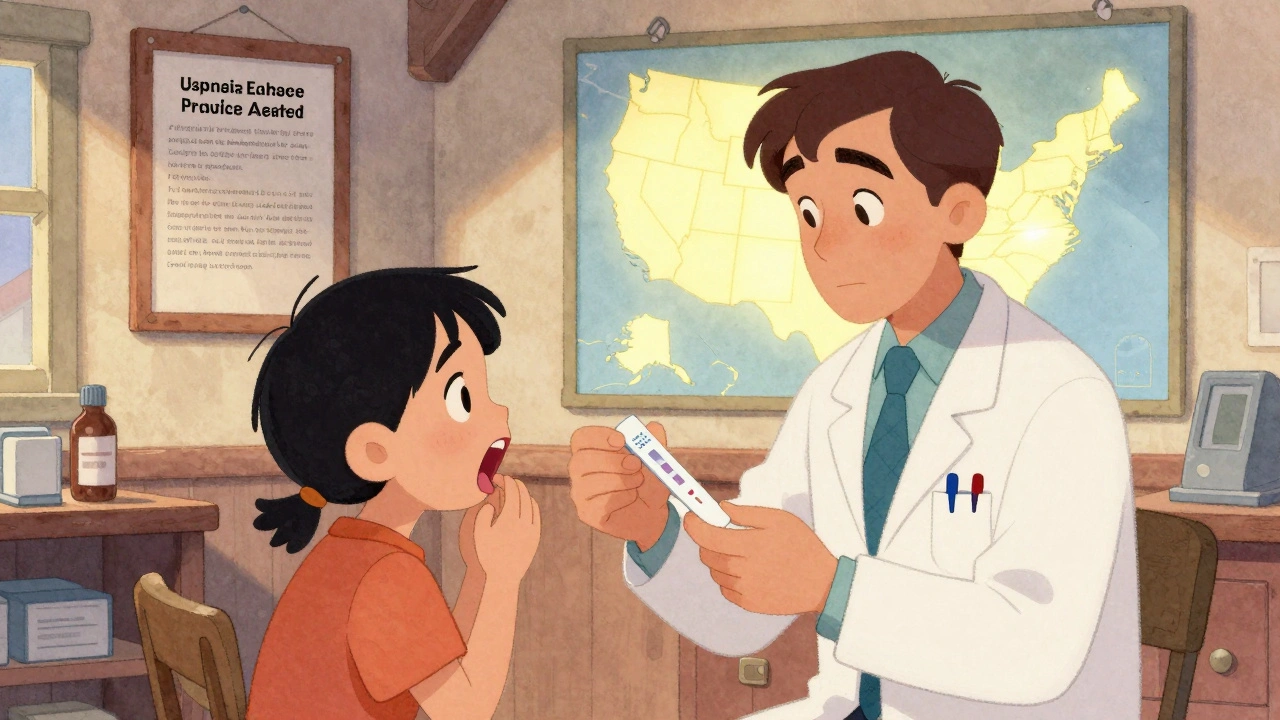
In a few states, yes. Oregon and Washington allow pharmacists to prescribe antibiotics for uncomplicated urinary tract infections and strep throat after performing a rapid test. Other states are considering similar rules. But this is still rare and tightly controlled.
Why don’t all states allow pharmacists to do more?
It’s a mix of politics, tradition, and reimbursement. Some medical groups resist change. Insurance companies don’t want to pay for new services. And passing laws takes time. But momentum is building. In 2025 alone, 16 new laws expanded pharmacist authority across 12 states.
Is this safe?
Evidence shows it is. Pharmacists have one of the lowest error rates in healthcare. Their training focuses on medication safety. Studies in states with expanded authority show fewer hospitalizations, better adherence, and higher patient satisfaction. Protocols, documentation, and collaboration keep things safe.
so uh... pharmacists are now docs? cool cool. next they'll be doing MRIs and writing prescriptions for moon boots. i mean if my barista can brew me a latte with extra foam, why not let 'em prescribe me adderall? capitalism is just a giant game of telephone where the pharmacist gets the last whisper and somehow it's legally binding now.
This is a necessary evolution in healthcare. Pharmacists are among the most accessible and trained professionals in medication management. Expanding their role improves outcomes and reduces burden on overstretched primary care systems. The data supports this shift.
OMG NOOOO they cant just start prescribing like that!!! what if they mess up and someone dies?? like my cousin's neighbor's dog got prescribed tylenol by a pharmacist once and it was a SCANDAL!!! also why dont they just hire more doctors instead of turning pharmacists into mini docs?? this is how we end up with robots doing brain surgery next
I love this so much. I live in a tiny town where the nearest doctor is 45 minutes away. Last month my blood pressure meds ran out on a Sunday and my pharmacist just refilled it based on my last labs. No panic. No drive. Just a quiet nod and a pill bottle. It felt like care, not a transaction. More of this please.
It's about time. Pharmacists know more about drugs than most doctors do. They're the ones catching interactions before you swallow the pill. I used to think this was overreach, but after watching my grandma’s meds get managed by her pharmacist for three years? She's healthier than ever. Let them help.
Therapeutic interchange requires strict protocols, patient consent, and documentation-all of which are already standard in states with expanded authority. The concern about safety is valid, but the evidence shows pharmacists have lower medication error rates than physicians in prescribing contexts. This isn't a risk-it's an optimization.
Why are we letting pharmacists take over? This is why America is falling apart. Doctors go to school for 11 years. Pharmacists? 6. That's not a doctor. That's a guy who knows how to count pills. You want cheaper care? Fine. But don't let someone who can't diagnose a heart attack write you a script for antibiotics. This is dangerous.
Ugh. Another ‘pharmacists are heroes’ piece. Where’s the data on errors? Where’s the accountability? I bet half these states don’t even track outcomes. And why is everyone so excited? Because it saves money, not because it’s better. We’re just outsourcing risk to people who aren’t trained to handle it. This is lazy policy.
I’m not a fan of the AMA’s stance here. Pharmacists aren’t trying to replace doctors. They’re filling the gaps. My uncle in rural Nebraska gets his insulin adjusted by his pharmacist every three months. He’s been stable for two years. No ER visits. No waitlists. That’s not a threat. That’s smart.
They can’t prescribe antibiotics. Period. That’s a doctor’s job. End of story. This is just the beginning of the collapse. Next thing you know, your local CVS will be doing ultrasounds and signing death certificates. This is insane.