
Preparing for Doctor Appointments: What to Bring and Discuss
Medication List Creator
Create Your Medication List
A complete medication list is essential for safe and effective healthcare. The Mayo Clinic reports patients who bring accurate medication lists reduce medication errors by 37%.
How Your Medication List Helps You
According to Mayo Clinic, accurate medication lists reduce medication errors by 37%. Patients who bring complete lists save time during appointments and improve communication with their doctors. Don't forget to include all medications, including supplements and over-the-counter drugs.
What to Bring to Your Doctor Appointment
Walking into a doctor’s office without being prepared is like showing up to a job interview without a resume. You might still get through, but you’re making it harder for yourself-and your doctor. The difference between a rushed, confusing visit and a productive, clear one often comes down to what you bring with you.
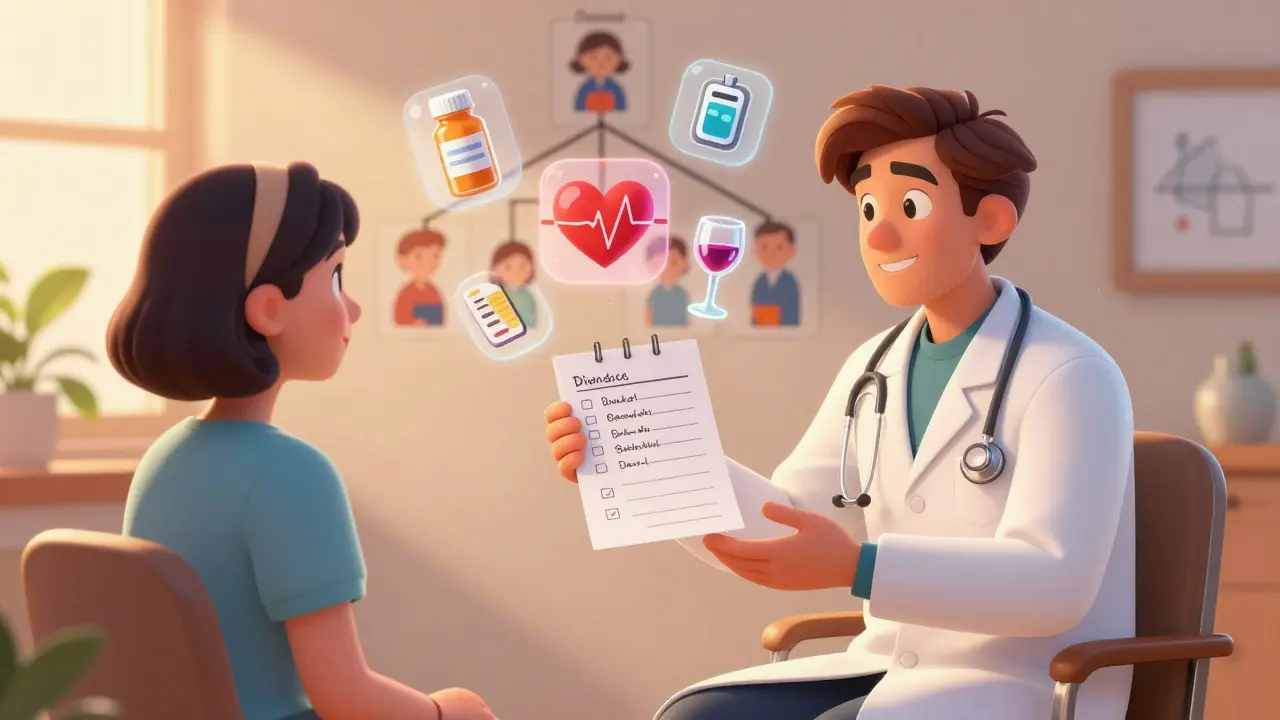
Start with your medication list. Don’t just say, “I take pills for blood pressure.” Write down every single thing you’re taking: prescription drugs, over-the-counter meds like ibuprofen or antacids, and even supplements like vitamin D or fish oil. For each one, include the name, strength (like “15mg”), how often you take it (“once daily”), and why you take it (“for high blood pressure”). Include the doctor who prescribed it and when you started. Mayo Clinic found that patients who bring accurate medication lists reduce medication errors by 37%. Most people get this wrong-45% of initial lists have mistakes, like forgetting a supplement or mixing up doses.
Bring your health insurance card and a government-issued photo ID. Even if you’ve been going to the same clinic for years, they need to verify your coverage and identity. Some clinics, like Cleveland Clinic, require you to check in digitally using their AppointmentPass® system. If you’re unsure, call ahead. Many now ask you to complete forms online before you arrive.
Don’t forget your family health history. Write down any major conditions your parents, siblings, or grandparents have had-especially heart disease, diabetes, cancer, or stroke. Some clinics, like Mayo Clinic, specifically ask for three generations of health data. This isn’t just small talk. It helps your doctor spot patterns that could affect your risk.
If you’ve had recent tests or scans, bring those records. Even if your doctor ordered them, they might not have the results yet. A printout or screenshot from your patient portal can save time. Same goes for any specialist notes or hospital discharge summaries. You don’t need everything-but the key ones.
What to Discuss: The 12 Topics You Can’t Skip
Your time with the doctor is short. You need to make it count. Don’t wait for them to ask. Bring up these topics yourself, even if they feel awkward.
Start with symptoms. Don’t say, “I’ve been tired.” Say, “I’ve felt exhausted every day since October 10. It gets worse after lunch, and I nap for an hour even when I slept 8 hours. It’s a 7 out of 10 in intensity.” Specifics matter. AdventHealth’s data shows that patients who describe symptoms with dates, frequency, and intensity are 68% more likely to get the right diagnosis on the first try.
Be honest about lifestyle habits. Alcohol? Say how much and how often: “Two glasses of wine on weekends.” Exercise? “I walk 20 minutes, three days a week.” Smoking? “I used to smoke a pack a day for 15 years, quit two years ago.” Don’t think your doctor will judge. They’ve heard it all. Hiding this information leads to wrong prescriptions or missed diagnoses. AdventHealth’s guidelines say these details are non-negotiable for accurate care.
Ask about as-needed medications. That inhaler you use when you’re short of breath? The nitroglycerin you keep in your wallet? Don’t assume they’re not important. AdventHealth specifically requires patients to list these. They’re not “just in case”-they’re part of your treatment plan.
Bring up mental health. If you’ve felt down, anxious, or overwhelmed for more than two weeks, say it. Doctors are trained to ask, but they won’t know unless you tell them. The Institute for Healthcare Improvement includes mental well-being as one of the four core domains for patient preparation.
Ask questions. Don’t be shy. Use these exact phrases: “Why are you recommending this test?” “Are there side effects?” “What would you do if this were your mom or dad?” Mayo Clinic says patients who ask these questions understand their care better and follow treatment plans more closely.
Finally, talk about your goals. “I want to walk without pain by spring.” “I want to stop taking this pill.” “I want to understand what’s causing my headaches.” Doctors can’t help you reach goals if they don’t know what they are.
How to Organize Your Info Before the Appointment
Don’t try to remember everything the night before. Build a system.
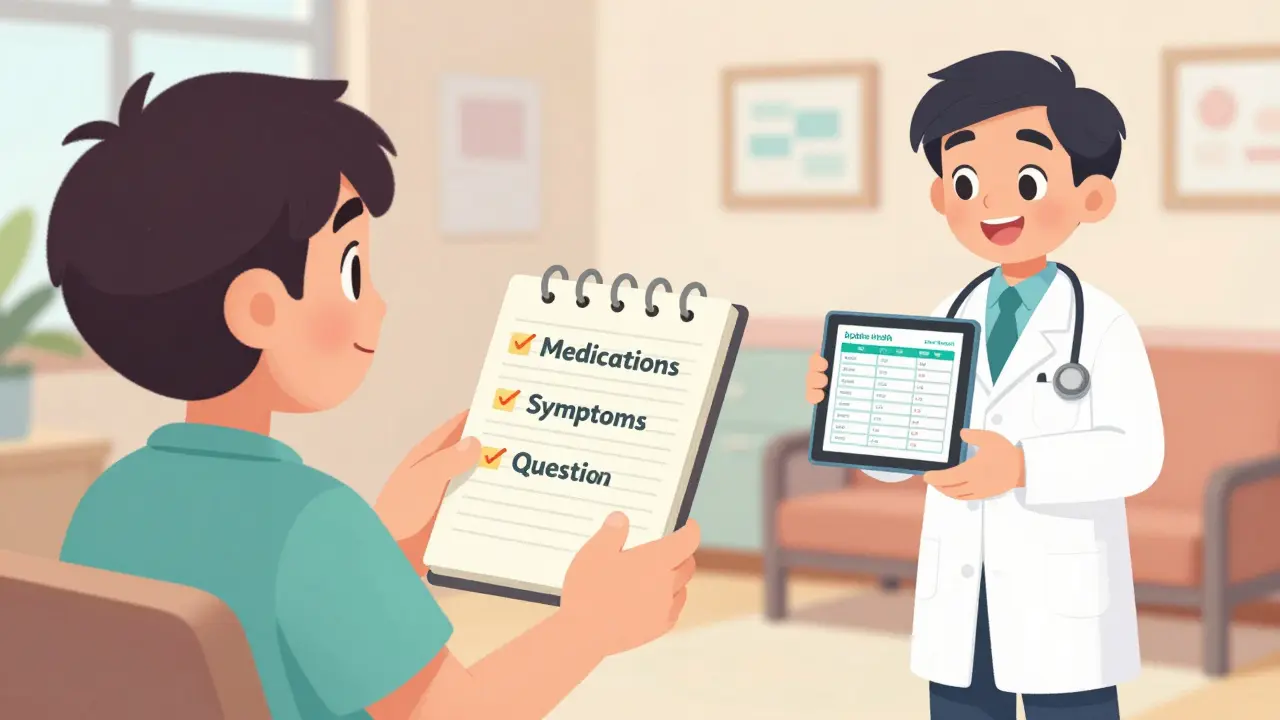
Use a simple notebook or your phone’s notes app. Create three sections: Medications, Symptoms, and Questions. Update them weekly. When you refill a prescription, write it down. When a new symptom pops up, note the date. When you think of a question, jot it down.
For medications, use a table format. Here’s a quick template:
- Drug Name: Lisinopril
- Strength: 10mg
- Dosage: One tablet
- Frequency: Once daily
- Purpose: For high blood pressure
- Prescribed by: Dr. Patel
- Started: January 2023
For symptoms, use this format: “Onset: October 10. Duration: Daily. Intensity: 6/10. Worse after meals. Better with rest.”
For questions, list only three to five. Prioritize. Put the most important one first. St. Joseph Hospital Bangor found patients who prepare 3-5 focused questions resolve 89% of their main concerns. Those who don’t? Only 63%.
What Happens If You Don’t Prepare?
Skipping prep might seem harmless. But the cost is real.
Doctors have 15-20 minutes per visit. If you show up without a list, they’ll spend half the time asking basic questions. That leaves less time for real issues. Aurora Health Care’s time-motion studies show prepared patients save 14.7 minutes per visit. That’s over 200 hours saved across 12 clinics in six months.
Without accurate medication info, you risk dangerous interactions. One patient in Cleveland Clinic’s study took a common painkiller with a blood thinner they forgot to mention. The result? A hospital stay.
And then there’s the emotional cost. You leave feeling unheard. You forget to ask about that weird rash. You don’t get the test you wanted. You end up back in the office two weeks later. It’s exhausting.
Digital Tools That Actually Help
You don’t have to do this all by hand. Many tools exist to make it easier.
Mayo Clinic’s app lets you import your pharmacy records from 27 major chains and syncs with Apple Health and Google Fit. It auto-updates your medication list when you refill a prescription.
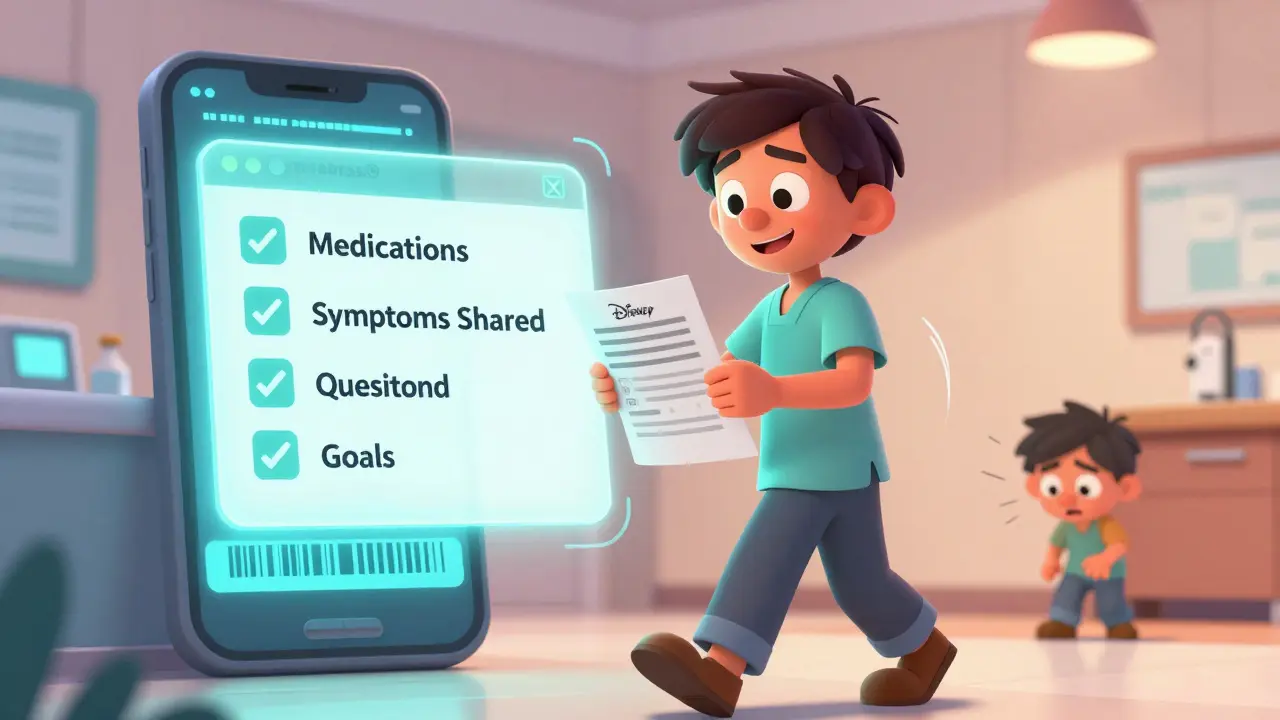
Cleveland Clinic’s AppointmentPass® system lets you check in online, answer symptom questions before your visit, and even get a digital barcode to scan at the front desk. Users complete prep 22 minutes faster and submit 19% more complete info.
Ambetter Health now links to their mail-order pharmacy. If you refill a prescription, it updates your list automatically.
Even if your clinic doesn’t use fancy tech, you can still use your phone. Take photos of your pill bottles. Record voice notes about symptoms. Use free apps like Medisafe or MyTherapy to track meds and symptoms.
What to Do After the Appointment
The visit isn’t over when you walk out.
Write down what the doctor said. Even if you think you’ll remember. Did they say “wait and see” or “start a new med”? Did they schedule a follow-up? Did they give you a test to do at home?
Set reminders for next steps. If they said “come back in 3 months,” put it in your calendar. If they said “take this blood test,” note the date and time. If they gave you a prescription, check if it’s covered by your insurance before picking it up.
Call if something doesn’t make sense. You shouldn’t have to guess. If the instructions were unclear, call the office. Most have a nurse line for exactly this.
Final Tip: Treat Your Appointment Like a Meeting
You wouldn’t go to a job interview without your resume. You wouldn’t show up to a team meeting without knowing the agenda. Your health is just as important.
Preparation isn’t extra work-it’s your right. It’s how you take control. The system is designed to move fast. You have to be ready to keep up.
Start small. This week, write down your meds. Next week, add your symptoms. Then your questions. You’ll be amazed at how much clearer everything becomes.
What if I forget to bring my medication list?
If you forget your list, don’t panic. Tell your doctor you’re trying to keep track and ask if they can look up your records. Most clinics have access to pharmacy databases. But don’t rely on this-medication errors are common when lists aren’t provided. Bring one next time. Even a handwritten note is better than nothing.
Should I bring my supplements to the appointment?
Yes. Supplements can interact with prescription drugs. For example, St. John’s Wort can reduce the effectiveness of birth control or antidepressants. Even fish oil can thin your blood. List every supplement by name and dose. Don’t assume your doctor knows what’s in your cabinet.
How many questions should I prepare?
Three to five is ideal. Too many, and you’ll rush. Too few, and you might miss something important. Prioritize: start with your biggest concern. If time allows, ask one or two more. Most doctors appreciate focused questions-they make the visit more efficient.
What if my doctor dismisses my concerns?
If you feel dismissed, ask for clarification: “Can you explain why you think this isn’t serious?” or “Could we get a second opinion?” You have the right to be heard. If this keeps happening, consider switching doctors. Your health matters too much to settle for silence.
Can I bring a friend or family member?
Absolutely. Many people find it helpful to have someone else there to listen, take notes, or ask questions they might forget. Just let the clinic know ahead of time. Some offices even offer private rooms for family discussions.
I bring a napkin with my meds written on it. My doctor laughs, then says it’s the most accurate list he’s seen all week.
Still beats the hospital’s system that lost my blood thinner last month.
you know what they dont tell u? the clinic is secretly selling your med list to big pharma. i saw a guy get a bill for $4000 for a pill that cost $3 at walmarts back in mexico. they know ur vulnerable. they know. theyre watching.
i always forget to write down my supplements until the day before. last time i showed up with just "vitamins" and the nurse had to ask me if i meant vitamin D or the gummy bears with vitamin C in them. oops.
now i use a sticky note on my mirror. works better than my phone.
in Indonesia, we just show up with a bag of herbs and say "this helps my back." doctors nod like it’s normal. here, they act like you’re bringing a live chicken into the ER.
but honestly? i think both sides miss something. maybe we need a middle ground - like, a shared language for healing. not just pills and forms.
i started using Medisafe last year. now my mom gets a text every time i take my BP med. she’s 72 and lives in Mumbai. we don’t talk every day, but she knows i’m okay.
tech isn’t cold. sometimes it’s the only hug you get.
my doctor once said, "You’re not here because you’re sick. You’re here because you’re tired of being tired."
that hit harder than any lab result.
turns out, the real diagnosis was: you’ve been ignoring yourself for 17 years.
so now i bring a journal. and a snack. because if we’re gonna talk about my soul, i’m not doing it on an empty stomach.
this whole "bring a list" thing is just corporate healthcare gaslighting.
you think they care if you forgot your fish oil?
they care that you spent 20 minutes filling out forms instead of paying your $500 copay.
your life is a revenue stream. your symptoms? just data points in a spreadsheet.
they don’t want you prepared. they want you compliant.
in Nigeria, when you’re sick, you don’t go to the doctor first. you go to the market. the herb lady knows your aunt’s cousin’s cousin who had the same cough. she gives you tea and a prayer.
then you go to the clinic.
but here? you’re told to memorize your meds like a poem.
maybe the real problem isn’t that we forget our lists - it’s that we’ve forgotten how to listen to each other.
I only bring my meds if they’re FDA-approved. Anything else? That’s just foreign nonsense. I don’t need some herbal tea from India telling me how to live. My insurance covers science, not superstition.
i brought my list last time and the doctor just skimmed it and said "ok cool" then asked me if i was stressed
like i wasnt the one who spent 3 hours typing it out and printing it and highlighting the bad stuff
why do we even bother