
Risks Associated with Any Medication or Dietary Supplement

People often think that because something is natural, it’s safe. That’s a dangerous myth. Whether it’s a prescription pill, an over-the-counter drug, or a bottle of herbal supplements from the health food store, every medication or dietary supplement carries real risks. These aren’t just theoretical concerns-they’re happening every day in hospitals, emergency rooms, and homes across the country.
Supplements Aren’t Regulated Like Medicines
In the U.S., prescription drugs go through years of testing before they hit the market. The FDA requires proof of safety and effectiveness. Not so for dietary supplements. Under the 1994 Dietary Supplement Health and Education Act (DSHEA), supplement makers don’t need to prove their products work-or even that they’re safe-before selling them. The FDA can only act after harm is reported, which means dangerous products can stay on shelves for months or even years before anyone steps in.This gap in oversight is why there are over 85,000 different supplement products available in the U.S. today. Most are sold without any real quality control. A 2022 FDA review found that nearly one in five supplements contained ingredients not listed on the label, including unapproved pharmaceuticals, heavy metals, or toxic contaminants. Some products labeled as “natural weight loss” or “energy boosters” have been found to contain hidden stimulants similar to those in banned drugs.
Drug-Supplement Interactions Can Be Deadly
One of the biggest hidden dangers is how supplements interact with prescription medications. These aren’t rare oddities-they’re common, predictable, and often ignored.St. John’s wort, for example, is sold as a natural remedy for mild depression. But it can slash the effectiveness of birth control pills by 13-15%, leading to unplanned pregnancies. It also cuts levels of cyclosporine (used after organ transplants) by half, which can cause organ rejection. In cancer patients, it can interfere with chemotherapy drugs like irinotecan and doxorubicin, reducing their potency by up to 30%.
Goldenseal and Asian ginseng affect the same liver enzyme system (CYP3A4) that processes over 50% of all prescription drugs. This includes statins for cholesterol, blood pressure meds, antidepressants, and even HIV treatments. If your liver breaks down your medication too fast because of a supplement, the drug stops working. If it slows down, the drug builds up to toxic levels.
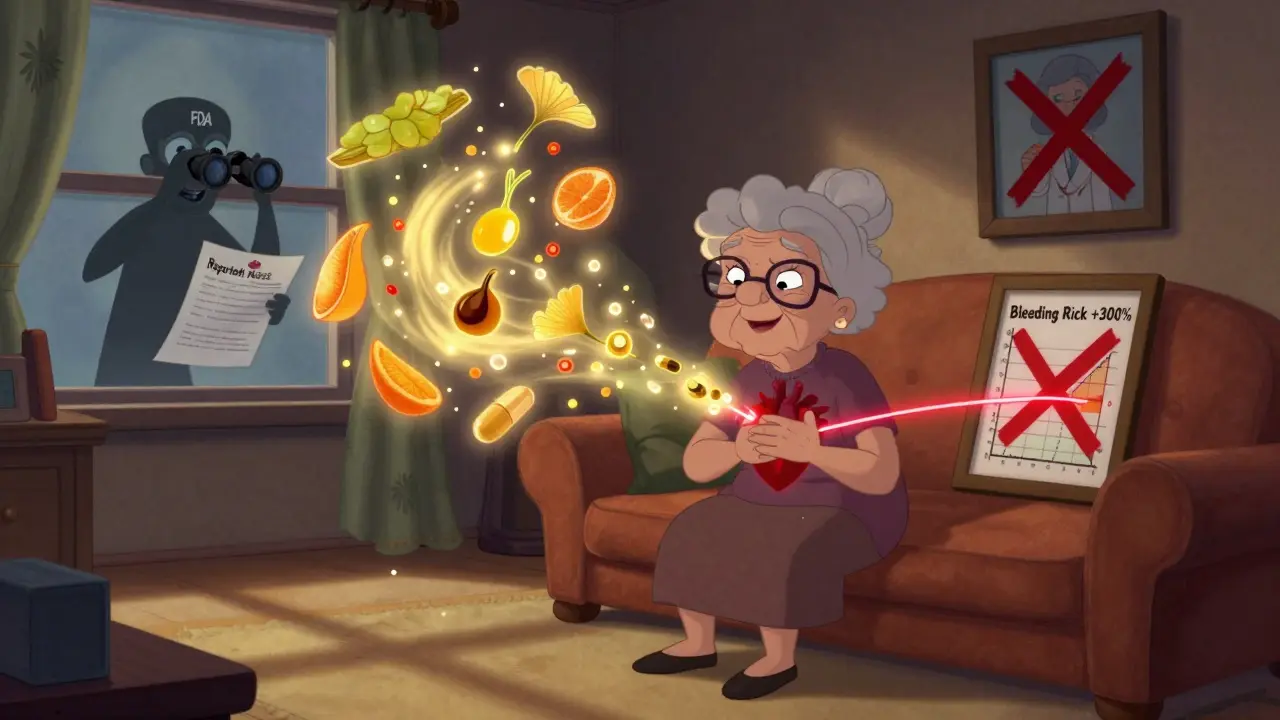
Even common supplements like fish oil, garlic, and ginkgo biloba can increase bleeding risk when taken with blood thinners like warfarin or aspirin. One 68-year-old woman in Melbourne ended up in the ER after combining ginkgo with daily aspirin-she lost so much blood she needed a transfusion. The FDA received that report in March 2022. It wasn’t an accident. It was preventable.
Too Much of a Good Thing Can Kill You
People think vitamins are harmless. They’re not.Too much vitamin A-over 10,000 IU per day for months-can cause liver damage, blurry vision, and even increased pressure inside the skull. Acute poisoning from a single large dose (over 300,000 IU) can lead to vomiting, dizziness, and coma.
Vitamin D is another silent killer. People take high doses thinking it’ll boost immunity or prevent fractures. But too much causes calcium to flood the bloodstream. Symptoms start with thirst and frequent urination. Then come confusion, irregular heartbeat, kidney stones, and eventually coma or death. A 2021 study showed that elderly adults taking monthly doses over 300,000 IU had a 15-20% higher risk of falls and broken bones.
Vitamin E at doses above 400 IU/day increases the risk of hemorrhagic stroke by about 10%. That’s not a small number. In Australia alone, that could mean hundreds of extra strokes each year.
Supplements Can Interfere with Medical Treatments
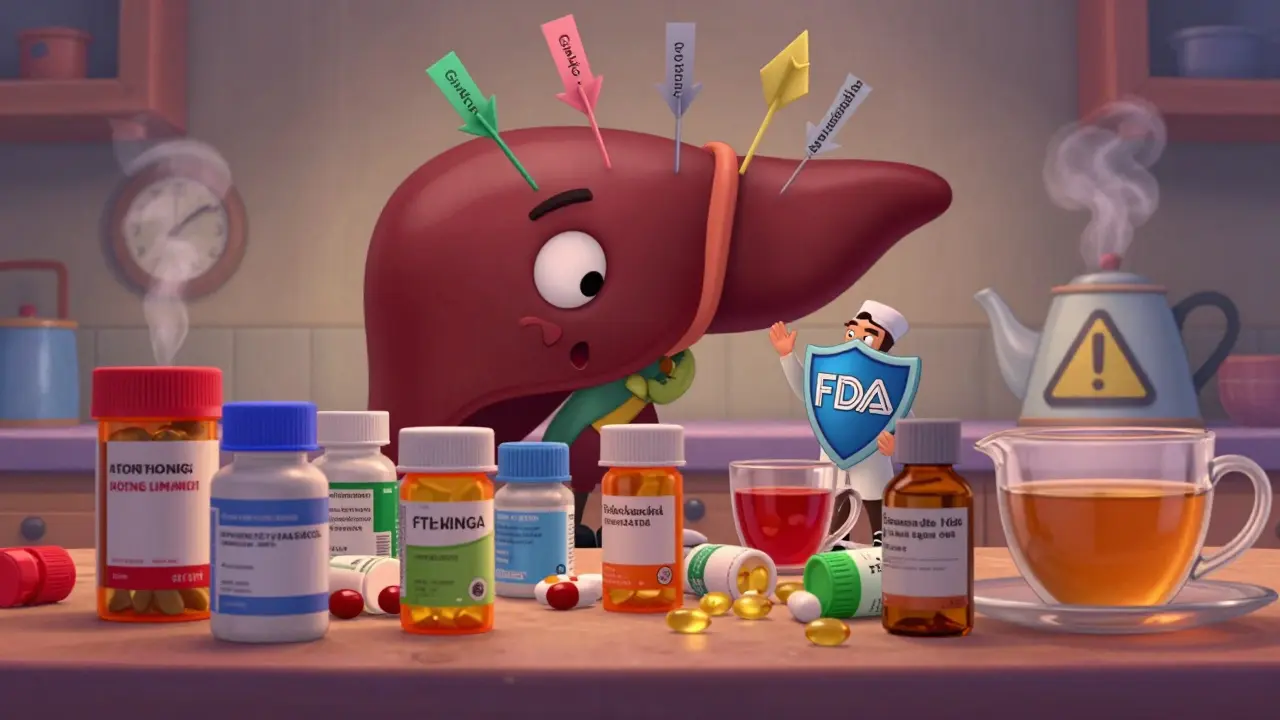
Cancer patients are especially vulnerable. Antioxidants like vitamins C and E are often taken to “protect the body” during chemo. But they can shield cancer cells from the very treatments meant to kill them. The American Cancer Society says up to 40% of commonly used supplements interfere with chemotherapy metabolism. One patient in Sydney stopped radiation therapy for three weeks because her skin blistered from vitamin E use. Her oncologist had no idea she was taking it.Herbal supplements can also trigger dangerous reactions during surgery. Ginkgo, garlic, and ginger can cause excessive bleeding. Bitter orange, often found in weight-loss products, can spike blood pressure and heart rate under anesthesia. In 2023, the FDA added bitter orange and yohimbe to its list of high-risk ingredients after multiple reports of heart attacks during minor procedures.
Who’s at Risk? And Why Don’t People Talk About It?
Half of American adults take dietary supplements. But only one-third tell their doctor. That’s the core problem. Doctors can’t protect you if they don’t know what you’re taking.Older adults are at the highest risk. They’re more likely to take multiple medications and supplements. They also process drugs slower, so interactions hit harder. A 2022 study in the Journal of the American Geriatrics Society found that 67% of dangerous interactions occurred in people over 65.
Reddit forums and Facebook groups are full of stories like this: “I took ashwagandha with my blood pressure meds and couldn’t sleep for a week.” Or: “My heart raced so bad I thought I was having a heart attack.” These aren’t rare. They’re routine.
Even the FDA’s reporting system only captures about 1% of actual incidents. Most people don’t connect their symptoms to a supplement. They blame stress, aging, or bad luck.
How to Protect Yourself
There are practical steps you can take right now to avoid harm:- Make a full list of everything you take-prescriptions, OTC drugs, vitamins, herbs, teas, and even topical creams. Update it every time you see a doctor.
- Bring it to every appointment. Don’t assume your doctor knows. Ask: “Could this interact with anything I’m taking?”
- Avoid supplements during cancer treatment unless your oncologist says it’s safe. Many don’t realize how much they interfere.
- Check for red flags on labels: “proprietary blends,” “clinically proven,” or claims like “miracle cure.” These often hide dangerous doses or untested ingredients.
- Use the NIH’s free tool called “My Dietary Supplement and Medicine Record.” It’s used by over 1,200 clinics and helps you track interactions.
- If you feel something off-rash, palpitations, dizziness, unusual bleeding-stop the supplement immediately and see a doctor.
What’s Changing? And Will It Be Enough?
The system is finally waking up. In 2023, the FDA launched its Dietary Supplement Ingredient Advisory List, flagging 12 high-risk substances like yohimbe and ephedra-like compounds. The NIH expanded its LiverTox database to track 45 supplement-linked liver injuries. Green tea extract alone accounts for 22% of those cases.The FDA is also testing AI to scan social media for early signs of problems. In a six-month pilot, it spotted dangerous patterns with 87% accuracy from over a million posts.
But the real fix? Legislation. The Dietary Supplement Listing Act, proposed in 2022, would require manufacturers to notify the FDA before selling new products. Right now, there’s a 6-12 month lag between a product hitting shelves and regulators finding out it’s dangerous. That’s too long.
Until then, you’re your own best defense. No one else is watching out for you the way you should be.
Can I trust supplements labeled as "natural" or "organic"?
No. "Natural" and "organic" are marketing terms, not safety guarantees. A supplement can be 100% organic and still contain toxic levels of heavy metals, unapproved stimulants, or hidden drugs. The FDA doesn’t regulate these labels. Always check the actual ingredients, not the branding.
Are multivitamins safe if I eat a balanced diet?
For most healthy people, multivitamins add little benefit and may even pose risks. Studies show no reduction in heart disease, cancer, or death from taking daily multivitamins. Some people end up with excess vitamin A, D, or zinc-especially if they’re also eating fortified foods. If you’re eating well, a multivitamin is unnecessary. If you have a diagnosed deficiency, take only what your doctor recommends.
Why do doctors not always warn about supplement risks?
Many doctors aren’t trained in supplement interactions. Medical schools spend little time on nutrition or herbal products. Also, patients rarely mention supplements unless asked directly. Doctors assume they’re harmless. That’s why you need to bring up supplements yourself. Don’t wait for them to ask.
What should I do if I think a supplement is making me sick?
Stop taking it immediately. See your doctor or go to the ER if symptoms are severe-like chest pain, trouble breathing, bleeding, or confusion. Then report it to the FDA through MedWatch Online. Even if you’re unsure, report it. Your report helps others avoid the same danger. In 2022, over 18,000 supplement-related reports were filed. Every one matters.
Are online supplements more dangerous than those in stores?
Yes. About 45% of adverse event reports involve supplements bought online. There’s no quality control. Products may be contaminated, mislabeled, or contain banned substances. Even reputable brands sometimes sell counterfeit versions online. Stick to trusted retailers with third-party testing seals (like USP or NSF), but still verify ingredients with your doctor.
Let me be absolutely clear: the FDA’s current regulatory framework for dietary supplements is a catastrophic failure of public health policy.
It is not merely inadequate-it is actively lethal.
Every time someone ingests a ‘natural’ product labeled as a ‘dietary supplement,’ they are participating in an uncontrolled, unmonitored, and entirely unregulated clinical trial-with no informed consent.
The 1994 DSHEA law was a surrender to corporate lobbying, not a legislative safeguard.
There is no legitimate scientific justification for permitting substances with unknown pharmacokinetics, undocumented adulterants, and zero pre-market safety data to be sold over-the-counter alongside candy bars.
The fact that over 85,000 products exist without standardized labeling, batch testing, or traceability is not a feature-it is a scandal.
And yet, we allow this to continue under the false comfort of ‘personal freedom.’
Freedom to die? Freedom to poison your liver? Freedom to unknowingly sabotage your chemotherapy?
That’s not freedom. That’s negligence dressed up as libertarianism.
When a 68-year-old woman needs a blood transfusion because she took ginkgo with aspirin-because no one warned her-whose fault is that?
The answer isn’t ‘the patient.’ The answer is the system that lets this happen.
We need mandatory pre-market approval. We need independent third-party verification. We need criminal liability for manufacturers who conceal ingredients.
Until then, every supplement bottle should come with a warning: ‘This product has not been evaluated for safety. You are the experiment.’
In India we call this 'Ayurveda is magic' syndrome. People think turmeric cures cancer and ashwagandha fixes everything. No regulation. No science. Just vibes.
If you’re taking supplements, you’re already losing.
I’ve seen too many elderly patients on 8+ meds + 5+ supplements. The CYP3A4 interactions? Absolute chaos. 🚨💊 I use the NIH tool religiously. It’s saved lives. 🙏
I used to take multivitamins daily. Then I read the studies. Zero benefit. Potential harm. Now I eat food. It’s simpler. And cheaper.
I had a friend take St. John’s wort for anxiety. Ended up in the ER because her birth control failed. She didn’t even know it was a risk. We need mandatory warning labels. Like cigarettes. Like alcohol.
I’ve been taking fish oil for years. But now I’m wondering if it’s safe with my blood thinner. Should I just stop?
I took vitamin D for 6 months at 5000 IU/day. Started getting dizzy. My doctor said my calcium was through the roof. I didn’t know it could do that. 😳 Now I only take 1000 IU. Lesson learned.
so i bought this 'natural energy booster' off amazon last year. thought it was gonna help me stop drinking coffee. turns out it had hidden caffeine and synephrine. i had panic attacks for 3 weeks. never again. also the label said 'proprietary blend' which is just corporate speak for 'we dont want you to know what we put in here'.
The fact that supplements aren’t regulated like drugs is a national disgrace. 🇺🇸 We let companies sell snake oil and call it 'wellness.' Meanwhile, real medicine gets bogged down in bureaucracy. Time to burn the whole system down and rebuild it. 🔥
This is why America is weak. People take supplements like they’re candy. You want health? Work out. Eat real food. Stop chasing magic pills. This whole supplement industry is a scam run by hippies and Chinese factories.
I think people are just scared of doctors. They’d rather take some herb they found on Instagram than actually talk to someone who went to med school. But hey whatever. I’m not gonna tell you what to do.
It’s fascinating how the market has commodified ignorance. The very language of 'natural' and 'organic' is a linguistic sleight of hand designed to exploit the public’s distrust of science. One might argue that the supplement industry is the most successful cult in modern history-complete with its own dogma, rituals, and unquestioning adherents.