
Statins and Sleep Disturbances: Managing Insomnia and Vivid Dreams

Statin Sleep-Risk Analyzer
Select your current medication or a medication you are discussing with your doctor to see how its chemical structure may influence your sleep patterns.
Note: This is an educational tool and not a medical diagnosis. Always consult your physician.Step 1: Select Statin
Step 2: Assess Other Symptoms
Analysis Result
You start taking a medication to protect your heart, but suddenly you're staring at the ceiling at 3 AM or waking up from dreams so intense they feel like movies. If this sounds familiar, you aren't alone. For some people, Statins is a class of drugs known as HMG-CoA reductase inhibitors used to lower LDL cholesterol and reduce the risk of cardiovascular events. While they are life-saving for millions, the link between these drugs and sleep issues like insomnia and vivid dreams is a point of genuine debate among doctors and researchers.
The core of the problem is that the evidence is contradictory. On one hand, massive trials involving over 100,000 patients suggest that statins don't cause sleep issues any more than a sugar pill does. On the other hand, thousands of patients report a direct link, and some targeted studies suggest that statins and sleep disturbances may depend entirely on the specific type of medication you're taking. If you're struggling to sleep, it's important to understand why this happens and what your options are without compromising your heart health.
Key Takeaways for Your Sleep and Heart Health
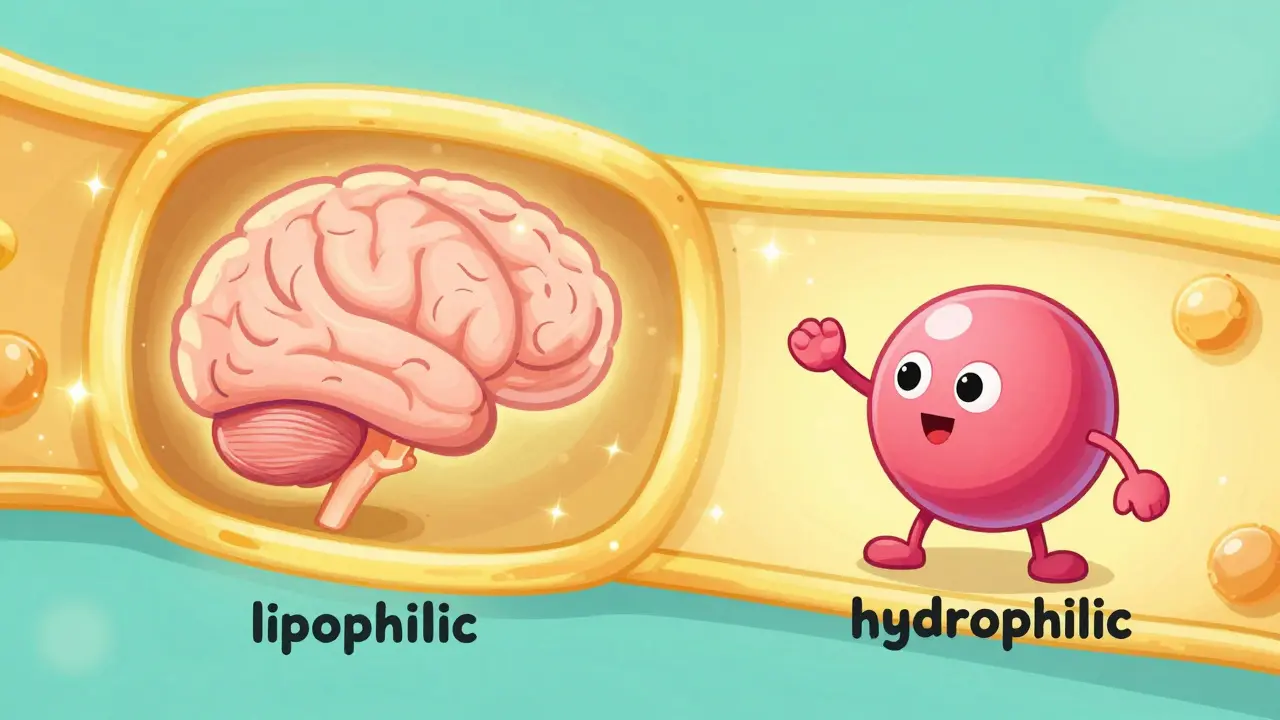
- Some statins are "fat-soluble" (lipophilic) and can cross the blood-brain barrier more easily, which may trigger sleep issues in sensitive people.
- Hydrophilic (water-soluble) statins, like pravastatin, are generally less associated with insomnia and vivid dreams.
- Muscle pain (SAMS) often goes hand-in-hand with poor sleep; treating the pain can sometimes fix the insomnia.
- The "nocebo effect" plays a role: knowing a side effect exists can sometimes make you experience it.
- Never stop taking your medication without talking to your doctor, as the risk of a heart attack often outweighs the annoyance of a vivid dream.
The Lipophilic vs. Hydrophilic Divide
Not all statins are built the same. To understand why some people experience insomnia while others don't, we have to look at how the drug moves through the body. Chemists use a value called "log P" to measure how lipophilic (fat-loving) a molecule is. The higher the log P, the easier it is for the drug to slip through the blood-brain barrier and enter the central nervous system.
For example, Simvastatin has a high log P of 4.4, meaning it's very lipophilic. Research, including a notable study by Dr. Beatrice Golomb, found that patients on simvastatin reported significantly worse sleep quality compared to those on a hydrophilic alternative. In contrast, Pravastatin is hydrophilic (log P of 0.6), meaning it doesn't enter the brain as easily and rarely shows a link to sleep disruption in clinical trials.
| Statin Name | Type | Lipophilicity (log P) | Sleep Disturbance Risk |
|---|---|---|---|
| Simvastatin | Lipophilic | 4.4 | Higher |
| Lovastatin | Lipophilic | 4.3 | Higher |
| Atorvastatin | Moderate | - | Low/Mixed |
| Pravastatin | Hydrophilic | 0.6 | Very Low |
| Rosuvastatin | Hydrophilic | - | Low/Mixed |
Insomnia, Vivid Dreams, and the 'Nocebo' Effect
When people talk about "statin sleep issues," they usually mean one of two things: difficulty falling asleep (insomnia) or dreams that feel incredibly real and often exhausting (vivid dreams). This is where the medical community splits. Some experts, like Professor Colin Baigent, argue that many of these reports are actually a Nocebo Effect-which is the opposite of a placebo, where a patient experiences negative side effects because they expect the drug to cause them.
A study of 10,000 patients taking Atorvastatin actually showed *fewer* sleep disturbances than the placebo group. This suggests that for many, the drug isn't the cause. However, the FDA Adverse Event Reporting System tells a different story, with thousands of reports specifically linking statins to sleep disruption. The truth likely lies in the middle: most people are fine, but a small, genetically predisposed group is highly sensitive to the chemical structure of certain statins.
The Hidden Link: Muscle Pain and Sleep
If you're experiencing both sleepless nights and aching muscles, the insomnia might actually be a secondary symptom. SAMS (Statin-Associated Muscle Symptoms) can cause a dull ache or stiffness that makes it impossible to get comfortable in bed. Recent 2024 data from Dr. L. Graves suggests that when patients with muscle pain stop their statins, their sleep efficiency increases by nearly 4% and nighttime awakenings drop by over 12%.
In these cases, the drug isn't necessarily "attacking" the sleep center of the brain; it's just making the body too uncomfortable to stay asleep. This is a crucial distinction because it means the solution might be managing the muscle symptoms (through CoQ10 supplements or dosing changes) rather than abandoning the cholesterol medication entirely.

What to Do If Your Sleep is Suffering
If you suspect your medication is ruining your sleep, don't just stop taking it. Abruptly quitting statins can lead to a rebound in cholesterol levels and increase your risk of a vascular event. Instead, use a structured approach with your doctor.
- Track Your Baseline: Use a tool like the Pittsburgh Sleep Quality Index (PSQI) to document exactly how your sleep changed after starting the drug.
- Check the Timing: Some patients find that switching from evening doses to morning doses removes the "vivid dream" effect, as the drug peak occurs while they are awake.
- Discuss a Switch: If you are on a lipophilic statin (like simvastatin), ask your doctor about switching to a hydrophilic one (like pravastatin). This often resolves the issue because the drug stays out of the brain.
- Address the Pain: If you have muscle aches, focus on treating those first. If the pain goes, the insomnia often follows.
Keep in mind that the benefits of these drugs are massive. A 1.0 mmol/L reduction in LDL cholesterol can reduce major vascular events by about 22%. For most, a few strange dreams are a fair trade for a significantly lower risk of a heart attack.
Can statins really cause vivid dreams?
Yes, although it's not common for everyone. This effect is more frequently reported with lipophilic statins like simvastatin and lovastatin, which can cross the blood-brain barrier. These dreams are often described as more intense or "strange" than usual, but they typically resolve if the medication is changed or stopped.
Which statin is the safest for sleep?
Hydrophilic statins, such as pravastatin, are generally considered the safest option for people prone to insomnia. Because they do not penetrate the brain as easily as lipophilic versions, they are less likely to interfere with sleep architecture.
Is insomnia a sign I should stop taking statins?
Not necessarily. Insomnia can be caused by stress, age, or other medications. You should first determine if the sleep issue started exactly when the statin did. Even if there is a link, your doctor may prefer to switch your brand rather than stop therapy, as the cardiovascular protection is critical.
How long does it take for sleep to return after stopping statins?
Based on clinical case reports, most patients find that sleep disturbances resolve within 2 to 4 weeks after discontinuing the medication. However, this should only be done under medical supervision.
Do all statins have the same effect on sleep?
No. There is a significant difference based on the chemical structure. Lipophilic statins (simvastatin, lovastatin) have a higher association with sleep issues, while hydrophilic ones (pravastatin) and some moderate ones (atorvastatin) show much lower or even no association in large trials.
Next Steps for Different Patients
For the "Good Sleeper": If you're taking statins and sleeping fine, don't worry about the "horror stories" you read online. The data shows the vast majority of people experience no sleep disruption.
For the "Vivid Dreamer": If you're waking up exhausted from intense dreams, keep a sleep diary for two weeks and bring it to your doctor. Specifically ask about switching to a hydrophilic statin.
For the "Aching Patient": If you have muscle pain and can't sleep, treat the SAMS first. Discuss dosage adjustments or CoQ10 with your provider to see if reducing muscle inflammation improves your sleep quality.