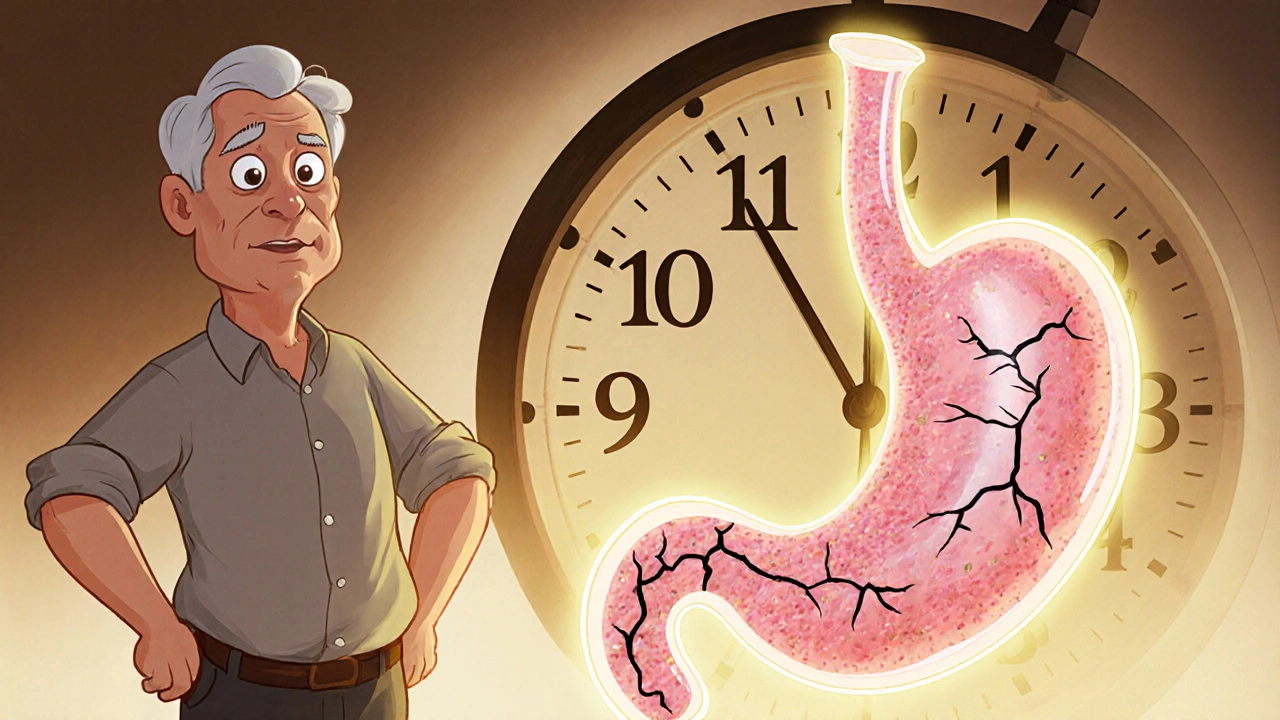
Esophageal Cancer: Causes, Symptoms, and Treatment Options
When you think of esophageal cancer, a malignant growth in the tube connecting your throat to your stomach. It’s not just a rare disease—it’s one that often sneaks up because early signs look like common heartburn or indigestion. Many people ignore persistent throat tightness or trouble swallowing, thinking it’s just from spicy food or stress. But if acid reflux keeps coming back, especially with weight loss or hoarseness, it could be more than just an upset stomach.
Barrett’s esophagus, a condition where the lining of the esophagus changes due to long-term acid exposure is the biggest known risk factor. It doesn’t mean you’ll get cancer, but it does mean you need monitoring. Smoking, heavy drinking, obesity, and even eating very hot foods regularly can push things in that direction. And while it’s more common in men over 50, it can happen to anyone with chronic reflux.
Treatment isn’t one-size-fits-all. Some people need surgery to remove part of the esophagus. Others get chemotherapy for esophageal cancer, a drug-based approach that shrinks tumors before or after surgery. Radiation, targeted therapies, and immunotherapy are also used—sometimes alone, sometimes together. The key is catching it early. If you’ve had heartburn for years and nothing seems to help, it’s not just "normal." It’s a signal.
What you’ll find here aren’t just general overviews. These are real, detailed guides written for people who’ve been there: how to manage swallowing problems after treatment, what side effects to expect from radiation, why some medications make reflux worse, and how to spot warning signs before it turns serious. No fluff. No jargon. Just clear, practical info from people who’ve studied the science—and listened to patients.