Fragrance-Free Skincare: What It Really Means and Why It Matters
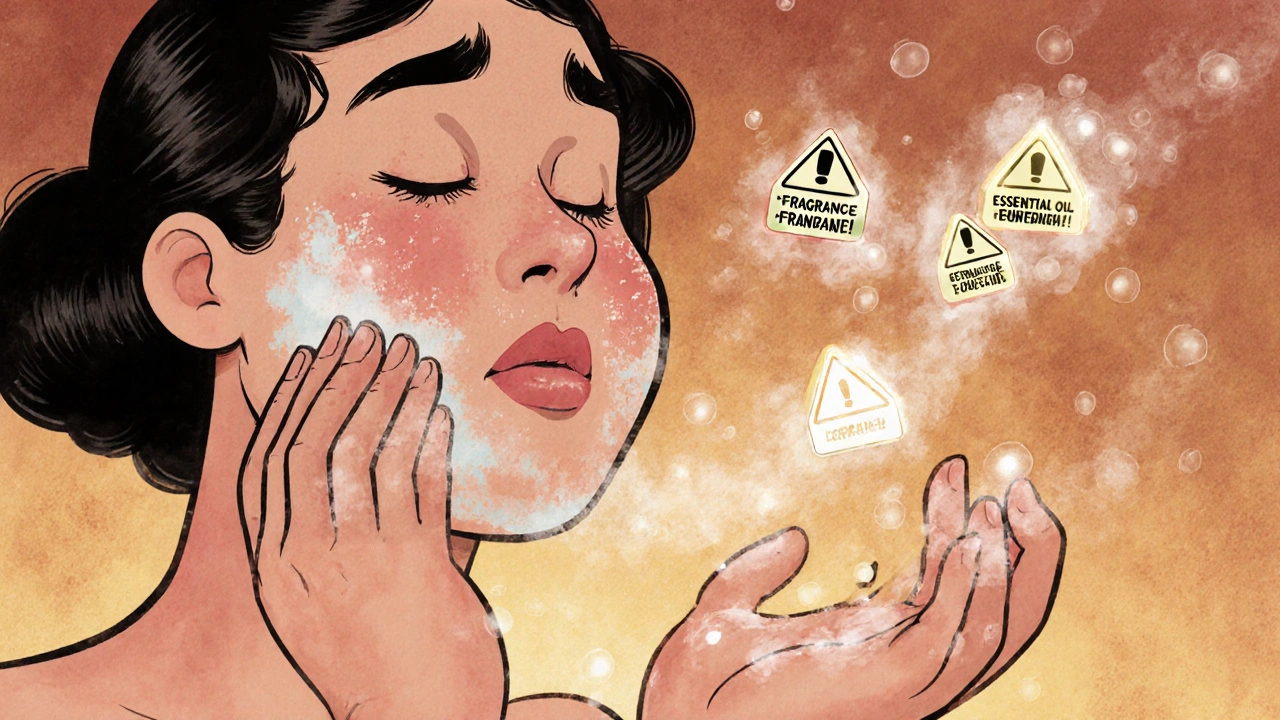
When you see fragrance-free skincare, products formulated without added scents to reduce skin irritation and allergic reactions. Also known as unscented, it doesn't mean the product has no smell—it means no synthetic or natural fragrances were added to mask odors or create a pleasant aroma. This distinction matters because many people mistake "unscented" for "fragrance-free," but unscented products often contain masking fragrances to cover up the smell of other ingredients. Those hidden fragrances can trigger redness, itching, and breakouts—even in people who never had sensitive skin before.
People with sensitive skin, skin that reacts easily to irritants like alcohol, dyes, or hidden fragrances often find relief switching to true fragrance-free formulas. Dermatologists see this daily: patients who thought they were allergic to moisturizers were actually reacting to the perfume in them. Conditions like eczema, rosacea, and contact dermatitis improve noticeably when fragrance is removed from daily routines. Even if your skin doesn’t feel irritated now, long-term exposure to fragrance chemicals can weaken your skin barrier over time, making it more prone to dryness and inflammation.
hypoallergenic skincare, products designed to minimize the risk of allergic reactions is often paired with fragrance-free claims, but they’re not the same thing. Hypoallergenic means fewer known allergens are used—but there’s no legal standard for that label. Fragrance-free, however, is clearer: no fragrance ingredients at all. Look for brands that list all ingredients plainly and avoid terms like "natural fragrance," which can still be irritants. Products with alcohol, essential oils, or botanical extracts like lavender or citrus are often red flags, even if they’re labeled "gentle."
The best fragrance-free options are simple: water, ceramides, glycerin, and a few proven stabilizers. No need for 20 ingredients. If you’ve ever had a product burn your face after applying it, or break out after using a "luxury" cream, chances are fragrance was the culprit. You don’t need to spend more to get better results—just choose smarter. Many dermatologists recommend fragrance-free lines for daily use, especially for kids, older adults, and anyone on long-term acne or anti-aging treatments.
What you’ll find in the posts below are real-world insights into how fragrance-free products actually perform, which ones avoid hidden irritants, and how to spot misleading labels. You’ll also see how switching to fragrance-free helped people with chronic skin issues finally find relief—and what to watch out for when shopping online. This isn’t about luxury. It’s about protecting your skin from unnecessary damage.