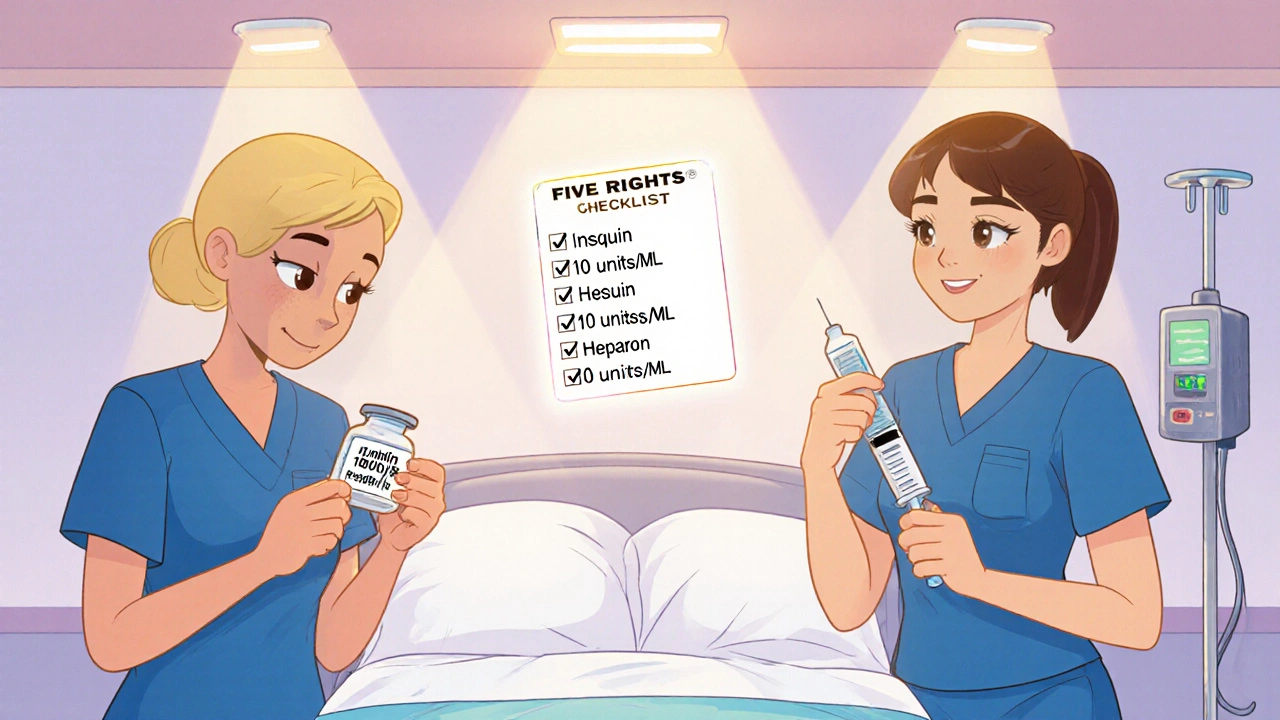
Independent Double Check: Why It Saves Lives in Medication Safety
When it comes to medications, one mistake can change everything. That’s why an independent double check, a process where two different healthcare professionals verify a medication before it’s given to a patient. Also known as two-person verification, it’s not just a formality—it’s a last-line defense against errors that kill. This isn’t about bureaucracy. It’s about stopping a wrong dose, a wrong drug, or a wrong patient from slipping through the cracks. Hospitals, pharmacies, and even some home care teams use this step because the data doesn’t lie: when double checks are done right, medication errors drop by up to 70%.
It’s not just about checking the label. A true independent double check means two people do it separately—one reads the prescription, the other verifies the pill, the dose, the route, and the patient’s identity. No talking, no copying, no rushing. One person picks up the medication. The other checks the chart. They compare notes only after each has made their own decision. This prevents confirmation bias. It stops one person’s mistake from becoming everyone’s mistake. And it’s not just for high-risk drugs like insulin or blood thinners. Even common pills like antibiotics or blood pressure meds can cause harm if given to the wrong person or in the wrong amount.
Related to this are other safety practices like medication reconciliation, the process of comparing a patient’s current meds with what they’re supposed to be taking, and barcoding systems, electronic tools that scan drugs and patient wristbands to match them. But none of these replace the human eye and mind doing a second look. Even with tech, people still make errors—misreading, mishearing, assuming. That’s why the independent double check remains the most reliable tool we have.
You’ll find posts here that show how this simple step connects to real-world risks: a patient getting warfarin instead of Eliquis, a diabetic receiving twice their insulin dose, or someone with kidney disease getting a phosphate binder at the wrong time. These aren’t hypotheticals. They’re stories from clinics and hospitals where the double check either saved the day—or failed to happen. The posts cover how to do it right, what to watch for, and why skipping it—even once—is never worth the risk.
Whether you’re a patient asking your pharmacist to verify your meds, a nurse double-checking a dose before administration, or a caregiver managing pills at home, this process is your shield. It doesn’t require fancy tools. Just two sets of eyes, a moment of focus, and the courage to speak up. That’s what these articles are built around: practical, no-nonsense ways to make sure the right medicine gets to the right person, every single time.