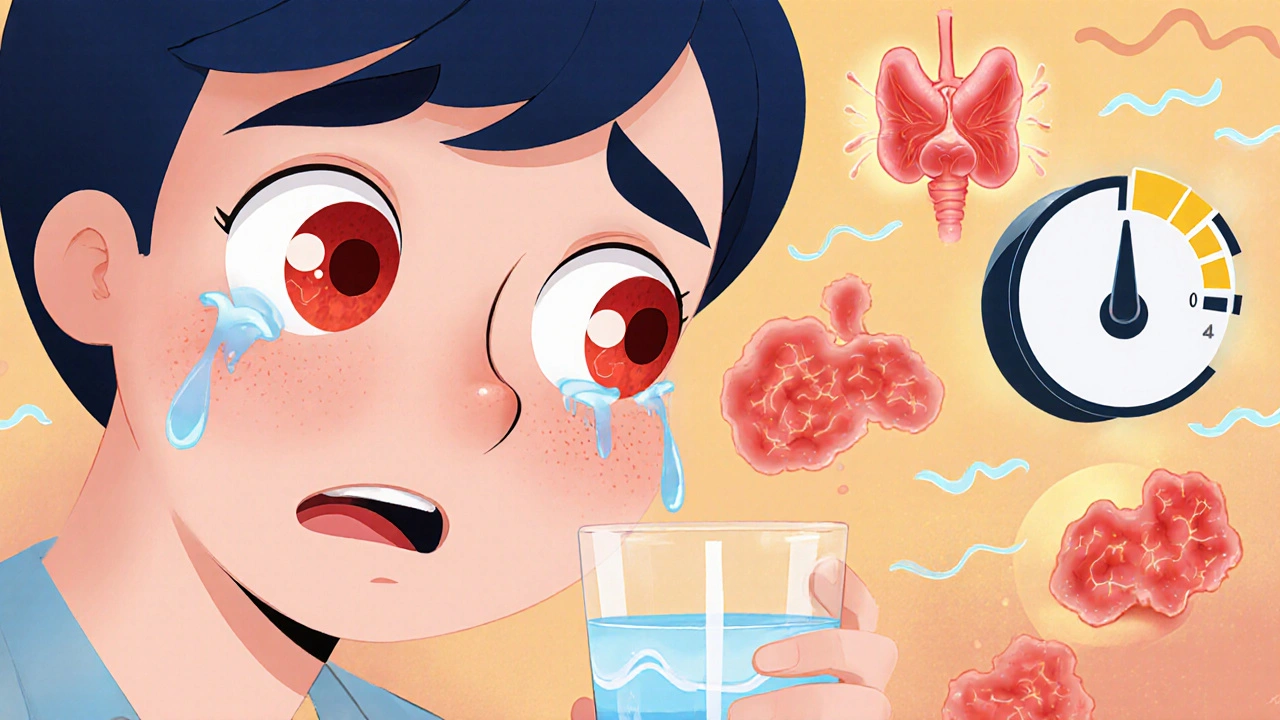
Thyroid Eye Disease: Symptoms, Steroids, and Biologics Explained
Thyroid Eye Disease causes eye bulging, double vision, and pain. Learn how steroids and new biologics like Tepezza can stop inflammation before it causes permanent damage.
Read More
When steroids for TED, systemic corticosteroids used to reduce inflammation in thyroid eye disease. Also known as corticosteroids, they are often the first line of treatment for active, moderate-to-severe thyroid eye disease, helping to calm swelling behind the eyes and prevent vision loss. Thyroid eye disease, or TED, an autoimmune condition linked to Graves’ disease that causes inflammation and swelling in the eye tissues, doesn’t just make eyes bulge—it can squeeze the optic nerve, cause double vision, and even lead to permanent sight damage if untreated. Steroids work by suppressing the immune system’s attack on the eye muscles and fat, reducing pain, redness, and pressure. But they’re not a magic fix. Many patients see improvement within weeks, but side effects like weight gain, mood swings, high blood sugar, and bone thinning are common—and sometimes long-lasting.
The connection between orbital inflammation, the swelling of tissues behind the eye that drives TED symptoms and steroid use is direct: the higher the inflammation, the more likely steroids will help. But not everyone responds the same. Some people get relief with oral prednisone; others need IV pulses, especially if vision is at risk. And even then, relapse is possible after stopping treatment. That’s why doctors often pair steroids with other tools—like radiation therapy or newer biologics such as teprotumumab—that target TED more precisely without the full-body side effects. You’ll also find that many patients in our collection have tried steroids first, then switched or added alternatives after experiencing side effects. The real question isn’t just whether steroids work—it’s whether they’re the right choice for you, given your age, thyroid control, and overall health.
What you’ll find in the posts below isn’t a textbook on steroids. It’s real-life stories and clinical breakdowns from people who’ve been through TED treatment. You’ll see how one man managed steroid-induced diabetes while fighting vision loss. How another avoided surgery by timing steroid cycles with his thyroid levels. And why some doctors now recommend skipping steroids entirely if the disease is mild. These aren’t abstract theories—they’re decisions made in clinics, kitchens, and doctor’s offices, with real trade-offs. Whether you’re newly diagnosed or already on treatment, this collection gives you the grounded, no-fluff details you won’t get from a brochure. No hype. Just what works, what doesn’t, and what to ask your doctor next.
Thyroid Eye Disease causes eye bulging, double vision, and pain. Learn how steroids and new biologics like Tepezza can stop inflammation before it causes permanent damage.
Read More