
Therapeutic Equivalence: What It Really Means for Patient Safety
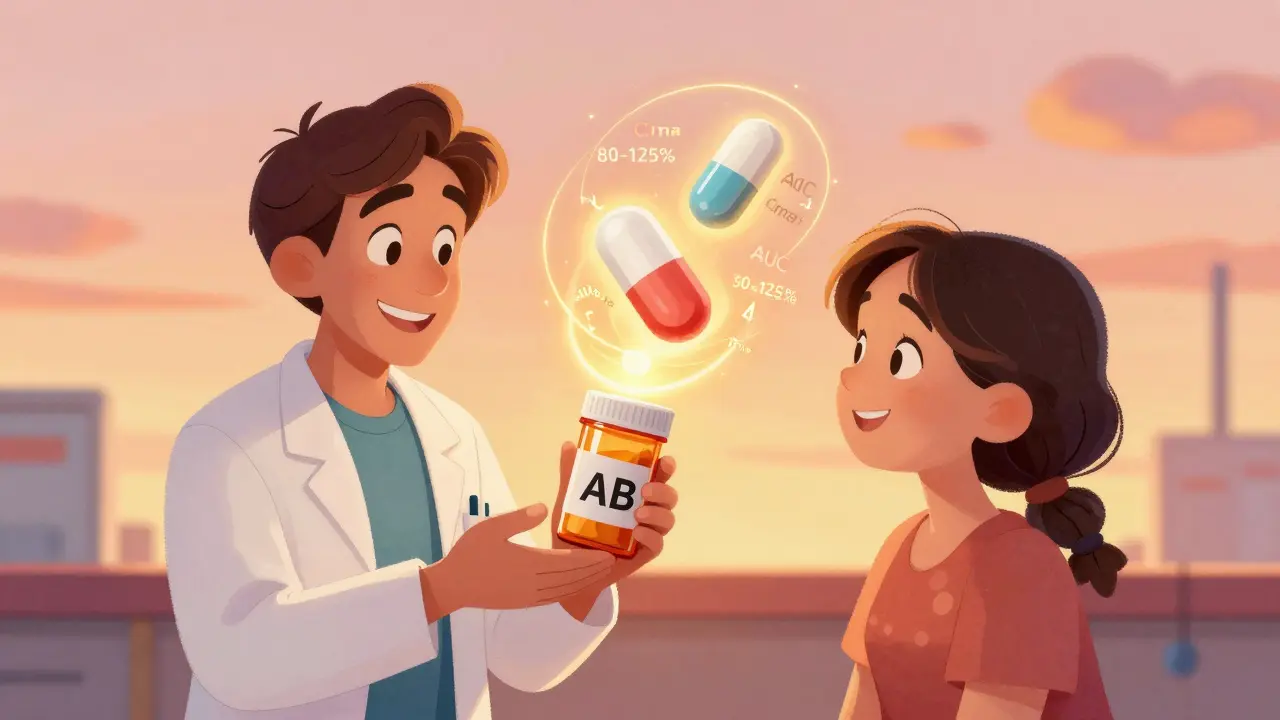
When you pick up a prescription and see a different pill color or name than last time, it’s natural to wonder: is this the same medicine? The answer lies in therapeutic equivalence - a quiet but powerful system that keeps millions of patients safe every day while saving the U.S. healthcare system billions. This isn’t just about cost. It’s about making sure a generic drug works just as well - and just as safely - as the brand-name version you originally got.
What therapeutic equivalence actually means
Therapeutic equivalence isn’t a marketing term. It’s a scientific judgment made by the FDA. Two drugs are considered therapeutically equivalent if they contain the same active ingredient, in the same strength and dosage form, and they deliver that ingredient into your body at the same rate and amount. That’s it. No guesswork. No assumptions. Just hard data.The FDA uses the Orange Book - officially called the Approved Drug Products with Therapeutic Equivalence Evaluations - to list every drug that meets this standard. As of October 2023, it includes over 13,000 drug products. Each entry has a two-letter code. If you see “AB,” it means the generic version has passed all tests and can be safely swapped for the brand-name drug. If you see “B,” it means there’s not enough proof they’re the same - and pharmacists shouldn’t substitute them without a doctor’s OK.
This system exists because pharmaceutical equivalence alone isn’t enough. Two pills might have the same active ingredient, but if one dissolves too slowly or too fast in your stomach, your body won’t get the right dose. That’s where bioequivalence comes in. The FDA tests this by measuring how much of the drug enters your bloodstream (AUC) and how quickly it peaks (Cmax). For most drugs, the generic’s levels must fall within 80% to 125% of the brand’s. That’s not a wide gap - it’s a tight window designed to ensure consistent results.
Why this matters for your safety
Imagine you’re taking warfarin, a blood thinner used to prevent strokes. The difference between a safe dose and a dangerous one is tiny. A 10% variation in how the drug is absorbed could mean a clot forms - or you bleed internally. For drugs like this, the FDA doesn’t use the standard 80-125% range. It demands a tighter 90-110% for bioequivalence. That’s because patient safety isn’t a one-size-fits-all rule. It’s calibrated to risk.Therapeutic equivalence keeps this from becoming a lottery. In 2022, over 90% of all prescriptions filled in the U.S. were for generic drugs. That’s 3.5 billion prescriptions. Without therapeutic equivalence, switching between brands and generics would be a gamble. But because of it, patients can trust that the cheaper version won’t suddenly stop working - or make them sick.
Studies back this up. A 2022 survey of 12,500 UnitedHealthcare patients found 87% reported no change in how they felt after switching to a therapeutically equivalent generic. Only 3.2% blamed the switch for any side effects. When the Institute for Safe Medication Practices looked at 127 reported adverse events linked to generic substitution between 2018 and 2022, only 17 involved drugs with an “A” rating. The rest were cases where the substitution wasn’t actually approved - or the issue was anxiety, not the drug itself.
What happens when therapeutic equivalence isn’t followed
Not all substitutions are equal. Therapeutic equivalence is not the same as therapeutic interchange. Interchange means switching from one drug to another in the same class - like swapping one statin for another. That’s risky. A 2019 JAMA Internal Medicine study found patients who got therapeutic interchanges had 32% more adverse events than those who switched to a therapeutically equivalent generic.Why? Because different drugs in the same class don’t act the same way. One might affect liver enzymes differently. Another might have a longer half-life. These differences matter - especially for older patients on multiple medications.
Even worse are products labeled “B.” These aren’t necessarily unsafe - they just haven’t been proven equivalent. That could be because the drug is complex - like an inhaler, a topical cream, or a long-acting injection. For these, standard blood tests don’t tell the whole story. The FDA is working on new methods to evaluate them, but until then, pharmacists are told not to substitute them automatically.
How doctors and pharmacists use this system
Pharmacists don’t guess. They check the Orange Book before swapping a brand for a generic. In 49 states, they can do this without calling the doctor - as long as the drug has an “A” rating. In 11 states, the prescriber must write “dispense as written” to block substitution. That’s a safety net for patients who’ve had bad experiences or need extra caution.But confusion still happens. Many providers don’t know the difference between “AB” and “AP” codes. “A” means therapeutic equivalence. “B” means no. The second letter adds detail - like whether the drug is an extended-release version. Training helps. The FDA’s free 90-minute online course improved accuracy by 85% among participants in 2022.
Patients should know: if you’re switched to a generic and feel different - worse, not better - tell your doctor. It’s rare, but it happens. And it’s not always the drug. Sometimes it’s the filler. A different dye or coating can trigger allergies or upset stomachs. That’s not therapeutic inequivalence - it’s an individual reaction. But it’s still worth reporting.

What’s changing in therapeutic equivalence
The system isn’t static. As drugs get more complex - think biosimilars, inhalers, transdermal patches - the old bioequivalence models struggle. That’s why the FDA launched its GDUFA III program in 2022, investing $65 million through 2027 to improve testing for these products. They’re also teaming up with MIT to use artificial intelligence to predict which formulation changes might cause problems before they reach patients.For now, the core stays the same: same active ingredient, same delivery, same effect. But the tools to prove it are getting smarter.
Real-world impact: savings without sacrifice
Therapeutic equivalence saves money - a lot of it. Between 2009 and 2019, generic drugs saved the U.S. healthcare system $1.7 trillion. In 2023 alone, they saved $158 billion. That’s money that goes to cancer treatments, mental health care, insulin for diabetics - not inflated drug prices.But here’s the key: those savings didn’t come at the cost of safety. Because of therapeutic equivalence, patients aren’t trading effectiveness for affordability. They’re getting the same treatment - just at a fraction of the price.
When you see a generic on your receipt, you’re not getting a second-rate drug. You’re getting a scientifically verified copy - one that’s been tested, measured, and approved to work exactly like the original. That’s not luck. It’s regulation. And it’s why millions of people wake up every day trusting their meds - no matter the label.
What does an AB rating mean on the FDA Orange Book?
An AB rating means the generic drug is considered therapeutically equivalent to the brand-name drug. It has the same active ingredient, dosage form, strength, and route of administration, and has passed bioequivalence testing. Pharmacists can substitute it without needing a doctor’s approval in most states.
Are all generic drugs therapeutically equivalent?
No. Only generics that have been reviewed and rated by the FDA with an “A” code (like AB, AP, or AT) are considered therapeutically equivalent. Some products, especially complex ones like inhalers or topical creams, may be rated “B” because bioequivalence can’t be reliably measured with current methods. These should not be substituted automatically.
Can switching to a generic cause side effects?
If the generic is rated therapeutically equivalent (AB), side effects from the drug’s effect are extremely rare. However, some people react to inactive ingredients - like dyes, fillers, or coatings - which can differ between brands and generics. These aren’t therapeutic failures, but individual sensitivities. If you notice new symptoms after switching, talk to your doctor or pharmacist.
Why do some doctors refuse to allow generic substitution?
Some doctors do this out of habit, fear, or past patient experiences - not because the science says it’s unsafe. For narrow therapeutic index drugs like levothyroxine or warfarin, even tiny variations can matter, and some providers prefer to keep patients on the same brand. But studies show most patients do just as well on generics. State laws also vary: 11 states require prescribers to write “dispense as written” to block substitution.
How can I check if my drug is therapeutically equivalent?
You can search the FDA’s Orange Book online for free. Just enter the brand name or active ingredient. If the generic shows an “A” rating (like AB or AP), it’s approved for substitution. If it shows “B,” it’s not considered equivalent. Your pharmacist can also check this for you - no need to ask twice.
Who the hell lets some bureaucrat in D.C. decide what medicine I get? I don't care if it's 'AB rated' - my body knows the difference. I switched once and felt like I was drugged on a Tuesday. Now I pay out of pocket just to keep my brand. Screw the savings.
People don’t understand that 'therapeutic equivalence' isn’t magic - it’s math. And math doesn’t care if you feel weird. If your body reacts to a dye or filler, that’s not the FDA’s fault. It’s biology. Stop blaming the system and start tracking your symptoms.
Let me tell you something - this whole system is beautiful. Imagine a world where your grandma can afford her blood thinner and still live to see her grandkids graduate. That’s not luck. That’s science. That’s regulation. That’s the FDA doing its damn job while big pharma cries about profit margins. Generics aren’t cheap versions - they’re smart versions. The same active ingredient, same bioavailability, same chance at life. And yeah, sometimes you get a weird filler that makes your stomach grumble - but that’s not the drug failing. That’s your body being picky. Talk to your pharmacist. Swap brands. Don’t throw the whole system under the bus because one pill made you feel off. We’re talking billions saved, millions protected. This is the quiet hero of American healthcare. Don’t sleep on it.
btw if u see an AP code, that means its AB but its extended release. most ppl dont know that. i work in a pharmacy and people freak out when they get a different color pill. its the same drug, just slower release. no need to panic. just ask. easy.
It’s embarrassing that we need a federal agency to ensure that pharmaceutical companies don’t cheat patients. In a civilized nation, this wouldn’t be necessary. But here we are - relying on a government database to stop corporations from selling snake oil disguised as medicine. Shameful.
Just wanted to say THANK YOU for this post 🙏 I’ve been on levothyroxine for 12 years and switched generics twice - both times I felt like a zombie. Turned out the filler was causing inflammation. My doctor didn’t know about the Orange Book either. Now I print the rating every time I refill. This info saved me. 🧠💊
India makes 40% of the world’s generics. You think they follow FDA standards? Not all do. I’ve seen pills here that look identical but dissolve in 3 minutes. That’s not AB - that’s a gamble. Don’t trust just because it says 'FDA approved' - check the manufacturer. Many are outsourced.
my mom had a reaction to a generic omeprazole - red rash, itching. turned out it was the dye. switched back to brand, gone in 2 days. i told her to report it to medwatch. she didn’t. she just said 'well i guess i’m allergic to generics now.' ugh. people need to know it’s not the drug, it’s the filler. and it’s reportable.
If a drug works the same in your bloodstream, why does it feel different? Is the mind part of the bioequation? Maybe the placebo effect works both ways - if you believe the generic is inferior, your body responds as if it is. We measure AUC and Cmax, but not the weight of doubt.
Oh, so now we’re celebrating the FDA like it’s Mother Teresa? Let’s not pretend this is altruism. GDUFA III? That’s $65 million in industry fees - paid by the same companies who lobby against price caps. This isn’t patient safety. It’s regulatory theater with a side of profit margin protection.
I’ve been on 7 different generics for my antidepressant. Every time I switch, I cry for no reason. I feel like I’m losing myself. I don’t care if it’s AB rated - my soul knows the difference. I’ve cried so much over these pills I’ve started calling them my emotional terrorists. Why won’t anyone listen? I just want to feel like me again. Not some bioequivalent ghost.
Wow. So the system works… unless you’re poor and can’t afford to pay extra for the brand. Then you’re just a lab rat for Big Pharma’s cost-cutting. And if you complain? They say it’s ‘anxiety.’ Bullshit. I’ve seen people go from stable to suicidal after a switch. This isn’t science - it’s capitalism with a lab coat.
I switched to a generic and my anxiety went through the roof. I thought I was dying. Turned out it was the color of the pill. Seriously. The blue dye. I asked for the white one. Same drug. Same dose. But now I’m fine. Who knew pills had moods?
If you’re not checking the Orange Book, you’re gambling. Simple as that. I don’t care if your doctor says it’s fine. Look it up. It’s free. It’s right there. Don’t be lazy. Your life isn’t a demo.
So Angela says it’s 'regulatory theater'? You’re the one who gets your meds from a pharmacy in Mexico. You think your 'generic' metformin was tested by the FDA? Nah. You’re the reason people think this whole system is broken. You’re not a critic - you’re a liability.