
Why Generic Medications Cost Less for Patients and Insurers
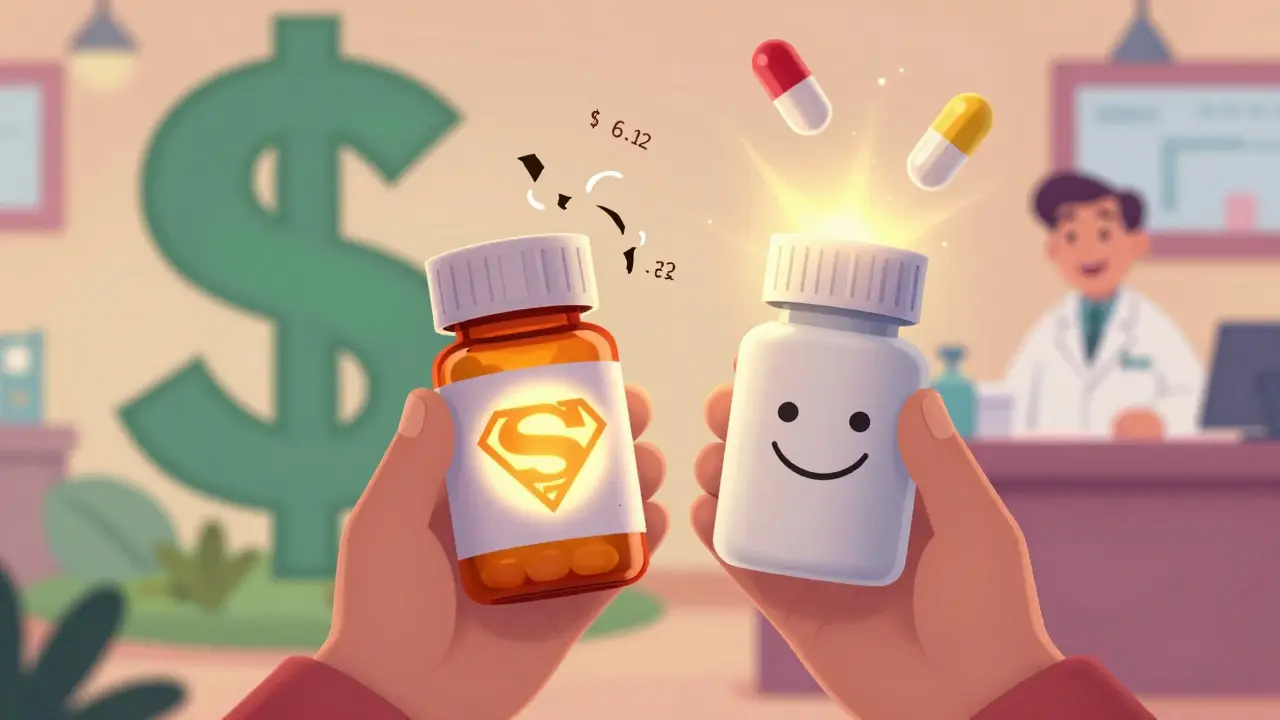
When you pick up a prescription, you might see two options on the receipt: the brand-name drug you asked for, or a cheaper generic version. Most people assume the generic is just a cheaper copy. But here’s the truth: generic medications aren’t copies-they’re the exact same medicine. Same active ingredient. Same strength. Same way your body absorbs it. The only real difference? The price.
How Generic Drugs Save You Hundreds Every Year
In 2022, generic drugs saved Americans over $408 billion in total healthcare costs. That’s not a typo. That’s more than the GDP of many small countries. And most of that savings went straight into patients’ pockets. The average copay for a generic drug? Just $6.16. For a brand-name drug? $56.12. That’s nearly nine times more. If you take just one prescription monthly, switching to the generic version saves you over $600 a year. For someone on multiple medications, that’s thousands.Take lurasidone, a drug used for schizophrenia. The brand version, Latuda, used to cost about $1,400 for a 30-day supply. After generics entered the market, that same dose dropped to under $60. Pemetrexed, a cancer drug, went from $3,800 to $500. These aren’t rare cases. This happens with almost every drug once its patent expires.
Why Are Generics So Much Cheaper?
Brand-name drug companies spend years and billions developing a new medicine. They run clinical trials, test safety, prove effectiveness, and get FDA approval. That process can cost over $2 billion per drug. Those costs get baked into the price.Generic manufacturers don’t have to do any of that. They don’t need to repeat expensive clinical trials. Instead, they prove their version works the same way as the brand-called bioequivalence. That’s it. No need to spend millions on research. No need to pay for big ad campaigns. No need to recoup R&D costs. That’s why their price tag is so much lower.
The FDA requires generics to meet the same strict standards as brand-name drugs. Same purity. Same stability. Same performance. The FDA even tests samples from generic factories. If a generic drug doesn’t deliver the same results as the brand, it doesn’t get approved. So you’re not getting a lesser product. You’re getting the same medicine, just without the branding markup.
Competition Drives Prices Even Lower
The real magic happens when more than one company starts making the same generic. When only one generic maker enters the market, prices drop to about 20% of the brand’s price. But when three or more companies join in, prices can fall to just 5-10% of the original cost.For example, when four companies started making the generic version of the cholesterol drug rosuvastatin, the price dropped from $150 to $8 per month. Add a fifth manufacturer? It drops again. This is how competition works in the real world-more sellers, lower prices.
That’s why the number of generic manufacturers matters. The FDA approved over 700 new generic drugs in 2022. Each one adds pressure on prices. In markets with strong generic competition, prices keep falling for years.
Not All Generics Are Created Equal
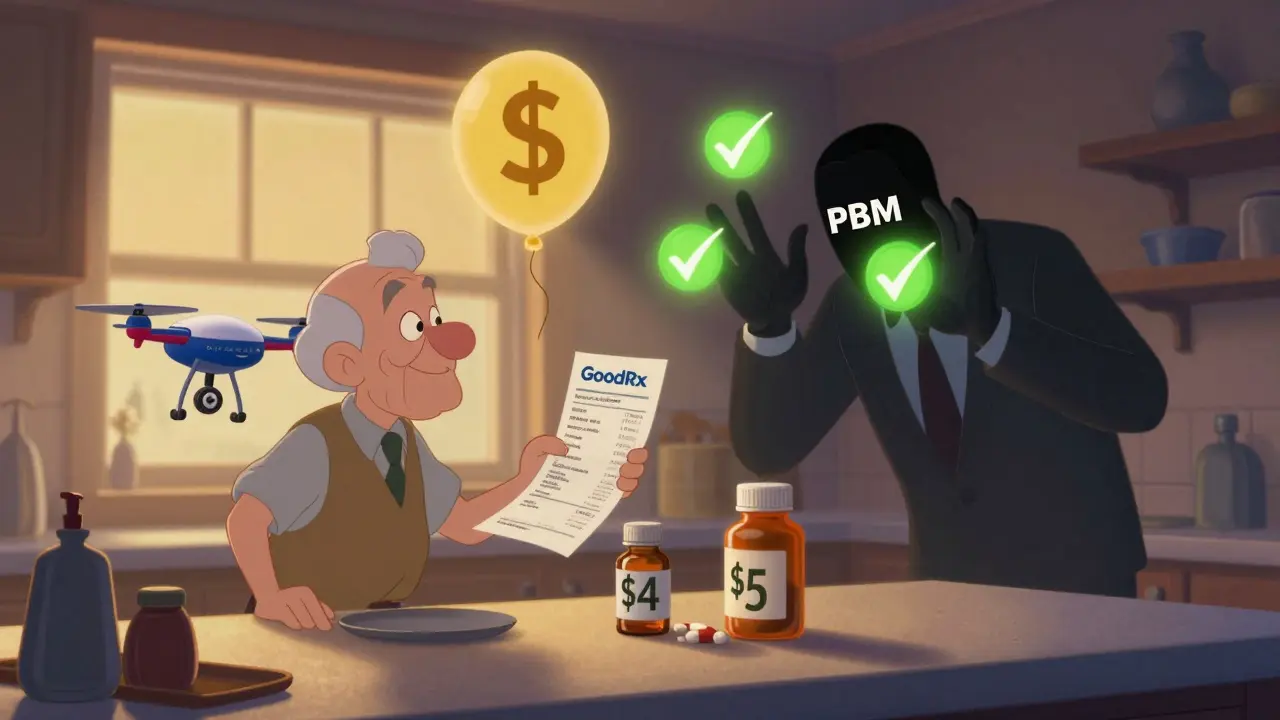
Here’s the catch: not every generic is cheap. Some generics are priced almost as high as the brand-name version. Why? Because of how pharmacy benefit managers (PBMs) work.PBMs are middlemen between insurers, pharmacies, and drug makers. They negotiate prices. But some PBMs use a trick called “spread pricing.” They tell the insurer they’re paying $10 for a generic, but actually pay $5 to the pharmacy. The $5 difference? That’s their profit. So even though the drug is a generic, you’re still paying a high price because the PBM benefits from the gap.
A 2022 study in JAMA Network Open found that some generics were 15 times more expensive than other equally effective alternatives. In Colorado, switching just 45 of these overpriced generics to cheaper ones saved $6.6 million in a single year. That’s not a flaw in generics-it’s a flaw in the system.
What You Can Do to Save More
You don’t have to just accept whatever price your pharmacy gives you. Here’s how to make sure you’re getting the best deal:- Ask your doctor to write “dispense as written” on your prescription. That gives your pharmacist the legal right to swap in a generic if one is available.
- Use free price-comparison tools like GoodRx or SingleCare. Enter your drug name and zip code. You’ll often find cash prices lower than your insurance copay.
- Try mail-order pharmacies for long-term meds. They often have bulk discounts and ship directly to your door.
- Check if your pharmacy offers a discount program. Some chains like Walmart and Costco sell common generics for $4 a month.
One study found that patients who actively compared prices saved an average of $287 per year just by switching to the cheapest option. That’s like getting a free vacation every year.
Who Benefits the Most?
The biggest winners? People without insurance. Or those with high-deductible plans. For them, insurance doesn’t help until they’ve paid thousands out of pocket. That’s where cash prices from GoodRx or the Mark Cuban Cost Plus Drug Company come in.A 2023 study showed uninsured patients saved $6.08 per prescription on average by buying generics directly. For someone taking five meds monthly, that’s over $360 saved in just one year. Even people with insurance saved money by paying cash-78% of Reddit users in a 2023 thread reported lower prices when they skipped insurance for generics.
But here’s the problem: not every generic is available everywhere. The Mark Cuban drug company only carried 26% of expensive generics in 2023. Some pharmacies don’t stock certain generics. Others have long shipping times. So you might need to shop around.
What’s Next for Generic Drugs?
The future looks bright. The Inflation Reduction Act of 2022 caps insulin at $35 a month for Medicare patients-and it’s pushing for more generic competition on other high-cost drugs. Biosimilars-generic versions of complex biologic drugs-are coming online. They’re expected to save another $150 billion by 2027.But challenges remain. Some brand-name companies pay generic makers to delay entering the market. These “pay-for-delay” deals are illegal, but they still happen. The Department of Justice is investigating. And some generics are at risk of shortage-202 drugs were flagged in early 2023. When supply drops, prices spike.
Still, the data is clear: generic drugs are the single most effective tool we have to lower prescription costs. They’re safe. They’re effective. And they’re dramatically cheaper. The problem isn’t the medicine. It’s the system that sometimes hides the savings.
Next time you get a prescription, ask: Is there a generic? What’s the cash price? Could I save more by switching? It takes five minutes. And it could save you hundreds-or even thousands-every year.
Oh wow, another feel-good story about how generics are ‘just as good’ - right up there with ‘organic food is healthier’ and ‘vaccines cause autism.’ Tell me, does your generic Adderall also come with a free copy of the FDA’s 2007 compliance report? No? Then stop pretending this isn’t corporate greed dressed up as public service.
Think about it - we’ve been conditioned to believe that ‘cheaper’ means ‘worse,’ but what if the real tragedy isn’t the price tag… it’s that we’ve forgotten how to trust our own bodies? The pill doesn’t care if it’s labeled ‘Lipitor’ or ‘atorvastatin.’ It only cares if it gets absorbed. We’re not saving money - we’re reclaiming our autonomy from the pharmaceutical-industrial complex. 🤔
I’ve been on generics for 8 years. Never had an issue. My thyroid med? Same as the brand. My BP med? Same. I used to be skeptical too - until I started comparing bloodwork. No difference. The only thing that changed was my bank account.
Let me get this straight - you’re telling me the same damn molecule, manufactured under the same FDA rules, costs 90% less… but only if you’re willing to *shop around* like you’re haggling at a flea market? 🤡 And we call this a healthcare system? My grandpa used to say, ‘If it’s too good to be true, it’s probably a scam.’ Turns out, the scam was the brand-name pricing all along.
Generics = good. PBMs = bad. 😔 But hey, at least we’ve got GoodRx now. Still… why does it feel like we’re fighting our own medicine?
Price difference is real. FDA equivalence is real. The system is broken. Simple as that.
I used to think generics were a compromise. Now I see them as a correction. The brand names weren’t better - they were just louder. And we paid for the noise. It’s not magic. It’s math. And math is on our side.
Oh please. You Americans think generics are some miracle because you let drug companies rip you off for decades. In India, we’ve had safe, cheap generics since the 1970s - because we didn’t let patent trolls strangle our people. Your ‘$6.16 copay’? In Delhi, it’s $0.20. You don’t need GoodRx - you need a revolution. And stop acting like you discovered the wheel.
Thank you for highlighting the PBM issue - it’s the hidden villain. I had a patient switch from a $120 generic to a $12 alternative with identical bioequivalence. Her insurer didn’t even know the cheaper option existed. Systemic ignorance is just as dangerous as corporate greed.