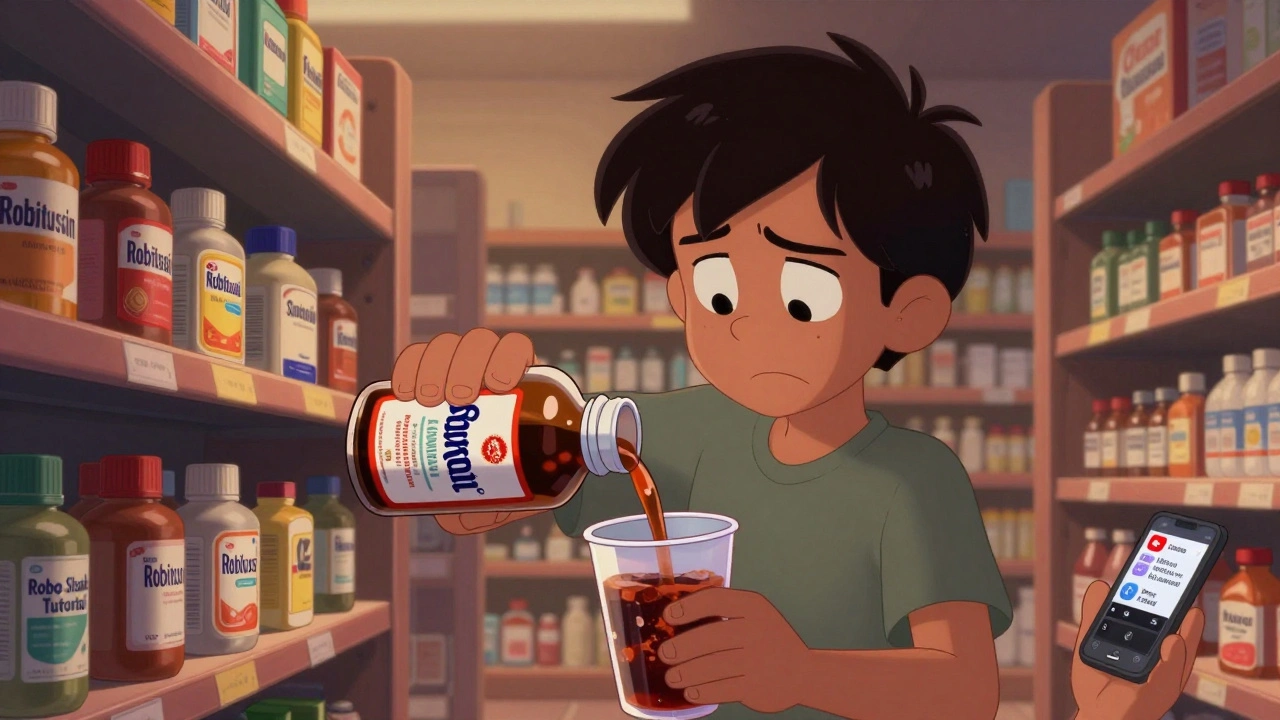
Robo Tripping: What It Is, Why It's Dangerous, and What You Need to Know
When people talk about robo tripping, the recreational misuse of cough medicines containing dextromethorphan (DXM). Also known as DXM abuse, it’s when someone takes far more than the recommended dose to experience hallucinations, euphoria, or altered perception. This isn’t just a party trick—it’s a serious health risk that shows up in ERs more often than you’d think.
Most over-the-counter cough syrups and pills contain dextromethorphan, a safe ingredient when used as directed. But when you crush pills, chug bottles, or mix it with soda or alcohol, you’re not just getting high—you’re overwhelming your brain and body. At high doses, DXM acts like a dissociative drug, similar to ketamine or PCP. That means you might feel detached from your body, see things that aren’t there, or lose control of your movements. Some people report numbness, blurred vision, or extreme dizziness. Others end up vomiting, having seizures, or going into respiratory failure. There’s no safe way to do this. The line between a "trip" and an overdose is razor-thin, and your body doesn’t care how much you’ve done before.
What makes it worse? People think it’s harmless because it’s legal and sold in drugstores. But mixing DXM with other meds—like antidepressants, ADHD pills, or even painkillers—can trigger serotonin syndrome, a life-threatening condition. Teens and young adults are most at risk, but anyone who thinks "it’s just cough medicine" is playing Russian roulette with their nervous system. The effects don’t always show up right away, either. You might feel fine after the first sip, then crash hours later with heart palpitations or confusion. And if you’re taking it regularly, your liver takes a beating. Long-term abuse can lead to memory loss, poor coordination, and even permanent brain changes.
There’s no glamor here. No cool stories. Just real damage. The posts below cover the science behind why DXM is dangerous, how it interacts with other drugs, and what happens when your body says no. You’ll find real-world cases, medical warnings, and clear facts about what’s actually in those bottles you might think are harmless. This isn’t about judgment—it’s about survival. If you or someone you know is doing this, you need to know the risks before it’s too late.