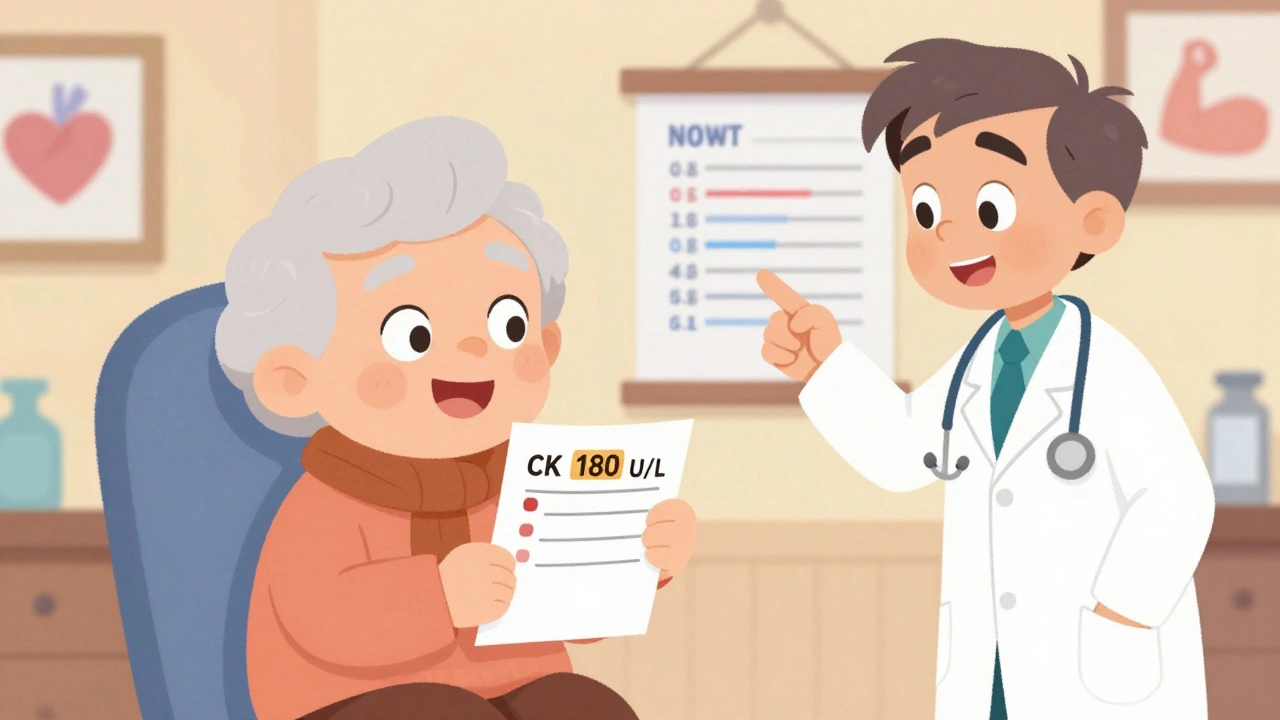
Baseline CK Testing for Statins: When It’s Actually Needed
Baseline CK testing before starting statins isn't needed for everyone-but it's crucial for high-risk patients to avoid unnecessary drug stops and catch real muscle damage early.
Read More
When you take a statin, a class of cholesterol-lowering drugs used to prevent heart attacks and strokes. Also known as HMG-CoA reductase inhibitors, they’re among the most prescribed medications in the world because they save lives. But for many, the fear of statin muscle side effects, unexplained aches, weakness, or cramps that start after starting the drug leads people to stop taking them—even when the pain isn’t actually caused by the statin.
Here’s the truth: true statin myopathy, a rare, serious muscle condition linked to statins that can lead to kidney damage affects fewer than 1 in 100 people. Most muscle pain people blame on statins is unrelated—maybe from aging, inactivity, vitamin D deficiency, or even stress. But because the timing lines up, patients assume the drug is to blame. That’s why statin rechallenge, the process of safely trying a statin again after stopping due to muscle symptoms is so important. It’s not about guessing. It’s about testing, tracking, and ruling out other causes before giving up on a drug that could prevent a heart attack.
Not all statins are the same when it comes to muscle side effects. Some, like simvastatin and atorvastatin, are more likely to cause issues than others like pravastatin or fluvastatin. Even pitavastatin, a newer statin with lower risk of metabolic side effects including new-onset diabetes, is often better tolerated. Dose matters too—lower doses usually mean fewer muscle complaints. And if you’re taking other meds like antibiotics, antifungals, or even grapefruit juice, those can boost statin levels and raise your risk. It’s not the statin alone—it’s the whole picture.
What you shouldn’t do: quit cold turkey. Stopping statins without a plan raises your risk of heart attack more than the muscle pain ever could. What you should do: talk to your doctor about blood tests (like CK levels), try a different statin, lower the dose, or test with a short break and controlled rechallenge. Many people who think they’re intolerant can actually tolerate a different statin or a lower dose with proper management.
In the posts below, you’ll find real, practical advice from people who’ve been there—how to tell if your pain is really from a statin, what tests to ask for, how to safely restart after stopping, and which alternatives might work if you truly can’t tolerate any statin. No fluff. No fear-mongering. Just what works based on clinical data and patient experience.
Baseline CK testing before starting statins isn't needed for everyone-but it's crucial for high-risk patients to avoid unnecessary drug stops and catch real muscle damage early.
Read More